Summary :
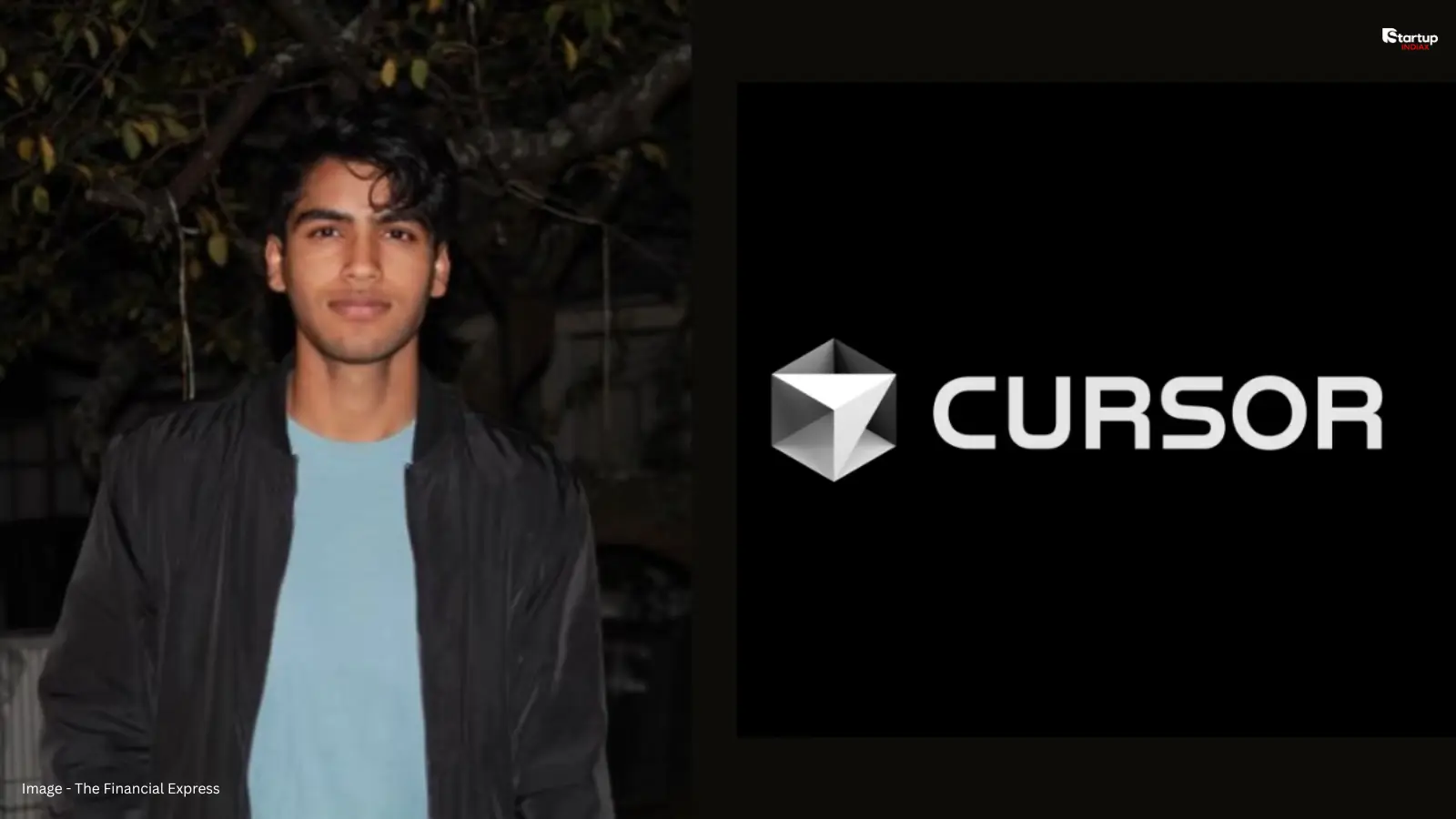
- Aman Sanger co-founded Cursor AI, the revolutionary AI code editor that reached a $29.3 billion valuation in just three years, making him one of the world’s youngest billionaires at age 25.
- Cursor solved real developer frustrations with “vibe coding” natural language programming that lets developers write, edit, and debug code by simply describing what they want, attracting over 1 million users and generating $1 billion in annualized revenue.
- This deep-dive Startup INDIAX story reveals the untold journey from MIT dorm rooms to Silicon Valley dominance, including product decisions, fundraising strategies, and actionable lessons for Indian startup founders building AI-first companies.
Picture this: You’re 25 years old, fresh out of MIT, and you just became a billionaire. Not from crypto luck or inheritance from solving one of the most frustrating problems developers face every single day.
That’s exactly what happened to Aman Sanger and his three co-founders at Cursor AI. In November 2025, their AI-powered code editor Cursor hit a mind-blowing $29.3 billion valuation after raising $2.3 billion from top-tier investors. They’re processing over 1 million users and generating more than $1 billion in annualized revenue. All before hitting 30.
But here’s what most coverage misses: this wasn’t overnight success. It was three years of obsessive focus on making coding feel less like wrestling with syntax and more like having a conversation with a brilliant colleague. From their MIT dorm rooms to becoming the fastest-growing developer tool in history, Aman Sanger’s journey offers raw lessons for every founder dreaming big.
Startup INDIAX dives deep into the untold story the struggles, pivots, and strategic decisions that transformed Cursor from “yet another AI tool” into a category-defining giant.
Read More: Best AI Tools for Startups in India 2025 That Will Boost Growth
Who Is Aman Sanger? The Face Behind Cursor AI
Early Life and Indian Heritage
Aman Sanger represents the new wave of Indian-origin founders reshaping Silicon Valley. While details of his early childhood remain private, what’s clear is his path followed the classic high-achiever trajectory exceptional academics, deep technical skills, and an early fascination with how software gets built.
Like many second-generation Indian-American entrepreneurs, Aman grew up watching the internet transform everything. He wasn’t just a passive user; he wanted to build the tools that would shape the next decade.
MIT Journey and Meeting the Co-Founders
At MIT, Aman Sanger met Michael Truell, Sualeh Asif, and Arvid Lunnemark. This wasn’t your typical college friendship these were four engineers who shared a common obsession: why does coding still feel so painful in 2022?

They’d spend late nights debugging, switching between documentation tabs, Stack Overflow searches, and their code editors. The constant context-switching killed productivity. GitHub Copilot had just launched, showing AI could help with code completion. But it wasn’t enough. The team kept asking: what if AI could understand intent, not just autocomplete functions?
That question became their North Star.
The Problem That Sparked a $29 Billion Idea
Developer Pain Points: Why Existing Tools Failed
Let’s be honest coding in 2022 was still a grind. Developers spent 35-40% of their time not writing code, but finding how to write it. Documentation hunting, debugging cryptic error messages, refactoring legacy code these weren’t edge cases. They were the job.
GitHub Copilot promised relief but had limits:
- Autocomplete worked great for boilerplate, terrible for complex logic
- No understanding of your entire codebase context
- Couldn’t edit existing code intelligently
- Required you to already know what to write
Aman and his team realized the real opportunity wasn’t better autocomplete. It was fundamentally rethinking the developer interface.
The “Vibe Coding” Vision
Here’s where Cursor’s insight gets brilliant: what if you could code by describing what you want, not how to build it?
They called this “vibe coding” a term that sounds casual but represents a seismic shift. Instead of typing precise syntax, developers could:
- Highlight buggy code and ask, “Why isn’t this working?”
- Select a function and say, “Refactor this for better performance”
- Describe a feature: “Add user authentication with Google OAuth”
The AI would understand context from your entire project, not just the current file. It would generate, edit, and debug code that actually fit your application architecture.
This wasn’t incremental improvement. This was a new paradigm.
💡 Key Takeaway: Aman Sanger didn’t chase the obvious AI coding opportunity. He identified a deeper problem the friction between human intent and code execution and built Cursor to eliminate it.
Building Cursor: From Dorm Room to Unicorn
Early Product Development (2022-2023)
In 2022, the four co-founders officially launched Anysphere, the company behind Cursor. Their early strategy was textbook Silicon Valley lean startup:
Phase 1: Prototype Fast
- Built initial version in 3-4 months
- Used existing AI models (OpenAI’s GPT-3.5 initially)
- Focused on one killer feature: Command K (natural language code editing)
Phase 2: Developer Beta
- Launched to 100 hand-picked developers
- Obsessively collected feedback
- Iterated weekly based on real usage patterns
Aman’s approach was different from typical founder ego. He didn’t defend product decisions he ruthlessly cut features that confused users and doubled down on what made developers say “whoa.”
The VS Code Fork Decision
Here’s a strategic move that deserves more attention: instead of building an editor from scratch, Cursor forked Visual Studio Code.
Why’d this matter?
Pros:
- Developers already knew VS Code’s interface (70%+ market share)
- Zero learning curve for keyboard shortcuts, extensions
- Instant familiarity = faster adoption
- Could focus 100% on AI features, not UI/UX basics
Cons:
- Less differentiation visually
- Tied to Microsoft’s open-source license terms
Aman bet that developers cared more about productivity than brand-new interfaces. He was right. Cursor looked familiar but felt magical.
Launch Strategy and First Users
Cursor’s public launch strategy in late 2023 was masterclass word-of-mouth engineering:
- Developer-first marketing: No billboards or TV ads just Twitter, Reddit, and Hacker News
- Show, don’t tell: Video demos of Command K transforming codebases
- Generous free tier: Let developers experience the magic before paywall
- Community feedback loop: Public roadmap, Discord engagement, rapid bug fixes
By Q1 2024, Cursor had 100,000+ active users. By mid-2025? Over 1 million.
The Hockey Stick Growth: 0 to 1 Million Users
Product-Market Fit Indicators
How do you know you’ve hit product-market fit? For Cursor, the signals were unmistakable:
📊 The Numbers:
- 40%+ monthly user growth for 12 consecutive months (2024)
- Net Revenue Retention >150% (users expanding seats)
- 70%+ weekly active usage among paying customers
- 50,000+ companies adopted Cursor, including startups and Fortune 500 engineering teams
But numbers don’t tell the full story. Developers started posting viral threads: “I’m 3x faster with Cursor” and “This is what coding should’ve always been.”
What Made Developers Switch from GitHub Copilot
GitHub Copilot had a head start and Microsoft’s backing. So why’d developers switch?
Cursor’s advantages:
- Codebase awareness: Understood entire project context, not just current file
- Multi-file editing: Could refactor across dozens of files simultaneously
- Better AI models: Quickly integrated Claude, GPT-4, and custom models
- Command K: Natural language interface beat tab-completion
- Debugging prowess: Didn’t just write code explained why bugs happened
Aman’s team also moved faster. GitHub ships on Microsoft’s enterprise timeline. Cursor shipped weekly improvements based on Discord feedback.
Speed became competitive moat.
💡 Key Takeaway: Cursor didn’t win by having better AI (they used similar models). They won by building a better experience around the AI faster iteration, superior UX, and obsessive attention to developer workflows.
Breaking Records: The $2.3 Billion Funding Round
Investor Lineup: Thrive, Andreessen Horowitz, and More
November 2025 brought the bombshell: Cursor raised $2.3 billion in what became one of the largest Series rounds ever for a developer tools company.
Lead investors:
- Thrive Capital (led the round)
- Andreessen Horowitz (a16z) (significant participation)
- Index Ventures
- Notable angels: Former GitHub executives, Stripe founders, OpenAI early employees
Why’d elite investors write such massive checks?
The pitch was simple:
- $1 billion+ annualized revenue (mostly recurring)
- 1 million+ developers (growing 40% monthly)
- 80%+ gross margins (software economics)
- Positioned to dominate the $50B+ developer tools market
But the real bet? Cursor wasn’t just a tool it was becoming the interface for how humans write software in the AI age.
$29.3 Billion Valuation Explained
Let’s break down that eye-popping $29.3B valuation:
Revenue multiple: ~29x ARR (aggressive but justified for growth rate)
Comparable valuations:
- GitHub sold to Microsoft for $7.5B (2018) at ~10x revenue
- GitLab IPO’d at $15B (2021) at ~50x revenue
- Figma nearly sold for $20B (2022) at ~50x revenue
Cursor’s valuation reflects:
- Market timing: AI is reshaping every software category
- Growth velocity: Fastest developer tool adoption ever recorded
- Expansion potential: Only 1M users out of 30M+ global developers
- Strategic value: Whoever owns the AI coding interface owns the future
Critics called it overvalued. Aman called it “just the beginning.”
How Cursor Works: The Technology Behind the Magic
Command K and Natural Language Coding
Here’s where Cursor gets technical but stick with me, because this is what makes it revolutionary.
Command K is Cursor’s signature feature. Press Cmd+K (Mac) or Ctrl+K (Windows), and you get a natural language prompt overlaying your code.
You can:
- Generate: “Create a REST API endpoint for user authentication”
- Edit: “Refactor this function to use async/await”
- Debug: “Why is this throwing a null pointer exception?”
- Explain: “What does this regex pattern do?”
Behind the scenes, Cursor:
- Analyzes your entire codebase (not just open files)
- Sends relevant context + your prompt to AI models
- Generates changes with full understanding of dependencies
- Applies edits across multiple files if needed
- Explains what it changed and why
It’s like pair programming with a genius who’s read your entire codebase.
AI Models Powering Cursor
Cursor isn’t locked to one AI provider that’s strategic brilliance.
Current model options:
- GPT-4 Turbo (OpenAI): Best for complex reasoning
- Claude 3.5 Sonnet (Anthropic): Excellent for long context windows
- Custom models: Cursor trains specialized models for code patterns
Developers can switch models based on task:
- Quick autocomplete? Fast model
- Complex refactoring? Premium model
- Budget-conscious? Optimized cheaper options
This flexibility means Cursor isn’t dependent on any single AI provider’s roadmap or pricing. Smart competitive positioning.
Becoming a Billionaire at 25: The Founders’ Net Worth
Let’s talk money because this part’s wild.
At a $29.3B valuation, the four co-founders (Aman Sanger, Michael Truell, Sualeh Asif, Arvid Lunnemark) collectively own an estimated 30-40% of Anysphere post-dilution.
Conservative math:
- 35% founder ownership = $10.25B combined
- Split four ways = ~$2.5B per founder
- Even after taxes and vesting schedules, each is a billionaire at age 25
For context:
- Mark Zuckerberg became a billionaire at 23 (Facebook IPO 2012)
- Evan Spiegel hit billionaire status at 25 (Snapchat, 2015)
- Aman Sanger joined this exclusive club via Cursor (2025)
But here’s what’s different about Aman’s generation: they’re not chasing vanity metrics or growth-at-all-costs. They’re building real businesses with actual revenue, sustainable unit economics, and products developers genuinely love.
The wealth is a byproduct. The mission is the moat.
Lessons Indian Founders Can Learn from Aman Sanger
Solve Your Own Problem First
Aman didn’t survey 1,000 developers or hire consultants. He built Cursor because he was frustrated coding. That personal pain became conviction.
Actionable insight for Indian founders: Don’t build what’s trendy. Build what you’d pay for yourself. If you’re not the target customer, find a co-founder who is.
Focus on Developer Experience
Cursor could’ve launched with 50 AI features. Instead, they perfected Command K first. One feature done exceptionally beats ten features done adequately.
Lesson: Indian startups often over-engineer trying to compete on feature lists. Aman’s approach? Pick one workflow, make it 10x better than alternatives, then expand.
Timing Meets Execution
Cursor launched right as:
- GPT-4 made AI coding viable
- Developers were ready to trust AI tools (post-Copilot education)
- Remote work increased demand for productivity tools
But timing alone doesn’t win. Cursor executed flawlessly fast iteration, community engagement, superior UX.
For Indian founders: You can’t control market timing, but you can control execution speed. Ship weekly. Gather feedback religiously. Iterate faster than incumbents.
💡 Key Takeaway: Aman Sanger’s success wasn’t luck or pedigree it was relentless focus on solving one problem better than anyone else, then scaling that solution to millions of developers worldwide.
Conclusion
Aman Sanger’s journey from MIT student to billionaire founder at 25 isn’t just another Silicon Valley success story it’s a blueprint for how AI-first startups should be built.
Cursor succeeded because Aman and his co-founders didn’t chase hype. They solved a genuine problem (developer productivity) with a genuinely better solution (natural language coding). They moved faster than giants like Microsoft, listened closer to users, and built a product developers actually loved using every single day.
The $29.3 billion valuation isn’t the end goal it’s validation that they’re onto something massive. With 1 million users and barely scratching the surface of 30 million global developers, Cursor’s story is just beginning.
For Indian founders watching this space: take notes. Aman Sanger proved you don’t need decades of experience, unlimited capital, or pedigree. You need genuine problem understanding, obsessive execution, and the courage to build something radically better.
What’s your take? Could Cursor become bigger than GitHub? Will “vibe coding” replace traditional programming? Share your thoughts in the comments below, and don’t forget to follow Startup INDIAX for more deep-dives into India’s most inspiring startup success stories.
FAQs
How did Aman Sanger become a billionaire at 25?
Aman Sanger co-founded Cursor AI (via Anysphere), which reached a $29.3 billion valuation in November 2025 after raising $2.3 billion. With estimated 30-40% founder ownership split among four co-founders, each became a billionaire, making Aman one of the world’s youngest self-made billionaires through building an AI-powered code editor used by over 1 million developers.
What makes Cursor different from GitHub Copilot?
Cursor offers codebase-aware AI that understands your entire project context, not just the current file. Its Command K feature lets developers use natural language to generate, edit, and debug code across multiple files simultaneously. Unlike Copilot’s autocomplete focus, Cursor functions more like an AI pair programmer that can refactor entire applications and explain complex bugs.
Who invested in Cursor AI’s $2.3 billion funding round?
Cursor’s massive funding round was led by Thrive Capital, with significant participation from Andreessen Horowitz (a16z), Index Ventures, and notable angel investors including former GitHub executives and OpenAI early employees. The round valued Anysphere (Cursor’s parent company) at $29.3 billion, making it one of the largest developer tools investments in history.
What is “vibe coding” in Cursor?
Vibe coding is Cursor’s approach to natural language programming where developers describe what they want in plain English rather than writing precise syntax. For example, you can say “add user authentication” or “fix this bug” and Cursor’s AI generates the appropriate code changes while understanding your entire codebase context. It’s about coding by intent, not memorizing syntax.
How much revenue does Cursor generate?
As of late 2025, Cursor generates over $1 billion in annualized recurring revenue with more than 1 million active users. The company maintains 80%+ gross margins typical of SaaS businesses, with revenue growing approximately 40% month-over-month throughout 2024 and 2025, making it one of the fastest-growing developer tools in history.
Can Indian founders build similar AI startups like Cursor?
Absolutely. Aman Sanger’s success shows that AI startup success depends on solving genuine problems with superior execution, not just geography or pedigree. Indian founders have access to the same AI models (GPT-4, Claude), global talent pools, and investor networks. The key lessons: solve your own problems, focus on one workflow done exceptionally well, and iterate faster than incumbents.