Table of Contents
SUMMARY
- Makers Hive’s bionic arm priced at ₹5 lakhs offers 72kg lifting capacity versus ₹40-50 lakhs international models
- Pranav Vempati founded startup in 2018 to make mind-controlled prosthetics accessible to 1.2 million Indians
- Hyderabad company achieves 90% cost reduction through local manufacturing and proprietary technology
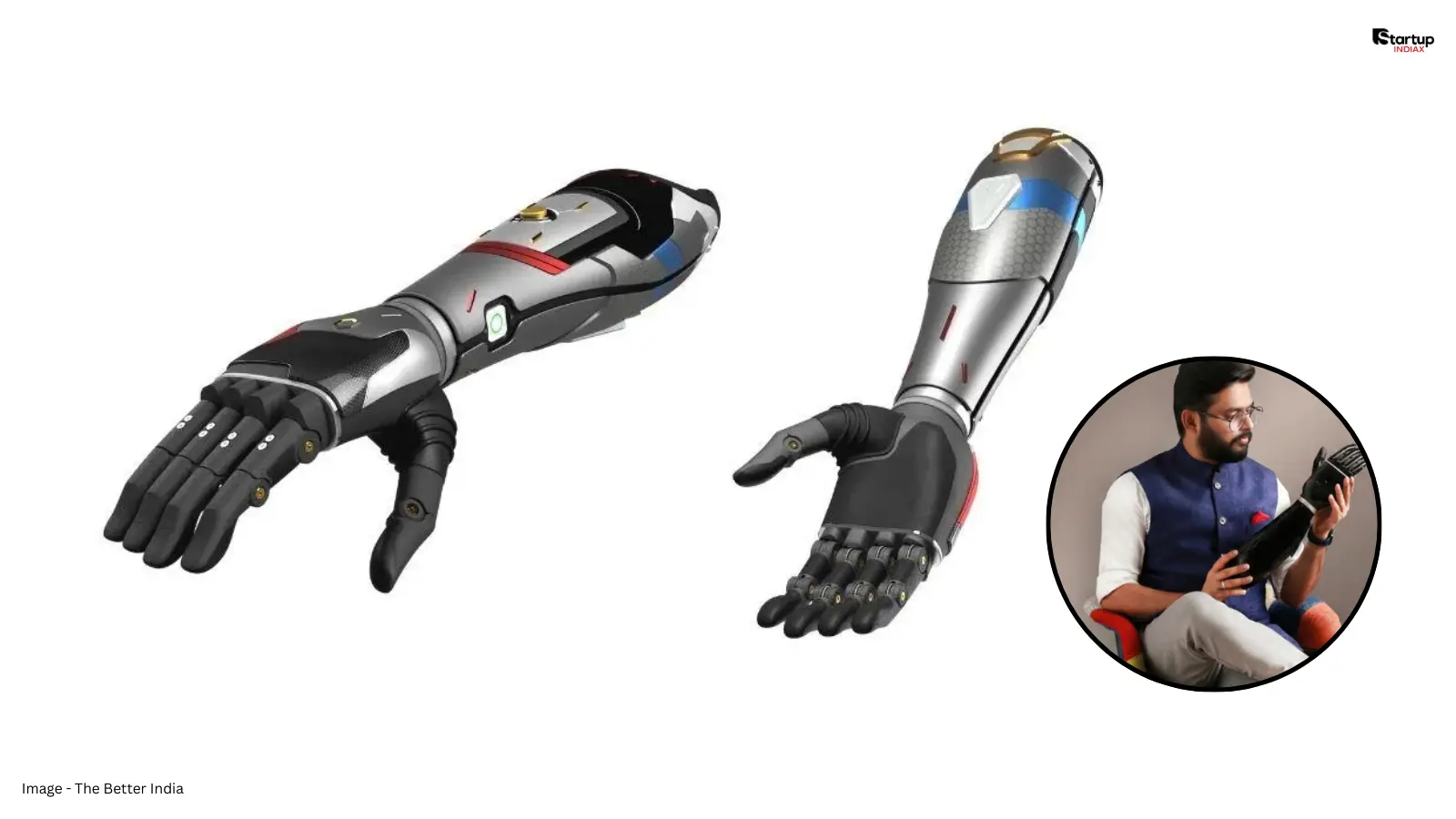
A bionic arm that can lift 72 kilograms and costs just one-tenth of international prices – this isn’t science fiction anymore. Makers Hive, a Hyderabad-based startup founded by Pranav Vempati in 2018, has developed India’s first affordable bionic arm priced at approximately ₹5 lakhs compared to ₹40-50 lakhs for global alternatives. The mind-controlled prosthetic performs 15 different hand movements and targets India’s 1.2 million population living with upper limb disabilities. Could this breakthrough finally make advanced prosthetic technology accessible to millions who need it most?
How Does the Makers Hive Bionic Arm Actually Work?
The bionic arm developed by Makers Hive operates through advanced muscle signal technology. Users control the prosthetic simply by thinking about the movement they want – the same neural pathways they’d use for a natural limb.
Sensors embedded in the device read electrical signals from residual muscles in the user’s upper arm. These signals are instantly translated into precise movements through proprietary algorithms developed by Pranav Vempati’s team specifically for Indian users. The result is seamless control that responds naturally to the wearer’s intentions.
The device performs 15 different hand and wrist movements, from gripping heavy objects to delicate tasks like holding a pen or buttoning a shirt. What makes it remarkable is the 72-kilogram lifting capacity – matching expensive international models while costing 90% less.
Read More: Deepinder Goyal Temple Wearable: Zomato CEO Launches Brain Health Device in 2025
Why Is the Makers Hive Bionic Arm So Much Cheaper?
International manufacturers typically charge ₹40-50 lakhs per bionic arm unit, putting advanced prosthetics out of reach for most Indians. Makers Hive cracked the affordability puzzle through three key innovations since its 2018 founding.
First, they sourced components locally wherever possible, reducing import costs significantly. Second, they developed their own control algorithms instead of licensing expensive foreign technology. Third, they optimized manufacturing processes specifically for the Indian market.
The prosthetic runs on rechargeable batteries lasting 12-14 hours per charge. It’s designed to withstand India’s humid climate and requires minimal maintenance – critical factors that international models often overlook.
According to Pranav Vempati, their goal was simple: make this technology accessible to the 95% of Indians with limb disabilities who currently can’t afford it. “We spent seven years perfecting this because we wanted to create something that actually serves our people,” Vempati shared in a recent statement.
Read More: MUDRA Loan Eligibility: Who Can Apply for Business Loans?
What Makes This Different from Traditional Prosthetics?
Traditional prosthetics offer limited functionality – often just basic gripping or cosmetic appearance. A bionic arm represents a quantum leap in capability and user experience.
The Makers Hive model provides natural movement patterns that let users perform daily activities independently. Picking up groceries, cooking meals, typing on keyboards, or playing with children – tasks that seemed impossible become routine again.
The startup spent years testing prototypes with real users across rehabilitation centers in Hyderabad and Chennai. Feedback from early adopters shaped everything from grip strength to aesthetic design, ensuring the prosthetic meets actual user needs rather than theoretical specifications.
Netizens React
Social media responses highlight both excitement and practical questions.
One user wrote, “Pranav Vempati and Makers Hive are doing what global companies couldn’t – making bionic arms affordable for ordinary Indians. Respect!“
Another commented, “My father lost his arm in an industrial accident. We looked at foreign options but ₹45 lakhs was impossible. At ₹5 lakhs from Makers Hive, there’s real hope now.“
A third user asked, “How long does the bionic arm last? What about repairs and servicing costs in smaller cities? These details matter as much as the initial price.“
Read More: Fund of Funds for Startups: Everything Founders Need to Know Now
What’s Next for Makers Hive’s Innovation?
Makers Hive plans to manufacture 500 bionic arm units in the first year of commercial production. Distribution will initially focus on major Indian cities through partnerships with rehabilitation centers and hospitals.
Pranav Vempati’s team is simultaneously developing pediatric versions tailored for children, who face unique challenges as they outgrow traditional prosthetics every few years. An adjustable design that grows with the child represents significant cost savings for families.
The company has also initiated discussions with insurance providers and government healthcare schemes. Subsidized access programs could bring the effective cost down even further for economically disadvantaged users.
Makers Hive’s future development roadmap includes adding sensory feedback capabilities, allowing users to feel texture and temperature – a feature currently unavailable even in most premium international models.
FAQs
What is a bionic arm?
A bionic arm is a mind-controlled prosthetic device that reads muscle signals and translates them into natural hand and wrist movements, allowing users to perform daily tasks independently.
Which company makes affordable bionic arms in India?
Makers Hive, a Hyderabad startup founded by Pranav Vempati in 2018, manufactures India’s first affordable bionic arm at ₹5 lakhs compared to ₹40-50 lakhs for international alternatives.
How much does a bionic arm cost in India?
The Makers Hive bionic arm costs approximately ₹5 lakhs, which is one-tenth the price of international alternatives ranging from ₹40-50 lakhs.
Can a bionic arm lift heavy objects?
Yes, the Makers Hive bionic arm can lift up to 72 kilograms, matching the capacity of expensive international models while being significantly more affordable.
Who founded Makers Hive and when?
Pranav Vempati founded Makers Hive in 2018 with the mission to create affordable prosthetic technology for Indians with limb disabilities.