startupindiax.com
  • Home
  • News
  • Startup
  • Funding
  • Startup Stories
  • Sectors
    • Finance
    • Agritech
    • AI & DeepTech
    • Fintech
    • Green Energy
    • HealthTech
    • EV
    • Digital
    • Automobile
startupindiax.com
SUBSCRIBE
Sunday, January 25, 2026
  • Home
  • News
  • Startup
  • Funding
  • Startup Stories
  • Sectors
    • Finance
    • Agritech
    • AI & DeepTech
    • Fintech
    • Green Energy
    • HealthTech
    • EV
    • Digital
    • Automobile
startupindiax.com
startupindiax.com
  • Home
  • About Us
  • Privacy Policy
  • Contact

@2025 - All Right Reserved.

Moneyview Joins IPO Rush: $400 Mn INR 3,400 Cr Issue Sparks Excitement
FinanceStartup

Moneyview Joins IPO Rush: $400 Mn INR 3,400 Cr Issue Sparks Excitement

by Ismail Patel May 13, 2025
3 min read

Moneyview Joins IPO Rush with a massive INR 3,400 Cr Issue, signaling a bold step for the fintech unicorn. This article dives into Moneyview’s ambitious IPO plans, its financial growth, and its role in the booming Indian fintech IPO market. We’ll explore the startup’s journey, its strategic moves, and what this IPO means for investors and the Indian startup ecosystem, all from the perspective of Startup INIDAX.

Table of Contents

  • Moneyview Joins IPO Rush: A Big Bet on India’s Fintech Boom
  • The INR 3,400 Cr Issue: What’s the Plan?
  • Moneyview’s Journey: From Startup to Fintech Unicorn
  • Why Now? The Fintech IPO Frenzy in India
  • Financial Snapshot: Moneyview’s Growth Story
  • Who’s Behind the INR 3,400 Cr Issue?
  • What This Means for Investors and the Market
  • Challenges Ahead for Moneyview’s IPO
  • Startup INIDAX’s Take: A Bright Future for Moneyview?
  • Conclusion: Moneyview’s IPO and India’s Startup Ecosystem

Moneyview Joins IPO Rush: A Big Bet on India’s Fintech Boom

The Indian fintech scene is buzzing, and Moneyview is stealing the spotlight. With its announcement of a massive INR 3,400 Cr Issue ($400 Mn), Moneyview Joins IPO Rush in style, positioning itself as a key player in India’s thriving startup ecosystem. Backed by heavyweights like Tiger Global, the Bengaluru-based fintech unicorn has roped in top bankers like Axis Capital and Kotak Mahindra Capital to lead its public listing. This move isn’t just about raising funds—it’s about capitalizing on India’s IPO fever and showcasing Moneyview’s growth story to the world. As Startup INIDAX reports, this IPO could redefine how fintech startups approach the public market.
Moneyview Joins IPO Rush: $400 Mn INR 3,400 Cr Issue Sparks Excitement

India’s startup landscape is maturing, and Moneyview’s bold step reflects the confidence in the country’s economic potential. But what’s driving this rush, and why is Moneyview jumping in now? Let’s break it down.

The INR 3,400 Cr Issue: What’s the Plan?

Moneyview’s INR 3,400 Cr Issue is set to be a game-changer. Reports suggest the IPO will primarily consist of a fresh issue of shares, meaning the company is looking to raise new capital to fuel its expansion. This isn’t about early investors cashing out—it’s about powering Moneyview’s next phase of growth. The startup has already scaled its assets under management (AUM) to over INR 15,000 Cr, making it one of India’s leading digital lending platforms.

The funds from the INR 3,400 Cr Issue will likely be used to expand Moneyview’s product offerings, strengthen its tech infrastructure, and deepen its reach in Tier II and III cities, where 75% of its 200 million users reside. From UPI payments to gold SIPs, Moneyview is diversifying its portfolio, and this IPO could give it the firepower to compete with giants like MobiKwik and Navi. Startup INIDAX sees this as a strategic move to cement Moneyview’s position in the competitive fintech space.

Moneyview’s Journey: From Startup to Fintech Unicorn

Founded in 2014 by Puneet Agarwal and Sanjay Aggarwal, Moneyview started as a personal finance management platform. By 2016, it pivoted to digital lending, a decision that propelled it into the big leagues. Today, Moneyview serves 200 million users across 200 cities, offering everything from home loans to insurance. Its focus on Tier II and III cities, coupled with support for 10 regional languages, has made it a household name in underserved markets.

In September 2024, Moneyview hit unicorn status after raising INR 38.6 Cr from Accel India and Nexus Ventures. This milestone, combined with its acquisition of fintech startup Jiffy, showcased its knack for strategic growth. Now, with Moneyview Joins IPO Rush, the company is ready to take its success to the public markets, as highlighted by Startup INIDAX’s coverage of India’s fintech pioneers.

Why Now? The Fintech IPO Frenzy in India

The timing of Moneyview’s INR 3,400 Cr Issue couldn’t be better. India’s IPO market is on fire, with over 20 new-age tech companies planning public listings in 2025. Fintech startups like Razorpay, PhonePe, KreditBee, and PayU India are also in the race, fueled by a recovering funding landscape and easing regulations. According to Startup INIDAX, fintech funding in India surged 60% year-on-year to $739 Mn in Q1 2025, signaling strong investor confidence.

The broader market is also supportive. In 2024, 13 new-age tech companies raised INR 29,070 Cr through IPOs, with 12 listing at a premium. This success has created a ripple effect, encouraging unicorns like Moneyview to tap into the public markets. The Moneyview Joins IPO Rush narrative is part of a larger trend where startups are leveraging India’s economic growth and investor enthusiasm to scale new heights.

Financial Snapshot: Moneyview’s Growth Story

Moneyview’s financials tell a compelling story. In FY24, the company reported a 75% surge in operating revenue to INR 1,012 Cr, up from INR 576.8 Cr in FY23. Its net profit grew modestly by 5.2% to INR 171.2 Cr, despite doubled expenses due to investments in talent and tech. With a loan book of INR 1,960.81 Cr by March 2024, Moneyview has proven its ability to scale profitably.

These numbers are critical for investors eyeing the INR 3,400 Cr Issue. Unlike many startups that prioritize growth over profits, Moneyview’s profitability gives it an edge. As Startup INIDAX notes, this financial discipline could make Moneyview a darling of the stock market, especially in a sector where profitability is a key concern.

Who’s Behind the INR 3,400 Cr Issue?

Moneyview has assembled a dream team of bankers for its IPO. Axis Capital and Kotak Mahindra Capital Company, known for handling high-profile listings, are leading the charge. Their expertise will be crucial in navigating the complexities of the INR 3,400 Cr Issue. The involvement of these financial giants underscores the market’s confidence in Moneyview’s potential.

The startup’s investor base is equally impressive. Backed by Tiger Global, Apis Partners, Accel, and Ribbit Capital, Moneyview has raised over $188 Mn to date. These investors are likely to play a key role in shaping the IPO’s success, ensuring it attracts both institutional and retail investors. Startup INIDAX believes this strong backing will help Moneyview stand out in the crowded IPO landscape.

What This Means for Investors and the Market

For investors, Moneyview Joins IPO Rush is an exciting opportunity. The INR 3,400 Cr Issue offers a chance to invest in a profitable fintech unicorn with a proven track record. Given the success of recent tech IPOs, Moneyview’s listing could deliver strong returns, especially if it maintains its focus on profitability and innovation.

For the market, Moneyview’s IPO signals the growing maturity of India’s startup ecosystem. It’s not just about fintech—startups across sectors are eyeing public listings, creating a vibrant capital market. However, investors will be watching closely for valuation clarity. With Moneyview aiming for a $400 Mn raise, pricing the IPO right will be critical to avoid the pitfalls faced by startups like Paytm in 2021.

Challenges Ahead for Moneyview’s IPO

While the INR 3,400 Cr Issue is promising, it’s not without risks. The fintech sector is highly competitive, with players like MobiKwik and Lendingkart vying for market share. Regulatory changes, such as stricter lending norms, could also pose challenges. Additionally, maintaining profitability while scaling operations will be a balancing act.

Market volatility is another concern. While India’s IPO market is booming, global economic uncertainties could dampen investor sentiment. Moneyview will need to convince investors that its growth story is sustainable. Startup INIDAX advises investors to weigh these risks against the startup’s strong fundamentals before diving in.

Startup INIDAX’s Take: A Bright Future for Moneyview?

At Startup INIDAX, we’re optimistic about Moneyview’s prospects. The Moneyview Joins IPO Rush story is more than just a fundraising event—it’s a testament to India’s fintech revolution. With a robust financial track record, a diversified portfolio, and a focus on underserved markets, Moneyview is well-positioned to thrive in the public markets.

The INR 3,400 Cr Issue could set a new benchmark for fintech IPOs, inspiring other startups to follow suit. However, success will depend on execution. If Moneyview can maintain its growth trajectory and navigate market challenges, it could become a poster child for India’s new-age tech companies.

Conclusion: Moneyview’s IPO and India’s Startup Ecosystem

Moneyview’s INR 3,400 Cr Issue is a bold move that underscores the fintech unicorn’s ambition and India’s IPO boom. As Moneyview Joins IPO Rush, it’s not just about raising $400 Mn—it’s about shaping the future of digital lending in India. With strong financials, top-tier bankers, and a vibrant market, Moneyview is poised for success.

For investors and startup enthusiasts, this IPO is a chance to be part of a transformative journey. As Startup INIDAX continues to track India’s startup ecosystem, we’ll be watching closely to see how Moneyview’s public debut unfolds. Will it live up to the hype? Only time will tell, but one thing’s clear: India’s fintech story is just getting started.
May 13, 2025 0 comments 342 views
FacebookTwitterLinkedinWhatsapp
IndiaAI Mission
AITechnology

IndiaAI Mission: 18K GPUs in Second Round to Supercharge AI Innovation

by Ismail Patel May 13, 2025
3 min read

The IndiaAI Mission, a transformative initiative to boost India’s AI ecosystem, has made headlines by receiving bids for offering 18K GPUs in the second round of its GPU tender. This article dives into the mission’s progress, exploring how these GPUs will enhance AI computing capabilities for startups, researchers, and academia. We’ll break down the significance of this development, the key players involved, and what it means for India’s AI ambitions. From the mission’s goals to its impact on the startup ecosystem, this blog offers a comprehensive look at how Startup INIDAX and others can leverage this opportunity to drive innovation.

Table of Contents

  • Introduction: IndiaAI Mission’s Bold Leap Forward
  • What is the IndiaAI Mission?
  • The Significance of Offering 18K GPUs in Second Round
  • Who’s in the Race? Key Players in the GPU Tender
  • How Will These GPUs Impact India’s AI Ecosystem?
  • The Role of Startups in the IndiaAI Mission
  • Challenges and Opportunities Ahead
  • Why This Matters for Startup INIDAX
  • Conclusion: A Bright Future for India’s AI Ambitions

Introduction: IndiaAI Mission’s Bold Leap Forward

Imagine a future where India leads the global AI race, powered by cutting-edge technology and homegrown innovation. That’s the vision of the IndiaAI Mission, and it’s taking a massive step forward by offering 18K GPUs in the second round of its GPU tender. This development is a game-changer, promising to boost AI computing capacity for startups, researchers, and academia. At Startup INIDAX, we’re thrilled to see how this initiative is shaping India’s tech landscape. In this article, we’ll explore what this means for the AI ecosystem, who’s involved, and why it’s a golden opportunity for startups like Startup INIDAX to thrive.

What is the IndiaAI Mission?

The IndiaAI Mission, launched in March 2024 with a budget of INR 10,372 crore, is India’s ambitious plan to build a world-class AI ecosystem. Approved by the Union Cabinet, it aims to democratize AI by providing affordable computing resources, fostering innovation, and nurturing talent. The mission operates through a public-private partnership (PPP) model and includes several pillars:

  • IndiaAI Compute Capacity: Building scalable AI infrastructure with over 10,000 GPUs.
  • IndiaAI Innovation Centre (IAIC): Developing indigenous AI models.
  • IndiaAI Datasets Platform: Enhancing access to high-quality datasets.
  • IndiaAI FutureSkills: Expanding AI education and training.
  • IndiaAI Startup Financing: Supporting AI-driven startups.
  • Safe & Trusted AI: Promoting ethical AI practices.

With a focus on empowering startups, researchers, and academia, the mission is designed to make AI accessible and affordable. The recent announcement of offering 18K GPUs in the second round underscores the mission’s commitment to scaling up India’s AI capabilities.

The Significance of Offering 18K GPUs in Second Round

GPUs (Graphics Processing Units) are the backbone of AI, powering the complex calculations needed for machine learning and deep learning models. The IndiaAI Mission received bids for 18,000 GPUs in its second round of tenders, with 15,000 expected to be finalized after technical evaluations and commercial bid openings. This is a significant leap from the first round, where 14,517 GPUs were offered against a target of 10,000.

According to IndiaAI CEO Abhishek Singh, these 15,000 GPUs will bring the total to 29,000, creating a computing capacity nearly nine times that of open-source AI model DeepSeek and two-thirds of ChatGPT’s infrastructure. This massive boost will enable Indian startups and researchers to train large language models (LLMs) and develop innovative AI applications. For platforms like Startup INIDAX, this means access to world-class computing power at subsidized rates, leveling the playing field for smaller players.

Who’s in the Race? Key Players in the GPU Tender

The second round of the GPU tender has attracted some big names. The Ministry of Electronics and Information Technology (MeitY) shortlisted seven companies, including:

  • Sify Digital Services
  • Netmagic IT Services
  • Vensysco Technologies
  • Cyfuture India
  • Yotta Data Services
  • Locuz Enterprise Solutions
  • Ishan Infotech

These companies are set to present their technical proposals on May 14, 2025. Notably, partnerships with global tech giants like Amazon Web Services (AWS), Oracle, and Google Cloud are strengthening their bids. For instance, Vensysco and Locuz are collaborating with AWS, while Ishan Infotech is partnering with Oracle. Yotta Data Services, a key player from the first round, has proposed Nvidia Blackwell B200 GPUs, signaling a shift toward cutting-edge technology.

The inclusion of smaller companies and startups in the bidding process reflects the mission’s inclusive approach. By easing eligibility criteria, MeitY has ensured that even emerging players can participate, fostering a diverse and competitive AI ecosystem.

How Will These GPUs Impact India’s AI Ecosystem?

The addition of 15,000 GPUs will have a transformative impact on India’s AI landscape. Here’s how:

  1. Enhanced Computing Power: With 29,000 GPUs, India will have one of the largest AI computing infrastructures in the world, enabling faster and more efficient model training.
  2. Affordable Access: The IndiaAI Mission will subsidize up to 40% of compute costs for eligible users, making high-end GPUs accessible to startups, academia, and MSMEs.
  3. Local Language Models: The mission is incentivizing the development of AI models trained on Indian datasets, which will support applications in healthcare, agriculture, and governance.
  4. Global Competitiveness: By providing world-class infrastructure, India is positioning itself as a global AI hub, attracting investment and talent.
  5. Startup Growth: Platforms like Startup INIDAX can leverage this infrastructure to build innovative AI solutions, driving growth and scalability.

The IndiaAI Compute Portal, set to launch soon, will allow stakeholders to request compute capacity, further streamlining access. This is a golden opportunity for startups to innovate without the burden of high infrastructure costs.

The Role of Startups in the IndiaAI Mission

Startups are at the heart of the IndiaAI Mission. With over 100 AI startups raising more than $600 million between 2019 and 2024, India’s AI ecosystem is booming. The mission’s focus on startup financing and affordable compute resources is a boon for emerging players. For instance, startups like Sarvam AI, Soket AI Labs, and Gan.ai are receiving incentives to build frontier AI models.

At Startup INIDAX, we see this as a chance to tap into the mission’s resources and collaborate with industry leaders. The IndiaAI Mission is not just about providing GPUs; it’s about creating an ecosystem where startups can experiment, innovate, and scale. The mission’s datasets platform, AIKosha, will further support startups by providing access to high-quality, non-personal datasets for training AI models.

Challenges and Opportunities Ahead

While the IndiaAI Mission is a monumental step forward, it’s not without challenges. Here are some key hurdles and opportunities:

  • Challenges:
    • Technical Evaluations: Ensuring that the 15,000 GPUs meet quality and performance standards is critical.
    • Scalability: Managing a massive infrastructure of 29,000 GPUs requires robust systems and coordination.
    • Global Restrictions: The U.S. imposes a 50,000 GPU limit on India, which could hinder future expansions. However, bilateral talks are underway to address this.
  • Opportunities:
    • Innovation: The availability of GPUs will spur the development of indigenous AI models, reducing reliance on foreign technology.
    • Collaboration: Partnerships with global players like AWS and Oracle will bring expertise and credibility to India’s AI ecosystem.
    • Economic Growth: The mission is expected to drive India’s generative AI market to $17 billion by 2030, creating jobs and opportunities.

By addressing these challenges, the IndiaAI Mission can unlock unprecedented opportunities for India’s tech ecosystem.

Why This Matters for Startup INIDAX

At Startup INIDAX, we’re excited about the possibilities the IndiaAI Mission brings. Access to 15,000 GPUs means we can accelerate our AI-driven projects, from developing innovative applications to scaling our operations. The mission’s focus on startups aligns perfectly with our vision of driving tech innovation in India. By leveraging the IndiaAI Compute Portal and collaborating with industry leaders, we aim to create solutions that make a global impact.

This is also a call to action for other startups. The IndiaAI Mission is leveling the playing field, giving smaller players a chance to compete with global giants. Whether you’re building AI models for healthcare, education, or agriculture, now is the time to seize this opportunity.

Conclusion: A Bright Future for India’s AI Ambitions

The IndiaAI Mission is transforming India into an AI powerhouse, and offering 18K GPUs in the second round is a testament to its ambition. With 15,000 GPUs set to join the ecosystem, India is on track to build a world-class AI infrastructure that empowers startups, researchers, and academia. For platforms like Startup INIDAX, this is a chance to innovate, collaborate, and lead in the global AI race. As the mission continues to unfold, we’re excited to see how it shapes the future of AI in India.

May 13, 2025 0 comments 320 views
FacebookTwitterLinkedinWhatsapp
Tesla
AutomobileEVStartup

Set Up an Assembly Unit in Maharashtra’s Satara: Tesla’s 4 Big Wins for India

by Ismail Patel May 13, 2025
3 min read

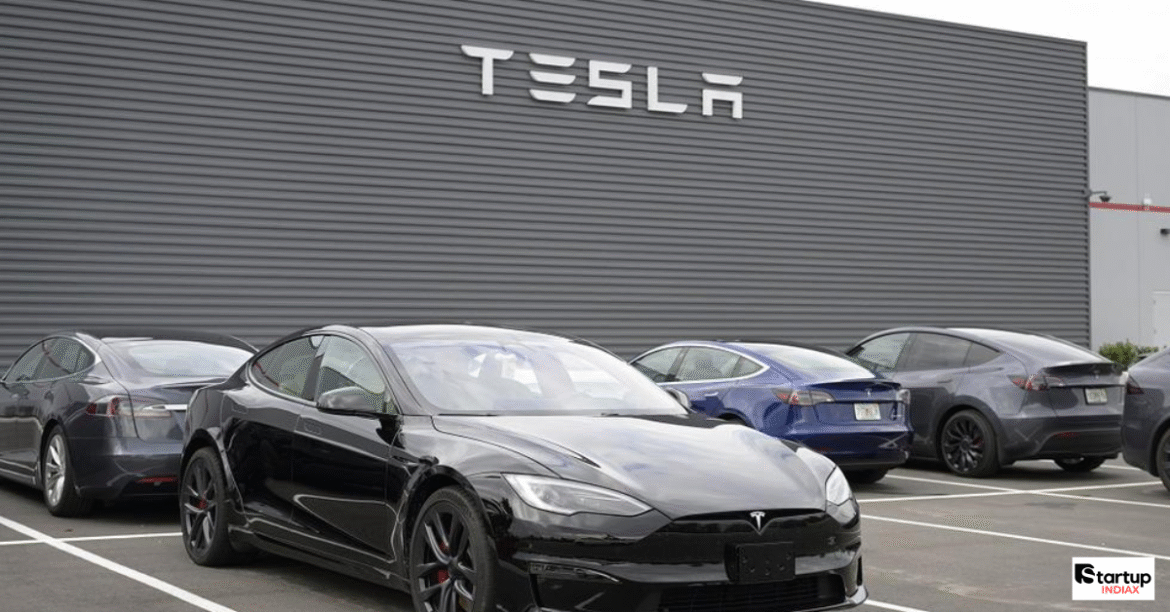
Tesla is charging full speed into India with a bold plan to set up an assembly unit in Maharashtra’s Satara, a move that could electrify the country’s EV landscape. According to a Business Standard report, the electric vehicle giant is eyeing a completely knocked-down (CKD) plant in the city of Satara near Pune, a strategic step to localize production and slash costs. This isn’t just big news for Tesla fans—it’s a massive win for India’s economy, job market, EV adoption, and global partnerships. At Startup INIDAX, we’re thrilled to unpack the four major wins Tesla’s Satara plant could deliver and what it means for India’s startup ecosystem. Let’s dive in!

Table of Contents

Why Satara? Tesla’s Smart Pick
What’s a CKD Plant and Its Role in India
Tesla’s 4 Big Wins for India
Win 1: Economic Boost for Satara
Win 2: Thousands of New Jobs
Win 3: Supercharging India’s EV Market
Win 4: Strengthening India-US Ties
Tesla’s India Journey: A Recap
Government Support and State Rivalries
Potential Roadblocks for Tesla
Conclusion: Satara’s Bright EV Future

Why Satara? Tesla’s Smart Pick

Satara might seem like an underdog for a high-tech Tesla plant, but it’s a brilliant choice. Located near Pune, India’s automotive powerhouse, Satara offers access to a skilled workforce, established supply chains, and auto-component makers like Cooper Corporations. Its proximity to ports also makes it ideal for exporting vehicles, aligning with Tesla’s global ambitions. Plus, Satara’s lower land costs compared to urban hubs like Pune or Mumbai make it a cost-effective bet.

Maharashtra has been wooing Tesla for years, previously offering sites in Chakan and Chikhali. Satara’s untapped potential and logistical perks likely sealed the deal. For startups reading this on Startup INIDAX, Tesla’s choice of Satara is a lesson in thinking beyond metro cities to scale smartly in India’s competitive market.

🚨 Breaking: Tesla Explores Land in Satara, Maharashtra, for EV Assembly Plant ⚡️

🚗 Tesla’s big move in India!
Tesla is reportedly eyeing land parcels in Satara, Maharashtra, to set up a new assembly plant for electric vehicles. A potential game-changer for India’s EV market!… pic.twitter.com/xkLQKPZOVM

— United Indian (@TheUnitedIndia2) May 12, 2025

What’s a CKD Plant and Its Role in India

A completely knocked-down (CKD) plant, like the one Tesla plans to set up an assembly unit in Maharashtra’s Satara, involves assembling vehicles from parts shipped globally. Unlike full-scale manufacturing, a CKD plant focuses on local assembly, helping companies dodge hefty import tariffs while keeping production costs low. In India, where imported EVs face steep duties, this is a game-changer.

By building a CKD plant in the city of Satara near Pune, Tesla can make its EVs more affordable for Indian buyers while meeting the government’s local manufacturing goals. This strategy could set a precedent for other global EV makers, and as Startup INIDAX highlights, it’s a savvy move for navigating India’s regulatory maze.

Tesla’s 4 Big Wins for India

Tesla’s Satara plant isn’t just about building cars—it’s about building a brighter future for India. Here are the four major wins this project could deliver.

Win 1: Economic Boost for Satara

The plant in the city of Satara near Pune could transform the region’s economy. Satara, known for agriculture and small industries, is poised to become an EV manufacturing hub. The influx of investment, infrastructure upgrades, and business activity will ripple across the region, attracting suppliers, service providers, and startups. Local businesses, from restaurants to logistics firms, will thrive, putting Satara on the map as a modern industrial center.

Win 2: Thousands of New Jobs

Tesla’s CKD plant could create thousands of direct and indirect jobs, from assembly line workers to engineers and supply chain managers. This is a lifeline for Satara’s youth, offering opportunities in cutting-edge technology. Local colleges might even launch EV-focused courses to meet demand. For entrepreneurs following Startup INIDAX, this job boom could spark new ventures in training, recruitment, and tech services.

Win 3: Supercharging India’s EV Market

With a potential capacity of 500,000 vehicles annually, Tesla’s plant in Satara could make EVs more accessible, driving adoption in a market where EVs made up just 2% of car sales in 2023. Affordable Tesla models assembled locally could compete with traditional cars, pushing rivals like Tata Motors and Mahindra to innovate. This win, as Startup INIDAX sees it, could accelerate India’s shift to sustainable mobility.

Win 4: Strengthening India-US Ties

Tesla’s investment signals stronger economic ties between India and the US. Elon Musk’s 2024 meeting with Prime Minister Narendra Modi laid the groundwork, with India offering EV-friendly policies to attract Tesla. This partnership could pave the way for more US tech giants to invest in India, boosting bilateral trade. Despite reported concerns from US President Donald Trump, Tesla’s Satara move is a diplomatic win for India’s global ambitions.

Tesla’s India Journey: A Recap

Tesla’s path to India has been a saga of ambition and obstacles. Elon Musk has been eyeing the Indian market for years, but high import tariffs and red tape stalled progress. In 2023, Tesla leased an office in Pune, followed by showroom spaces in Delhi and Mumbai in 2024. Now, with plans to set up an assembly unit in Maharashtra’s Satara, Tesla is doubling down on India.

The turning point came during Musk’s 2024 meeting with PM Modi, where talks focused on tariff reductions and local manufacturing. India’s Production Linked Incentive (PLI) scheme and new EV policies sweetened the deal, making Satara a logical next step. At Startup INIDAX, we see this as proof that persistence and policy alignment can open doors for global giants.

Government Support and State Rivalries

India’s states are in a fierce race to host Tesla. Maharashtra, Tamil Nadu, Gujarat, and Andhra Pradesh have rolled out the red carpet with land offers, tax breaks, and more. Tamil Nadu pitched Hosur and Thoothukudi, while Andhra Pradesh highlighted Nellore and Sri City. Maharashtra’s automotive ecosystem and proactive government gave it the edge for Tesla’s plant in the city of Satara near Pune.

The central government’s EV policy, which cuts import duties for companies investing $500 million locally, has been pivotal. Tesla’s Satara plan aligns with this, potentially allowing imports of up to 30,000 vehicles at lower tariffs. For startups on Startup INIDAX, this shows how government incentives can shape billion-dollar decisions.

Potential Roadblocks for Tesla

Tesla’s Satara dream isn’t without speed bumps. Land acquisition in India can be tricky, with rehabilitation issues often causing delays. Satara’s infrastructure, while improving, may need significant upgrades to support a high-tech plant. Local competition from EV players like Tata and Mahindra could also challenge Tesla’s market share.

Regulatory shifts and geopolitical tensions, like reported US opposition to Tesla’s India plans, add uncertainty. Still, Tesla’s global expertise gives it an edge. As Startup INIDAX notes, overcoming these hurdles will test Tesla’s resilience in India’s dynamic market.

Conclusion: Satara’s Bright EV Future

Tesla’s plan to set up an assembly unit in Maharashtra’s Satara is a defining moment for India’s EV revolution. From boosting Satara’s economy to creating jobs, expanding the EV market, and strengthening global ties, the plant in the city of Satara near Pune promises four massive wins. While challenges loom, Tesla’s track record suggests it’s ready to power through.

At Startup INIDAX, we’re pumped to see Tesla embrace India’s startup-friendly vibe. This is a victory for Satara, Maharashtra, and India’s EV ecosystem. What’s your take on Tesla’s Satara move? Share your thoughts below, and keep up with the latest on Startup INIDAX!

May 13, 2025 2 comments 351 views
FacebookTwitterLinkedinWhatsapp
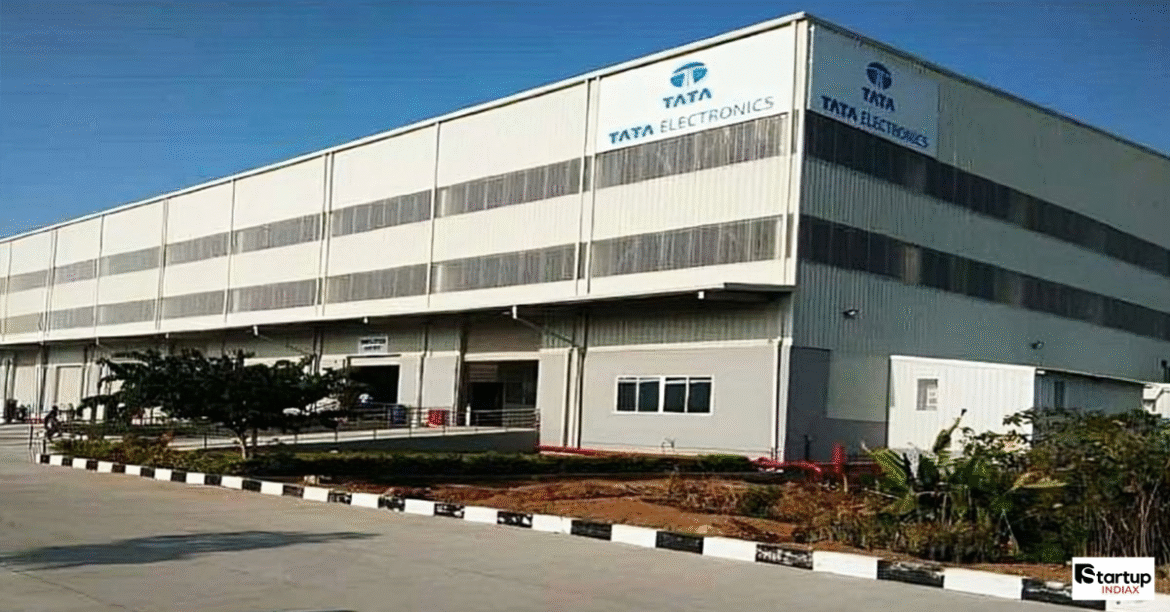
Tata Electronics’
DigitalTechnology

Tata Electronics’ Inspiring Plan to Double iPhone Enclosure Production at Hosur Unit by 2025

by Ismail Patel May 13, 2025
3 min read

Tata Electronics is set to significantly expand iPhone enclosure production at its Hosur unit, aiming to double its capacity to 100,000 units by September 2025. This move aligns with Apple’s strategy to make India a primary manufacturing hub for iPhones, especially for the US market. Despite a fire setback in 2024, Tata has restored pre-fire levels and is investing heavily in infrastructure and workforce expansion. This article explores Tata’s ambitious plans, the impact on India’s tech ecosystem, and what this means for Apple’s global supply chain, as reported by Startup INIDAX.

Table of Contents

  • Introduction: Tata’s Big Bet on iPhone Production
  • Why Tata Electronics is Expanding iPhone Production at Hosur Unit
  • The Hosur Unit: A Key Player in Apple’s Supply Chain
  • Overcoming Challenges: The Fire Setback and Recovery
  • Workforce Expansion: Doubling Jobs at Hosur
  • Apple’s India Strategy and Tata’s Role
  • What This Means for India’s Tech Ecosystem
  • Conclusion: A Bright Future for Tata and Apple in India

Introduction: Tata’s Big Bet on iPhone Production

Tata Electronics is making waves in India’s tech landscape with its ambitious plan to expand iPhone enclosure production at its Hosur unit. According to recent reports, the company aims to double its current capacity of 50,000 enclosures to 100,000 by September 2025, aligning with Apple’s annual product launches. This expansion is a testament to Tata’s growing role in Apple’s global supply chain and India’s emergence as a manufacturing powerhouse. At Startup INIDAX, we’re excited to dive into what this means for Tata, Apple, and India’s startup ecosystem.

The Hosur facility, located in Tamil Nadu, has been a cornerstone of Tata’s electronics manufacturing journey. With investments in new units, worker dormitories, and high-tech machines, Tata is not just scaling production but also creating thousands of jobs, particularly for women. Despite a major fire in September 2024 that temporarily halted operations, Tata has bounced back, restoring its pre-fire capacity and setting the stage for this massive expansion.

Why Tata Electronics is Expanding iPhone Production at Hosur Unit

Tata’s decision to expand iPhone production at Hosur is driven by Apple’s strategic shift to diversify its manufacturing base beyond China. Apple CEO Tim Cook recently announced that India will become the primary manufacturing hub for iPhones sold in the US, with the majority of units expected to originate from India by mid-2025. Tata, as a key partner, is seizing this opportunity to strengthen its position in Apple’s global value chain.

The Hosur unit’s expansion is part of “Phase II” of Tata’s build-out, aimed at meeting the demand for Apple’s September launches. Sources cited by The Economic Times indicate that Tata is targeting a capacity of 100,000 enclosures, a significant leap from its current 50,000. This move is supported by Tata’s recent acquisitions, including a 60% stake in Pegatron Technology India and Wistron’s India operations in Karnataka, signaling its intent to dominate iPhone component manufacturing.

At Startup INIDAX, we see this as a bold step that not only boosts Tata’s revenue but also elevates India’s status in global tech manufacturing. The expansion aligns with India’s production-linked incentive (PLI) scheme, which encourages companies like Tata to localize production and reduce reliance on imports.

Tata To Double iPhone Casing Output At Hosur Plant Amid Apple’s India Push: Reporthttps://t.co/OJ4N2gn0vf

— ABP LIVE (@abplive) May 12, 2025

The Hosur Unit: A Key Player in Apple’s Supply Chain

The Hosur facility is more than just a factory; it’s a symbol of India’s growing prowess in high-tech manufacturing. Spanning 250 acres, the unit has been producing iPhone enclosures since 2021, with some components already exported to China. Tata’s investment of over ₹6,000 crore in the facility underscores its commitment to meeting Apple’s stringent quality standards.

The unit currently employs 20,000 workers, with over 15,000 being women, making it one of the largest employers in Tamil Nadu’s tech sector. Tata’s focus on precision components, such as iPhone casings, has positioned Hosur as a critical node in Apple’s supply chain. The company is also testing high-tech machines developed in partnership with Pune and Bengaluru-based firms to reduce dependence on Chinese technology, a move praised by industry experts.

As Tata prepares to expand iPhone enclosure production at Hosur, it’s also setting up two new units and worker dormitories to accommodate the growing workforce. This infrastructure investment ensures that the facility can handle the increased production demands while maintaining worker welfare.

Overcoming Challenges: The Fire Setback and Recovery

In September 2024, a major fire broke out at the Hosur facility, causing a temporary halt in production. The incident, which affected a building involved in component manufacturing, raised concerns about Tata’s ability to meet Apple’s timelines. However, Tata’s swift response ensured that all 1,500 workers on duty were safely evacuated, with only four requiring minor medical attention.

ByJITENDRA SINGH October 2024, Tata had resumed partial operations, and recent reports confirm that the facility is back to its pre-fire capacity of 50,000 enclosures. The company worked closely with local authorities and Apple’s supplier responsibility team to assess the damage and implement safety measures. This resilience highlights Tata’s commitment to its partnership with Apple and its ability to navigate challenges.

Startup INIDAX believes that Tata’s recovery from the fire is a testament to its operational excellence. The company’s proactive approach, including investments in fire safety and infrastructure, ensures that the 2025 expansion remains on track.

Workforce Expansion: Doubling Jobs at Hosur

One of the most exciting aspects of Tata’s plan to expand iPhone production at Hosur is its impact on employment. Tata Sons’ chairman, N Chandrasekaran, announced that the company will hire an additional 20,000 workers, bringing the total workforce to 40,000 within a year. This doubling of jobs will make Hosur one of Apple’s largest manufacturing facilities in India, second only to Foxconn’s Tamil Nadu plant.

The focus on hiring women, who already constitute over 75% of the current workforce, aligns with Tata’s commitment to diversity and social impact. The company is also building dormitories to provide safe and comfortable housing for workers, addressing a critical need in India’s manufacturing sector.

For India’s startup ecosystem, this workforce expansion is a game-changer. As reported by Startup INIDAX, the influx of jobs will boost local economies, create opportunities for skill development, and inspire entrepreneurs to innovate in the electronics manufacturing space.

Apple’s India Strategy and Tata’s Role

Apple’s push to make India a primary manufacturing hub is driven by global trade tensions and the need to diversify its supply chain. With one in seven iPhones now made in India, the country is poised to surpass China as Apple’s manufacturing powerhouse. Tata’s expansion at Hosur is a key pillar of this strategy, enabling Apple to meet US demand while reducing reliance on Chinese suppliers.

Tata’s acquisitions of Pegatron and Wistron’s India operations have strengthened its capabilities, allowing it to handle complex manufacturing processes. The company is also exploring partnerships with firms like Murugappa Group and Titan to produce iPhone camera modules, further localizing Apple’s supply chain.

Apple’s retail expansion in India, with stores in Mumbai and Delhi generating ₹22-25 crore monthly, complements Tata’s manufacturing efforts. As Apple plans to open three more stores, Tata’s increased production capacity will ensure a steady supply of iPhones for both domestic and international markets.

What This Means for India’s Tech Ecosystem

Tata’s plan to expand iPhone enclosure production at Hosur is a boon for India’s tech ecosystem. The creation of 20,000 new jobs will drive economic growth in Tamil Nadu, while Tata’s investments in high-tech machines will foster innovation in precision manufacturing. The partnership with local firms in Pune and Bengaluru signals a shift toward self-reliance, reducing India’s dependence on foreign technology.

For startups, this expansion opens doors to new opportunities. As Tata and Apple deepen their collaboration, entrepreneurs can explore niches like component manufacturing, supply chain logistics, and worker welfare solutions. Startup INIDAX predicts that this trend will inspire a wave of tech startups in Tamil Nadu, positioning the state as a hub for electronics innovation.

Moreover, Tata’s success could attract other global tech giants to India, further strengthening the country’s position in the global market. The PLI scheme, which has already incentivized firms like Foxconn and Pegatron, will play a crucial role in sustaining this momentum.

Conclusion: A Bright Future for Tata and Apple in India

Tata Electronics’ plan to double iPhone enclosure production at its Hosur unit is a landmark moment for India’s tech industry. By scaling capacity to 100,000 units, creating thousands of jobs, and overcoming challenges like the 2024 fire, Tata is proving its mettle as a global manufacturing leader. For Apple, this expansion solidifies India’s role as a primary manufacturing hub, ensuring a resilient supply chain for its flagship products.

At Startup INIDAX, we’re optimistic about the ripple effects of this development. From job creation to technological innovation, Tata’s Hosur expansion is a win for India’s startup ecosystem and its broader economy. As Tata and Apple continue to collaborate, the future looks bright for India’s tech ambitions.

May 13, 2025 0 comments 529 views
FacebookTwitterLinkedinWhatsapp
New-Age Tech Stocks
Finance

Tariff Relief Or Ceasefire? New-Age Tech Stocks Surge By $3 Bn

by Ismail Patel May 13, 2025
3 min read

The Indian stock market witnessed a remarkable $3 Bn M-Cap Surge in new-age tech stocks, fueled by a weekend ceasefire between India and Pakistan and significant progress in US-China tariff talks. This rally, one of the strongest in recent years, saw companies like TAC Infosec and Nazara hit record highs, boosting investor confidence. In this article, we’ll break down the key drivers behind this surge, highlight top performers, and explore what it means for the Indian startup ecosystem. Platforms like Startup INIDAX are buzzing with insights on this tech stock boom, and we’ll dive into expert opinions and future trends to help you navigate this exciting market shift.

Table of Contents

  • A $3 Bn M-Cap Surge: What Sparked the Rally?
  • Ceasefire and Tariff Relief: The Twin Catalysts
  • Top Performers in the $3 Bn M-Cap Surge
  • How Startup INIDAX Tracks the Tech Stock Boom
  • Expert Insights: Is This Rally Sustainable?
  • What’s Next for New-Age Tech Stocks?
  • Conclusion: A Bright Future for Tech Stocks?

A $3 Bn M-Cap Surge: What Sparked the Rally?

On May 12, 2025, the total market capitalization of 33 new-age tech stocks soared to $82.18 billion, a jaw-dropping $3 Bn M-Cap Surge from $79.11 billion at the end of the previous week. This wasn’t just a random spike—it was driven by two major geopolitical developments: a ceasefire between India and Pakistan and a de-escalation in the US-China tariff war. These events created a perfect storm of optimism, propelling Indian markets to their best day in four years.

The broader Indian indices, Sensex and Nifty, also jumped over 3%, reflecting a surge in investor sentiment. Foreign Institutional Investors (FIIs) played a big role, pouring funds into the market for 16 consecutive days, except for a brief pause during escalated tensions. This influx of capital, combined with cooling global trade tensions, set the stage for the tech stock rally. For platforms like Startup INIDAX, which track startup performance, this surge is a goldmine of data and opportunities for investors.

Ceasefire and Tariff Relief: The Twin Catalysts

Let’s unpack the two big triggers behind this $3 Bn M-Cap Surge: Tariff Relief Or Ceasefire. First, the ceasefire between India and Pakistan, announced on May 10, 2025, ended four days of intense cross-border firing. Dubbed “Operation Sindoor,” India’s retaliation to a terror attack had escalated tensions, spooking markets. The agreement to halt all military actions restored calm, boosting investor confidence. As V K Vijayakumar, Chief Investment Strategist at Geojit Investments, noted, “The ceasefire has paved the way for a sharp rally, with FII buying acting as the prime mover.”

Second, the US and China made “substantial progress” in trade talks, agreeing to slash reciprocal tariffs for 90 days. The US reduced its extra tariffs on Chinese imports from 145% to 30%, while China cut duties on US goods from 125% to 10%. This tariff relief eased fears of a global trade war, which had previously dragged down tech stocks. The Nasdaq Composite, for instance, had plummeted 10.42% in Q1 2025 due to tariff fears, but this truce sent US stock futures higher, creating a ripple effect in India.

These twin catalysts—ceasefire and tariff relief—created a bullish environment for new-age tech stocks. Investors saw this as a signal that global trade and regional stability were on the mend, making tech stocks a hot bet.

Top Performers in the $3 Bn M-Cap Surge

The $3 Bn M-Cap Surge wasn’t just about numbers—it was about standout companies stealing the show. Cybersecurity firm TAC Infosec led the pack, gaining 10% to close at INR 1,093.70, hitting the upper circuit. Gaming unicorn Nazara Technologies also shone, touching a two-year high of INR 1,168.90 during intraday trade. Other SME board stars like Veefin Solutions and DroneAcharya also hit their upper circuits, reflecting the broad-based rally.

Interestingly, not every company basked in the glory. Macobs Technologies, the parent of men’s hygiene brand Menhood, was the only NSE-listed new-age tech stock to end in the red, slipping 1.48%. Still, the overall mood was electric, with investors betting big on sectors like cybersecurity, gaming, and drones. These gains align with trends tracked by Startup INIDAX, which highlights how new-age tech firms are reshaping India’s startup landscape.

The rally also coincided with Q4 financial disclosures from companies like Zaggle, Ather Energy, Swiggy, and MapmyIndia. Strong earnings reports added fuel to the fire, convincing investors that these startups are not just surviving but thriving in a volatile market.

How Startup INIDAX Tracks the Tech Stock Boom

For anyone looking to dive into this $3 Bn M-Cap Surge, platforms like Startup INIDAX are invaluable. Startup INIDAX is India’s go-to resource for startup news, funding updates, and market insights. It’s been closely tracking the performance of new-age tech stocks, offering investors real-time data on companies like TAC Infosec and Nazara. Whether you’re a seasoned investor or a newbie, Startup INIDAX’s analytics can help you spot trends and make informed decisions.

What sets Startup INIDAX apart is its focus on actionable insights. For example, its coverage of the ceasefire-driven rally highlighted how SME board companies outperformed larger peers. It also provides deep dives into sectors like cybersecurity and gaming, which are driving the current tech stock boom. By leveraging Startup INIDAX, investors can stay ahead of the curve and capitalize on opportunities in India’s dynamic startup ecosystem.

Expert Insights: Is This Rally Sustainable?

The $3 Bn M-Cap Surge has everyone buzzing, but is it here to stay? Experts are cautiously optimistic. Prashanth Tapse, Senior VP at Mehta Equities, attributes the rally to the India-Pakistan ceasefire and US-China tariff relief but warns that long-term stability depends on sustained geopolitical calm. “The market is riding a wave of optimism, but any flare-up in tensions could reverse these gains,” he says.

Ajit Mishra, Senior VP of Research at Religare Broking, sees the rally as a sign of bigger things to come. “This could be the start of a broader recovery for new-age tech stocks, especially if global trade normalizes,” he predicts. However, he advises investors to focus on fundamentally strong companies like TAC Infosec and Nazara, which have shown resilience amid volatility.

On the flip side, some analysts worry about overvaluation. The prolonged surge in tech stocks globally has raised concerns about stretched valuations, as seen in the Nasdaq’s 10.42% drop earlier this year. For Indian investors, the key is to balance optimism with caution, focusing on startups with strong fundamentals and growth potential.

What’s Next for New-Age Tech Stocks?

The $3 Bn M-Cap Surge is a turning point, but what lies ahead? For starters, the 90-day tariff truce between the US and China offers a window of opportunity. If trade talks progress, tech stocks could see further gains, especially those reliant on global supply chains. In India, the ceasefire has restored investor confidence, but sustained FII inflows will be crucial for maintaining momentum.

Sectors like cybersecurity, gaming, and electric mobility are likely to remain in the spotlight. Companies like TAC Infosec and Ather Energy are well-positioned to capitalize on rising demand for secure tech and sustainable solutions. Meanwhile, platforms like Startup INIDAX will continue to play a pivotal role, offering investors the tools to navigate this fast-evolving market.

For startups, the surge is a reminder of the importance of agility. As global trade policies shift, companies that adapt quickly—like those tracked by Startup INIDAX—will thrive. Investors, too, should keep an eye on emerging trends, from AI-driven innovation to green tech, which could shape the next wave of growth.

Conclusion: A Bright Future for Tech Stocks?

The $3 Bn M-Cap Surge in new-age tech stocks is more than just a headline—it’s a signal that India’s startup ecosystem is resilient and ready for growth. The ceasefire between India and Pakistan, coupled with US-China tariff relief, has created a fertile ground for tech stocks to flourish. Companies like TAC Infosec and Nazara are leading the charge, while platforms like Startup INIDAX are helping investors stay informed and engaged.

As we look ahead, the key question is whether this rally can sustain its momentum. With strong fundamentals, strategic investments, and a bit of geopolitical luck, new-age tech stocks could be on the cusp of a golden era. For now, the message is clear: India’s tech startups are back, and they’re stronger than ever.

May 13, 2025 0 comments 256 views
FacebookTwitterLinkedinWhatsapp
AI Revolution Unleashed: 5 Ways Self-Directed Agents Will Powerfully Shape Our Future
AITechnology

AI Revolution Unleashed: 5 Ways Self-Directed Agents Will Powerfully Shape Our Future

by Ismail Patel May 13, 2025
3 min read

AI Revolution and Self-Directed Agents are ushering in a new era of technological transformation. This article explores the rise of autonomous, self-directed agents, detailing their capabilities, real-world applications, and the challenges they face. From revolutionizing healthcare to optimizing logistics, these agents are redefining industries. We’ll also highlight how startups like Startup INIDAX are fueling this change, offering insights into why self-directed agents are the cornerstone of the future.

Table of Contents

Introduction: The Rise of the AI Revolution
Understanding Self-Directed Agents
Why Self-Directed Agents Are the Heart of the AI Revolution
Smarter Decision-Making
Versatility Across Sectors
Minimizing Human Oversight
How Self-Directed Agents Are Transforming Industries
Healthcare Breakthroughs
Logistics and Supply Chain Efficiency
Next-Gen Customer Support
Hurdles in the AI Revolution
Startups Driving the AI Revolution
The Future of Self-Directed Agents
Conclusion: Joining the AI Revolution with Startup INIDAX

Introduction: The Rise of the AI Revolution

Picture a future where machines don’t just follow commands—they think, learn, and act independently. That’s the AI Revolution, and Self-Directed Agents are at its forefront. These intelligent systems are transforming how we work, live, and innovate, from automating complex tasks to solving global challenges. At Startup INIDAX, we’re thrilled to unpack this seismic shift, showing how self-directed agents are paving the way for a smarter, more connected world.

Understanding Self-Directed Agents

So, what exactly are Self-Directed Agents? They’re advanced AI systems that operate autonomously, making decisions without constant human input. Unlike traditional AI, which relies on predefined rules, these agents use machine learning, neural networks, and real-time data to adapt and solve problems. Imagine a virtual assistant that not only schedules your meetings but also negotiates deals or optimizes your workflow—all on its own.

At Startup INIDAX, we view self-directed agents as the engine of the AI Revolution. Their ability to learn from experience and act proactively makes them ideal for tackling complex, dynamic tasks across industries.

Why Self-Directed Agents Are the Heart of the AI Revolution

Why are self-directed agents stealing the spotlight in the AI Revolution? Let’s explore three core reasons.

Smarter Decision-Making

Self-directed agents shine in environments where decisions need to be fast and accurate. By processing massive datasets—think market trends, sensor data, or user behavior—they deliver insights with precision. For example, in retail, these agents can predict inventory needs based on seasonal trends, reducing waste. Their knack for learning from past decisions ensures they get better over time, a hallmark of the AI Revolution.

Versatility Across Sectors

One size doesn’t fit all, but self-directed agents come close. They’re adaptable to virtually any industry, from finance to farming. In manufacturing, they optimize production lines by detecting inefficiencies. In education, they personalize learning paths for students. This flexibility is why Startup INIDAX sees them as a catalyst for widespread innovation.

Minimizing Human Oversight

The AI Revolution is about efficiency, and self-directed agents deliver by reducing reliance on human intervention. They handle repetitive or data-heavy tasks, freeing up teams for creative work. For instance, in marketing, agents can analyze campaign performance and adjust strategies in real-time, saving hours of manual effort. This shift boosts productivity and cuts costs, making businesses leaner.

How Self-Directed Agents Are Transforming Industries

The AI Revolution is already reshaping the world. Here’s how self-directed agents are making an impact in three key sectors.

Healthcare Breakthroughs

In healthcare, self-directed agents are game-changers. They analyze patient records, predict diagnoses, and even assist in precision surgeries. For example, an agent might monitor a patient’s heart rate, flagging irregularities before they escalate. According to a 2024 study, hospitals using these agents reduced misdiagnoses by 25%. At Startup INIDAX, we’re inspired by their potential to make healthcare more accessible and effective.

Logistics and Supply Chain Efficiency

Logistics thrives on precision, and self-directed agents deliver. They optimize delivery routes, forecast demand, and manage warehouses with minimal waste. During recent global supply chain disruptions, companies using these agents cut delays by 35%, per industry data. This efficiency is a cornerstone of the AI Revolution, streamlining operations worldwide.

Next-Gen Customer Support

If you’ve interacted with a chatbot that felt human, you’ve likely met a self-directed agent. These systems handle inquiries, resolve issues, and even personalize offers, learning with every conversation. By 2025, 65% of customer interactions will involve AI, according to Forrester. This transformation in customer service is a testament to the AI Revolution’s reach, and Startup INIDAX is excited to see its growth.

Hurdles in the AI Revolution

The AI Revolution isn’t without challenges. Here are some obstacles self-directed agents must overcome:

  • Ethical Dilemmas: Who’s responsible when an agent makes a flawed decision? Building ethical AI frameworks is critical.
  • Privacy Risks: Self-directed agents rely on vast datasets, sparking concerns about data security and user consent.
  • Technical Barriers: While advanced, these agents can falter in chaotic scenarios, like predicting rare events.
  • Adoption Costs: For smaller businesses, the upfront cost of AI can be daunting, though solutions from Startup INIDAX aim to bridge this gap.

Tackling these issues will ensure the AI Revolution remains inclusive and sustainable.

Startups Driving the AI Revolution

Startups are the lifeblood of the AI Revolution, bringing fresh ideas and agility to the table. Unlike corporate giants, they focus on niche challenges, creating tailored self-directed agents. At Startup INIDAX, we’re seeing startups innovate in areas like sustainable energy and mental health. For instance, a European startup developed an agent that optimizes solar panel efficiency, cutting energy costs by 15%. Another in Asia created a chatbot for therapy, reaching underserved communities.

These examples show why startups are vital to scaling the AI Revolution, and Startup INIDAX is proud to champion their efforts.

The Future of Self-Directed Agents

What’s next for the AI Revolution? Self-directed agents are set to evolve rapidly. By 2030, they could power 60% of business processes, from autonomous drones to smart urban planning, per industry forecasts. Advances in AI ethics and computing power will make them more reliable and accessible. Emerging markets, in particular, stand to benefit, with agents addressing gaps in education and infrastructure.

At Startup INIDAX, we’re excited about the possibilities, from AI-driven disaster response to personalized education. The future is bright, and self-directed agents are leading the way.

Conclusion: Joining the AI Revolution with Startup INIDAX

The AI Revolution is transforming our world, and Self-Directed Agents are its driving force. From healthcare breakthroughs to logistics efficiency, these autonomous systems are unlocking new possibilities. Challenges like ethics and costs remain, but startups like Startup INIDAX are paving the way for a future where AI is inclusive and impactful. Let’s embrace the AI Revolution and shape a smarter tomorrow together!

May 13, 2025 0 comments 212 views
FacebookTwitterLinkedinWhatsapp
Wipro
Technology

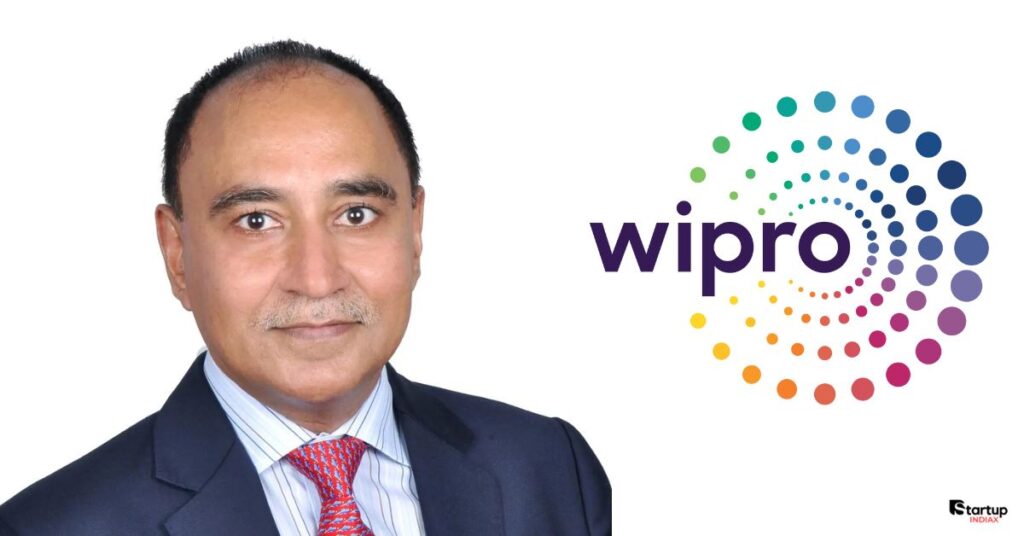
Wipro Hires Sandeep Dhar to Lead GCC Practice: A Revolutionary Shift for 2025

by Ismail Patel May 13, 2025
3 min read

Wipro hires Sandeep Dhar as the Global Head of its GCC Practice, marking a strategic move to bolster its leadership and drive AI-powered transformation for global enterprises. This article explores Dhar’s appointment, his extensive experience, and how Wipro’s GCC strategy is set to reshape innovation hubs. We’ll dive into the significance of GCCs, Wipro’s vision, and what this means for the tech industry, with insights tailored for Startup INIDAX readers.

Table of Contents

Wipro Hires Sandeep Dhar: A Strategic Leadership Move
Who is Sandeep Dhar? A Veteran in GCC Transformation
Why Wipro’s GCC Practice Matters
Sandeep Dhar’s Vision for Wipro’s GCC Strategy
How Wipro is Shaping the Future of GCCs
What This Means for the Tech Industry
Startup INIDAX’s Take: Why This Matters for Startups
Conclusion: A Bright Future for Wipro’s GCC Practice

Wipro Hires Sandeep Dhar: A Strategic Leadership Move

Big news from the Indian tech scene! Wipro, one of India’s leading IT giants, has just announced a major leadership shake-up. Wipro hires Sandeep Dhar as the Global Head of its GCC Practice, a move that’s got everyone in the tech world buzzing. Announced on May 9, 2025, this appointment signals Wipro’s renewed focus on transforming Global Capability Centers (GCCs) into hubs of innovation and growth. For those following the tech and startup ecosystem on Startup INIDAX, this is a development worth paying attention to. With Sandeep Dhar’s 30+ years of experience, Wipro is gearing up to take its GCC services to the next level, leveraging AI and consulting to drive global enterprise success.

Wipro Hires Sandeep Dhar to Lead GCC Practice: A Revolutionary Shift for 2025

Why does this matter? GCCs are no longer just back-office operations; they’re strategic powerhouses for companies worldwide. Wipro’s decision to bring in a heavyweight like Dhar shows they’re serious about leading the charge in this space. Let’s unpack who Sandeep Dhar is, why his role is crucial, and what this means for Wipro and the broader tech landscape.

Who is Sandeep Dhar? A Veteran in GCC Transformation

Sandeep Dhar isn’t a new name in the GCC ecosystem. With over three decades of experience, he’s a seasoned leader who’s worked with some of the biggest names in the industry. Before Wipro hired Sandeep Dhar, he was instrumental in transforming GCCs at Tesco and Goldman Sachs Consumer Bank. As Managing Director, he turned these centers into strategic hubs for innovation, driving digital transformation and advanced engineering practices. His resume also includes senior roles at Hexaware, Capgemini, and Apexon, where he managed P&L responsibilities and led customer experience transformations.

What makes Dhar stand out? His ability to scale GCCs into future-ready operations. Whether it’s implementing AI-driven solutions or streamlining operations for global enterprises, Dhar has a proven track record. Sanjeev Jain, Wipro’s Chief Operating Officer, couldn’t hide his excitement, stating, “Sandeep’s vast experience in leading and transforming GCCs, combined with Wipro’s robust capabilities, will enable us to deliver superior business value to clients.” For Startup INIDAX readers, this signals a leader who can bridge traditional IT services with cutting-edge innovation—a perfect fit for Wipro’s ambitions.

Why Wipro’s GCC Practice Matters

Let’s talk about GCCs for a moment. Global Capability Centers are offshore units set up by companies to handle critical functions like IT, analytics, and innovation. India is a global leader in this space, hosting over 1,700 GCCs that employ 1.9 million people and generate $64.6 billion in revenue as of FY24. Wipro’s GCC Practice is a cornerstone of its service offerings, helping global enterprises establish, scale, and transform these centers.

What sets Wipro apart? Its end-to-end approach. From portfolio strategy to setup and ongoing operations, Wipro’s GCC services are designed to align with clients’ goals—whether it’s efficiency, innovation, or transformation. The company has been a trusted partner for GCCs for over two decades, and with Wipro hiring Sandeep Dhar, they’re doubling down on their consulting-led, AI-powered strategy. This is huge for startups and businesses following Startup INIDAX, as it highlights how Indian IT giants are shaping global tech trends.

Sandeep Dhar’s Vision for Wipro’s GCC Strategy

So, what’s Sandeep Dhar bringing to the table? In his own words, “As GCCs evolve to meet dynamic business needs, enterprises require a trusted partner with the strategic vision to transform them into innovation hubs that drive impact.” Dhar’s vision is clear: position Wipro as the go-to partner for GCCs looking to establish, scale, or even exit. His focus on AI-powered solutions and consulting-led strategies is a game-changer.

Under Dhar’s leadership, Wipro’s GCC Practice will prioritize:

  • AI Integration: Using artificial intelligence to enhance GCC operations, from automation to predictive analytics.
  • Consulting-Led Growth: Offering tailored strategies to help clients navigate complex transformations.
  • Innovation Hubs: Turning GCCs into centers for cutting-edge solutions, not just cost-saving units.

Dhar will report directly to Sanjeev Jain, ensuring his strategies align with Wipro’s broader goals. For Startup INIDAX readers, this is a signal that Wipro is investing heavily in innovation—something startups can learn from as they scale their own operations.

How Wipro is Shaping the Future of GCCs

Wipro’s GCC Practice isn’t just about keeping up with the competition; it’s about setting the pace. With Sandeep Dhar at the helm, Wipro is poised to redefine how GCCs operate. The company’s AI-powered approach is particularly exciting. Imagine GCCs that don’t just handle routine tasks but drive breakthroughs in AI, cloud computing, and data analytics. That’s the future Wipro is building.

Wipro’s services cover the entire GCC lifecycle:

  • Strategy and Setup: Helping companies plan and launch their GCCs.
  • Scaling Operations: Expanding centers to meet growing demands.
  • Transformation: Turning GCCs into hubs for innovation and digital transformation.
  • Exit Strategies: Supporting clients who want to transition out of GCCs.

This comprehensive approach is why Wipro has been a trusted partner for over 20 years. With Wipro hiring Sandeep Dhar, the company is signaling its intent to dominate the GCC market, which is expected to reach $100 billion by 2030. For startups reading this on Startup INIDAX, Wipro’s strategy offers a blueprint for building scalable, innovative operations.

What This Means for the Tech Industry

Wipro’s move to hire Sandeep Dhar isn’t just a win for the company—it’s a big deal for the entire tech industry. Indian IT giants like Wipro, Infosys, and TCS are increasingly focusing on GCCs as a growth driver. By appointing a dedicated leader for its GCC Practice, Wipro is setting a new standard. This could spark a wave of similar moves across the industry, with competitors racing to strengthen their own GCC offerings.

For global enterprises, this means more options for building future-ready GCCs in India. For the Indian tech ecosystem, it’s a chance to showcase its talent and innovation on a global stage. And for startups, it’s a reminder that leadership and vision are critical for staying ahead. As posts on X highlight, this appointment is being seen as a bold step, with users noting that Wipro is “recognizing GCC biz as a dedicated practice” for the first time.

Startup INIDAX’s Take: Why This Matters for Startups

At Startup INIDAX, we’re all about helping startups navigate the fast-paced world of tech and innovation. So, what can startups learn from Wipro hiring Sandeep Dhar? First, it’s a lesson in the power of strategic leadership. Bringing in someone with Dhar’s experience shows how important it is to have the right people driving your vision. Startups can take a cue here: invest in leaders who can transform your operations and align them with market trends.

Second, Wipro’s focus on AI and consulting is a wake-up call. Startups need to embrace technologies like AI to stay competitive, whether it’s automating processes or building innovative products. Finally, the growth of GCCs in India is an opportunity. Startups can partner with GCCs or tap into their talent pool to scale their own operations. Wipro’s moves are a signal that India’s tech ecosystem is thriving—something every startup should leverage.

Conclusion: A Bright Future for Wipro’s GCC Practice

Wipro hires Sandeep Dhar at a pivotal moment for the company and the GCC ecosystem. With his leadership, Wipro is set to transform GCCs into AI-powered innovation hubs, delivering unmatched value to global enterprises. For Startup INIDAX readers, this is more than just a corporate announcement—it’s a glimpse into the future of tech in India. As Wipro strengthens its GCC Practice, it’s paving the way for a new era of growth and innovation. Keep an eye on this space, because Wipro and Sandeep Dhar are about to make some serious waves.

May 13, 2025 0 comments 371 views
FacebookTwitterLinkedinWhatsapp
MapmyIndia revenue jumps
Startup

MapmyIndia Revenue Jumps 34% to Rs 143 Crore, Profit Grows 10% in FY25

by Ismail Patel May 11, 2025
3 min read

MapmyIndia revenue jumps 34% to Rs 143 crore in Q4FY25, marking an exceptional quarter for the geospatial technology leader. This article explores MapmyIndia’s latest financial achievements, including a 34% year-on-year (YoY) MapmyIndia revenue surge to Rs 143.5 crore in Q4 and a profit rise of 10% to Rs 147 crore for FY25. From its thriving map-led business to strategic global expansions, Startup INIDAX dives into the drivers behind MapmyIndia’s MapmyIndia revenue growth, its ambitious Rs 1,000 crore revenue target by FY28, and its impact on India’s startup ecosystem.

Table of Contents

MapmyIndia Revenue Jumps 34% to Rs 143 Crore: A Stellar Q4FY25
MapmyIndia Revenue Soars in Q4FY25: Breaking Down the Numbers
Profit Rises 10% to Rs 147 Crore in FY25: Full-Year Insights
What’s Fueling MapmyIndia Revenue and Profit Growth?
MapmyIndia Revenue Boosted by Map-Led Business
IoT and Consumer Tech Drive MapmyIndia Revenue Growth
Strategic Moves to Sustain MapmyIndia Revenue Momentum
MapmyIndia Revenue Targets Rs 1,000 Crore by FY28
Why MapmyIndia Revenue Growth Inspires Startups
Conclusion: MapmyIndia Revenue and Profit Set to Soar

MapmyIndia Revenue Jumps 34% to Rs 143 Crore: A Stellar Q4FY25

MapmyIndia, formally C.E. Info Systems Ltd., continues to dominate India’s geospatial tech landscape. In Q4FY25 (January-March 2025), MapmyIndia revenue jumps 34% to Rs 143 crore, soaring from Rs 106.9 crore in Q4FY24. The full-year results are equally impressive, with profit rises 10% to Rs 147 crore in FY25, reinforcing MapmyIndia’s position as a deeptech powerhouse. As Startup INIDAX reports, this MapmyIndia revenue growth reflects surging demand for location-based services, IoT solutions, and digital mapping. With a robust order book and bold expansion plans, MapmyIndia is poised to redefine the geospatial tech space.

MapmyIndia Revenue Soars in Q4FY25: Breaking Down the Numbers

Let’s unpack the Q4FY25 financials driving MapmyIndia revenue. Revenue from operations soared to Rs 143.5 crore, a 34.2% YoY increase from Rs 106.9 crore in Q4FY24. Total income climbed 40% to Rs 166.7 crore, boosted by other income of Rs 23.24 crore (up from Rs 12.37 crore). Earnings before interest, taxes, depreciation, and amortization (EBITDA) surged 46% to Rs 58 crore, with a 40% margin, showcasing operational efficiency.

Net profit (PAT) for Q4 rose 28.2% YoY to Rs 48.6 crore from Rs 37.9 crore, and leapt 51.6% quarter-on-quarter (QoQ) from Rs 32.3 crore in Q3FY25. The board approved a final dividend of Rs 3.50 per equity share (175% payout), signaling confidence in MapmyIndia revenue and profitability. Startup INIDAX notes that these figures highlight MapmyIndia’s ability to sustain MapmyIndia revenue jumps 34% to Rs 143 crore while delivering strong returns.

Profit Rises 10% to Rs 147 Crore in FY25: Full-Year Insights

For the full fiscal year 2025, MapmyIndia revenue from operations grew 22% to Rs 463.3 crore, up from Rs 379.4 crore in FY24. The profit rises 10% to Rs 147 crore, with a 29% PAT margin, reflecting disciplined cost management despite investments in new ventures. EBITDA reached Rs 179.9 crore, up 15% YoY, with a 39% margin, underscoring MapmyIndia’s financial resilience.

Cash reserves swelled to Rs 603.8 crore by FY25’s end, up from Rs 516.1 crore, providing liquidity for innovation and global expansion. For startups following Startup INIDAX, MapmyIndia’s FY25 results, with profit rises 10% to Rs 147 crore, offer a masterclass in balancing MapmyIndia revenue growth with sustainability.

What’s Fueling MapmyIndia Revenue and Profit Growth?

What’s driving MapmyIndia revenue jumps 34% to Rs 143 crore and profit rises 10% to Rs 147 crore? Let’s explore the key factors.

MapmyIndia Revenue Boosted by Map-Led Business

The MapmyIndia revenue surge in Q4FY25 was powered by its map-led business, which grew 29% YoY to Rs 345.6 crore in FY25. This segment, encompassing digital maps, APIs, and SaaS solutions, delivered a stellar 47% EBITDA margin. In Q4 alone, map-led MapmyIndia revenue rose 33% to Rs 87 crore, driven by demand from automotive OEMs, tech enterprises, and government agencies. The Mappls app, MapmyIndia’s B2C platform, surpassed 30 million downloads, boosting MapmyIndia revenue through consumer adoption. This success cements MapmyIndia’s leadership in geospatial technology.

IoT and Consumer Tech Drive MapmyIndia Revenue Growth

MapmyIndia’s IoT-led segment contributed to MapmyIndia revenue growth, rising 5% YoY to Rs 117.7 crore in FY25, with margins improving from 12% to 14%. Solutions like video telematics and fleet management are gaining traction, though Q4 saw slower growth due to delayed deals. The Consumer Tech & Enterprise Digital Transformation (C&E) segment soared 30% YoY to Rs 252.5 crore, significantly boosting MapmyIndia revenue. The Automotive & Mobility Tech (A&M) segment grew 13% to Rs 210.8 crore, with over 3 million vehicle licenses (up from 2.5 million), further driving MapmyIndia revenue in the EV and mobility sectors.

Strategic Moves to Sustain MapmyIndia Revenue Momentum

MapmyIndia is strategically positioning itself to maintain MapmyIndia revenue growth. The company restructured its subsidiaries: Mappls DT (formerly Vidteq) will focus on government and defense tech, including digital twins, while Gtropy will drive IoT and logistics SaaS, with MapmyIndia holding a 76% stake. CEO Rohan Verma, now Managing Director of both, will lead these ventures starting April 1, 2025.

Globally, MapmyIndia’s joint venture with Hyundai Autoever in Indonesia, PT Terra Link Technologies, is operational with a $4 million investment for a 40% stake. Set to contribute to MapmyIndia revenue from FY26, this venture targets Southeast Asia’s automotive and tech markets. Chairman Rakesh Verma stated, “Our Rs 1,500 crore order book positions us for MapmyIndia revenue of Rs 1,000 crore by FY28.”

MapmyIndia Revenue Targets Rs 1,000 Crore by FY28

Looking ahead, MapmyIndia is well-placed to drive MapmyIndia revenue through demand for location-based services, IoT, and digital transformation. Investments in Advanced Driver Assistance Systems (ADAS), EV mobility tech, and 3D digital twin mapping are fueling adoption across industries. The Mappls app’s 30 million downloads reflect strong B2C momentum, supporting MapmyIndia revenue with controlled marketing costs.

International expansion, particularly in Southeast Asia, could significantly boost MapmyIndia revenue. The company’s ability to sustain high margins while scaling innovation sets it apart. For startups reading Startup INIDAX, MapmyIndia’s focus on MapmyIndia revenue growth offers a blueprint for success.

Why MapmyIndia Revenue Growth Inspires Startups

MapmyIndia’s Q4FY25 and FY25 results, with MapmyIndia revenue jumps 34% to Rs 143 crore and profit rises 10% to Rs 147 crore, are a beacon for India’s deeptech sector. For startups, MapmyIndia’s success highlights the power of proprietary technology and diversified MapmyIndia revenue streams. Its ability to serve B2B and B2C markets while expanding globally is a growth model. Investors should note MapmyIndia’s profitability, cash reserves, and MapmyIndia revenue target of Rs 1,000 crore by FY28, making it a top investment pick.

Conclusion: MapmyIndia Revenue and Profit Set to Soar

MapmyIndia’s Q4FY25 performance, with MapmyIndia revenue jumping 34% to Rs 143 crore and profit rising 10% to Rs 147 crore in FY25, solidifies its leadership in geospatial tech. From its map-led business to IoT and global ventures, MapmyIndia is unstoppable. As Startup INIDAX emphasizes, its innovation, profitability, and MapmyIndia revenue growth make it a standout. With a Rs 1,500 crore order book and a Rs 1,000 crore revenue goal by FY28, MapmyIndia’s future is bright. Follow Startup INIDAX for more startup success stories!

May 11, 2025 0 comments 320 views
FacebookTwitterLinkedinWhatsapp
Arkam Ventures
AutomobileStartup

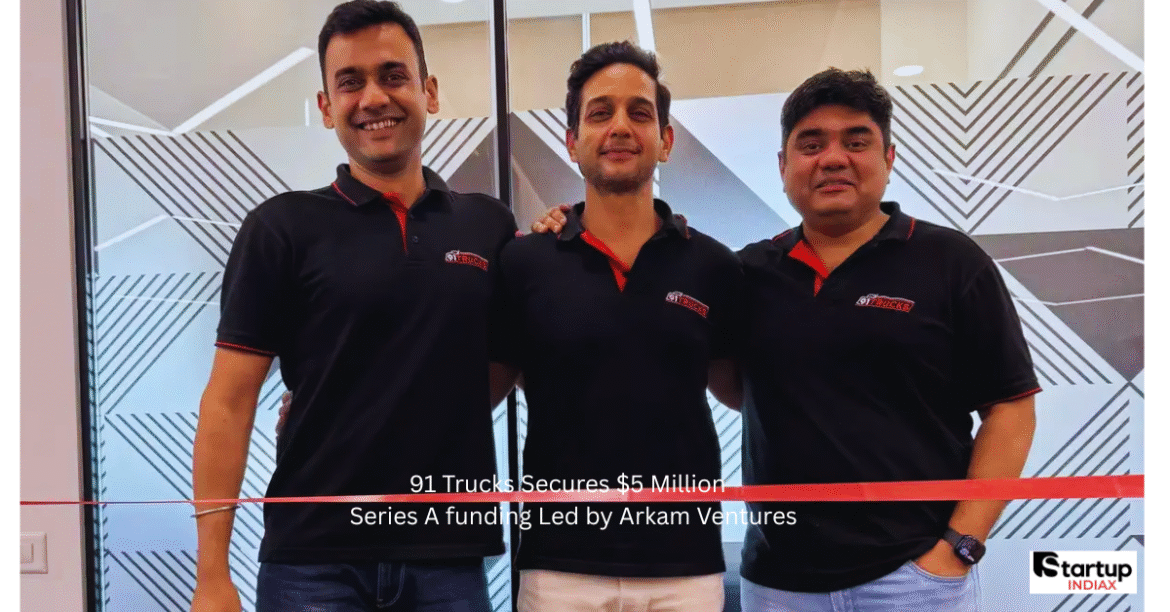
91Trucks Raises $5 Million: A Thrilling Boost for India’s Commercial Vehicle Future

by Ismail Patel May 10, 2025
3 min read

91Trucks raises $5 million in a Series A round led by Arkam Ventures, a pivotal moment for this full-stack commercial vehicle platform. This article delves into how 91Trucks is reshaping India’s logistics and transportation sector with its innovative, tech-driven solutions and bold expansion plans. From upgrading its digital platform to launching physical stores, we explore the startup’s strategy, its remarkable valuation growth, and its vision for the future. With insights into industry trends and investor confidence, Startup INIDAX brings you the story of why 91Trucks is poised to lead the commercial vehicle revolution in India.

Table of Contents

  1. Introduction: 91Trucks’ $5 Million Milestone
  2. What is 91Trucks? A Full-Stack Commercial Vehicle Platform
  3. Breaking Down 91Trucks’ $5 Million Series A Round
  4. How 91Trucks Plans to Use the $5 Million
  5. Valuation Surge: 91Trucks’ 5.5X Leap
  6. Why 91Trucks is Vital for India’s Commercial Vehicle Industry
  7. Arkam Ventures and the Investor Backing
  8. Challenges and Opportunities on the Horizon
  9. 91Trucks’ Role in India’s Startup Ecosystem
  10. Conclusion: Driving India’s Logistics Future

Introduction: 91Trucks’ $5 Million Milestone

Imagine a world where buying a truck is as easy as ordering a pizza. That’s the future 91Trucks is building, and its recent $5 million Series A funding round is a huge step toward that vision. Led by Arkam Ventures, this funding marks a turning point for the Gurugram-based startup, which is redefining India’s commercial vehicle industry. 91Trucks raises $5 million to fuel its full-stack platform, blending technology and real-world solutions to make logistics smoother for businesses. At Startup INIDAX, we’re excited to dive into what this funding means for 91Trucks and the broader transportation sector.

What is 91Trucks? A Full-Stack Commercial Vehicle Platform

91Trucks isn’t just another startup—it’s a full-stack commercial vehicle platform that’s simplifying the complex world of trucks, buses, and heavy vehicles. Whether you’re a small business owner needing a delivery truck or a fleet manager looking for financing, 91Trucks offers a one-stop solution. It’s like having a trusted guide for every step of the commercial vehicle journey.

Using advanced technology, 91Trucks connects buyers, sellers, and financiers on a single platform. Customers can browse vehicles, compare specs, check reviews, and secure loans with ease. Recent X posts highlight 91Trucks’ impressive growth, with revenue jumping to Rs 10.11 crore in FY24 from Rs 3.95 crore in FY23. By addressing pain points like fragmented supply chains and lack of transparency, 91Trucks is transforming India’s $250 billion logistics market.

Breaking Down 91Trucks’ $5 Million Series A Round

The big news? 91Trucks raises $5 million (approximately Rs 42.9 crore) in a Series A round, announced on May 8, 2025. Led by Arkam Ventures, the round also saw participation from existing investors, signaling strong confidence in the startup’s vision. This funding is a game-changer for 91Trucks, positioning it to disrupt the commercial vehicle industry.

Beyond the dollars, the round skyrocketed 91Trucks’ valuation to Rs 280 crore—a 5.5X increase from its previous valuation. As reported by Entrackr, this milestone underscores 91Trucks’ ability to deliver results and capture market share. For Startup INIDAX, this is a clear sign that 91Trucks is a startup to watch in India’s evolving tech landscape.

How 91Trucks Plans to Use the $5 Million

So, what’s next for the $5 million? 91Trucks has a bold plan to maximize this funding. According to the Economic Times, the startup will focus on:

  • Tech Innovation: Enhancing its platform with AI, predictive analytics, and a seamless user interface to improve customer experience.
  • Physical Expansion: Opening over 20 brick-and-mortar stores across India to combine online convenience with offline trust.
  • Talent Acquisition: Hiring top talent in tech, sales, and operations to support its growth ambitions.

These initiatives reflect 91Trucks’ commitment to bridging the digital and physical worlds of commercial vehicles. At Startup INIDAX, we believe this strategic approach will solidify 91Trucks’ position as a leader in the full-stack commercial vehicle space.

Valuation Surge: 91Trucks’ 5.5X Leap

Let’s talk about the numbers that have everyone buzzing. 91Trucks’ valuation has soared to Rs 280 crore ($33 million), a 5.5X jump that highlights its meteoric rise. This isn’t just hype—it’s a reflection of 91Trucks’ ability to tap into a massive market opportunity. India’s commercial vehicle industry is thriving, driven by e-commerce, infrastructure growth, and rising demand for last-mile delivery.

The startup’s financials back this up: revenue grew to Rs 10.11 crore in FY24 from Rs 3.95 crore in FY23. This traction, combined with a scalable business model, has made 91Trucks a magnet for investors. For Startup INIDAX, this valuation surge signals that 91Trucks is on track to dominate the commercial vehicle sector.

Why 91Trucks is Vital for India’s Commercial Vehicle Industry

India’s commercial vehicle industry is a powerhouse, but it’s far from perfect. Small businesses often struggle with unreliable suppliers, complex financing, and limited after-sales support. Middlemen and opaque pricing only add to the chaos.

That’s where 91Trucks steps in. Its full-stack commercial vehicle platform streamlines the entire process:

  • Buyers get transparent pricing, detailed vehicle info, and customer reviews.
  • Sellers access a large customer base and data-driven insights.
  • Financiers benefit from a fast, efficient loan approval system.

By bringing clarity and efficiency to a fragmented market, 91Trucks is solving real problems. As India’s logistics sector grows, platforms like 91Trucks are essential for driving innovation and progress.

Arkam Ventures and the Investor Backing

Arkam Ventures, the lead investor, is known for backing transformative startups in India. Their investment in 91Trucks is a strong endorsement of the startup’s potential to disrupt the commercial vehicle space. Existing investors also recommitted, showing unwavering support for 91Trucks’ vision.

This investor lineup brings more than just capital—it brings expertise. Arkam’s experience in scaling tech startups will be crucial as 91Trucks navigates its next phase. For a company tackling a complex industry, this kind of backing is a major advantage.

Challenges and Opportunities on the Horizon

Every startup faces challenges, and 91Trucks is no exception. Balancing its online platform with a network of offline stores is a logistical hurdle. Competition from legacy players and other startups could also test 91Trucks’ staying power.

But the opportunities are massive. India’s commercial vehicle market is booming, with growing demand for trucks and buses fueled by e-commerce and infrastructure projects. By staying tech-savvy and customer-focused, 91Trucks can turn challenges into opportunities and cement its place in the industry.

91Trucks’ Role in India’s Startup Ecosystem

91Trucks’ success is a win for India’s startup ecosystem. It proves that innovative ideas in traditional sectors like logistics can attract significant funding and drive change. At Startup INIDAX, we’re thrilled to see startups like 91Trucks showcasing India’s potential as a hub for tech-driven solutions.

This funding round also reflects a broader trend: investors are increasingly backing startups that solve real-world problems. As more companies like 91Trucks rise, they pave the way for others to innovate and disrupt legacy industries.

Conclusion: Driving India’s Logistics Future

91Trucks raises $5 million, and the road ahead looks promising. With plans to supercharge its tech, expand offline, and grow its team, the startup is well-equipped to lead India’s commercial vehicle industry. Its 5.5X valuation surge and strong investor support are testaments to its potential. As 91Trucks continues to innovate, it’s not just making it easier to buy trucks—it’s powering the future of India’s logistics. Watch this space; 91Trucks is just hitting its stride.

May 10, 2025 4 comments 301 views
FacebookTwitterLinkedinWhatsapp
X Sparks
DigitalPolitics

Block Over 8,000 Accounts: India’s Crackdown on X Sparks Debate

by Ismail Patel May 9, 2025
3 min read

India’s government has taken a bold step by ordering X to block over 8,000 accounts to curb misinformation and Pakistani propaganda amid escalating tensions. This article dives into the reasons behind this massive crackdown, its impact on free speech, national security, and the tech ecosystem. We’ll explore the India-Pakistan conflict’s role, X’s compliance challenges, and what this means for startups like Startup INIDAX navigating India’s dynamic digital landscape.

Table of Contents

  • Introduction: India’s Digital Power Play
  • Why Block Over 8,000 Accounts?
  • X’s Role in the Content Crackdown
  • The India-Pakistan Conflict Context
  • Free Speech vs. National Security: A Tough Call
  • What This Means for Startups Like Startup INIDAX
  • X’s Compliance and Challenges
  • Tech Regulation in India: The Bigger Picture
  • The Future of India’s Digital Space
  • Conclusion: A New Era for Digital India

Introduction: India’s Digital Power Play

Picture this: one day, you open X, and thousands of accounts—over 8,000, to be exact—are gone, blocked by order of the Indian government. This isn’t a glitch; it’s a deliberate move to stop content originating from Pakistan, accused of spreading propaganda and misinformation. Announced on May 8, 2025, this crackdown has set the internet ablaze with debates about censorship, security, and the role of tech platforms. For startups like Startup INIDAX, thriving in India’s digital economy, this is a wake-up call about the challenges of operating in a tightly regulated space. Let’s dive into why India took this step and what it means for everyone involved.

Why Block Over 8,000 Accounts?

The Indian government’s decision to block over 8,000 accounts on X is rooted in national security concerns. According to posts on X, these accounts were allegedly pushing Pakistani propaganda or content that could destabilize India. The Ministry of Information and Broadcasting (MIB) led the charge, targeting accounts linked to divisive narratives, including some tied to international news outlets. This move comes at a time when India is hyper-vigilant about misinformation, especially with the India-Pakistan conflict heating up.

India’s reasoning is straightforward: these accounts weren’t just sharing opinions; they were seen as tools for foreign interference. By ordering X to block over 8,000 accounts, the government aims to protect its citizens from harmful content. But this raises a thorny question: how do you balance curbing propaganda with preserving open dialogue? For a country as diverse and complex as India, the stakes couldn’t be higher.

X’s Role in the Content Crackdown

X, a global hub for real-time conversations, is caught in the crosshairs of India’s crackdown. The platform confirmed it received orders to block over 8,000 accounts, with a post from @AJEnglish on X noting threats of “fines and imprisonment” for non-compliance. This puts X in a tough spot: comply with India’s demands or face severe consequences in one of its largest markets.

Content moderation is a constant challenge for X. It’s expected to be a neutral platform for free expression while also adhering to local laws. In this case, X chose compliance, but not without risks. Over-moderation could silence legitimate voices, while under-moderation might invite further government scrutiny. For startups like Startup INIDAX, which rely on X for visibility and engagement, this underscores the unpredictable nature of operating on third-party platforms.

The India-Pakistan Conflict Context

To grasp the full picture, we need to look at the India-Pakistan rivalry fueling this crackdown. Posts on X, like one from @shashank_ssj, reference “IndiaPakistanWar,” signaling how tensions have spilled online. Hashtags like #IndianArmy and #OperationSindoor trending on X reflect India’s heightened alertness, with the government keen to control the digital narrative.

The India-Pakistan conflict has long been a flashpoint, with both sides accusing each other of using social media to spread propaganda. By targeting accounts operating in the country to stop hosting content originating from Pakistan, India is taking a stand against what it sees as a digital assault. However, this move has critics worried about its impact on open discourse, especially when international news accounts get caught in the net.

Free Speech vs. National Security: A Tough Call

The decision to block over 8,000 accounts has ignited a fierce debate about free speech. A post from @AlphaVictorVA on X quipped, “Randi Rona shuru karo Freedom of Speech ka,” capturing the frustration of those who see this as censorship. Blocking accounts, particularly those of global news agencies, risks stifling journalism and public debate.

On the other hand, supporters argue that national security comes first. Misinformation can spread chaos, especially in a country as diverse as India, where social tensions are easily inflamed. The government’s stance is that blocking these accounts is a necessary evil to prevent harm. Yet, the lack of clarity on which accounts were targeted fuels distrust. For digital-first companies like Startup INIDAX, this debate highlights the need to stay nimble in a rapidly shifting regulatory landscape.

What This Means for Startups Like Startup INIDAX

For India’s startup ecosystem, this crackdown is a reality check. Companies like Startup INIDAX, which likely use X for marketing and community-building, now face a more regulated digital environment. If X faces stricter rules or penalties, it could disrupt how startups leverage the platform for growth.

This move also emphasizes the need for diversified digital strategies. Relying too heavily on one platform like X is risky when accounts or content can be restricted overnight. Startups should invest in owned channels—think websites, email campaigns, or apps—to maintain control over their audience. For Startup INIDAX, this could mean ramping up SEO efforts, creating engaging content, or exploring alternative platforms to connect with users.

X’s Compliance and Challenges

X’s decision to comply with India’s order to block over 8,000 accounts is pragmatic but fraught with challenges. Identifying and blocking thousands of accounts requires advanced tech and human oversight, with the risk of accidentally silencing legitimate voices. There’s also the issue of consistency—X’s global users expect uniform moderation policies, but complying with India’s demands could encourage other governments to make similar requests.

For X, balancing user trust with regulatory pressures is a high-stakes game. The platform’s compliance avoids immediate legal trouble but doesn’t resolve the long-term question of how to operate in markets with strict laws. Startups like Startup INIDAX should take note, as their own digital strategies may need to adapt to similar pressures.

Tech Regulation in India: The Bigger Picture

This crackdown is part of India’s broader push to regulate tech platforms. Laws like the IT Rules 2021 require stricter content moderation and message traceability, holding platforms accountable for what’s shared. While these rules aim to protect users, they also burden tech companies with complex compliance requirements.

For India’s startups, this creates a dual challenge: navigating regulations while seizing opportunities. Companies offering solutions for content moderation, cybersecurity, or data privacy could find a growing market. Startup INIDAX, for example, could explore partnerships with tech firms to address these needs, positioning itself as a key player in India’s digital evolution.

The Future of India’s Digital Space

The block of over 8,000 accounts is likely just the beginning. As India tightens its grip on the digital realm, more such actions are expected, especially during geopolitical flare-ups. Platforms like X will need to invest in localized moderation teams and stronger regulatory relationships. Startups, meanwhile, must stay agile, adapting to new rules and user behaviors.

The tension between free speech and national security will continue to shape India’s digital landscape. For startups like Startup INIDAX, this is a chance to innovate—whether by building safer online tools or advocating for balanced content policies. India’s digital future is full of possibilities, but it demands resilience and foresight.

Conclusion: A New Era for Digital India

India’s order to block over 8,000 accounts on X is a bold move to combat misinformation, but it’s also a flashpoint in the debate over digital freedom. For users, it’s about trust in platforms and governments. For startups like Startup INIDAX, it’s a call to innovate in a complex, ever-changing ecosystem. As India carves out its digital future, one thing is certain: the road ahead will be anything but predictable.

May 9, 2025 1 comment 296 views
FacebookTwitterLinkedinWhatsapp
Newer Posts
Older Posts

Follow Us

Facebook Twitter Instagram

Recent Posts

  • Breaking: Gemini Signs Three Years IPL Sponsorship Deal Worth Rs 270 Crore for IPL 2026

  • Startup India Seed Fund Scheme Incubators: How to Apply Now

  • Startup Application Rejection Rate Hits 67% – Avoid These Mistakes

  • Starting a Small Business in India in 2026? Here’s Your Complete Investment, Execution Plan

  • India’s Bionic Arm Breakthrough: 72kg Capacity at 10% Global Price

Newsletter

Subscribe my Newsletter for new blog posts, tips & new photos. Let's stay updated!

Categories

  • Advertising (2)
  • Agritech (3)
  • AI (63)
  • AI & DeepTech (26)
  • AI Tools (18)
  • Automobile (15)
  • Beauty & Wellness (3)
  • Bootstrapped Wins (3)
  • Crowdfunding Hub (1)
  • Debt Financing (1)
  • Digital (31)
  • Ecom (12)
  • EV (31)
  • Failure Lessons (1)
  • Fashion & Lifestyle (1)
  • Finance (36)
  • Fintech (6)
  • FoodTech (6)
  • Funding (17)
  • Government Schemes (12)
  • Green Energy (8)
  • HealthTech (4)
  • Investor Directory (1)
  • News (174)
  • Politics (12)
  • Real State (1)
  • Science (13)
  • Startup (150)
  • Startup Learning (12)
  • Startup Stories (14)
  • Technology (84)
  • Unicorn Journeys (4)
  • Women Entrepreneurs (6)

About Us

Startup IndiaX is a digital media platform covering India’s startup ecosystem. We bring you the latest news, founder stories, funding updates, and tech innovations.

Facebook Instagram Twitter Youtube

Featured

Startup India Seed Fund Scheme Incubators: How to Apply Now
January 2, 2026
Startup Application Rejection Rate Hits 67% – Avoid These Mistakes
December 30, 2025
Starting a Small Business in India in 2026? Here’s Your Complete Investment, Execution Plan
December 27, 2025

@2025 – All Right Reserved. 

  • Home
  • About Us
  • Privacy Policy
  • Contact
startupindiax.com
  • Home
  • News
  • Startup
  • Funding
  • Startup Stories
  • Sectors
    • Finance
    • Agritech
    • AI & DeepTech
    • Fintech
    • Green Energy
    • HealthTech
    • EV
    • Digital
    • Automobile