SUMMARY
- India PCB industry must scale from $6.3B to $24.7B by 2033 while reducing 88% import dependency through massive infrastructure investments
- Building complete domestic raw material supply chains for copper laminates and specialty substrates is critical for cost competitiveness
- India PCB industry needs 50,000 skilled professionals and strategic technology partnerships to match global quality standards
The India PCB industry faces a startling reality: 88% of bare PCBs are still imported despite domestic demand worth $4.2 billion in FY2024-25. These tiny printed circuit boards power everything from your smartphone to India’s growing electric vehicle fleet, yet the country remains dangerously dependent on foreign suppliers. With the India PCB industry projected to surge from $6.3 billion in 2024 to $24.7 billion by 2033, the path to self-reliance is clear but challenging. Government schemes like PLI and strategic investments are finally creating momentum, but breaking free from import dependency requires more than just good intentions.
Why the India PCB Industry Holds the Key to Electronics Self-Reliance
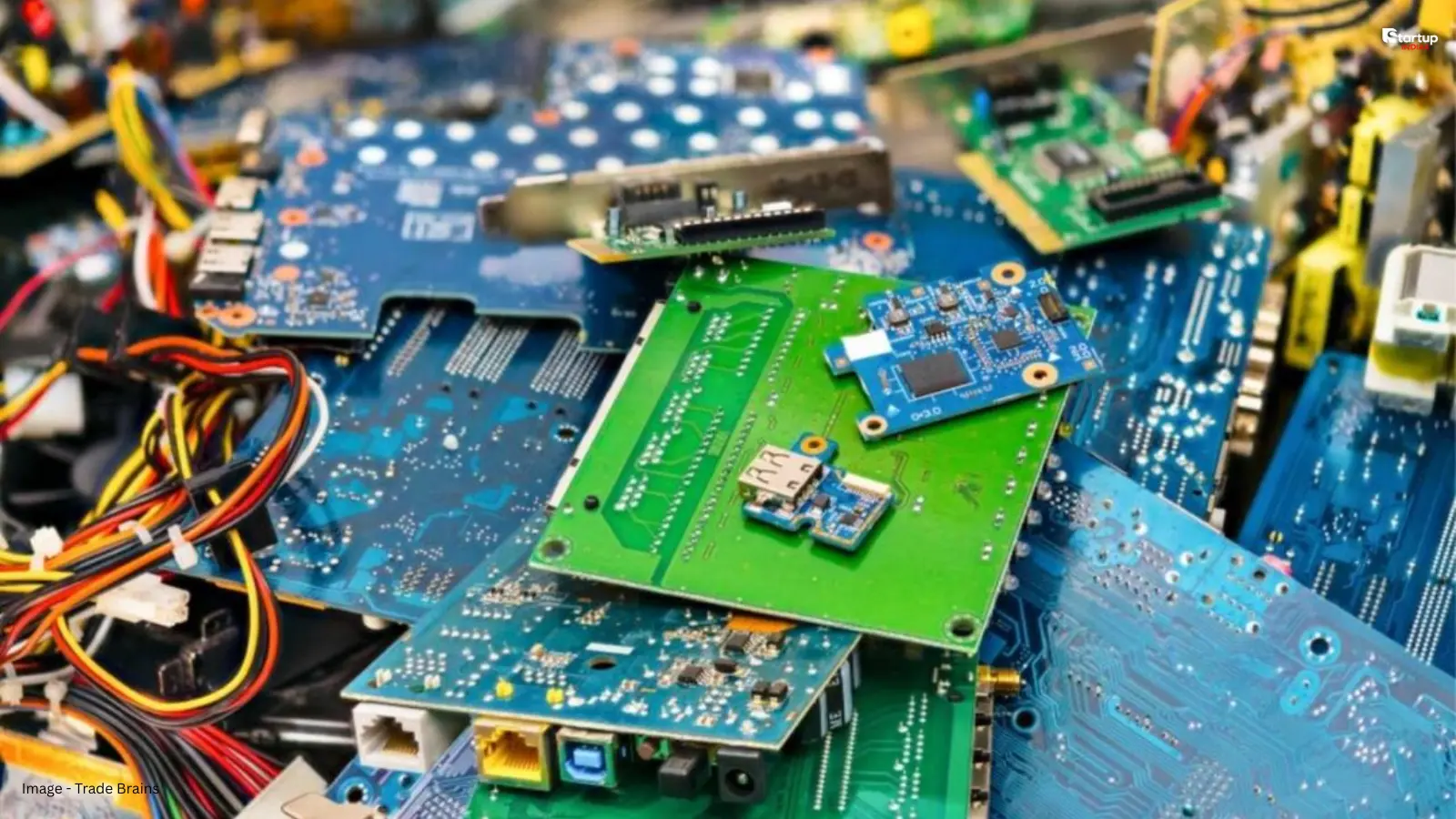
Printed circuit boards are the nervous system of every electronic device. Yet only 35% of India’s PCB requirements are currently met through domestic production, creating vulnerabilities that the pandemic brutally exposed.
The opportunity is massive. The Electronic Industries Association of India projects domestic PCB manufacturing could reach $14 billion by FY2030, contributing nearly 10% to the government’s $150 billion electronics components manufacturing target.
The India PCB industry isn’t just about circuit boards. It’s about building the foundation for India’s $115 billion electronics sector, which grew 23% in FY24 on the back of 1.15 billion mobile phones, expanding EV adoption, and 5G infrastructure rollout.
Read More: Tech Startup Funding: 5 Epic Reasons India’s $4.8B Boom Rules
The Brutal Reality: What’s Holding the India PCB Industry Back?
Limited access to high-end raw materials like copper laminates and photoresists constrains upstream self-sufficiency. This forces manufacturers to import specialty materials, driving costs up by 30-40% compared to Chinese competitors.
The sector faces dependence on imports for high-end PCBs and essential raw materials, focuses mainly on lower-end products limiting value addition, and infrastructure gaps including inadequate large-scale plants and limited R&D capability.
The technology chasm is real. Technological gaps in automation, design software, and surface finish processes hinder high-quality output. While Indian manufacturers excel at basic two-layer boards, producing complex multilayer and HDI boards for flagship smartphones remains out of reach.
The industry faces a shortage of skilled professionals, particularly in advanced PCB technologies, and must compete with established global players from China and Southeast Asia. This talent gap affects everything from design to quality control.
Read More: Indian Startups Showcase AI, Green Tech For UAE Boom
Five Game-Changing Requirements for Import Independence
Building World-Class Manufacturing Infrastructure
Kaynes Technology announced a $570 million investment for Tamil Nadu’s first large-scale PCB plant in August 2025, marking the largest single investment in the India PCB industry. But one plant won’t cut it.
The India PCB industry needs at least 20 more facilities of this scale by 2030 to meet domestic demand and capture export opportunities. Companies must invest in automated optical inspection, X-ray inspection systems, and advanced drilling equipment that can produce boards with trace widths below 50 microns.
Indian manufacturers currently operate plants with 60-70% automation versus 90%+ in China and Taiwan. Closing this gap requires capital investments exceeding $5 billion across the sector.
Creating a Complete Raw Material Ecosystem
The copper-clad laminate bottleneck is strangling growth. Right now, manufacturers import most specialty substrates, adding 15-20 days to production cycles and creating unpredictable costs.
The ECMS has recently approved projects in multi-layer and HDI PCBs, camera module sub-assemblies, laminates, and polypropylene film, with key players like Kaynes Group, Syrma Group, Ascent Circuits, and SRF Limited leading the charge.
Building domestic laminate production could slash PCB costs by 25-30%. Indian chemical giants like Aditya Birla and Reliance could partner with PCB manufacturers to produce FR-4 laminates, high-frequency materials, and flexible substrates locally.
Read More: KLA Corporation Plans Rs 3,000 Crore R&D Hub in Chennai
Developing Technical Talent at Unprecedented Scale
The PCB fabrication process requires high-level precision and expertise, yet there’s a shortage of skilled labor in India, particularly in PCB design, assembly, and testing.
The India PCB industry needs 50,000 additional trained professionals by 2030. IITs and NITs must introduce specialized PCB design courses, while companies like AT&S India and Cipsa Tech need to expand training programs beyond their current facilities.
Raghu Panicker, CEO of Kaynes Semicon, stated that India’s bare board PCB market is on track to touch $24.7 billion by 2033, growing at over 15% CAGR, reflecting robust domestic demand and policy push.
Forming Strategic Technology Partnerships
On September 19, 2024, Karnataka announced India’s first PCB and Supply Chain Cluster in Mysuru to enhance local production and strengthen electronics manufacturing capabilities.
Joint ventures with Korean, Japanese, and Taiwanese PCB leaders could compress India’s learning curve from decades to years. AT&S India demonstrates this model, bringing Austrian expertise to produce HDI boards for smartphones at its Karnataka facility.
The India PCB industry needs similar partnerships in specialized areas like rigid-flex boards, IC substrates, and high-frequency materials for 5G applications.
Ensuring Policy Consistency and Long-Term Vision
On January 20, 2025, the Ministry of Commerce announced the third round of PLI Scheme for White Goods, with 24 companies committing INR 3,516 crore investment to boost production of components including PCBs for ACs and LED Lights.
Jasbir Singh Gujral, Managing Director of Syrma SGS, emphasized that the ecosystem for local production is finally taking shape, and with the PLI, SPECS, and dedicated component clusters, the environment is now ideal for scaling up domestic manufacturing.
But the India PCB industry needs more than three-year schemes. A 10-year PCB Mission with guaranteed incentives, stable duty structures, and R&D funding would give manufacturers confidence for billion-dollar investments.
Read More: Why Top VCs Are Betting Big on Indian Deeptech Startups in 2025
The Roadmap: How India PCB Industry Can Achieve 2030 Goals
The Indian government’s Make in India and Digital India missions, combined with the PLI scheme for electronics manufacturing, are pivotal in expanding PCB production capacity, leading to increased investments, global partnerships, and infrastructure development.
The fundamentals are aligning for the India PCB industry. The country offers 30-40% labor cost advantages over China, a $400 billion domestic electronics market by 2030, and improving manufacturing infrastructure across Maharashtra, Tamil Nadu, and Karnataka.
What the India PCB industry needs now is execution velocity. To compete globally, Indian manufacturers must overcome constraints through increased capital investment, extensive R&D collaboration, reduced PCB import duties, and tighter integration with OEM innovation cycles.
Companies like Dixon Technologies, Kaynes Technology, and Amber Enterprises are pioneering this transformation. Dixon operates PCB facilities in Noida and plans expansion in Tamil Nadu. Kaynes is investing heavily in HDI technology. Amber focuses on multilayer boards for appliances.
But dozens more players need to enter the market. The India PCB industry requires at least 50 mid-to-large scale manufacturers by 2030 to genuinely break import dependency and capture global market share.
The China+1 strategy creates unprecedented opportunities. Global electronics brands actively seek manufacturing alternatives, and India’s combination of scale, talent, and policy support positions it as the natural choice.
What do you think the India PCB industry needs most to break free from import dependency? Will the $570 million Kaynes investment be the turning point, or do we need fundamental policy changes? Share your perspectives in the comments below, and discover more breakthrough stories about India’s manufacturing revolution on Startup INDIAX!
FAQs
What is the India PCB industry and why is it important?
The India PCB industry manufactures printed circuit boards that connect electronic components in devices. It’s critical because India currently imports 88% of bare PCBs despite having a $115 billion electronics sector, creating supply chain vulnerabilities and cost disadvantages.
How big is the India PCB industry in 2025?
The India PCB industry reached $6.3 billion in 2024 and is projected to grow at 15.58% CAGR to $24.7 billion by 2033, driven by smartphone production, electric vehicle adoption, and government manufacturing incentives.
What are the biggest challenges facing India PCB industry?
Major challenges include limited access to high-end raw materials like copper laminates, lack of large-scale fabrication facilities with advanced automation, shortage of skilled professionals, and heavy reliance on imported multilayer and HDI boards.
Which companies are leading the India PCB industry transformation?
Key players include Kaynes Technology (investing $570M in Tamil Nadu), Dixon Technologies, Syrma SGS, AT&S India, Ascent Circuits, Cipsa Tech, and Amber Enterprises, supported by PLI scheme incentives and state government partnerships.
How can India PCB industry reduce import dependency?
By building world-class manufacturing infrastructure, developing domestic raw material supply chains, training 50,000+ skilled professionals, forming strategic technology partnerships with global leaders, and ensuring long-term policy stability beyond three-year schemes.