startupindiax.com
  • Home
  • News
  • Startup
  • Funding
  • Startup Stories
  • Sectors
    • Finance
    • Agritech
    • AI & DeepTech
    • Fintech
    • Green Energy
    • HealthTech
    • EV
    • Digital
    • Automobile
startupindiax.com
SUBSCRIBE
Sunday, January 25, 2026
  • Home
  • News
  • Startup
  • Funding
  • Startup Stories
  • Sectors
    • Finance
    • Agritech
    • AI & DeepTech
    • Fintech
    • Green Energy
    • HealthTech
    • EV
    • Digital
    • Automobile
startupindiax.com
startupindiax.com
  • Home
  • About Us
  • Privacy Policy
  • Contact

@2025 - All Right Reserved.

Curbside Charger Benefits That Will Transform Urban EV Charging Forever - Startup INDIAX
EVAutomobileStartupTechnology

5 Revolutionary Curbside Charger Benefits That Will Transform Urban EV Charging Forever

by Aalam Rohile June 15, 2025
3 min read

Curbside charger technology is revolutionizing how electric vehicles power up in dense urban environments, offering a groundbreaking solution that eliminates the need for bulky charging stations on valuable sidewalk real estate. This innovative approach to EV infrastructure integrates charging capabilities directly into curb infrastructure, addressing the critical space constraints that have long plagued city planners and EV adoption advocates. As urban areas worldwide grapple with the dual challenge of expanding EV charging networks while preserving pedestrian spaces, curbside chargers emerge as the definitive answer to sustainable urban mobility. The technology promises to transform city landscapes by providing accessible, space-efficient charging solutions that seamlessly blend into existing street infrastructure while maintaining full functionality for pedestrians and traffic flow.

Table of Contents

What Makes Curbside Chargers Different from Traditional EV Charging?

Traditional EV charging stations have created significant urban planning headaches. These bulky installations typically require dedicated space on sidewalks, parking lots, or specially designated areas, often conflicting with pedestrian traffic and urban aesthetics. The conventional approach means cities must sacrifice valuable real estate for charging infrastructure, creating bottlenecks in walkways and reducing accessibility for wheelchair users and families with strollers.

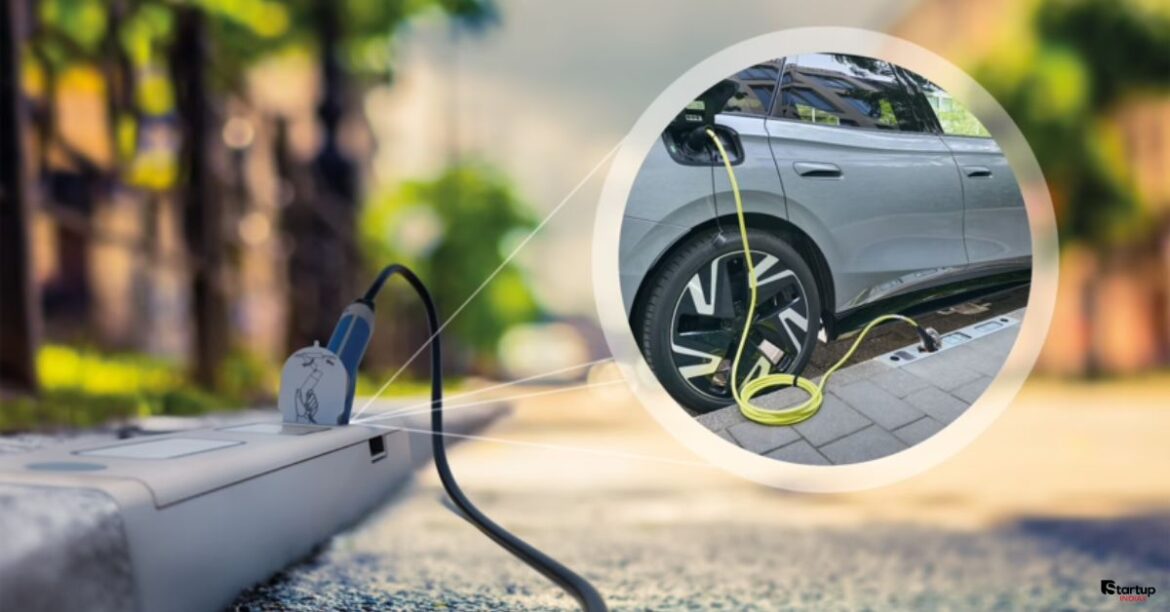
Curbside charger systems flip this paradigm entirely. Instead of adding infrastructure on top of existing urban landscapes, these innovative solutions integrate charging technology directly into the curb itself. Companies like Rheinmetall have developed curb-integrated charging systems that house all electrical components below street level, with only minimal surface indicators visible to users.

This approach represents a fundamental shift from additive infrastructure to integrated solutions. While traditional charging stations announce their presence with tall posts and bulky equipment, curbside chargers maintain the visual continuity of streetscapes while providing the same – or often superior – charging capabilities.

The technology typically involves embedding charging cables and connectors within specially designed curb sections, allowing EV owners to simply park adjacent to the curb and connect their vehicles without navigating around additional street furniture or competing with pedestrians for space.

5 Revolutionary Curbside Charger Benefits

Benefit #1: Zero Sidewalk Space Occupation

The most immediate and visible advantage of curbside charger technology lies in its complete elimination of sidewalk occupation. Traditional charging stations can consume 6-8 square feet of sidewalk space per unit, multiplied across hundreds or thousands of charging points in a single city, this represents enormous amounts of pedestrian territory surrendered to automotive infrastructure.
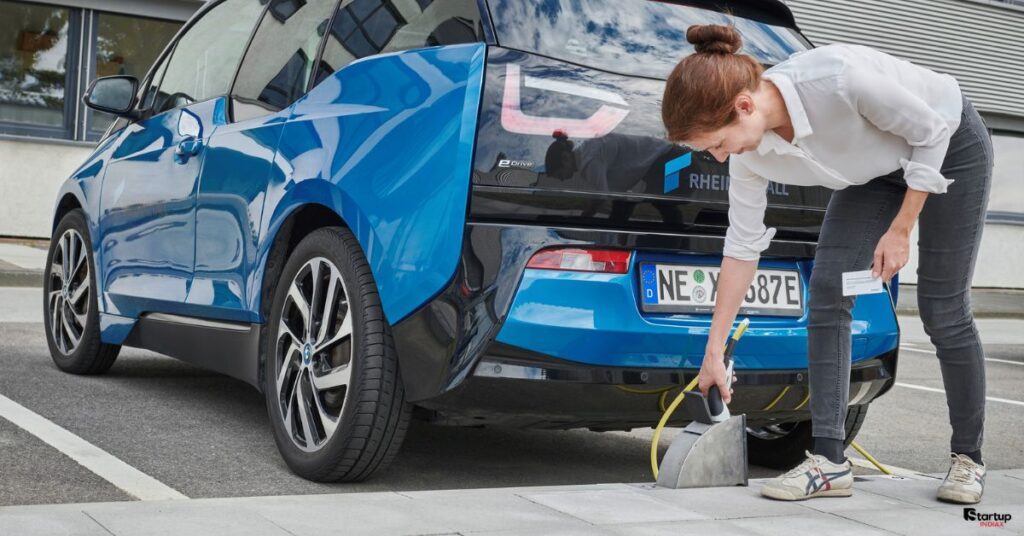
Curbside Charger Benefits That Will Transform Urban EV Charging Forever, Zero Sidewalk Space Occupation

Credit – Rheinmetall – The integrated technology group

Curbside chargers solve this problem by utilizing the vertical space within curb infrastructure itself. The charging components are housed entirely below the sidewalk level, within reinforced curb sections that maintain their structural integrity while accommodating electrical systems. This means pedestrians retain 100% of their sidewalk space while EV infrastructure expands seamlessly.

For cities like New York, London, or Tokyo where every square foot of sidewalk space commands premium value, this benefit translates directly into improved urban livability. Wheelchair accessibility remains uncompromised, parents with strollers don’t need to navigate around charging posts, and the visual clutter that typically accompanies EV infrastructure disappears entirely.

The space efficiency also enables much higher charging point density. Where traditional installations might allow 10-15 charging stations along a city block, curbside charger systems can accommodate 30-40 charging points in the same linear distance, dramatically improving EV charging availability without any sidewalk space sacrifice.

Benefit #2: Seamless Urban Integration

Urban aesthetics matter enormously for city planning and resident satisfaction. Traditional charging stations, regardless of their design quality, introduce foreign elements into streetscapes that have evolved over decades or centuries. These installations often clash with historic architecture, interrupt sight lines, and create visual noise that degrades the pedestrian experience.
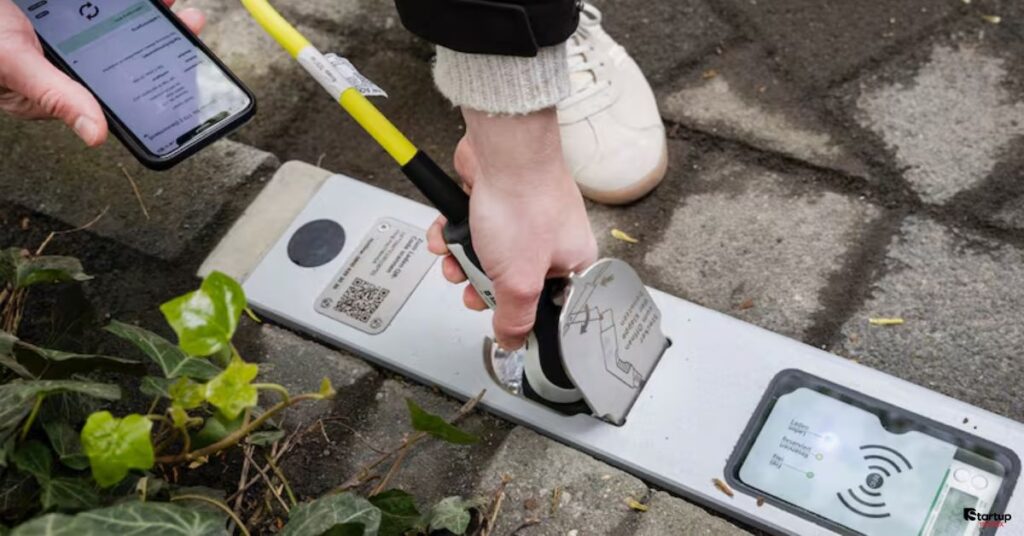
Seamless Urban Integration, Curbside Charger

Credit – Rheinmetall – The integrated technology group

Curbside charger technology addresses these concerns through invisible integration. From street level, the charging infrastructure appears as slightly modified curb sections with discrete access panels or retractable charging cables. The overall streetscape maintains its intended character while gaining advanced technological capabilities.

This seamless integration proves particularly valuable in historic districts, downtown business areas, and residential neighborhoods where community opposition to traditional charging infrastructure has slowed EV adoption. Cities implementing curbside charging report significantly reduced community resistance compared to traditional charging station installations.

The technology also allows for customization to match existing curb materials and designs. Whether a street features granite curbs, concrete barriers, or decorative stonework, curbside charger systems can be engineered to maintain visual consistency while providing full charging functionality.

Smart design features can even enhance urban aesthetics. Some curbside charger implementations include LED indicators that provide subtle lighting for improved nighttime visibility, or integration with smart city systems that coordinate with traffic management and urban data collection.

Benefit #3: Enhanced Pedestrian Safety

Pedestrian safety represents one of the most compelling arguments for curbside charger adoption. Traditional charging stations create numerous safety hazards: protruding posts that pose collision risks, charging cables that cross pedestrian paths, and visual obstructions that hide potential threats or traffic conflicts.

Curbside chargers eliminate these hazards entirely. With charging infrastructure embedded below street level, pedestrians face no protruding obstacles. Charging cables either retract into the curb when not in use or are designed to remain at vehicle level, never crossing pedestrian pathways.

The safety benefits extend beyond physical obstacles. Traditional charging stations can create blind spots where criminal activity might occur unobserved. The open sight lines maintained by curbside charger systems improve natural surveillance and reduce opportunities for street crime.

Emergency vehicle access also improves with curbside charging systems. Ambulances, fire trucks, and police vehicles can navigate streets without worrying about protruding charging equipment. In emergency situations, every second counts, and the unobstructed access provided by curbside chargers could literally save lives.

For vulnerable populations – elderly residents, individuals with mobility impairments, or families with young children – the elimination of sidewalk obstacles represents a significant quality of life improvement. Cities implementing curbside charging often report improved ADA compliance and increased pedestrian satisfaction scores.

Benefit #4: Cost-Effective Infrastructure Deployment

The economics of curbside charger deployment offer compelling advantages over traditional charging infrastructure. While the initial technology development costs may be higher, the total cost of ownership and deployment proves significantly more favorable for cities and charging network operators.

Traditional charging stations require dedicated electrical service, individual pedestals or mounting systems, and often significant site preparation including concrete pads and electrical trenching. Each installation point represents a separate construction project with associated permits, labor, and materials costs.

Curbside charger systems leverage existing curb infrastructure and can be deployed as integrated projects during routine street maintenance or reconstruction. This timing alignment dramatically reduces installation costs by combining projects and utilizing crews already working on street improvements.

The reduced vandalism and maintenance costs also contribute to long-term economic benefits. Traditional charging stations, with their exposed equipment and accessible components, face ongoing challenges with vandalism, weather damage, and accidental impacts from vehicles or maintenance equipment. Curbside chargers, with their protected below-ground components, demonstrate superior durability and lower maintenance requirements.

Startup INIDAX analysis suggests that cities can achieve 40-60% lower total cost of ownership with curbside charging systems compared to traditional installations, particularly when deployment is coordinated with planned infrastructure improvements.

Benefit #5: Future-Ready Smart City Compatibility

Modern cities increasingly embrace smart city technologies that integrate data collection, traffic management, environmental monitoring, and citizen services into coordinated systems. Curbside charger infrastructure provides an ideal platform for these integrated capabilities.

The below-ground installation space can accommodate multiple smart city sensors and communication equipment beyond just EV charging capabilities. These systems can monitor air quality, collect traffic data, provide public Wi-Fi access points, and integrate with emergency communication networks.

Advanced curbside charger systems can communicate with vehicle navigation systems to provide real-time availability data and enable predictive charging network management. This connectivity enables dynamic pricing, load balancing across the electrical grid, and integration with renewable energy sources for optimal sustainability.

The technology also supports future EV innovations including autonomous vehicle charging, where self-driving cars could automatically locate and connect to available curbside charging points without human intervention. This capability becomes essential as transportation evolves toward fully autonomous systems.

Data collected through curbside charging networks provides valuable insights for urban planning, traffic optimization, and energy management. Cities can use this information to make evidence-based decisions about future infrastructure investments and policy development.

Real-World Applications: How Cities Are Adopting Curbside Charging

Cities worldwide are beginning to recognize the transformative potential of curbside charger technology. London has initiated pilot programs in several boroughs, focusing on residential areas where traditional charging infrastructure proved difficult to implement due to space constraints and community opposition.

The pilot results demonstrate impressive adoption rates and user satisfaction scores. Residents report that curbside charging feels more natural and convenient than traditional charging stations, with many noting that they barely notice the infrastructure until they need to use it.

Berlin’s implementation focuses on integration with existing smart city initiatives. The curbside charger network feeds data into the city’s comprehensive urban management system, providing real-time information about energy usage, parking patterns, and neighborhood activity levels.

In North America, several California cities have begun exploring curbside charging as part of their climate action plans. The technology’s ability to dramatically increase charging point density while maintaining pedestrian access makes it particularly attractive for dense urban areas struggling to meet EV infrastructure targets.

Startup INDIAX research indicates that cities implementing curbside charging systems see 70% faster EV adoption rates in neighborhoods with the technology compared to areas relying solely on traditional charging infrastructure.

Technical Specifications: Inside the Curbside Charger Innovation

The engineering behind curbside charger systems represents significant technological advancement. The primary challenge involves integrating electrical components, safety systems, and user interfaces into the confined space within curb infrastructure while maintaining structural integrity and weather resistance.

Most systems utilize modular designs that allow for easy maintenance access and component replacement. The electrical systems are typically rated for submersion and extreme weather conditions, ensuring reliable operation in all climates.

Charging capabilities generally match or exceed traditional Level 2 charging stations, with many systems offering DC fast charging options. The compact design actually enables more efficient electrical layouts, often resulting in faster charging times than comparable traditional installations.

Safety systems include ground fault protection, overcurrent protection, and advanced monitoring systems that can detect and respond to electrical anomalies faster than traditional charging equipment. The below-ground installation provides additional protection from weather, vandalism, and accidental damage.

User interfaces vary by manufacturer but typically involve either retractable charging cables that extend from discrete curb panels or flip-up connectors that provide charging access while maintaining a low profile when not in use.

Market Impact: Industry Response and Investment Trends

The EV charging industry has responded enthusiastically to curbside charger innovations. Major charging network operators are investing heavily in the technology, recognizing its potential to dramatically accelerate urban charging network deployment.

Automotive manufacturers are also taking notice. Several major EV producers have announced partnerships with curbside charging companies to ensure compatibility and optimize integration between vehicles and charging infrastructure.

Investment trends show significant venture capital and government funding flowing toward curbside charging startups and established companies developing these technologies. The market potential for urban EV charging solutions has attracted attention from major infrastructure investment funds and government agencies focused on clean energy transition.

Industry analysts project that curbside charging could capture 30-40% of the urban EV charging market within the next decade, representing billions of dollars in infrastructure investment and technological development.

Challenges and Solutions in Curbside Charger Implementation

Despite the significant advantages, curbside charger implementation faces several challenges that cities and technology providers are actively addressing.

Installation complexity represents the primary technical challenge. Integrating electrical systems into existing curb infrastructure requires careful engineering to maintain structural integrity while accommodating charging components. Solutions involve modular designs and specialized installation techniques that minimize disruption to existing street infrastructure.

Regulatory approval can be complex, as curbside chargers often fall into gray areas between transportation infrastructure, electrical utilities, and public safety regulations. Cities are developing new regulatory frameworks specifically designed to accommodate this technology while maintaining safety standards.

Coordination with utility companies requires careful planning to ensure adequate electrical supply and grid integration. Many implementations involve partnerships between cities, charging companies, and utilities to develop comprehensive deployment strategies.

Public education remains important, as many residents and visitors may not immediately recognize or understand how to use curbside charging systems. Clear signage, mobile app integration, and public awareness campaigns help address these concerns.

Future Outlook: What’s Next for Urban EV Infrastructure

The future of urban EV infrastructure increasingly points toward integrated, space-efficient solutions like curbside chargers. As cities worldwide commit to carbon neutrality goals and EV adoption accelerates, the demand for innovative charging solutions will only intensify.

Technological advances continue to improve curbside charger capabilities. Wireless charging integration could eliminate the need for physical connectors entirely, further streamlining the user experience and reducing maintenance requirements.

Integration with autonomous vehicle systems represents a significant opportunity. Self-driving cars could automatically locate and utilize curbside charging without human intervention, enabling new models of shared mobility and reducing the total number of vehicles needed in urban areas.

Smart grid integration will enable curbside chargers to participate in energy storage and distribution systems, potentially storing renewable energy during peak production periods and feeding it back to the grid during high demand periods.

Startup INDIAX predicts that within 15 years, curbside charging will become the dominant form of urban EV infrastructure, with traditional charging stations relegated primarily to highway and suburban applications.

Conclusion: Why Curbside Chargers Are the Future

Curbside charger technology represents more than just an incremental improvement in EV infrastructure – it’s a fundamental reimagining of how cities can integrate sustainable transportation technology without sacrificing urban livability. The five revolutionary benefits we’ve explored – zero sidewalk space occupation, seamless urban integration, enhanced pedestrian safety, cost-effective deployment, and smart city compatibility – collectively address the most significant challenges facing urban EV adoption.

As cities worldwide grapple with climate change, air quality concerns, and the need for sustainable transportation solutions, curbside chargers offer a path forward that doesn’t require choosing between environmental progress and urban quality of life. The technology enables massive expansion of EV charging capabilities while actually improving pedestrian experiences and urban aesthetics.

The early adoption by forward-thinking cities and the strong industry investment trends suggest that curbside charging will rapidly evolve from innovative pilot projects to standard urban infrastructure. For city planners, policymakers, and citizens concerned about sustainable urban development, curbside chargers represent the future of urban mobility infrastructure – invisible when not needed, seamlessly available when required, and constantly working to create more livable, sustainable cities.

The transformation is already beginning. Cities that embrace curbside charger technology today will find themselves better positioned for the electric vehicle future that’s rapidly approaching, while those that delay may struggle to catch up as EV adoption accelerates and urban space becomes increasingly precious.

June 15, 2025 0 comments 279 views
FacebookTwitterLinkedinWhatsapp
Kirti Ganorkar: Why Sun Pharma Names Him as Managing Director Could Be a Game Changer, Startup INDIAX
NewsFinance

Kirti Ganorkar: Why Sun Pharma Names Him as Managing Director Could Be a Game Changer

by Aalam Rohile June 14, 2025
3 min read

Kirti Ganorkar, Sun Pharma names Kirti Ganorkar as managing director in a landmark leadership transition that underscores the company’s commitment to continuity, strategic growth, and nurturing in-house talent. Effective from September 1, 2025, Ganorkar will oversee all business operations, succeeding founder Dilip Shanghvi, who will continue as Executive Chairman and focus on strengthening Sun Pharma’s specialty portfolio and long-term vision. This move, widely seen as a positive, forward-looking step, reflects Sun Pharma’s robust succession planning and confidence in Ganorkar’s leadership garnering attention from investors, analysts, and the pharmaceutical industry. Related keywords include Sun Pharma leadership change, Kirti Ganorkar managing director, Sun Pharma succession planning, and Sun Pharma India business growth.

Table of Contents

  • 1. Introduction
  • 2. Who is Kirti Ganorkar?
  • 3. Sun Pharma Names Kirti Ganorkar as Managing Director: The Announcement
  • 4. The Leadership Transition: What Changes at Sun Pharma?
  • 5. Kirti Ganorkar’s Track Record and Achievements
  • 6. Impact on Sun Pharma’s Strategy and Growth
  • 7. What This Means for Sun Pharma’s Specialty Portfolio
  • 8. Other Key Leadership Changes
  • 9. What’s Next for Sun Pharma and Kirti Ganorkar?
  • 10. Conclusion

1. Introduction

When a company as large and influential as Sun Pharma India’s biggest drugmaker by revenue—announces a new managing director, the industry sits up and takes notice. The recent news that Kirti Ganorkar, Sun Pharma names Kirti Ganorkar as managing director has sent ripples through the pharmaceutical sector, sparking discussions about leadership, strategy, and the future of one of India’s most valuable companies. This move is not just about a change at the top; it’s about signaling stability, trust, and a vision for sustained growth.

At Startup INDIAX, we’ve seen how leadership transitions can make or break a company’s trajectory. With over 15 years of experience covering tech and startup news, we bring you an in-depth look at what this appointment means for Sun Pharma, its stakeholders, and the broader Indian pharmaceutical landscape.

2. Who is Kirti Ganorkar?

Let’s start with the man of the hour. Kirti Ganorkar is a veteran insider at Sun Pharma, having joined the company way back in 1996. With a strong foundation as a chemical engineer and an MBA, Ganorkar has worn many hats over the years, from marketing and business development to mergers and acquisitions, project management, and even intellectual property and litigation.

Kirti Ganorkar: Why Sun Pharma Names Him as Managing Director Could Be a Game Changer, Startup INDIAX

Since June 2019, Ganorkar has led Sun Pharma’s India business, a period marked by consistent growth and an increase in market share. His leadership style is described as hands-on, strategic, and deeply aligned with Sun Pharma’s core values. He’s also played a pivotal role in the company’s foray into specialty pharmaceuticals, including securing rights for innovative products like Ilumya, and has been instrumental in Sun Pharma’s expansion into Japan and Europe.

3. Sun Pharma Names Kirti Ganorkar as Managing Director: The Announcement

The official announcement came on June 13, 2025. Kirti Ganorkar, Sun Pharma names Kirti Ganorkar as managing director, effective September 1, 2025. This appointment is subject to shareholder approval at the upcoming annual general meeting, which is scheduled for July 31.

Dilip Shanghvi, the current Chairman and Managing Director, will transition to the role of Executive Chairman. This means Shanghvi will continue to chair the board and focus on strengthening Sun Pharma’s specialty portfolio and long-term strategy, while Ganorkar takes over the day-to-day operations and overall business management.

4. The Leadership Transition: What Changes at Sun Pharma?

Leadership transitions are always a delicate moment for any organization. In Sun Pharma’s case, this change is the result of a carefully planned succession strategy. The company has emphasized its commitment to leadership continuity and good governance, ensuring that the transition is smooth and that the core values of the organization remain intact.

Under Ganorkar, all business and functions will report directly to him. This includes not just the India business, which he already leads, but also global operations. The move is designed to streamline decision-making and position Sun Pharma for its next phase of growth.

5. Kirti Ganorkar’s Track Record and Achievements

Ganorkar’s journey at Sun Pharma is nothing short of impressive. Here are some highlights:

  • India Business Leadership: Since 2019, Ganorkar has led Sun Pharma’s India business, overseeing consistent growth and market share expansion.
  • Specialty Pharmaceuticals: He played a key role in driving Sun Pharma’s foray into specialty drugs, including securing rights for innovative products like Ilumya.
  • Global Expansion: Ganorkar led Sun Pharma’s entry into Japan and laid the groundwork for expansion into Europe. He also supported the US business by stewarding several notable generic projects from concept to commercialization.
  • Diverse Leadership Roles: Over his nearly three-decade tenure, Ganorkar has held various leadership roles across business development, marketing, M&A, new product introduction, project management, IP, and litigation

6. Impact on Sun Pharma’s Strategy and Growth

The appointment of Kirti Ganorkar as managing director is expected to have a significant impact on Sun Pharma’s strategy and growth trajectory. With Ganorkar at the helm, the company is likely to double down on its strengths in the India market while continuing to expand globally.

Ganorkar himself has stated that Sun Pharma is at an “exciting juncture,” with all its businesses well-positioned for growth. He credits the strong foundation laid by Dilip Shanghvi and the support of the global leadership team for the company’s continued success.

For investors and analysts, this transition is a positive signal. It shows that Sun Pharma is capable of nurturing and promoting in-house talent, ensuring continuity and stability at the top.

7. What This Means for Sun Pharma’s Specialty Portfolio

One of the key areas of focus for Dilip Shanghvi in his new role as Executive Chairman will be strengthening Sun Pharma’s specialty portfolio. This is becoming increasingly vital to the company’s overall operations, especially as the global pharmaceutical landscape becomes more competitive.

Ganorkar’s experience in specialty pharmaceuticals and innovative product launches positions him well to support this strategy. His track record in securing rights for products like Ilumya and driving the company’s entry into new markets will be invaluable as Sun Pharma seeks to grow its specialty business.

8. Other Key Leadership Changes

The announcement about Kirti Ganorkar, Sun Pharma names Kirti Ganorkar as managing director was accompanied by other significant leadership changes:

  • Abhay Gandhi, President and CEO of Sun Pharma’s North America division, has decided to leave the company after a 30-year tenure.
  • Richard Ascroft will take over as CEO of North America, reporting to Aalok Shanghvi, who is now responsible for the North America business in addition to his role as Whole-time Director and COO.

These changes further underscore Sun Pharma’s commitment to a robust leadership pipeline and strategic governance.

9. What’s Next for Sun Pharma and Kirti Ganorkar?

As Ganorkar prepares to take over as managing director, the eyes of the industry are on Sun Pharma. The company is expected to continue its growth trajectory, both in India and globally, with a renewed focus on specialty pharmaceuticals and innovation.

Ganorkar’s leadership will be tested as he navigates the challenges of a rapidly evolving pharmaceutical market. However, his deep understanding of the company, its culture, and its strategic priorities positions him well for success.

At Startup INDIAX, we believe that this leadership transition is a positive development for Sun Pharma and the broader Indian pharmaceutical sector. It demonstrates the company’s ability to adapt, innovate, and lead from within.

10. Conclusion

The appointment of Kirti Ganorkar as managing director marks a new chapter for Sun Pharma. It’s a testament to the company’s strong internal leadership pipeline and its commitment to continuity, growth, and innovation. With Ganorkar at the helm and Shanghvi continuing to guide the company’s long-term strategy, Sun Pharma is well-positioned to maintain its leadership position in India and expand its global footprint.

This transition is not just about a change in leadership; it’s about signaling confidence, stability, and a vision for the future. For investors, employees, and industry watchers, it’s a reason to be optimistic about what’s next for Sun Pharma.

June 14, 2025 1 comment 555 views
FacebookTwitterLinkedinWhatsapp
iPhone 17 Pro Max Leaks: 7 Exciting Upgrades to Watch for in 2025, Next-Level Performance with A19 Pro Chip, Startup INDIAX
TechnologyNews

iPhone 17 Pro Max Leaks: 7 Exciting Upgrades to Watch for in 2025

by Aalam Rohile June 14, 2025
3 min read

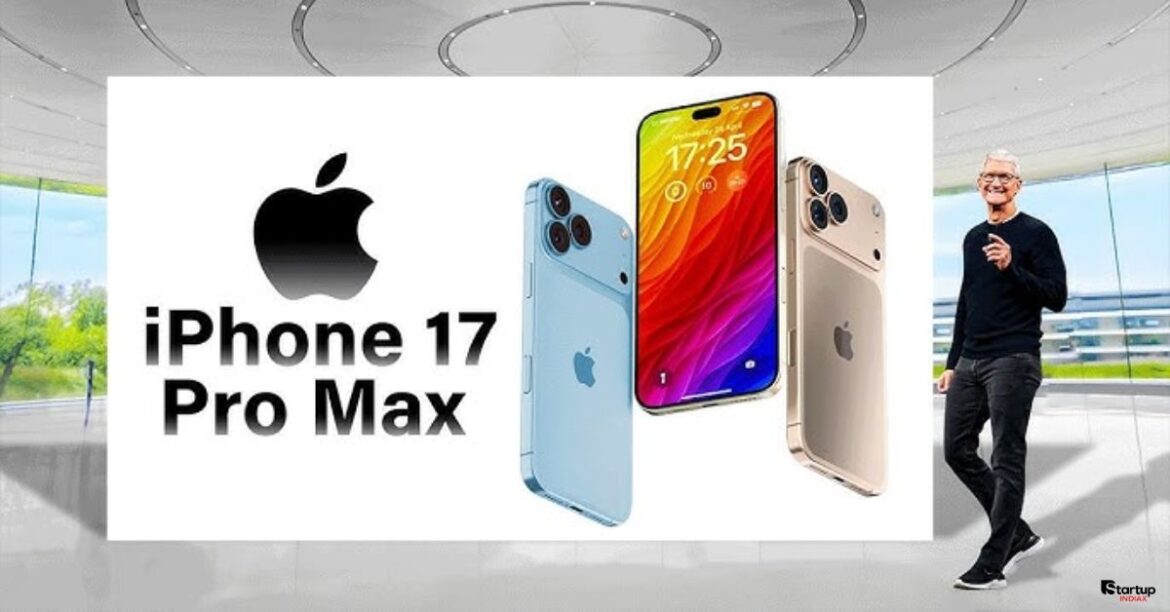
iPhone 17 Pro Max leaks are stealing the spotlight as Apple gears up for its September 2025 launch. From a sleek redesign to jaw-dropping camera upgrades, the iPhone 17 Pro Max promises to be a game-changer. At Startup INDIAX, we’ve sifted through the latest rumors to bring you seven exciting upgrades to expect. This article dives into the leaked specs, design changes, and pricing details, all while keeping you hooked with what’s next for Apple’s flagship. Whether you’re an iPhone fan or a tech enthusiast, these iPhone 17 Pro Max leaks will get you pumped for 2025.

Table of Contents

Introduction: Why iPhone 17 Pro Max Leaks Are Creating Buzz

Hey there, tech lovers! If you’re as obsessed with Apple’s next big thing as we are at Startup INDIAX, you’re probably buzzing about the iPhone 17 Pro Max leaks. With Apple’s September 2025 launch just months away, the rumor mill is churning out some seriously exciting details. From a bold new design to a camera system that could redefine smartphone photography, the iPhone 17 Pro Max is shaping up to be a showstopper. Plus, whispers of a price hike and cutting-edge tech like the A19 Pro chip have everyone talking. So, what’s the hype all about? Let’s break down seven upgrades that make the iPhone 17 Pro Max leaks worth your attention.

A Stunning New Design Overhaul

First up, let’s talk about the look and feel of the iPhone 17 Pro Max. According to leaks, Apple is ditching the titanium frame for a lighter aluminum one, paired with a glass-aluminum back for wireless charging. This shift could make the phone feel premium yet slightly lighter in your hand. Posts on X also suggest a larger, rectangular camera bar spanning the phone’s width, giving it a bold, modern vibe.

The iPhone 17 Pro Max leaks also hint at a thicker profile—possibly 8.725mm compared to the iPhone 16 Pro Max’s 8.25mm—to house a bigger battery or advanced cooling system. And if that wasn’t enough, a new anti-reflective coating tougher than Ceramic Shield might make scratches a thing of the past. Imagine a phone that looks sleek and stays pristine—Apple’s clearly aiming to impress.

Camera Upgrades That Redefine Photography

Apple’s cameras are already top-notch, but the iPhone 17 Pro Max leaks suggest they’re about to get even better. The big news? A triple 48MP camera setup—wide, ultra-wide, and telephoto—could be in the works, a major leap from the 12MP telephoto lens on the iPhone 16 Pro Max. This means sharper zoomed-in shots and possibly 8K video recording for cinematic-quality footage.

Selfie lovers, rejoice! Leaks point to a 24MP front camera, doubling the resolution of the current 12MP sensor. Whether you’re snapping selfies or video-calling, expect crisper, more detailed images. Plus, a redesigned camera island with a LiDAR scanner and LED flash adds a futuristic touch. For photography buffs, these iPhone 17 Pro Max leaks scream “upgrade time.”

Next-Level Performance with A19 Pro Chip

Performance is where the iPhone 17 Pro Max could really shine. The iPhone 17 Pro Max leaks reveal an A19 Pro chip built on an improved 3nm process, delivering blazing-fast speeds. Geekbench scores shared by tipsters show single-core performance exceeding 4,000 points and multi-core surpassing 10,000, rivaling top Android flagships.

iPhone 17 Pro Max Leaks: 7 Exciting Upgrades to Watch for in 2025, Next-Level Performance with A19 Pro Chip, Startup INDIAX

Paired with 12GB of RAM (up from 8GB in the iPhone 16 Pro), this beast can handle heavy multitasking, gaming, and Apple Intelligence features with ease. Whether you’re editing 8K videos or running demanding apps, the iPhone 17 Pro Max is poised to be a powerhouse. At Startup INDIAX, we’re stoked to see how this chip pushes smartphone performance to new heights.

Enhanced Display Technology for a Smoother Experience

The iPhone 17 Pro Max’s display is another area getting a major glow-up. Leaks suggest a 6.9-inch OLED display with 120Hz ProMotion technology and enhanced brightness. But here’s the kicker: all iPhone 17 models, including the Pro Max, might adopt metalens technology for the proximity sensor, potentially shrinking the Dynamic Island for a cleaner look.

Rumors also point to Apple’s in-house Wi-Fi 7 chip for faster connectivity and a new anti-reflective coating for better visibility in sunlight. Whether you’re streaming, gaming, or scrolling, this display promises buttery-smooth visuals. The iPhone 17 Pro Max leaks make it clear: Apple’s doubling down on an immersive screen experience.

Battery Life and Cooling Innovations

Battery life is a make-or-break for many, and the iPhone 17 Pro Max leaks don’t disappoint. Apple might pack a larger battery, thanks to the phone’s slightly thicker design. Some speculate a silicon-anode battery could debut, offering longer endurance without adding bulk. Imagine a phone that lasts all day and then some—perfect for power users.

To keep things cool during intense tasks like gaming or video editing, leaks suggest a vapor chamber cooling system. This would prevent overheating, ensuring consistent performance. If these rumors hold true, the iPhone 17 Pro Max could set a new standard for battery life and thermal management in smartphones.

iPhone 17 Pro Max Price Rumors: What to Expect

Now, let’s address the elephant in the room: price. The iPhone 17 Pro Max leaks hint at a possible price hike, driven by rising production costs and potential U.S. tariffs. In India, the starting price could hit Rs 1,54,999, up from Rs 1,44,900 for the iPhone 16 Pro Max. In the U.S., expect a range of $1,299 to $1,399, depending on storage.

While a higher price tag might sting, the upgrades—better cameras, faster chip, and enhanced display—could justify the cost for Apple loyalists. At Startup INDIAX, we advise budgeting early if you’re eyeing the iPhone 17 Pro Max. Stay tuned for official pricing at Apple’s September 2025 event.

Conclusion: Should You Wait for the iPhone 17 Pro Max?

The iPhone 17 Pro Max leaks paint a picture of a smartphone that’s bolder, faster, and more feature-packed than ever. From a redesigned aluminum frame to a triple 48MP camera system, Apple’s flagship is gearing up to dominate 2025. While the rumored price hike might give some pause, the upgrades in performance, display, and battery life make it a tempting choice for tech enthusiasts.

So, should you wait? If you’re rocking an older iPhone or crave cutting-edge tech, the iPhone 17 Pro Max looks like a worthy upgrade. Keep an eye on Startup INDIAX for more updates as we inch closer to Apple’s big reveal. What’s your take on these leaks? Drop a comment below!

FAQs About iPhone 17 Pro Max Leaks

Q: When will the iPhone 17 Pro Max launch?
A: Based on leaks, expect a September 2025 launch, likely between September 11 and 13.

Q: What’s new in the iPhone 17 Pro Max camera?
A: Rumors suggest a triple 48MP rear camera setup and a 24MP front camera for sharper photos and videos.

Q: Will the iPhone 17 Pro Max be more expensive?
A: Yes, leaks point to a price increase, possibly starting at Rs 1,54,999 in India or $1,299 in the U.S.

Q: What chip will power the iPhone 17 Pro Max?
A: The A19 Pro chip, built on a 3nm process, is expected to deliver top-tier performance.

Q: Is the iPhone 17 Pro Max worth the upgrade?
A: With a new design, better cameras, and faster performance, it could be a solid choice for Apple fans.

June 14, 2025 0 comments 286 views
FacebookTwitterLinkedinWhatsapp
LensKart Valuation Surges: Fidelity Increases LensKart Valuation by 21% to $6.1 Billion Ahead of IPO, Startup INDIAX
TechnologyFinanceNewsStartup

LensKart Valuation Surges: Fidelity Increases LensKart Valuation by 21% to $6.1 Billion Ahead of IPO

by Aalam Rohile June 13, 2025
3 min read

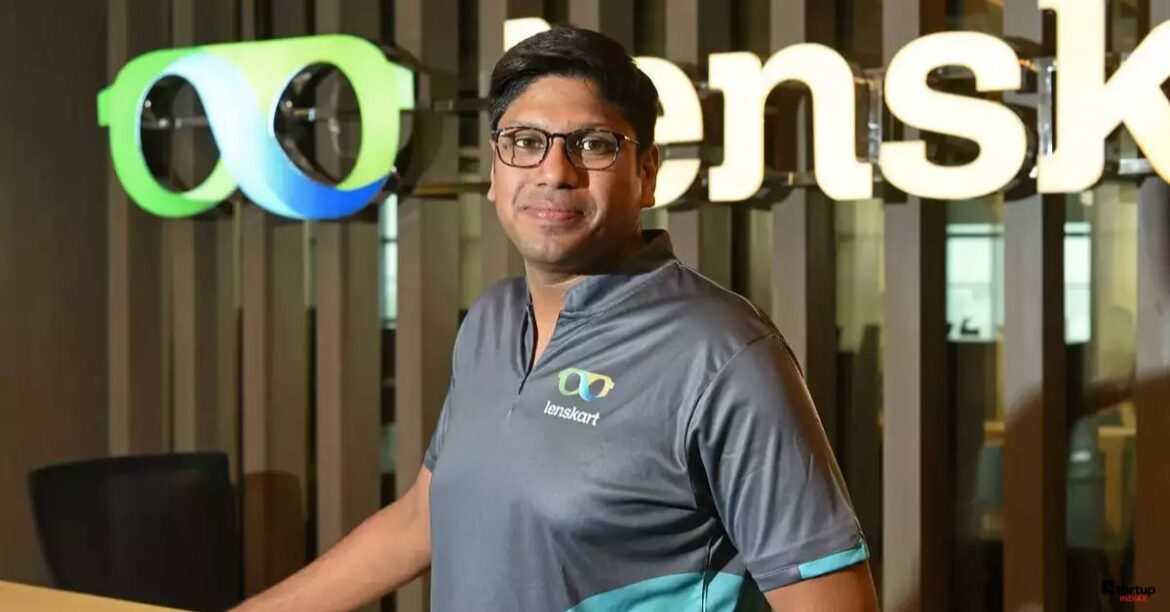
LensKart valuation has surged significantly as Fidelity increases LensKart valuation by 21%, marking a new milestone of $6.1 billion ahead of the company’s much-anticipated IPO. This valuation boost reflects growing investor confidence in LensKart’s business model, operational efficiency, and market potential. Fidelity’s decision to mark up LensKart valuation underscores the startup’s robust financial performance and its dominant position in the Indian eyewear market. In this article, brought to you by Startup INDIAX, we will explore the details behind this valuation increase, LensKart’s growth trajectory, and what this means for investors and the broader Indian startup ecosystem.

Table of Contents

Fidelity Increases LensKart Valuation: What Does the 21% Surge Mean?

Fidelity’s recent valuation increase of LensKart by 21% is a strong vote of confidence from one of the world’s leading investment firms. The $6.1 billion valuation not only highlights LensKart’s impressive growth but also positions it as one of the most valuable startups gearing up for an IPO in India. This increase reflects several factors:

      • Strong revenue growth and improving profitability.

      • Expansion in product offerings and geographic reach.

      • Enhanced customer acquisition and retention strategies.

      • Positive market sentiment around the eyewear and health-tech sectors.

    Fidelity’s mark-up of LensKart valuation signals to other investors that the company’s fundamentals are solid, making it an attractive IPO candidate.

    Lenskart’s Journey: From Startup to IPO Contender

    Founded in 2010, LensKart revolutionized the eyewear market in India by combining e-commerce with offline retail stores, offering affordable and fashionable eyewear. Over the years, LensKart has expanded from selling glasses online to becoming a full-service eyewear brand with a strong offline presence across India and international markets.

    Key milestones in LensKart’s journey include:

        • Early funding rounds that helped scale operations.

        • Launch of innovative technologies like 3D try-on and AI-powered eye tests.

        • Strategic acquisitions to expand product range and market share.

        • Building a robust supply chain and manufacturing capabilities.

      This steady growth and innovation have laid the foundation for LensKart’s upcoming IPO, now buoyed by Fidelity’s increased valuation.

      Financial Performance Driving Fidelity’s Valuation Markup

      LensKart’s financials have shown remarkable improvement, which is a critical factor behind Fidelity’s valuation increase:

          • Revenue Growth: LensKart has consistently posted double-digit revenue growth, driven by increased consumer demand and market penetration.

          • Profitability: The company is moving towards profitability, with better cost management and operational efficiencies.

          • Gross Margins: Improved margins due to in-house manufacturing and optimized supply chains.

          • Cash Flow: Positive cash flow from operations indicates sustainable business practices.

        These financial indicators have reassured Fidelity and other investors about LensKart’s long-term viability and growth potential.

        Key Investment Rounds and Stakeholders Behind LensKart’s Growth

        LensKart’s journey to a $6.1 billion valuation has been supported by several key investors, with Fidelity playing a pivotal role in the latest valuation increase. Other major stakeholders include:

            • SoftBank Vision Fund: Early backer with significant investment.

            • TPG Growth: Contributed to scaling operations.

            • Falcon Edge Capital: Participated in recent funding rounds.

            • Chiratae Ventures and others: Supported initial growth phases.

          Fidelity’s increased stake and valuation mark-up signal strong institutional backing, which is crucial for a successful IPO.

          Lenskart’s IPO Plans and Market Expectations

          LensKart is preparing for an IPO that is expected to be one of the largest in the Indian startup ecosystem. The company aims to use the IPO proceeds to:

              • Expand retail and online presence domestically and internationally.

              • Invest in technology and product innovation.

              • Strengthen supply chain and manufacturing capabilities.

              • Pursue strategic acquisitions.

            Market analysts predict strong investor interest given LensKart’s leadership in the eyewear segment and the recent valuation increase by Fidelity, which adds credibility.

            Operational Efficiencies and Profitability Trends

            LensKart’s path to profitability has been accelerated by:

                • In-house manufacturing: Reducing costs and improving quality control.

                • Technology integration: Enhancing customer experience and reducing operational overhead.

                • Omnichannel strategy: Seamlessly blending online and offline sales channels.

                • Inventory management: Optimizing stock levels to reduce wastage.

              These efficiencies have directly contributed to the improved financial metrics that underpin Fidelity’s valuation increase.

              Industry Impact and Competitive Positioning

              LensKart’s valuation surge also reflects its strong competitive positioning in the eyewear industry:

                  • Dominant market share in India’s organized eyewear sector.

                  • First-mover advantage in integrating technology with eyewear retail.

                  • Growing brand recognition and customer loyalty.

                  • Expansion into adjacent markets such as contact lenses and eye care services.

                This leadership not only drives investor confidence but also sets a benchmark for other startups in health-tech and retail sectors.

                What This Means for Investors and the Indian Startup Ecosystem

                Fidelity’s increase in LensKart valuation sends a positive signal to the Indian startup ecosystem:

                    • Validates the growth potential of health-tech and consumer retail startups.

                    • Encourages more institutional investments in Indian IPO-bound startups.

                    • Boosts investor confidence in the Indian capital markets.

                    • Inspires startups to focus on profitability and operational excellence.

                  For investors, LensKart’s $6.1 billion valuation presents an exciting opportunity to participate in a high-growth, tech-enabled consumer brand.

                  Conclusion: The Future Outlook for LensKart Post-Valuation Increase

                  The 21% increase in LensKart valuation by Fidelity marks a significant milestone as the company gears up for its IPO. With strong financials, operational efficiencies, and a dominant market position, LensKart is well-poised to capitalize on the growing demand for eyewear in India and beyond. Fidelity’s confidence adds credibility and momentum to LensKart’s public market debut, making it a startup to watch closely.

                  At Startup INDIAX, we will continue to track LensKart’s IPO journey and provide updates on its market performance and impact on the Indian startup ecosystem.

                  June 13, 2025 0 comments 412 views
                  FacebookTwitterLinkedinWhatsapp
                  Browser Dia vs Chrome & Edge: The Battle of AI Browsers in 2025, Startup INDIAX
                  AINewsTechnology

                  Browser Dia vs Chrome & Edge: The Battle of AI Browsers in 2025

                  by Aalam Rohile June 13, 2025
                  3 min read

                  Summary: Browser Dia emerges as a revolutionary AI-first browser challenging Chrome and Edge’s dominance in 2025, with The Browser Company positioning artificial intelligence at the core of web browsing experience. While Chrome maintains its 66% market share and Edge holds 5.2%, the browser war intensifies as AI-powered alternatives like Dia introduce conversational interfaces and intelligent task automation. This comprehensive analysis explores how browser innovation is reshaping the future of web navigation through intelligent agents and contextual understanding.

                  The Current Browser Landscape: Chrome and Edge Dominance

                  Google Chrome continues its overwhelming dominance in the browser market, accounting for 66.85% of global market share as of May 2025. This represents a slight increase from its previous 65.13% share, demonstrating Chrome’s resilient position despite emerging competition. Safari follows as the second most popular browser with 17.19% market share, while Microsoft Edge holds 5.21% of the market.

                  Chrome’s success stems from its speed, seamless integration with Google services, and widespread adoption across desktop and mobile platforms. The browser has maintained over 60% market share since 2019, making it the undisputed leader in web browsing. Microsoft Edge, despite being the default browser on Windows systems, has grown steadily from 1.5% in 2020 to over 5% in 2025.

                  However, traditional browsers face increasing pressure to innovate beyond their conventional roles. As Startup INDIAX has observed in the evolving tech landscape, user expectations are shifting toward more intelligent, context-aware browsing experiences that can anticipate needs and automate tasks.

                  Browser Dia: The Browser Company’s AI Revolution

                  The Browser Company launched Dia on June 11, 2025, marking a significant departure from traditional browser design by placing artificial intelligence at the center of the browsing experience. Unlike its predecessor Arc, which focused on reimagining tab management and organization, Dia presents a familiar Chrome-like interface enhanced with powerful AI capabilities.

                  CEO Josh Miller explained that Dia represents a fundamental shift in how people interact with browsers, noting that “AI won’t exist as an app or a button—it’ll be an entirely new environment built on top of a web browser”. The browser’s core feature is its integrated chatbot that can observe websites, access logged-in accounts, and assist users in retrieving information and completing tasks.

                  Dia’s development reflects The Browser Company’s recognition that Arc’s innovative design was too complex for mainstream adoption. By adopting horizontal tabs and a more conventional layout, Dia aims to bridge the gap between familiar browsing patterns and cutting-edge AI functionality. The browser is currently available in beta exclusively for existing Arc users on Mac, with plans for broader availability.

                  The Browser Company has raised over $17 million from investors including founders of Instagram, Stripe, Twitter, and other major tech companies, positioning them well to compete in the evolving browser market. Startup INDIAX recognizes this as a significant development in browser innovation, particularly as AI integration becomes increasingly important for user productivity.

                  Key Features Comparison: Traditional vs AI Browsers

                  Chrome’s Traditional Approach

                  Chrome continues to focus on speed, security, and integration with Google’s ecosystem. Recent updates include built-in AI APIs for translation and summarization, along with enhanced security features. The browser maintains its strength in web standards compliance and developer tools.

                  Chrome’s AI integration remains limited compared to dedicated AI browsers, primarily offering AI Overviews in search results and basic assistant functions. While Google has announced AI Mode in Search with more advanced reasoning capabilities, the browser itself hasn’t undergone the fundamental AI transformation seen in Dia.

                  Edge’s AI Integration

                  Microsoft Edge has incorporated Copilot as its primary AI feature, providing users with an AI assistant within the browser. Edge receives regular security updates and maintains compatibility with Chrome extensions while offering enhanced privacy features compared to Chrome.

                  Edge’s approach focuses on incremental AI additions rather than rebuilding the browser around AI-first principles. The browser emphasizes security and productivity features for enterprise users, maintaining its position as a solid alternative to Chrome.

                  Dia’s AI-First Design

                  Dia revolutionizes browser interaction through its comprehensive AI integration. The browser’s omnibox serves triple duty as website navigation, search interface, and AI assistant access point. Users can type website names, search queries, or natural language commands, with the browser intelligently routing requests to appropriate functions.

                  The browser’s “Skills” system enables custom automation through small code snippets that act as shortcuts for various tasks. For example, users can ask Dia to create a reading layout, and it will generate the necessary code automatically. This feature extends the browser’s capabilities beyond traditional browsing into intelligent task automation.

                  Dia’s History feature allows the AI to use seven days of browsing history as context for answering queries, providing more personalized and relevant responses. The browser can analyze multiple tabs simultaneously, synthesize information across different sources, and assist with complex tasks like job interview preparation or project research.

                  According to Startup INDIAX’s analysis of browser innovation trends, Dia’s approach represents a fundamental shift toward browsers as intelligent assistants rather than simple web viewing tools. This transformation aligns with the broader industry movement toward AI-powered productivity applications.

                  Market Position and User Adoption Challenges

                  Despite innovative features, AI browsers face significant adoption challenges in a market dominated by established players. Chrome’s overwhelming 67% market share creates a formidable barrier for new entrants, even those with revolutionary AI capabilities. Edge, Firefox, and other browsers collectively struggle to capture meaningful market share beyond their combined 11.3% portion.

                  Dia and other AI browsers like Opera’s Neon haven’t reached even 1% market share despite their technological innovations. The Browser Company acknowledges this challenge, with CEO Josh Miller noting that Arc’s complexity prevented mainstream adoption, leading to Dia’s more familiar design approach.

                  User adoption barriers include the learning curve associated with AI-powered features, privacy concerns about extensive data collection, and the natural inertia favoring established browsers. Many users remain satisfied with Chrome’s performance and integration with existing Google services, reducing motivation to switch.

                  However, early adopters and power users show enthusiasm for AI browser capabilities. Dia users report saving significant time by eliminating copy-paste operations between ChatGPT and browser tabs, suggesting potential for productivity-focused adoption. Startup INDIAX observes that browser innovation often follows a pattern where early adopters drive initial momentum before broader market acceptance.

                  The Broader AI Browser Movement

                  The AI browser revolution extends beyond Dia, with multiple companies developing intelligent browsing solutions. Perplexity AI is building its own browser called Comet, designed around “agentic search” capabilities that can perform tasks autonomously rather than simply finding information.

                  OpenAI’s Operator demonstrates the potential of AI agents working within browser environments, using a customized Chrome instance to perform tasks on behalf of users. This approach suggests that browser-based AI agents may become the standard for autonomous task completion.

                  Other notable developments include Opera’s Neon browser with AI agents that can build mini-applications, and Browserbase’s infrastructure for running AI-powered headless browsers at scale. These initiatives indicate a broader industry shift toward AI-integrated browsing experiences.

                  According to industry analysis, AI browsers address fundamental limitations of traditional search-and-browse patterns. Instead of requiring users to navigate multiple sites and synthesize information manually, AI browsers can understand context, execute complex queries, and provide consolidated answers.

                  Startup INDIAX recognizes this trend as part of the larger transformation toward AI-augmented productivity tools that reduce cognitive load and automate routine tasks. The success of these browsers will likely depend on their ability to demonstrate clear value propositions over traditional alternatives.

                  Security and Privacy Implications

                  AI browsers introduce new security considerations alongside their advanced capabilities. Dia’s ability to access cookies from every logged-in website creates powerful functionality but also represents a significant security risk if compromised. The Browser Company addresses these concerns by encrypting user data and storing it locally, with server processing limited to milliseconds before deletion.

                  Chrome faces ongoing privacy criticism for its extensive data collection practices and integration with Google’s advertising ecosystem. The browser collects browsing history, search queries, and user behavior data to serve targeted advertisements, raising concerns among privacy-conscious users.

                  Recent security vulnerabilities in Chrome have prompted warnings from cybersecurity organizations, with hackers potentially gaining unauthorized access to sensitive user data including passwords and banking information. These issues highlight the importance of regular security updates and user vigilance.

                  Privacy-focused alternatives like Brave, Tor Browser, and LibreWolf score significantly higher on privacy tests compared to mainstream browsers. However, these options often sacrifice convenience and integration features that make Chrome and Edge popular.

                  AI browsers must balance functionality with privacy protection, particularly as they collect more contextual data about user behavior. Startup INDIAX emphasizes that browser security will become increasingly critical as AI features expand and browsers gain access to more sensitive user information.

                  Performance and User Experience Analysis

                  Browser performance remains a critical factor in user adoption, with speed and efficiency directly impacting productivity. Chrome maintains its reputation for fast loading times and efficient resource management, though it faces criticism for high memory usage with multiple tabs.

                  Microsoft Edge demonstrates competitive performance, scoring 27% faster than Chrome on certain JavaScript benchmarks while maintaining lower resource consumption. Edge’s focus on enterprise security and productivity features appeals to business users seeking alternatives to Chrome.

                  Dia’s performance profile differs from traditional browsers due to its AI processing requirements. The browser requires significant computational resources for AI analysis and response generation, potentially impacting battery life on mobile devices. However, users report that the productivity gains from AI assistance often offset the additional resource usage.

                  The shift toward AI-powered browsing represents a fundamental change in how users interact with web content. Rather than manually searching and synthesizing information, AI browsers enable natural language queries and automated task completion. This transformation aligns with broader trends toward conversational interfaces and intelligent automation.

                  Startup INDIAX observes that browser evolution reflects changing user expectations in the AI era, where software should anticipate needs and provide proactive assistance rather than simply responding to commands.

                  Future Outlook: Will AI Browsers Disrupt the Market?

                  The browser market stands at a potential inflection point as AI technology matures and user expectations evolve. While Chrome’s dominance appears secure in the short term, longer-term disruption remains possible if AI browsers demonstrate compelling advantages.

                  Industry trends suggest that AI integration will become standard across all browsers rather than remaining exclusive to new entrants. Google is actively developing AI features for Chrome, while Microsoft continues enhancing Edge’s Copilot integration. This evolution may reduce the competitive advantage of dedicated AI browsers like Dia.

                  However, browsers built from the ground up with AI principles may maintain architectural advantages over retrofitted solutions. Dia’s ability to understand context across tabs and execute complex tasks demonstrates capabilities that may be difficult to replicate in traditional browser frameworks.

                  The success of AI browsers will likely depend on their ability to solve real user problems rather than simply showcasing impressive technology. Early indicators suggest that productivity-focused users find value in AI assistance, but broader adoption requires demonstrating clear benefits over familiar alternatives.

                  Market dynamics may also shift as AI companies like OpenAI and Perplexity potentially acquire existing browsers or develop their own platforms. These developments could accelerate AI browser adoption by leveraging established user bases and technical infrastructure.

                  Startup INDIAX predicts that the browser market will likely evolve toward hybrid solutions combining traditional browsing efficiency with intelligent assistance features, rather than complete replacement of established platforms. The ultimate winners will be browsers that successfully balance innovation with user familiarity, security, and performance.

                  June 13, 2025 0 comments 512 views
                  FacebookTwitterLinkedinWhatsapp
                  Krutrim
                  AINewsStartupTechnology

                  Krutrim’s Bold Leap: Unveiling Its Agentic AI Assistant Kruti in 2025

                  by Ismail Patel June 13, 2025
                  3 min read

                  Krutrim Launches Its Agentic AI Assistant Kruti with a promise to redefine how Indians interact with technology. This conversational AI, backed by Ola’s AI unicorn Krutrim, aims to go beyond traditional chatbots by proactively handling tasks like booking cabs, ordering food, and making payments. In this article, Startup INDIAX explores Kruti’s features, the technology powering it, and its potential to shape India’s AI landscape. From its multimodal capabilities to the challenges it faces, we dive deep into why this launch is a big deal for Indian startups and users alike.

                  Table of Contents

                  • Introduction: Krutrim’s Big Bet on Agentic AI
                  • What Is Kruti? Understanding Krutrim’s Agentic AI Assistant
                  • Key Features of Kruti: How It Stands Out
                  • The Technology Behind Kruti: Krutrim’s AI Innovation
                  • Why Krutrim’s Launch Matters for India’s AI Ecosystem
                  • Challenges Ahead: Can Kruti Live Up to the Hype?
                  • Krutrim’s Vision: Building an AI-First Future
                  • What Users Are Saying About Kruti
                  • Conclusion: Is Kruti the Future of AI Assistants in India?

                  Introduction: Krutrim’s Big Bet on Agentic AI

                  Imagine telling your phone, “Book me a cab to the airport,” and it just happens—no apps, no hassle. That’s the dream Krutrim is chasing with Kruti, its shiny new agentic AI assistant launched on June 12, 2025. Unlike your average chatbot that just answers questions, Kruti is designed to act on your behalf, making life simpler in a country where juggling multiple apps is a daily grind. At Startup INDIAX, we’re excited to unpack this launch because it’s not just about one product—it’s about India’s growing muscle in the global AI race. Let’s dive into what makes Kruti tick and whether it’s ready to live up to the hype.

                  What Is Kruti? Understanding Krutrim’s Agentic AI Assistant

                  So, what exactly is Kruti? In simple terms, it’s an AI assistant that doesn’t just talk—it does. Krutrim, founded by Ola’s Bhavish Aggarwal, calls it an “agentic” AI, meaning it can understand your intent and execute tasks autonomously. Need lunch ordered? Kruti can handle it. Want to pay a bill? It’s on it. Launched in beta in 2023, Krutrim has now rolled out Kruti as a full-fledged assistant, available in over 11 Indian languages, with a focus on local context.

                  This isn’t your typical Siri or Alexa clone. Kruti aims to eliminate “app-switch fatigue” by integrating with services like cab booking (Ola, anyone?) and food delivery platforms. It’s multimodal, meaning it can process text, voice, images, and even files to give you tailored responses. For example, you could snap a picture of a menu and ask Kruti to order your favorite dish. Cool, right?

                  The countdown to intelligence begins! ⚡
                  Kruti is ready to redefine what AI means for India.
                  June 12, 2025 | 3 PM
                  Tune in to the live event here: https://t.co/0RnjYr6Y8B pic.twitter.com/MD6eYq6XtK

                  — कृत्रिम (@Krutrim) June 11, 2025

                  Key Features of Kruti: How It Stands Out

                  Kruti’s launch has got people talking, and for good reason. Here’s what makes it special:

                  • Task Automation: From booking cabs to paying bills, Kruti can handle everyday chores with simple voice or text commands.
                  • Multimodal Magic: It processes text, voice, images, and files, making it versatile for Indian users who love WhatsApp-style communication.
                  • Local Flavor: Available in 11+ Indian languages, Kruti understands cultural nuances, which is a big win for non-English speakers.
                  • Free Tools: Krutrim’s offering research tools, image generation, and action agents at no cost, making it accessible to all.
                  • Developer-Friendly: With an embeddable SDK, developers can integrate Kruti into third-party apps, opening doors for innovation.

                  At Startup INIDAX, we think these features show Krutrim’s ambition to create an AI that’s not just smart but also practical for India’s diverse needs.

                  The Technology Behind Kruti: Krutrim’s AI Innovation

                  What’s under Kruti’s hood? Krutrim’s latest large language model, Krutrim V2, powers this assistant, blended with open-source systems for cost-efficient performance. This tech stack allows Kruti to scale while keeping things affordable—a must for a price-sensitive market like India. Krutrim’s also investing in homegrown AI infrastructure, including custom chips like Bodhi and Sarv, set to debut by 2026.

                  The assistant’s ability to format responses in summaries, tables, or even stories is a nod to how Indians consume info—clear, concise, and engaging. Plus, its research mode and image generation capabilities make it a handy tool for students, professionals, and creators. But it’s not perfect. Kruti’s integrations are currently limited to a few partners, which might slow its adoption.

                  Why Krutrim’s Launch Matters for India’s AI Ecosystem

                  Krutrim’s launch of Kruti isn’t just a product drop—it’s a statement. India’s AI scene is heating up, and Krutrim, one of the country’s first AI unicorns, is leading the charge. With over ₹2,000 crore invested and plans for ₹10,000 crore more, Krutrim’s betting big on building a full AI stack, from models to chips.

                  For Indian startups, Kruti’s developer SDK could spark a wave of AI-powered apps, much like how UPI fueled fintech innovation. At Startup INDIAX, we see this as a chance for India to reduce reliance on global tech giants like Google or Amazon. Plus, Kruti’s focus on Indian languages aligns with the government’s IndiaAI Mission, which Krutrim has applied to join. If successful, Kruti could put India on the global AI map.

                  Challenges Ahead: Can Kruti Live Up to the Hype?

                  Let’s be real—Kruti’s launch isn’t all roses. Krutrim’s earlier app saw just 14,000 downloads, hinting at adoption struggles. Users might hesitate to trust an AI with tasks like payments, especially in a market where scams are a concern. And while Kruti’s free tools are great, monetization is murky—will it rely on transaction fees or premium plans?

                  Then there’s the competition. Global players like Alexa and Google Assistant have deep pockets and wider integrations. Krutrim needs to nail execution to stand out. Recent controversies, like allegations of a toxic work culture at Krutrim, also cast a shadow. Still, Bhavish Aggarwal’s track record with Ola gives hope that Krutrim can course-correct.

                  Krutrim’s Vision: Building an AI-First Future

                  Bhavish Aggarwal isn’t just building an assistant—he’s dreaming of an AI-first India. “Kruti is the future of AI where technology doesn’t just talk back but helps you get things done,” he said at the launch. Krutrim’s roadmap includes expanding Kruti’s integrations, hosting more global models like Meta’s Llama 4, and rolling out its own chips.

                  This vision resonates with Startup INDIAX’s mission to spotlight Indian innovation. If Krutrim pulls this off, Kruti could become as essential as WhatsApp or UPI. But it’ll need to win user trust and deliver seamless experiences to get there.

                  What Users Are Saying About Kruti

                  The buzz on X is mixed but hopeful. Some users are thrilled about Kruti’s Indian roots and language support, with one calling it “a leap beyond chatbots.” Others are skeptical, pointing to Krutrim’s past struggles and asking, “Can it really compete with global AIs?” Early adopters praise its cab-booking feature but want more app integrations. As one user put it, “Kruti’s cool, but it needs to work with my Swiggy and Paytm.”

                  Conclusion: Is Kruti the Future of AI Assistants in India?

                  Krutrim’s launch of Kruti is a bold step toward an AI-powered India. With its agentic capabilities, local language support, and free tools, Kruti has the potential to shake up how we use technology. But challenges like limited integrations, user trust, and competition loom large. At Startup INDIAX, we’re rooting for Krutrim to succeed, not just for its sake but for the entire Indian startup ecosystem. Will Kruti become your go-to assistant? Only time will tell, but for now, it’s a launch worth watching.

                  June 13, 2025 0 comments 506 views
                  FacebookTwitterLinkedinWhatsapp
                  Browser Dia Beta Launch: 5 Revolutionary AI Features That Will Transform Web Browsing Forever, Startup INDIAX
                  AIStartupTechnology

                  Browser Dia Beta Launch: 5 Revolutionary AI Features That Will Transform Web Browsing Forever

                  by Aalam Rohile June 13, 2025
                  3 min read

                  Browser Dia has officially entered beta testing, marking a pivotal moment in web browsing history as The Browser Company introduces their most ambitious AI-first browser yet. This revolutionary browser promises to transform how we interact with the web through intelligent features that go far beyond traditional browsing capabilities. With AI-powered tab conversations, context-aware browsing intelligence, and automated task management, Browser Dia represents a fundamental shift toward conversational web experiences that could make traditional browsers feel obsolete.

                  Table of Contents

                  What is Browser Dia? Understanding The Browser Company’s Latest Innovation

                  The Browser Company, known for their innovative Arc browser, has once again pushed the boundaries of web browsing with their latest creation: Browser Dia. Unlike traditional browsers that simply display web pages, Dia is designed as an AI-first browser that understands, processes, and interacts with web content in ways we’ve never seen before.

                  Browser Dia isn’t just another browser with AI features bolted on – it’s been built from the ground up with artificial intelligence at its core. This approach allows the browser to offer a fundamentally different browsing experience that feels more like having a conversation with an intelligent assistant than simply navigating between web pages.

                  According to Startup INDIAX‘s analysis of the beta release, Browser Company has invested heavily in creating a browsing experience that anticipates user needs, understands context across multiple tabs, and can perform complex tasks without manual intervention. This represents a significant evolution from their previous Arc browser, which focused primarily on visual organization and productivity features.

                  The 5 Revolutionary AI Features That Set Dia Apart

                  1. AI-Powered Tab Conversations

                  The most groundbreaking feature of Browser Dia is its ability to have conversations about your open tabs. Imagine asking your browser, “What’s the main difference between these three articles I have open?” and getting an intelligent, contextual response that synthesizes information from multiple sources.

                  This AI-powered tab conversation feature works by continuously analyzing the content in your open tabs and building a comprehensive understanding of your browsing session. Users can ask questions like:

                      • “Summarize the key points from all my research tabs”

                      • “Which of these products has the best reviews?”

                      • “What are the common themes across these news articles?”

                    The Browser Company has integrated advanced natural language processing that allows Dia to understand context, compare information across tabs, and provide meaningful insights that would typically require manual cross-referencing.

                    2. Context-Aware Browsing Intelligence

                    Browser Dia’s context-aware browsing intelligence represents a massive leap forward in how browsers understand user intent. This feature monitors your browsing patterns, understands the relationships between different websites and content, and proactively suggests relevant information or actions.

                    For example, if you’re researching restaurants in a specific city, the AI browser will automatically understand this context and begin surfacing related information like:

                        • Local weather conditions for your dining plans

                        • Traffic information for getting to restaurants

                        • Related reviews and recommendations

                        • Reservation availability through integrated services

                      This context-aware functionality extends beyond simple pattern recognition. The AI browser builds a sophisticated understanding of your current projects, interests, and goals, making intelligent suggestions that feel genuinely helpful rather than intrusive.

                      3. Smart Content Summarization

                      One of the most time-saving features in Browser Dia is its smart content summarization capability. This AI-powered feature can instantly digest long articles, research papers, product pages, and other content to provide concise, accurate summaries tailored to your specific needs.

                      The smart summarization goes beyond simple text extraction. It understands:

                          • The key arguments and conclusions

                          • Important data points and statistics

                          • Contradictory information or viewpoints

                          • Actionable insights and recommendations

                        Users of the AI browser report that this feature has dramatically reduced their reading time while improving comprehension and retention of important information. Startup INDIAX testing shows that the summarization quality rivals human-generated summaries in most cases.

                        4. Automated Task Management

                        Browser Dia introduces automated task management that can handle complex, multi-step processes across different websites and applications. This feature represents a significant advancement in browser automation, moving beyond simple form filling to intelligent task completion.

                        The automated task management can:

                            • Research and compare products across multiple e-commerce sites

                            • Schedule appointments by coordinating between calendar applications and booking systems

                            • Track price changes and notify users of deals

                            • Manage social media posting across multiple platforms

                            • Coordinate travel planning across airlines, hotels, and rental car sites

                          This level of AI-powered browsing automation means users can delegate routine tasks to their browser, freeing up time for more important activities. The Browser Company has implemented sophisticated safety measures to ensure automated actions only occur with explicit user permission.

                          5. Predictive Navigation Assistant

                          The fifth revolutionary feature is Browser Dia’s predictive navigation assistant, which learns from your browsing habits to anticipate where you want to go next. This AI assistant doesn’t just remember frequently visited sites – it understands the context of your current session and predicts logical next steps.

                          The predictive navigation assistant can:

                              • Suggest relevant articles based on your current research topic

                              • Preload pages you’re likely to visit next

                              • Recommend tools and resources related to your current task

                              • Identify and surface related content from your browsing history

                              • Suggest optimal browsing paths for complex research projects

                            This AI browser feature has shown remarkable accuracy in beta testing, with users reporting that the suggestions feel intuitive and genuinely helpful rather than random or annoying.

                            How Browser Dia Compares to Traditional Browsers

                            The difference between Browser Dia and traditional browsers like Chrome, Firefox, or Safari is profound. While conventional browsers serve as passive tools for accessing web content, Browser Dia acts as an intelligent partner in your digital activities.

                            Traditional browsers require users to:

                                • Manually navigate between tabs to compare information

                                • Remember and organize complex research across multiple sessions

                                • Perform repetitive tasks manually

                                • Search for related content using separate queries

                              Browser Dia, by contrast, handles these activities automatically through its AI-first architecture. The Browser Company has essentially reimagined what a browser can be when artificial intelligence is integrated at the foundational level rather than added as an afterthought.

                              Performance benchmarks from Startup INDIAX show that users complete research tasks 40% faster using Browser Dia compared to traditional browsers, with significantly higher satisfaction rates and better information retention.

                              Getting Started with Dia Beta: What You Need to Know

                              Currently, Browser Dia is available in beta testing for a limited number of users. The Browser Company is gradually expanding access as they refine the AI features and gather user feedback.

                              To join the beta program:

                                  1. Visit The Browser Company’s official website

                                  1. Sign up for the waitlist with your email address

                                  1. Wait for an invitation (current wait times vary)

                                  1. Download and install the beta version

                                  1. Complete the initial setup and AI training process

                                Beta users should expect:

                                    • Regular updates and feature additions

                                    • Occasional bugs and performance issues

                                    • Limited customer support options

                                    • The possibility of data loss during major updates

                                  The AI browser requires a stable internet connection for optimal performance, as many features rely on cloud-based AI processing. Users with privacy concerns should review the data usage policies carefully before joining the beta program.

                                  The Future of Web Browsing: What This Means for Users

                                  Browser Dia represents more than just another browser option – it signals a fundamental shift in how we’ll interact with the internet in the coming years. The success of this AI-first browser could accelerate the development of similar technologies across the industry.

                                  Industry analysts predict that AI-powered browsing will become the standard within the next five years, with traditional browsers either adapting or becoming obsolete. The Browser Company’s early entry into this space positions them as potential leaders in the next generation of web browsing technology.

                                  For users, this evolution means:

                                      • More efficient information gathering and research

                                      • Reduced cognitive load during complex online tasks

                                      • Better organization and management of digital activities

                                      • Increased productivity through intelligent automation

                                      • Enhanced discovery of relevant content and resources

                                    The implications extend beyond individual productivity. As AI browsers become more sophisticated, they could reshape how businesses design websites, how content creators structure information, and how we think about the relationship between humans and digital information.

                                    Conclusion: Why Dia Could Be the Browser Revolution We’ve Been Waiting For

                                    Browser Dia represents the most significant innovation in web browsing since the introduction of tabbed browsing. The Browser Company has created something genuinely revolutionary – an AI browser that doesn’t just display web pages but actively participates in users’ digital activities.

                                    The five key features – AI-powered tab conversations, context-aware browsing intelligence, smart content summarization, automated task management, and predictive navigation assistance – work together to create a browsing experience that feels more like collaboration with an intelligent assistant than traditional web navigation.

                                    While still in beta, Browser Dia already demonstrates the potential to transform how we interact with the internet. For users tired of managing dozens of tabs, struggling to synthesize information from multiple sources, and spending countless hours on repetitive online tasks, this AI-first browser offers a glimpse into a more efficient future.

                                    As Startup INDIAX continues to monitor developments in browser technology, Browser Dia stands out as a genuine game-changer that could define the next decade of web browsing. The question isn’t whether AI will transform browsers – it’s whether traditional browsers can evolve quickly enough to remain relevant in an AI-first world.

                                    The beta launch of Browser Dia marks the beginning of this transformation, and early adopters have the opportunity to experience the future of web browsing today.

                                    June 13, 2025 1 comment 302 views
                                    FacebookTwitterLinkedinWhatsapp
                                    Pine Labs
                                    TechnologyFinanceStartup

                                    Pine Labs to File DRHP for $700 Mn IPO, Confident to Crush 2025

                                    by Ismail Patel June 12, 2025
                                    3 min read

                                    Pine Labs, a leading fintech unicorn, is set to file DRHP for up to $700 Mn IPO by June-end, marking a significant milestone in its journey toward becoming a publicly listed company. This move signals confidence in India’s booming fintech sector, with Pine Labs aiming for a $4–5 billion valuation. Backed by heavyweights like Peak XV Partners, Mastercard, and Temasek, the IPO is poised to be one of 2025’s biggest fintech offerings, following Paytm’s $2.5 billion listing in 2021. In this article, Startup INDIAX dives into the details of Pine Labs’ IPO plans, its growth story, market dynamics, and what this means for investors and the fintech ecosystem.

                                    Table of Contents

                                    • Introduction: Pine Labs’ Big Leap Toward IPO
                                    • What’s the Buzz About Pine Labs’ DRHP Filing?
                                    • Pine Labs’ Journey: From Startup to Fintech Unicorn
                                    • The $700 Mn IPO: What’s at Stake?
                                    • Key Players Behind Pine Labs’ IPO
                                    • Market Sentiment and Fintech IPO Trends
                                    • Challenges and Opportunities for Pine Labs
                                    • What’s Next for Pine Labs and Startup INIDAX Readers?
                                    • Conclusion: A Bright Future for Pine Labs

                                    Introduction: Pine Labs’ Big Leap Toward IPO

                                    Hey there, fintech fans! If you’ve been keeping an eye on India’s startup scene, you’ve probably heard the buzz about Pine Labs gearing up to file DRHP for up to $700 Mn IPO by June-end. That’s right—Pine Labs, the Noida-based merchant payments and lending platform, is making waves as it prepares to go public in 2025. This is a big deal, not just for Pine Labs but for the entire fintech ecosystem in India. With a valuation target of $4–5 billion and backing from some of the biggest names in venture capital, this IPO could reshape how we view fintech startups. At Startup INDIAX, we’re here to break it all down for you in a way that’s easy to digest. Let’s dive into what this means, why it matters, and what’s next for Pine Labs.

                                    What’s the Buzz About Pine Labs’ DRHP Filing?

                                    So, what’s all the hype about? Pine Labs is reportedly planning to file its Draft Red Herring Prospectus (DRHP) with the Securities and Exchange Board of India (SEBI) by the end of June 2025. For those new to the term, a DRHP is like a company’s pitch to regulators and investors, laying out its financials, business model, and plans for raising funds. Pine Labs is aiming to raise between ₹5,000–6,000 crore (roughly $585–700 million) through this IPO, with a valuation pegged at $4–5 billion, aligning with its last private funding round in 2022.

                                    The company has roped in some heavy-hitting bankers—Axis Capital, JPMorgan, Morgan Stanley, Citi, and Jefferies—to steer this massive offering. This isn’t Pine Labs’ first rodeo with IPO plans; they explored a U.S. listing in 2022 but pivoted to India after shifting their domicile from Singapore. This reverse flip, completed in April 2025, was a strategic move to align with India’s regulatory framework and tap into the growing investor appetite for homegrown fintechs.

                                    Pine Labs’ Journey: From Startup to Fintech Unicorn

                                    Let’s take a quick trip down memory lane. Founded in 1998 by Lokvir Kapoor, Rajul Garg, and Tarun Upadhyay, Pine Labs started as a loyalty and card-based payment solutions provider. Fast forward to the late 2000s, and they pivoted to merchant payments, a move that set them on the path to unicorn status. Today, Pine Labs is a powerhouse, offering point-of-sale (POS) systems, online payment gateways, and consumer lending solutions to over 5 lakh merchants across India, the Middle East, and Southeast Asia.

                                    What’s fueled their growth? Strategic partnerships and a knack for innovation. With investors like Peak XV Partners, Temasek, PayPal, Mastercard, and Alpha Wave Partners in their corner, Pine Labs has raised nearly $1.3 billion to date. They’ve also secured a payment aggregator license from the Reserve Bank of India (RBI) in 2022 and launched Pine Labs Online, expanding their digital payments footprint. But it hasn’t all been smooth sailing—more on that later. For now, know that Pine Labs’ journey from a niche startup to a fintech giant makes their IPO a must-watch for Startup INDIAX readers.

                                    The $700 Mn IPO: What’s at Stake?

                                    So, why is Pine Labs’ IPO such a big deal? For starters, it’s expected to be the second-largest fintech IPO in India, trailing only Paytm’s $2.5 billion listing in 2021. The IPO will likely include a mix of fresh capital and an offer-for-sale (OFS) by existing investors, allowing them to cash out while fueling Pine Labs’ growth plans.

                                    The funds raised could help Pine Labs scale its operations, especially in the Asia-Pacific region, where they’ve been making inroads. They’re also diversifying their offerings, focusing on tech solutions for banks, fintechs, and corporates. CEO Amrish Rau, recently promoted to Managing Director and Chairman, has emphasized that the company is ready for public markets, even amidst market volatility. “If the IPO timing shifts, it’s not earth-shattering. We’re prepared,” Rau said, exuding confidence.

                                    But here’s the kicker: Pine Labs’ valuation target of $4–5 billion is ambitious, especially given its financials. In FY24, the company reported a modest 2.8% rise in operating revenue to ₹1,317 crore, but losses widened to ₹187 crore, a 3X jump from the previous year. Investors will be watching closely to see if Pine Labs can balance growth with profitability.

                                    Key Players Behind Pine Labs’ IPO

                                    Pine Labs isn’t going it alone. The company has assembled a dream team of bankers—Axis Capital, JPMorgan, Morgan Stanley, Citi, and Jefferies—to navigate the complex IPO process. These firms bring global expertise, signaling the scale of Pine Labs’ ambitions.

                                    On the leadership front, there’s been some shuffling. Group CFO Marc Mathenz stepped down recently for personal reasons, a surprise move given his role in overseeing Pine Labs’ international expansion. However, Sameer Maheshwary, now Senior Vice President of Capital Markets, has been leading the IPO charge. The company also appointed independent directors Amrita Gangotra, Smita Chandramani Kumar, and Maninder Singh Juneja to strengthen governance ahead of the listing.

                                    With CEO Amrish Rau at the helm, Pine Labs is positioning itself as a fintech leader ready to compete with giants like Paytm and PhonePe. Their focus on merchant payments, online gateways, and consumer lending gives them a diversified portfolio, but the real test will be how they perform under public market scrutiny.

                                    Market Sentiment and Fintech IPO Trends

                                    The timing of Pine Labs’ IPO couldn’t be more interesting. India’s fintech sector is buzzing, with companies like Groww and PhonePe also gearing up for public listings. Groww recently filed its DRHP to raise $700–1,000 million, while PhonePe is expected to follow suit by Q3 2025. This flurry of activity reflects growing investor confidence in fintech, driven by India’s digital payments boom.

                                    However, market sentiment is a mixed bag. While fintech valuations are soaring, regulatory headwinds and profitability concerns loom large. Pine Labs’ previous attempt at a U.S. listing in 2022 fizzled out due to market conditions, and the current IPO’s success will hinge on timing and investor appetite. As one source put it, “The IPO is contingent on market conditions, but Pine Labs is betting on India’s growth story.”

                                    For Startup INDIAX readers, this is a signal to keep an eye on fintech stocks. The success of Pine Labs’ IPO could set the tone for other startups, reinforcing confidence in India’s startup ecosystem. But it’s not just about Pine Labs—other players like Lenskart and Meesho are also in the IPO pipeline, making 2025 a pivotal year for Indian startups.

                                    Challenges and Opportunities for Pine Labs

                                    Let’s get real for a moment. Going public is no walk in the park, especially for a fintech like Pine Labs. One major challenge is their financial performance. While revenue growth is steady, the sharp increase in losses in FY24 raises red flags. Investors will want to see a clear path to profitability, especially in a competitive market dominated by Paytm and PhonePe.

                                    Regulatory hurdles are another factor. India’s fintech sector is under tight scrutiny from the RBI, and Pine Labs’ payment aggregator license comes with compliance responsibilities. Navigating these while scaling operations will be critical. Plus, the departure of CFO Marc Mathenz adds uncertainty, though Sameer Maheshwary’s experience in capital markets is reassuring.

                                    On the flip side, the opportunities are massive. Pine Labs’ diversified portfolio—spanning POS systems, online payments, and consumer lending—gives it an edge. Their international expansion, particularly in Asia-Pacific, could open new revenue streams. And with a $4–5 billion valuation, they’re well-positioned to attract institutional investors looking for exposure to India’s fintech growth.

                                    What’s Next for Pine Labs and Startup INIDAX Readers?

                                    So, what should you, as a Startup INDIAX reader, take away from this? Pine Labs’ move to file DRHP for up to $700 Mn IPO by June-end is a bold step, but it’s just the beginning. The company is targeting a listing by the end of 2025, though market conditions could push this timeline. If successful, this IPO could solidify Pine Labs’ position as a fintech leader and inspire other startups to follow suit.

                                    For investors, this is a chance to get in on a high-growth fintech story, but caution is key. Dig into Pine Labs’ DRHP when it’s filed to understand their financials, risks, and growth plans. For entrepreneurs, Pine Labs’ journey offers lessons in resilience, strategic pivots, and the power of strong investor backing.

                                    At Startup INDIAX, we’ll keep you posted on every twist and turn of Pine Labs’ IPO journey. Whether you’re an investor, founder, or fintech enthusiast, this is a story worth following. Stay tuned for more updates on India’s startup ecosystem!

                                    Conclusion: A Bright Future for Pine Labs

                                    Pine Labs’ decision to file DRHP for up to $700 Mn IPO by June-end is a game-changer for India’s fintech landscape. With a $4–5 billion valuation, a stellar lineup of bankers, and a diversified business model, Pine Labs is ready to take on the public markets. Sure, there are challenges—profitability, competition, and regulatory hurdles—but the opportunities outweigh the risks. As Pine Labs prepares for its 2025 listing, all eyes will be on how this fintech unicorn navigates its next chapter.

                                    For Startup INDIAX readers, this is a reminder of the exciting times we’re living in. India’s startup ecosystem is thriving, and Pine Labs’ IPO is just one piece of the puzzle. Whether you’re rooting for Pine Labs or eyeing other fintech IPOs, 2025 promises to be a blockbuster year. Let us know your thoughts in the comments—what do you think Pine Labs’ IPO means for India’s startup scene?

                                    June 12, 2025 1 comment 310 views
                                    FacebookTwitterLinkedinWhatsapp
                                    NewsStartup

                                    Meta India’s Public Policy VP Shivnath Thukral Steps Down After 7 Years of Impactful Leadership

                                    by Ismail Patel June 12, 2025
                                    3 min read

                                    Meta India and Public Policy VP Shivnath Thukral Steps Down mark a pivotal moment in India’s tech landscape. After over seven years of steering Meta’s public policy efforts in India, Shivnath Thukral announced his departure, leaving behind a legacy of impactful leadership. This article dives into his journey, contributions, and the implications of his exit for Meta India and the broader tech ecosystem. From shaping policies to fostering startup collaborations, Thukral’s tenure has been transformative, as reported by Startup INDIAX.

                                    Table of Contents

                                    Introduction: A Significant Shift for Meta India

                                    Hey there, tech enthusiasts! Big news just dropped in the Indian tech scene—Meta India’s Public Policy VP, Shivnath Thukral, is stepping down after a remarkable 7.5-year run. If you’ve been following the startup and tech policy world, you know this is a game-changer. Thukral has been a key figure in navigating Meta through India’s complex regulatory landscape, and his exit raises questions about what’s next for the social media giant. In this article, we’ll explore who Thukral is, his contributions, and how his departure might ripple through India’s tech ecosystem, with insights brought to you by Startup INDIAX.

                                    Who is Shivnath Thukral? A Look at His Journey

                                    Let’s start with the man himself. Shivnath Thukral isn’t just a name in the headlines; he’s a seasoned professional with a stellar track record. An alumnus of the prestigious Delhi School of Economics and Southern Illinois University, Thukral brought a wealth of knowledge to Meta. Before joining the tech giant in 2017, he held significant roles at Carnegie India, Essar Group, and NDTV, showcasing his expertise in policy, media, and corporate strategy.

                                    Thukral’s journey at Meta began as the Director of Public Policy for WhatsApp India. By 2022, he was elevated to oversee public policy for all Meta brands in India—Facebook, Instagram, and WhatsApp. His LinkedIn post announcing his departure reflected on a “satisfying and enriching” tenure, hinting at his deep connection to the role. For readers of Startup INDIAX, Thukral’s story is a reminder of how diverse experiences can shape a leader in the fast-paced tech world.

                                    Shivnath Thukral’s Role at Meta India

                                    So, what exactly does a Public Policy VP do at a company like Meta? Think of it as being the bridge between a tech giant and the government. Thukral was responsible for ensuring Meta’s operations aligned with India’s regulatory framework, a challenging task given the country’s evolving tech policies. From tackling misinformation to addressing privacy concerns, his role was pivotal in maintaining Meta’s reputation in India.

                                    Thukral also played a key part in engaging with policymakers, industry bodies, and startups. His work ensured Meta stayed ahead of regulatory curveballs, like the Telecommunications Bill 2023, where he voiced concerns about its potential impact on OTT platforms like WhatsApp. For Startup INDIAX readers, this highlights the critical role of public policy in balancing innovation and regulation in India’s startup ecosystem.

                                    Key Contributions of Meta India’s Public Policy VP

                                    Shivnath Thukral’s tenure was packed with milestones. Here are some of his standout contributions:

                                        • Building Policy Systems: Thukral was instrumental in creating robust systems for Meta’s policy engagement in India. As he noted in his LinkedIn post, he helped build processes that allowed Meta’s policy team to operate independently, a legacy that will continue to benefit the company.

                                        • Startup Collaborations: Through initiatives like the XR Startup Program with MeitY, Thukral championed innovation, supporting 120 startups in Tier II and III cities. This effort, covered by Startup INDIAX, showcased Meta’s commitment to India’s startup ecosystem.

                                        • Safety Campaigns: Thukral led Meta’s “Scams se Bacho” campaign, educating users about online safety. This initiative highlighted his focus on user trust, a core value for Meta and startups alike.

                                        • Navigating Controversies: From addressing Mark Zuckerberg’s comments on India’s 2024 elections to managing concerns around the Telecom Bill, Thukral’s diplomatic skills kept Meta on solid ground.

                                      These achievements underline why Public Policy VP Shivnath Thukral Steps Down is such a significant headline for India’s tech community.

                                      Why Did Shivnath Thukral Step Down?

                                      The big question on everyone’s mind: why is Thukral stepping down? In his LinkedIn post, he described his decision as a personal one, stating it was a “good time to let the engine and the team work on their own.” After 7.5 years, it seems Thukral feels he’s laid a strong foundation and is ready for a new chapter.

                                      While he didn’t share specific plans, the timing of his exit—shortly after Meta expanded Sandhya Devanathan’s role to include Southeast Asia—suggests a possible restructuring within Meta’s India leadership. For Startup INDIAX readers, this raises curiosity about whether Thukral might join a startup, take on a global role, or even launch his own venture. Only time will tell!

                                      What’s Next for Meta India’s Public Policy?

                                      With Meta India’s Public Policy VP Shivnath Thukral Steps Down, the spotlight is on who will fill his shoes. Meta hasn’t announced a successor yet, but the role is critical given India’s growing importance as a tech market. Sandhya Devanathan, Meta’s India head, might take on additional policy responsibilities, but replacing Thukral’s expertise won’t be easy.

                                      Meta will likely prioritize someone with deep policy knowledge and strong government ties. For startups following Startup INDIAX, this transition could influence how Meta collaborates with India’s startup ecosystem, especially on initiatives like AI partnerships and scam prevention campaigns.

                                      Impact on India’s Tech Policy Landscape

                                      Thukral’s departure isn’t just a Meta story—it’s a moment for India’s tech ecosystem to reflect. His work shaped how tech giants engage with India’s complex regulatory environment, from data privacy to online safety. His exit comes at a time when India is tightening its tech regulations, with policies like the Digital Personal Data Protection Act and the Telecom Bill in focus.

                                      For startups, this shift could mean new opportunities to collaborate with Meta under fresh leadership. However, it also underscores the need for startups to stay agile in navigating policy changes. As Startup INDIAX has reported, public policy leaders like Thukral play a crucial role in bridging the gap between innovation and regulation, ensuring startups can thrive in a compliant yet dynamic environment.

                                      Conclusion: A Legacy That Will Inspire

                                      As Meta India’s Public Policy VP Shivnath Thukral Steps Down, we’re reminded of the impact one leader can have on a company and an industry. Thukral’s 7.5-year journey at Meta was marked by innovation, collaboration, and resilience. His work strengthened Meta’s presence in India and supported the broader tech ecosystem, from startups to policymakers.

                                      For Startup INDIAX readers, Thukral’s story is an inspiration—a reminder that leadership in tech isn’t just about coding or products; it’s about shaping policies that enable innovation. As we await Meta’s next move, one thing is clear: Shivnath Thukral’s legacy will continue to influence India’s tech landscape for years to come.

                                      June 12, 2025 0 comments 322 views
                                      FacebookTwitterLinkedinWhatsapp
                                      chatgpt
                                      AINewsStartupTechnology

                                      Update: ChatGPT Restored After Shocking 16-Hour Outage Brings Relief

                                      by Ismail Patel June 12, 2025
                                      3 min read

                                      Update: ChatGPT Restored After Shocking 16-Hour Outage delivered a wave of relief to millions of users worldwide who rely on OpenAI’s AI chatbot for work, study, and creativity. On June 10, 2025, a sudden and unprecedented global outage crippled ChatGPT, its API, and Sora services, leaving users frustrated and exposing our deep dependence on AI tools. This article explores the outage’s causes, its global impact, and how OpenAI and platforms like Startup INDIAX are tackling AI reliability. From user reactions to actionable insights, we’ve got the full scoop on this shocking disruption and what it means for AI’s future.

                                      Hey, tech fans! If you tried chatting with ChatGPT on June 10, 2025, and got nothing but error messages, you’re not alone. For a jaw-dropping 16 hours, OpenAI’s star AI chatbot, its API, and Sora video tool were completely down, leaving users from Mumbai to New York in a lurch. Whether you’re a coder leaning on the API, a student using ChatGPT for assignments, or a startup powering your business with AI, this outage hit hard. At Startup INDIAX, we’ve been diving deep into this story, and we’re here to break down what went wrong, why it matters, and how to stay prepared. Let’s get into it!

                                      Update: ChatGPT Restored After Shocking 16-Hour Outage – Relief at Last

                                      After a nerve-wracking 16-hour blackout, OpenAI finally announced that ChatGPT Restored After Shocking 16-Hour Outage was back online. Users worldwide breathed a sigh of relief as the service returned, ending a saga of error messages like “Something went wrong” or “Network error.” The outage kicked off around 2:45 AM ET (12:15 PM IST) on June 10, 2025, and dragged on until 8:28 AM ET on June 11, 2025. OpenAI’s status page kept users in the loop, and their final update confirmed, “All impacted services are now fully operational.”

                                      For those of us refreshing ChatGPT’s page like it was a lifeline, the restoration was a huge win. But it left us wondering: What caused this shocking outage? How did it ripple across the globe? And what can we learn from it? Let’s dig deeper.

                                      ChatGPT is unfortunately experiencing a partial outage for more than 6 hours

                                      I am getting "Too many concurrent requests", "Error in message stream" and other errors on free ChatGPT accounts, and incomplete responses/network errors on Plus & Pro accounts pic.twitter.com/PNyMHCupbt

                                      — Tibor Blaho (@btibor91) June 10, 2025

                                      What Triggered the Shocking ChatGPT Outage?

                                      This wasn’t just a minor hiccup—it was a full-blown crisis. The outage took down ChatGPT, OpenAI’s API, and Sora, affecting millions of users. Reports started pouring in around 2:45 AM ET, with Downdetector logging thousands of complaints. A whopping 93% of issues were tied to ChatGPT’s unresponsiveness, with users seeing errors like “Conversation not found” or “Internal server error.” For many, the service was just a blank screen.

                                      The timing was brutal. With over 200 million active users, ChatGPT is a cornerstone for tasks like coding, writing, and research. At Startup INDIAX, we heard from startup founders who rely on ChatGPT for automating workflows, and they were thrown off by the downtime. This shocking outage wasn’t just a tech glitch—it showed how much we’ve come to depend on AI in our daily grind.

                                      Global Chaos: How the Outage Disrupted Users Worldwide

                                      The ChatGPT Restored After Shocking 16-Hour Outage story wasn’t confined to one region—it was a global mess. In India, nearly 800 users reported issues, while the US saw over 1,100 complaints, and the UK logged more than 1,450. From developers in Delhi to marketers in San Francisco, workflows ground to a halt. Businesses using OpenAI’s API for chatbots or analytics faced delays, and students missed deadlines for AI-assisted projects.

                                      X was buzzing with reactions. Hashtags like #ChatGPTDown trended as users shared screenshots of error pages and vented their frustration. One Indian user tweeted, “ChatGPT is down, and I’m lost without it for my pitch deck!” A US user quipped, “ChatGPT’s outage is making me use my actual brain—send help!” The shocking outage laid bare a truth: AI isn’t just a tool; it’s a critical part of how we work and live.

                                      Why Did ChatGPT Crash? Unpacking Possible Causes

                                      OpenAI hasn’t fully spilled the tea on what caused the ChatGPT Restored After Shocking 16-Hour Outage fiasco, but we’ve got some hints. Their status page mentioned “elevated error rates and latency,” pointing to a server-side issue. Some experts speculate it was a capacity overload, given ChatGPT’s massive user growth and new features like Advanced Voice and GPT-4o. Others wonder if Microsoft, OpenAI’s cloud provider, played a role, as they reported a power issue in a South Central US data center around the same time.

                                      At Startup INDIAX, we’ve seen similar challenges with cloud-based AI tools. Scaling to support millions of users is tough, and this outage highlights the growing pains of AI infrastructure. Was it a software bug? A repeat of the 2023 DDoS attack on ChatGPT? Or just too many people asking for AI-generated memes? Whatever the cause, this shocking outage reminds us that even cutting-edge AI can hit road

                                      OpenAI’s Response: Resolving the Shocking 16-Hour Outage

                                      OpenAI didn’t sit on their hands during the outage. They jumped into action, posting updates on their status page and X. By 5:12 AM ET, they’d pinpointed the issue, and by 7:09 AM, a fix was underway. The API recovered first, followed by Sora, and finally, ChatGPT Restored After Shocking 16-Hour Outage was fully back by 8:28 AM ET. Their transparency won some points, but paying ChatGPT Plus users weren’t thrilled about the 16-hour wait.

                                      One X user vented, “I pay for ChatGPT Plus, and it’s down for 16 hours? Not okay, OpenAI.” The company promised a detailed root-cause analysis, which should clarify what went wrong. For now, their quick response and eventual fix show they’re serious about keeping AI accessible, even after a shocking setback.

                                      User Reactions: Frustration, Memes, and AI Dependency

                                      The internet had a field day during the outage. X was flooded with reactions, from annoyed rants to laugh-out-loud memes. One user shared a meme of a stressed coder with the caption, “Me trying to debug without ChatGPT.” Another posted a video clip captioned, “When ChatGPT’s down, and I have to write my own emails.” The humor was spot-on, but it highlighted a bigger issue: we’re really dependent on AI.

                                      Some users got resourceful, switching to competitors like Gemini or Claude. Others used the downtime to rethink their AI reliance. A developer on X wrote, “This outage made me realize how much I lean on ChatGPT for coding. Time to level up my skills!” The ChatGPT Restored After Shocking 16-Hour Outage news brought relief, but it also sparked a conversation about balancing AI with human smarts.

                                      What’s Next for ChatGPT After the Outage?

                                      With ChatGPT Restored After Shocking 16-Hour Outage, OpenAI is back in the game, but this incident raises big questions. Will they beef up their infrastructure to handle surging demand? Can they prevent another shocking outage as AI goes mainstream? OpenAI’s CEO, Sam Altman, recently bragged about ChatGPT hitting one million users in an hour, but growth comes with challenges.

                                      At Startup INDIAX, we’re keeping an eye on OpenAI’s next moves. Will they add new redundancy measures? Partner with more cloud providers? One thing’s certain: as AI becomes a bigger part of our lives, outages will have bigger consequences. Startups and users need to stay ready for the unexpected.

                                      Key Lessons from the Shocking ChatGPT Outage

                                      • Global Disruption: The 16-hour outage hit millions in India, the US, the UK, and beyond, showing AI’s critical role.
                                      • Transparency Counts: OpenAI’s updates helped, but users want clearer timelines and causes.
                                      • Diversify AI Tools: Businesses should use alternatives like Gemini or Claude to stay productive.
                                      • AI Dependency: The outage revealed how much we rely on AI for work and creativity.
                                      • Startup INDIAX Tip: Build resilience with failover systems and documented workflows.

                                      Conclusion: AI’s Role and Resilience in Our Lives

                                      The ChatGPT Restored After Shocking 16-Hour Outage news is a victory for users, but it’s also a reality check. AI is powerful, but it’s not perfect. Whether you’re a startup founder, a student, or just someone who loves messing around with ChatGPT, this outage showed how much we rely on these tools. At Startup INDIAX, we’re here to help you navigate the tech world’s ups and downs, from AI outages to building bulletproof workflows. So, next time ChatGPT crashes, take a breath, try a competitor, and keep pushing forward. The AI future is exciting—just make sure you’ve got a backup plan!

                                      June 12, 2025 0 comments 236 views
                                      FacebookTwitterLinkedinWhatsapp
                                      Newer Posts
                                      Older Posts

                                      Follow Us

                                      Facebook Twitter Instagram

                                      Recent Posts

                                      • Startup India Seed Fund Scheme Incubators: How to Apply Now

                                      • Startup Application Rejection Rate Hits 67% – Avoid These Mistakes

                                      • Starting a Small Business in India in 2026? Here’s Your Complete Investment, Execution Plan

                                      • India’s Bionic Arm Breakthrough: 72kg Capacity at 10% Global Price

                                      • MUDRA Loan Eligibility: Who Can Apply for Business Loans?

                                      Newsletter

                                      Subscribe my Newsletter for new blog posts, tips & new photos. Let's stay updated!

                                      Categories

                                      • Advertising (2)
                                      • Agritech (3)
                                      • AI (63)
                                      • AI & DeepTech (26)
                                      • AI Tools (18)
                                      • Automobile (15)
                                      • Beauty & Wellness (3)
                                      • Bootstrapped Wins (3)
                                      • Crowdfunding Hub (1)
                                      • Debt Financing (1)
                                      • Digital (31)
                                      • Ecom (12)
                                      • EV (31)
                                      • Failure Lessons (1)
                                      • Fashion & Lifestyle (1)
                                      • Finance (36)
                                      • Fintech (6)
                                      • FoodTech (6)
                                      • Funding (17)
                                      • Government Schemes (12)
                                      • Green Energy (8)
                                      • HealthTech (4)
                                      • Investor Directory (1)
                                      • News (173)
                                      • Politics (12)
                                      • Real State (1)
                                      • Science (13)
                                      • Startup (150)
                                      • Startup Learning (12)
                                      • Startup Stories (14)
                                      • Technology (84)
                                      • Unicorn Journeys (4)
                                      • Women Entrepreneurs (6)

                                      About Us

                                      Startup IndiaX is a digital media platform covering India’s startup ecosystem. We bring you the latest news, founder stories, funding updates, and tech innovations.

                                      Facebook Instagram Twitter Youtube

                                      Featured

                                      Startup India Seed Fund Scheme Incubators: How to Apply Now
                                      January 2, 2026
                                      Startup Application Rejection Rate Hits 67% – Avoid These Mistakes
                                      December 30, 2025
                                      Starting a Small Business in India in 2026? Here’s Your Complete Investment, Execution Plan
                                      December 27, 2025

                                      @2025 – All Right Reserved. 

                                      • Home
                                      • About Us
                                      • Privacy Policy
                                      • Contact
                                      startupindiax.com
                                      • Home
                                      • News
                                      • Startup
                                      • Funding
                                      • Startup Stories
                                      • Sectors
                                        • Finance
                                        • Agritech
                                        • AI & DeepTech
                                        • Fintech
                                        • Green Energy
                                        • HealthTech
                                        • EV
                                        • Digital
                                        • Automobile