startupindiax.com
  • Home
  • News
  • Startup
  • Funding
  • Startup Stories
  • Sectors
    • Finance
    • Agritech
    • AI & DeepTech
    • Fintech
    • Green Energy
    • HealthTech
    • EV
    • Digital
    • Automobile
startupindiax.com
SUBSCRIBE
Monday, January 26, 2026
  • Home
  • News
  • Startup
  • Funding
  • Startup Stories
  • Sectors
    • Finance
    • Agritech
    • AI & DeepTech
    • Fintech
    • Green Energy
    • HealthTech
    • EV
    • Digital
    • Automobile
startupindiax.com
startupindiax.com
  • Home
  • About Us
  • Privacy Policy
  • Contact

@2025 - All Right Reserved.

Ather Energy IPO Fully Subscribed: 7 Key Insights After QIBs Jump In
EVFinance

Ather Energy IPO: Why Shares Dropped 8% After a 2.2% Premium Listing

by Aalam Rohile May 6, 2025
3 min read

Ather Energy, one of India’s top electric two-wheeler players, made its stock market debut with high expectations but saw its shares fall nearly 8% on the first day, despite opening 2.2% above the IPO price. In this Startup INIDAX article, we break down the reasons behind Ather Energy’s sharp post-listing fall, analyze its financials, market sentiment, and competitive landscape, and discuss what this means for investors eyeing the fast-evolving EV sector. If you want to know why Ather Energy’s IPO fizzled and what’s next for the company, read on for all the key insights.

Introduction: The Hype Around Ather Energy’s IPO

Ather Energy has long been a buzzword in India’s electric vehicle (EV) revolution. Founded in 2013, the company quickly became a leader in the electric two-wheeler market, known for its innovative scooters, smart features, and robust charging infrastructure. Backed by marquee investors like Hero MotoCorp, Ather Energy’s IPO was highly anticipated, especially as it became the first major EV listing of FY26 and only the second after Ola Electric. The question on everyone’s mind: Could Ather Energy’s stock electrify the market as much as its scooters have done on the roads?

Ather Energy IPO Details: Price, Subscription & Listing

IPO Structure and Timeline

  • Price Band: ₹304–₹321 per share
  • Issue Size: ₹2,981 crore (Fresh issue: ₹2,626 crore; Offer for Sale: ₹355 crore)
  • Minimum Investment: 46 shares per lot
  • Anchor Investors: Raised ₹1,340 crore from prominent names before launch
  • Subscription Window: April 28–30, 2025
  • Listing Date: May 6, 2025, on NSE and BSE

Subscription Breakdown

CategorySubscription (x)
Qualified Institutional1.70–1.76
Retail Investors1.78–1.89
Non-Institutional (NII)0.66–0.69
Employees5.43
Overall1.43–1.5

Despite the hype, the IPO saw only a modest subscription, especially from non-institutional investors, signaling early caution from the market.

Day 1 Performance: How Ather Energy Shares Fared

Ather Energy’s shares listed at ₹328 on the NSE-a 2.2% premium over the issue price of ₹321. However, the excitement was short-lived. The stock quickly lost ground, ending the first trading day at ₹300, down nearly 8% from its debut and below the IPO price.

Key Listing Highlights

  • Opening Price: ₹328 (NSE), ₹326.05 (BSE)
  • Highest Price on Day 1: ₹333
  • Closing Price: ₹300 (NSE), down 8.54% from debut
  • Market Capitalization: ₹11,306 crore at close

This sharp fall surprised many, especially given the brand’s strong reputation and the initial listing premium.

Why Did Ather Energy Shares Fall After Listing?

Several factors contributed to Ather Energy’s disappointing post-listing performance:

  • Aggressive Valuation: Analysts widely believed the IPO was priced aggressively, especially compared to Ola Electric, its closest rival. This left little room for immediate listing gains.
  • Flat Revenue Growth: Ather’s revenue for FY24 was ₹1,753.8 crore, almost unchanged from ₹1,780.9 crore in FY23, raising concerns about growth momentum.
  • Widening Losses: Loss before taxes ballooned to ₹1,059.7 crore in FY24, up from ₹864.5 crore in FY23 and ₹344.1 crore in FY22.
  • Muted Investor Demand: The IPO was only 1.5 times subscribed overall, with non-institutional investors subscribing to just 66–69% of their quota.
  • Competitive and Capital-Intensive Sector: The electric two-wheeler market is highly competitive and requires heavy investment, making profitability elusive for most players, including Ather Energy.
  • Grey Market Premium (GMP) Disappointment: The GMP suggested a higher listing, but the actual debut was only slightly above the IPO price, leading to quick profit booking.
  • Broader Market Caution: With the EV sector still nascent and many players unprofitable, investors are wary of overpaying for future growth.

Financials: Losses, Revenue, and Profitability Challenges

Ather Energy’s financials paint a picture of a fast-growing but still loss-making company:

Financial YearRevenue (₹ crore)Loss Before Tax (₹ crore)
FY221,780.9344.1
FY231,753.8864.5
FY241,753.81,059.7
  • Stagnant Revenue: Flat revenue growth over the past two years is a concern for a company in a supposedly high-growth sector.
  • Rising Losses: Losses have widened significantly, reflecting high R&D, marketing, and expansion costs.
  • Market Share: Despite these challenges, Ather holds an 11.5% market share, making it the third-largest electric two-wheeler player in India.

How Ather Energy Plans to Use IPO Funds

Ather Energy has outlined a clear plan for its IPO proceeds:

  • New Factory: Establishing a new electric two-wheeler factory in Maharashtra
  • Debt Repayment: Reducing existing corporate borrowings
  • R&D and Marketing: Investing in product innovation and brand-building
  • General Corporate Purposes: Supporting ongoing business needs

These investments are crucial for scaling up production, expanding the product lineup, and strengthening Ather’s position in a highly competitive market.

Market Reaction: Analyst and Investor Sentiment

Market experts and analysts had mixed views on Ather Energy’s IPO and listing:

“As expected, we see a flat listing, which was justified, as the issue was aggressively priced, especially when benchmarked against peer OLA Electric. The electric two-wheeler segment remains highly competitive and capital-intensive, with most players, including market leaders, struggling to achieve sustainable profitability.”

  • Prashanth Tapse, Mehta Equities

Retail investors showed more interest than institutions, but overall sentiment was muted due to concerns about valuation and ongoing losses.

Competitive Landscape: Ather Energy vs Ola Electric

Ather Energy’s biggest rival is Ola Electric, which also recently went public. Both companies are known for:

  • Smart, Connected Scooters: Innovative features and proprietary software
  • Charging Infrastructure: Nationwide fast-charging networks
  • Aggressive Growth Plans: Heavy investments in R&D and marketing

However, Ola Electric enjoys a larger market share and higher sales volumes, putting pressure on Ather to accelerate its growth and move towards profitability.

What’s Next for Ather Energy and Its Investors?

Short-Term Outlook:
The weak listing and price drop may deter short-term investors, and the stock could remain under pressure until the company shows clear signs of revenue growth and loss reduction.

Long-Term Potential:
Ather Energy’s strong brand, expanding infrastructure, and government support for EVs provide a foundation for future growth. However, investors must be patient and prepared for volatility as the company works towards profitability.

Risks to Watch:

  • Persistent losses and stagnant revenue
  • Intense competition from Ola Electric and others
  • High capital requirements and execution risks

Conclusion: Should You Buy, Sell, or Hold Ather Energy Shares?

Ather Energy’s IPO debut was a reality check for both the company and the broader EV sector. While the brand remains strong and India’s electric mobility market is poised for growth, investors are rightfully cautious about high valuations and persistent losses. For now, Ather Energy stock may be best suited for patient, long-term investors who believe in the EV story and can ride out volatility. Stay tuned with Startup INIDAX for the latest analysis and updates on Ather Energy and India’s dynamic startup ecosystem.

Frequently Asked Questions

What was the Ather Energy IPO price band?

₹304–₹321 per share

How much did Ather Energy raise through its IPO?

₹2,981 crore (Fresh issue: ₹2,626 crore; OFS: ₹355 crore)

Why did Ather Energy shares fall after listing?

Aggressive valuation, flat revenue, widening losses, and muted investor demand

Is Ather Energy profitable?

No, the company posted a loss before tax of ₹1,059.7 crore in FY24

How will Ather Energy use IPO funds?

For a new factory, debt repayment, R&D, marketing, and general corporate purposes
May 6, 2025 0 comments 369 views
FacebookTwitterLinkedinWhatsapp
Finance

Amazon Faces Setback: Challenging INR 339.3 Cr Trademark Verdict

by Ismail Patel May 6, 2025
3 min read

Amazon’s legal battle with Lifestyle Equities over trademark infringement has taken a dramatic turn as the e-commerce giant challenges a Delhi High Court order to pay damages worth INR 339.3 Cr for infringing the Beverly Hills Polo Club (BHPC) trademark. This article dives into the case’s background, the court’s ruling, Amazon’s appeal, and the broader implications for e-commerce platforms. We’ll explore how this verdict could reshape trademark enforcement in India’s digital marketplace, offering insights into the complexities of intellectual property rights in the online retail space.

The Backstory: Amazon vs. Lifestyle Equities

In 2020, Lifestyle Equities, the parent company of the luxury fashion brand Beverly Hills Polo Club (BHPC), dragged Amazon to court, accusing the e-commerce titan of trademark infringement. The issue? Amazon was allegedly selling apparel under its private label “Symbol” that bore a logo strikingly similar to BHPC’s iconic horse-rider emblem. Lifestyle Equities claimed this unauthorized use misled customers, diluted their brand, and caused significant financial harm.

BHPC’s trademark, registered in over 90 countries including India, is a symbol of luxury and exclusivity. The brand argued that Amazon’s knockoff products, sold at a fraction of BHPC’s prices, eroded its market position. To make matters worse, Cloudtail India, a major seller on Amazon’s platform, was also implicated in distributing these infringing items. The case quickly escalated, with Lifestyle Equities demanding damages worth a staggering INR 1,260 Cr.

The Delhi High Court stepped in early, issuing an interim injunction in October 2020 to stop Amazon and Cloudtail from using the disputed logo. Fast forward to February 2025, and the court delivered a bombshell verdict, ordering Amazon to pay damages worth INR 339.3 Cr to Lifestyle Equities for what it called “deliberate and wilful infringement.”

Delhi High Court’s Landmark Ruling

The Delhi High Court’s February 2025 ruling was a game-changer. Justice Pratibha M. Singh didn’t hold back, describing Amazon’s actions as a “deliberate strategy of obfuscation.” The court found that Amazon wore multiple hats—intermediary, retailer, and brand owner—to dodge responsibility for the infringement. This, the judge argued, allowed Amazon to promote its own products at deep discounts, undercutting BHPC’s premium pricing.

The damages breakdown was hefty:

  • INR 292.7 Cr for lost royalties.
  • INR 43.33 Cr for increased advertising and promotional expenses incurred by Lifestyle Equities.
  • INR 3.23 Cr for legal costs and court fees.

The court also slapped a permanent injunction on Amazon, barring it from selling or advertising products with logos identical or deceptively similar to BHPC’s trademark. The ruling sent shockwaves through the e-commerce industry, signaling that even giants like Amazon aren’t above the law when it comes to intellectual property rights.

Why Amazon Is Fighting Back

Unsurprisingly, Amazon isn’t taking this lying down. In May 2025, the company appealed to the Delhi High Court’s division bench, challenging the single-judge order to pay damages worth INR 339.3 Cr. Amazon’s argument? Lifestyle Equities failed to provide concrete evidence of trademark infringement, and the case warrants a deeper examination.

Amazon also contends that its role as an intermediary platform shouldn’t make it liable for the actions of third-party sellers like Cloudtail. The company’s legal team is banking on the fact that Amazon Seller Services, which operates the marketplace, complied with court orders by removing infringing listings. By distancing itself from direct responsibility, Amazon hopes to overturn or reduce the massive fine.

But there’s more at stake than just money. A loss in this appeal could tarnish Amazon’s reputation and set a precedent for stricter oversight of e-commerce platforms in India. With the division bench, led by Justice Hari Shankar, scheduling a hearing for May 2025, all eyes are on how this legal saga will unfold.

The Role of Cloudtail and Amazon Seller Services

Cloudtail India, once a joint venture between Amazon and Catamaran Ventures, played a pivotal role in this case. The company admitted to selling infringing products between 2015 and July 2020, generating INR 23.92 lakh in revenue with a 20% profit margin. In 2023, Cloudtail agreed to a permanent injunction and offered to pay damages of INR 4.78 lakh, hoping to settle the matter. However, Lifestyle Equities argued that both Cloudtail and Amazon Technologies should be held accountable, as the infringing mark wasn’t covered by their brand license agreement.

Amazon Seller Services, on the other hand, got a reprieve. The court recognized its role as an intermediary and noted its compliance with orders to remove infringing listings. As a result, it was dropped from the lawsuit, leaving Amazon Technologies to bear the brunt of the damages. This distinction highlights the complex web of relationships within Amazon’s ecosystem and raises questions about accountability in e-commerce marketplaces.

Global Context: Amazon’s Trademark Troubles

This isn’t Amazon’s first rodeo with trademark disputes. In 2019, Lifestyle Equities took the company to court in the UK, accusing it of targeting British consumers with infringing products on its US website. The UK Supreme Court ruled against Amazon in March 2024, reinforcing the need for e-commerce platforms to respect international trademark laws.

Closer to home, Amazon has faced scrutiny from India’s Competition Commission of India (CCI), which found the company and Flipkart guilty of violating competition laws by favoring select sellers. These legal battles paint a picture of a company grappling with the challenges of operating in a highly regulated global market. For Amazon, the Delhi High Court’s INR 339.3 Cr verdict is another hurdle in its quest to maintain dominance while navigating intellectual property laws.

What This Means for E-Commerce in India

The Delhi High Court’s ruling is a wake-up call for India’s e-commerce sector. With online retail booming, trademark infringement cases are becoming more common. The verdict underscores the importance of robust intellectual property protections, especially for luxury brands like BHPC that rely on exclusivity to maintain their market position.

For e-commerce platforms, the ruling sets a precedent that could lead to stricter enforcement of trademark laws. Companies may need to invest in better monitoring systems to prevent third-party sellers from listing infringing products. It also highlights the risks of private labels, which can blur the lines between intermediary and retailer roles, as seen in Amazon’s case.

For consumers, this case is a reminder to be cautious when shopping online. Low-priced products that mimic premium brands could be knockoffs, potentially leading to disappointment or confusion. As India’s e-commerce market grows, ensuring transparency and authenticity will be key to maintaining consumer trust.

The Bigger Picture: Trademark Protection in the Digital Age

Trademark infringement in the digital age is a complex issue. Unlike physical stores, where customers can inspect products, e-commerce relies heavily on visuals. A logo that’s “almost indistinguishable” from a registered trademark can easily mislead shoppers, as the Delhi High Court noted in its ruling. This makes it critical for platforms like Amazon to proactively police their marketplaces.

The case also raises questions about the balance between innovation and regulation. E-commerce giants drive economic growth, but their dominance can sometimes come at the expense of smaller brands. By holding Amazon accountable for damages worth INR 339.3 Cr, the court is sending a message: intellectual property rights are non-negotiable, no matter how big the player.

What’s Next for Amazon and Lifestyle Equities?

As Amazon’s appeal moves forward, the outcome will have far-reaching implications. If the division bench upholds the single-judge order, Amazon could face not only financial losses but also stricter compliance requirements in India. On the other hand, a favorable ruling could embolden e-commerce platforms to challenge similar verdicts, potentially weakening trademark protections.

For Lifestyle Equities, the case is a victory for brand owners fighting to protect their intellectual property. However, enforcing the INR 339.3 Cr judgment in the US, where Amazon is headquartered, could be a challenge. Legal experts are watching closely to see how this cross-border dispute plays out.

Conclusion

Amazon’s challenge to the Delhi High Court’s INR 339.3 Cr trademark infringement verdict is more than just a legal spat it’s a test of how intellectual property laws will evolve in India’s fast-growing e-commerce landscape. The case highlights the delicate balance between innovation, competition, and brand protection. As the division bench prepares to hear Amazon’s appeal, the outcome could reshape the rules of the game for online retailers and luxury brands alike. For now, one thing is clear: when it comes to trademarks, even giants like Amazon can’t afford to play fast and loose.

May 6, 2025 0 comments 257 views
FacebookTwitterLinkedinWhatsapp
EVAutomobileStartup

The Rural EV Boom: How Electric Vehicles Are Winning Hearts in 2025

by Ismail Patel May 6, 2025
3 min read

Rural-focused EV solutions are transforming mobility by addressing unique challenges like affordability, infrastructure, and awareness to drive adoption beyond major cities. This article explores the potential of electric vehicles (EVs) in rural areas, diving into innovative solutions, government initiatives, and real-world examples. We’ll uncover how startups, policymakers, and communities are bridging the urban-rural EV gap, making sustainable transport accessible to all.

Why Rural EV Adoption Matters

Rural-focused EV solutions are critical to ensuring equitable access to sustainable transportation. While cities buzz with charging stations and flashy EV showrooms, rural areas often feel left behind. Yet, rural communities stand to gain immensely from EVs—lower fuel costs, reduced emissions, and economic opportunities. With over 40% of the global population living in rural areas, ignoring these regions risks stalling the global shift to clean energy.

EVs in rural settings aren’t just about going green; they’re about practicality. Farmers, small business owners, and daily commuters in villages face high fuel costs and limited public transport. Electric vehicles, with their lower running costs, could be a game-changer—if the right solutions are in place. Let’s dive into what’s holding rural EV adoption back and how we can fix it.

The Challenges of Rural EV Adoption

Rural areas face unique hurdles when it comes to embracing EVs. First, there’s the issue of affordability. Many rural households operate on tight budgets, and the upfront cost of EVs, even with subsidies, can feel out of reach. Second, charging infrastructure is sparse. Unlike urban hubs with charging stations at every corner, rural regions often lack reliable electricity, let alone EV chargers.

Then there’s the awareness gap. Many rural residents aren’t familiar with EVs or their benefits. Misconceptions—like EVs being impractical for long rural drives or needing constant charging—persist. Finally, service and maintenance pose challenges. With fewer mechanics trained to handle EVs, rural EV owners may need to travel far for repairs.

Despite these barriers, rural-focused EV solutions are emerging to tackle these issues head-on. Let’s explore how.

Rural-Focused EV Solutions to Drive Adoption

Affordable EVs for Rural Budgets

Cost is the biggest roadblock, but startups and manufacturers are stepping up with rural-focused EV solutions. Companies like India’s Tata Motors and China’s BYD are launching budget-friendly EVs priced under $15,000, tailored for rural markets. These models prioritize durability for rough rural roads and lower maintenance costs.

Micro-mobility solutions, like electric scooters and three-wheelers, are also gaining traction. For instance, brands like Ola Electric offer e-scooters starting at $1,200, perfect for short rural commutes. Financing schemes, such as pay-as-you-go models, are making these vehicles accessible to low-income households. By aligning with rural budgets, these solutions are driving adoption beyond major cities.

Building Charging Infrastructure in Remote Areas

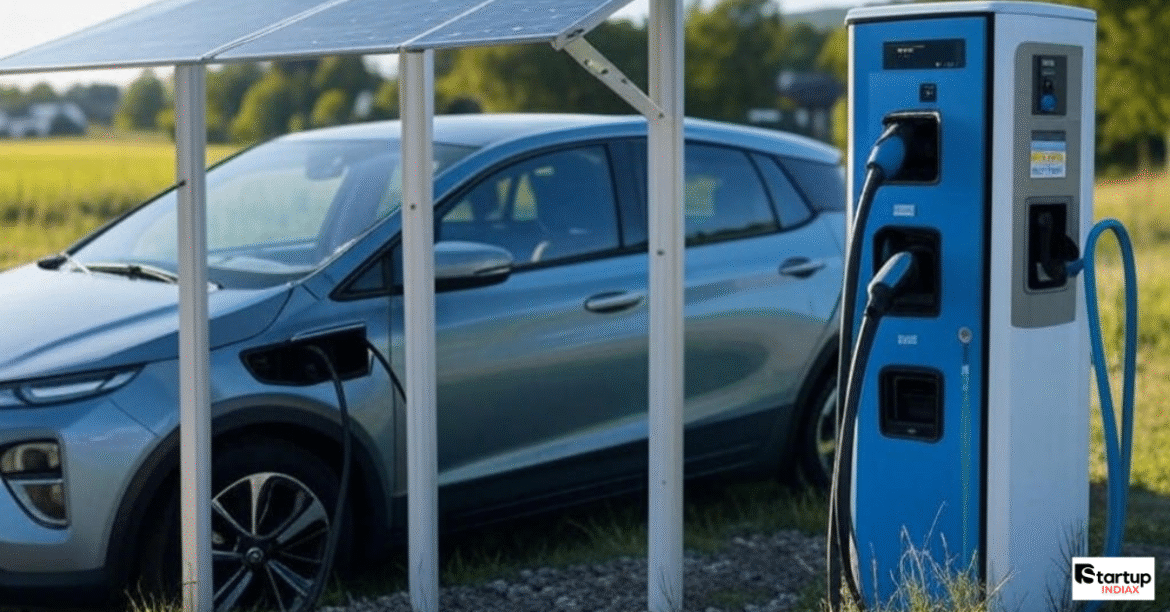
No chargers, no EVs—it’s that simple. Rural-focused EV solutions are tackling this by introducing innovative charging models. Solar-powered charging stations are a standout. Startups like ChargeZone in India are deploying solar chargers in off-grid villages, ensuring reliable power without depending on shaky electricity grids.

The Rural EV Boom: How Electric Vehicles Are Winning Hearts in 2025

Swappable battery systems are another game-changer. Companies like Gogoro allow riders to swap drained batteries for charged ones at rural kiosks, eliminating the need for home chargers. Meanwhile, governments are stepping in with subsidies to install chargers along rural highways. These efforts are making EVs practical for long-distance rural travel.

Raising Awareness and Education

You can’t adopt what you don’t understand. Rural-focused EV solutions include campaigns to educate communities about EVs. Startups are partnering with local leaders to host demos, test drives, and workshops. For example, Mahindra Electric’s “EV on Wheels” program brings EVs to Indian villages, letting residents experience them firsthand.

Digital platforms are also bridging the gap. Short, engaging videos on platforms like YouTube explain EV benefits in local languages, debunking myths. These efforts are building trust and excitement, encouraging rural residents to consider EVs as viable options.

Government and Startup Initiatives

Governments are waking up to the need for rural-focused EV solutions. In India, the FAME II scheme offers subsidies for EVs and charging infrastructure, with a focus on Tier-2 and rural areas. The U.S. has allocated $7.5 billion under the Bipartisan Infrastructure Law to build rural charging networks. These policies are creating a supportive ecosystem for rural EV adoption.

The Rural EV Boom: How Electric Vehicles Are Winning Hearts in 2025

Startups are equally critical. Companies like Ampere Vehicles and Ather Energy are designing EVs specifically for rural terrains, with rugged builds and long-range batteries. Others, like Zypp Electric, are introducing EV rental models for rural gig workers, reducing upfront costs. These initiatives show how public-private partnerships can drive adoption beyond major cities.

Real-World Success Stories

Let’s look at some inspiring examples of rural-focused EV solutions in action. In India’s Rajasthan, a startup called eSwaraj deployed solar-powered charging hubs in 50 villages. Farmers now use electric three-wheelers to transport goods, cutting fuel costs by 70%. The program’s success has spurred plans to expand to 200 more villages by 2026.

In Kenya, Ampersand’s electric motorcycles are transforming rural delivery services. With swappable batteries and affordable leasing, drivers save up to $500 annually compared to petrol bikes. Meanwhile, in rural China, NIO’s mobile charging vans bring power to remote areas, ensuring EV owners are never stranded.

These stories prove that rural-focused EV solutions aren’t just ideas—they’re working, driving adoption, and changing lives.

The Road Ahead for Rural EVs

The future of rural EV adoption is bright, but it’s not without challenges. Scaling infrastructure, ensuring affordability, and maintaining momentum will require sustained effort. Emerging technologies, like vehicle-to-grid (V2G) systems, could let rural EVs double as energy storage, powering homes during outages. Meanwhile, advancements in battery tech promise longer ranges and lower costs, making EVs even more rural-friendly.

Collaboration is key. Governments, startups, and communities must work together to keep rural-focused EV solutions accessible and practical. By prioritizing rural needs, we can ensure the EV revolution isn’t just an urban story but a global one.

Conclusion

Rural-focused EV solutions are paving the way for a cleaner, more inclusive future. By addressing affordability, infrastructure, and awareness, these solutions are driving adoption beyond major cities. From solar chargers to budget-friendly e-scooters, the tools to transform rural mobility are here. The question isn’t whether EVs can thrive in rural areas—it’s how fast we can make it happen. Let’s keep the momentum going and bring the EV revolution to every corner of the world.

May 6, 2025 2 comments 409 views
FacebookTwitterLinkedinWhatsapp
Ather Energy IPO Fully Subscribed: 7 Key Insights After QIBs Jump In
EVStartup

Ather Energy IPO Fully Subscribed: 7 Key Insights After QIBs Jump In

by Aalam Rohile May 2, 2025
3 min read

Ather Energy IPO fully subscribed-that’s the headline dominating startup and tech news this week as the Bengaluru-based electric scooter manufacturer’s Rs 2,981 crore public issue saw a dramatic turnaround on its final day. After a slow start, the IPO was fully subscribed, thanks to a surge in demand from Qualified Institutional Buyers (QIBs) and strong participation from retail investors. This article explores how the QIBs’ last-minute jump in changed the game, breaks down the subscription numbers, compares Ather Energy to its biggest rival Ola Electric, and discusses what this means for investors and India’s electric vehicle (EV) startup scene.

If you want to know why the Ather Energy IPO fully subscribed story matters, read on-Startup INIDAX brings you all the details, numbers, and expert insights.

Ather Energy IPO: The Build-Up and Final Day Turnaround

The Ather Energy IPO fully subscribed story didn’t start with fireworks. For the first two days, the Rs 2,981 crore IPO, which opened on April 28 and closed on April 30, saw muted demand. By the end of Day 2, only 30% of the shares were taken up, with QIBs largely staying away and retail investors doing most of the heavy lifting.

But everything changed on Day 3. As the clock ticked down, QIBs jumped in with large bids, pushing the overall subscription to 1.5 times the shares on offer. The turnaround was dramatic and signaled renewed confidence in Ather’s business model and the broader EV narrative in India.

IPO Subscription Details: Breaking Down the Numbers

Let’s break down the numbers to understand how the Ather Energy IPO fully subscribed after QIBs jump in:

CategorySubscription (times)Shares OfferedShares Bid For
QIB1.762,78,30,3834,90,60,472
NII0.691,39,15,19296,25,914
bNII (> Rs 10L)0.7492,76,79568,41,626
sNII (< Rs 10L)0.6046,38,39727,84,288
Retail1.8992,76,7951,75,20,158
Employee5.431,00,0005,42,524
Total1.505,11,22,3707,67,49,068
  • QIBs: Subscribed 1.76 times; the real momentum came from this segment on the final day.
  • Retail Investors: Showed strong interest, subscribing 1.89 times their quota.
  • Non-Institutional Investors (NIIs): Subdued response, only 0.69 times subscription.
  • Employees: Overwhelming response, with 5.43 times subscription.

In total, Ather Energy received bids for 7.67 crore shares against the 5.11 crore shares on offer, with 2,73,370 total applications.

Why Did QIBs Jump In?

The big question: Why did QIBs jump in and drive the Ather Energy IPO fully subscribed?

  • Market Sentiment: QIBs often wait until the last day to assess overall demand and market conditions. Their late surge is a sign of confidence in Ather’s fundamentals and the Indian EV sector’s growth potential.
  • Anchor Investors: Ather Energy had already mobilized Rs 1,340 crore from anchor investors, which likely boosted QIB confidence.
  • EV Sector Optimism: Despite short-term risks, the long-term outlook for electric mobility in India remains strong, attracting institutional capital.

Retail and NII Response: Mixed Sentiment

While retail investors showed robust participation, NIIs were more cautious:

  • Retail Investors: Subscribed nearly twice their allotted shares, reflecting strong interest from individual investors who see Ather as a promising EV play.
  • NIIs: Subscribed only 69% of their quota, possibly due to concerns over valuation and sector risks.
  • Employee Quota: The employee reserved portion was a standout, with over five times subscription, indicating strong internal faith in the company’s future.

How Ather Energy Stands Out from Ola Electric

Ather Energy’s IPO has naturally drawn comparisons to Ola Electric, another major player in India’s EV market:

  • Revenue and Scale: Ola Electric’s revenues in FY24 were nearly three times higher than Ather’s, but Ola’s rapid growth has come with much higher losses and cash burn.
  • Business Model: Ather Energy positions itself as a premium, technology-driven brand with a disciplined approach, lower cash burn, and better per-vehicle margins.
  • Market Share: Ather’s market share is about one-third of Ola’s, but its focus on quality and innovation sets it apart.
  • Supply Chain: Ather relies on imported components, especially from China, which exposes it to supply chain risks and regulatory changes.

What Analysts and Brokerages Are Saying

Despite the Ather Energy IPO fully subscribed after QIBs jump in narrative, not all analysts are bullish:

  • Valuation Concerns: Some brokerages, like Deven Choksey Research, flagged the IPO’s valuation at an EV-to-sales multiple of 6x as “overvalued.” They suggested waiting for better value post-listing.
  • Industry Risks: Analysts highlighted risks such as supply chain dependencies (especially on China), regulatory uncertainties, and the high cost of critical components like lithium-ion cells.
  • Long-Term Potential: The consensus is that while short-term risks exist, Ather’s disciplined approach and focus on innovation position it well for long-term growth.

IPO Allotment and Listing: What Happens Next?

  • Allotment Date: The share allotment for Ather Energy’s IPO is expected to be finalized on May 2.
  • Demat Credit and Refunds: Shares will be credited to successful applicants’ Demat accounts on May 5. Refunds for unsuccessful bidders will also be processed on the same day.
  • Listing Date: Ather Energy’s shares are scheduled to debut on both BSE and NSE on May 6.
  • Registrar: Link Intime India is the official registrar for the IPO.

How to Check Your Ather Energy IPO Allotment Status

Checking your IPO allotment status is simple:

On Link Intime India:

  • Visit Link Intime’s IPO Allotment Page.
  • Select ‘Ather Energy Limited’ from the dropdown.
  • Choose your search mode: PAN, Application Number, or DP/Client ID.
  • Enter your details and click ‘Search’.

On NSE:

  • Go to the NSE IPO allotment page.
  • Navigate to ‘Market Data’ > ‘Equity & SME IPO Bid Details’.
  • Select ‘ATHER’ from the list.
  • Enter your PAN and Application Number, then submit.

Risks and Opportunities for Investors

Opportunities:

  • Exposure to India’s fast-growing EV market.
  • Backed by major investors like Hero MotoCorp.
  • Focus on premium, tech-driven products and disciplined financials.

Risks:

  • High valuation compared to industry peers.
  • Supply chain vulnerabilities, especially reliance on imports from China.
  • Sector volatility and regulatory uncertainties.
  • Competition from larger players like Ola Electric and traditional automakers.

Conclusion: What Ather’s IPO Means for India’s EV Ecosystem

The Ather Energy IPO fully subscribed after QIBs jump in is a positive signal for India’s startup and EV ecosystem. It demonstrates that institutional and retail investors are willing to back innovative, homegrown brands-even in a volatile market. For Ather, the successful IPO provides fresh capital to scale operations, invest in R&D, and expand its footprint. For investors, the listing will be closely watched as a bellwether for the broader EV sector’s prospects.

At Startup INIDAX, we believe Ather’s journey from a cautious IPO start to a fully subscribed issue reflects both the promise and the challenges of India’s electric mobility revolution. Stay tuned for more updates, expert analysis, and startup news that matter.

May 2, 2025 9 comments 346 views
FacebookTwitterLinkedinWhatsapp
Maharashtras 2025 Cabs Policy: 5 Ways Fines for Driver Cancels a Ride Build Trust
Automobile

Maharashtra Aggregator Cabs Policy: Fines for Driver Cancels a Ride Boost Commuter Trust

by Ismail Patel May 2, 2025
3 min read

Maharashtra Aggregator Cabs Policy 2025 is a game-changer for commuters and cab drivers alike, tackling issues like when a driver cancels a ride and ensuring benefits for cab drivers. This article dives into the policy’s key features, such as fines for ride cancellations, improved driver earnings, and enhanced passenger safety measures. We’ll explore how these changes impact platforms like Ola, Uber, and Rapido, the benefits for cab drivers, and what commuters can expect from this progressive regulation. With a focus on transparency, safety, and fairness, the policy aims to reshape urban mobility in Maharashtra.

Introduction: A New Era for Cab Services in Maharashtra

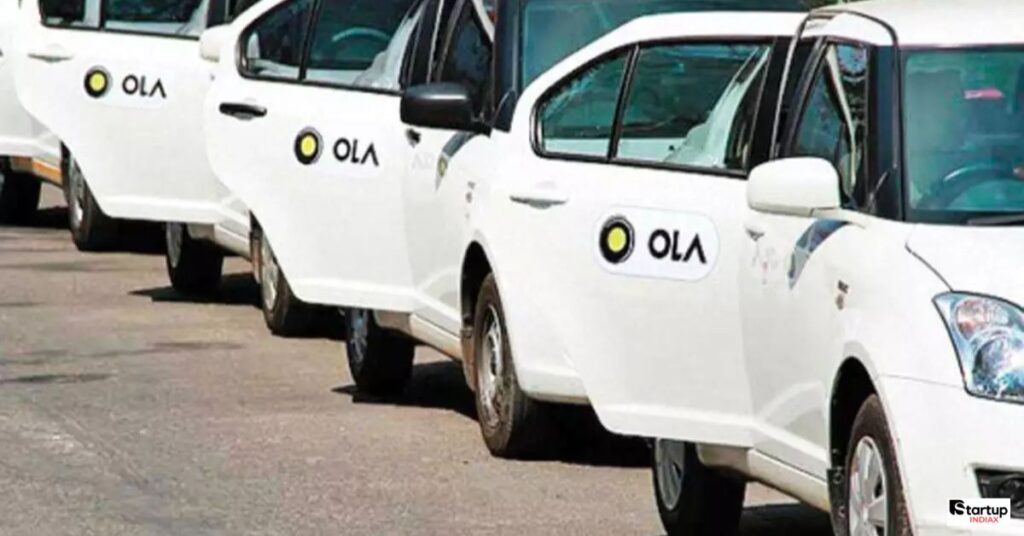
Picture this: you’re rushing to a meeting, your cab is booked, and just as you’re about to step out, the driver cancels the ride. Frustrating, right? For years, commuters in Maharashtra have faced this issue with app-based cab services like Ola, Uber, and Rapido. But change is here. The Maharashtra Aggregator Cabs Policy 2025, rolled out on May 1, 2025, is shaking things up. It’s not just about penalizing drivers when a driver cancels a ride—it’s about creating a fairer, safer, and more reliable ride-hailing ecosystem. Plus, it brings significant benefits for cab drivers, ensuring they’re not left in the dust. Let’s break down what this policy means for you, the commuter, and the drivers behind the wheel.

What Is the Maharashtra Aggregator Cabs Policy 2025?

The Aggregator Cabs Policy 2025 is Maharashtra’s response to growing complaints about ride-hailing services. From arbitrary cancellations to sky-high surge pricing and safety concerns, the app-cab sector was operating in a regulatory gray zone. Following Supreme Court directives and recommendations from a committee led by retired IAS officer Sudhir Kumar Srivastava, this policy sets clear rules for cab aggregators. It covers licensing, driver conduct, passenger safety, and fare transparency, aiming to balance the needs of commuters, drivers, and platforms.

The policy applies to all app-based cab services in urban Maharashtra, including giants like Ola, Uber, and Rapido. It’s a bold step to make ride-hailing more accountable, with measures like fines when a driver cancels a ride and ensuring benefits for cab drivers through better earnings and welfare programs.

Key Features of the Policy

Let’s dive into the meat of the policy—what’s changing and how it affects you.

Fines When a Driver Cancels a Ride

One of the standout features is the penalty for cancellations. If a driver cancels a confirmed ride, they’ll face a fine, and the passenger gets compensated. Specifically, the commuter receives either ₹100 or 10% of the fare, whichever is lower, credited directly to their account. This flips the script—previously, passengers often bore the brunt of cancellation fees. Now, the policy holds drivers accountable, discouraging last-minute cancellations and ensuring a smoother booking experience.

Benefits for Cab Drivers: Fair Earnings and Welfare

The policy isn’t just about cracking down on drivers—it’s also about supporting them. Cab drivers will now earn at least 80% of the fare per ride, a significant boost to their income. Aggregators must also provide medical insurance for drivers and their families, along with training programs for those with poor ratings. These benefits for cab drivers aim to improve their financial stability and job satisfaction, which could reduce cancellations driven by low earnings.

Passenger Safety and Transparency Measures

Safety is a big focus. All cabs must have GPS tracking, and drivers undergo mandatory police verification. Women passengers can opt for women-only ride-sharing with female drivers, addressing safety concerns, especially at night. Surge pricing is capped at 1.5x the base fare, and discounts can go up to 25% during off-peak hours. Aggregators must also set up physical offices in Maharashtra and comply with data security under the IT Act, 2000, ensuring your personal info stays safe.

How the Policy Impacts Cab Aggregators

For platforms like Ola, Uber, and Rapido, this policy means a major overhaul. They’ll need to update their apps to include features like driver penalties and emergency buttons. Setting up physical offices in Maharashtra adds operational costs, and strict compliance with licensing and safety norms could strain smaller players. However, these changes could build trust with users, potentially increasing ridership in the long run.

Aggregators also face pressure to balance driver earnings with affordable fares. By mandating that drivers get 80% of the fare, the policy limits how much platforms can take as commission. This could push companies to rethink their business models, but it’s a win for drivers who’ve long complained about low payouts.

Why This Policy Matters for Commuters

As a commuter, you’re probably tired of drivers cancelling rides at the last minute or surge prices that make short trips cost a fortune. The Aggregator Cabs Policy 2025 directly addresses these pain points. When a driver cancels a ride, you get compensated, which feels like a small victory. Surge pricing caps mean you won’t pay ₹1,500 for a 5-km ride during rush hour. And with safety features like GPS tracking and women-only options, you can ride with more peace of mind.

The policy also tackles poor cab conditions. Vehicles in bad shape will be removed from service, and drivers with consistently low ratings must undergo retraining. This means cleaner cabs, better service, and fewer headaches for you.

Benefits for Cab Drivers: A Closer Look

Let’s talk about the unsung heroes of ride-hailing: the drivers. For years, drivers have faced low earnings, high commissions, and little job security. The 2025 policy changes that narrative. By guaranteeing 80% of the fare, drivers can earn more per trip, reducing the temptation to cancel rides for better-paying ones. Medical insurance for drivers and their families adds a layer of financial security, especially in a gig economy with few benefits.

Training programs are another perk. If a driver’s ratings dip, they get a chance to improve through refresher courses rather than being kicked off the platform. These benefits for cab drivers could make the job more sustainable, attracting more drivers and reducing wait times for passengers.

Challenges and Implementation Hurdles

No policy is perfect, and this one has its share of challenges. For starters, enforcing fines when a driver cancels a ride requires robust tracking systems. Aggregators will need to invest in tech to ensure cancellations are accurately recorded and penalties are applied fairly. Smaller platforms might struggle with the costs of setting up offices and complying with safety norms, potentially leading to market consolidation.

There’s also the question of driver pushback. While the policy offers benefits for cab drivers, some may resist fines for cancellations, especially if they cancel due to genuine issues like traffic or vehicle breakdowns. The state transport department has promised detailed implementation guidelines, but the success of the policy hinges on how well these are executed.

What’s Next for Maharashtra’s Urban Mobility?

The Aggregator Cabs Policy 2025 is a bold step, but it’s just the beginning. As urban Maharashtra grows, so will the demand for reliable, affordable transport. The policy sets a precedent for other states to regulate app-based cabs, potentially inspiring a nationwide framework. In the short term, expect cab aggregators to roll out app updates and training programs to comply with the new rules.

For commuters, the policy promises a more dependable ride-hailing experience. For drivers, it offers a fairer deal, which could stabilize the driver pool and reduce cancellations. If implemented well, this policy could transform Maharashtra’s urban mobility, making it a model for other Indian cities.

Conclusion: A Step Toward Fairer Rides

Maharashtra’s Aggregator Cabs Policy 2025 is a win-win for commuters and drivers. By fining drivers when a driver cancels a ride, it ensures accountability and compensates passengers. At the same time, it delivers real benefits for cab drivers through better earnings, insurance, and training. While challenges remain, the policy is a promising move toward safer, fairer, and more transparent ride-hailing in Maharashtra. So, the next time you book a cab, you can ride with a little more confidence—and maybe a few extra rupees in your account if the driver bails.

May 2, 2025 3 comments 340 views
FacebookTwitterLinkedinWhatsapp
Startup

IPO Amid Market Volatility: OYO Delays 2026 Listing as SoftBank Raises Concerns

by Ismail Patel May 2, 2025
3 min read

IPO Amid market volatility, SoftBank, which holds 30% stake in OYO, has influenced the hospitality unicorn to delay its much-anticipated initial public offering (IPO) for the third time, pushing it to March 2026. This article dives into the reasons behind OYO’s IPO postponement, exploring market volatility, SoftBank’s concerns, and the startup’s financial challenges. We’ll also examine the broader IPO landscape in India, the implications for OYO’s stakeholders, and what lies ahead for the company. With a conversational tone, this 1500+ word blog breaks down complex financial moves into simple insights, offering a clear picture of why OYO’s stock market debut is on hold and how it reflects the cautious sentiment in today’s startup ecosystem.

IPO Amid Market Volatility: OYO Delays 2026 Listing as SoftBank Raises Concerns

Imagine you’re all set to throw a big party, but the weather forecast predicts a storm. You’d probably postpone, right? That’s exactly what’s happening with OYO, the Indian hospitality giant, as it delays its initial public offering (IPO) for the third time, now eyeing March 2026. The decision, heavily influenced by SoftBank, which holds 30% stake in the company, comes amid shaky stock markets and concerns about OYO’s financial health. Let’s unpack why this is happening, what it means for OYO, and how it fits into the broader startup scene in India.

Why OYO’s IPO is Delayed Again

IPO Amid market volatility isn’t a new story, but for OYO, it’s a recurring headache. The budget hotel chain has been trying to go public since 2021, only to hit roadblocks each time. This time, the delay stems from a mix of external and internal pressures. Posts on X and recent reports highlight that SoftBank, OYO’s largest shareholder, isn’t convinced the timing is right. The stock market’s wild swings in 2025—think Nifty dropping 4.3% since December—have made investors jittery. Companies like LG Electronics and Ather Energy have also scaled back or delayed their IPOs, signaling a cautious mood.

IPO Amid Market Volatility: OYO Delays 2026 Listing as SoftBank Raises Concerns

For OYO, the stakes are high. Founder Ritesh Agarwal has been pushing for a quick IPO to meet deadlines tied to a $2.2 billion loan he took in 2019 to increase his stake. That loan, personally guaranteed by SoftBank’s Masayoshi Son, has a repayment deadline looming in December 2025. Lenders might extend the timeline if OYO lists soon, but with markets in turmoil, SoftBank’s saying, “Not yet.”

The Role of SoftBank, Which Holds 30% Stake

SoftBank, which holds 30% stake in OYO, isn’t just a passive investor—it’s calling the shots. The Japanese conglomerate has a history of steering its portfolio companies through turbulent times, and OYO is no exception. Reports suggest SoftBank is worried about OYO’s shaky financials, including inconsistent profitability and high debt. In 2024, OYO reported a profit of ₹99 crore, but that’s a far cry from the scale needed to justify a $7 billion valuation in a volatile market.

SoftBank’s caution isn’t baseless. The investor has seen its bets on startups like WeWork and Zume falter, making it extra careful with OYO. By delaying the IPO, SoftBank is likely protecting its investment from a lackluster debut that could tank OYO’s stock price. After all, a weak IPO doesn’t just hurt the company—it dents SoftBank’s reputation and portfolio value. This move reflects a broader trend: big investors are tightening the reins on startups, pushing for stronger fundamentals before going public.

Market Volatility: A Tough Time for IPOs

IPO Amid market volatility is like trying to sail a boat in a storm. The global and Indian markets in 2025 are anything but calm. Foreign investors have pulled out ₹13,359 crore from Indian bonds, and the U.S. market is reeling from tariff uncertainties and weak GDP growth. In India, the Sensex and Nifty have been on a rollercoaster, with experts warning of a possible correction.

This isn’t just OYO’s problem. Ather Energy slashed its IPO size to ₹2,626 crore, while LG Electronics postponed its $15 billion listing. Even global players like StubHub and Klarna have hit pause on their IPO plans. The message is clear: investors are picky, and companies need to bring their A-game to the stock market. For OYO, the timing couldn’t be worse. Its budget hospitality model thrives on economic stability, but with travel demand softening and inflation biting, the market isn’t exactly rolling out the red carpet.

OYO’s Financial Struggles and Loan Pressures

Let’s talk numbers. OYO’s financials are a mixed bag. On one hand, it’s expanded globally, with over 1.5 million rooms in its network. On the other, its balance sheet tells a tougher story. The $2.2 billion loan Agarwal took in 2019 is a big weight, with repayment pressures mounting. Add to that OYO’s high operational costs and uneven cash flow, and you see why SoftBank, which holds 30% stake, is nervous.

The company’s valuation is another sticking point. OYO’s aiming for a $7 billion tag, but market volatility makes that ambitious. Ather Energy, for example, halved its valuation before its IPO, and OYO might face similar pressure. If the IPO flops, it could erode investor confidence and make it harder for OYO to raise funds later. SoftBank’s push to delay is a bet on OYO fixing its financial leaks—think cutting costs, boosting margins, and proving it can stay profitable.

The Bigger Picture: India’s IPO Landscape in 2025

India’s IPO market is a tale of two halves. In late 2024, IPOs were red-hot, with 20 offerings raising ₹27,000 crore since December. Some, like Wagons Learning, saw massive oversubscription, while others, like Kenrik Industries, struggled. But as 2025 rolls on, the mood is shifting. A Mint survey found 56% of experts expect IPOs to stay relevant but play a smaller role, with only 8.7% seeing them as a dominant theme.

Why the cooldown? Blame foreign investor sell-offs, slowing corporate earnings, and global uncertainties like U.S. tariffs. Retail investors, who fueled last year’s IPO frenzy, are also getting cautious. This doesn’t mean IPOs are dead—companies like Tata Capital and Canara HSBC Life Insurance are still filing papers—but the bar is higher. For OYO, this means waiting for a sunnier day when investor appetite matches its growth story.

What’s Next for OYO and Its Investors?

So, what’s the game plan? OYO’s likely spending the next few months polishing its financials. This could mean streamlining operations, doubling down on profitable markets like India and Southeast Asia, or even exploring mergers and acquisitions (M&As). The startup ecosystem is seeing more M&As as investors seek quicker exits, like Delhivery’s ₹1,407 crore buyout of Ecom Express. OYO might not go that route, but it’s a sign of the times.

For investors, the delay is a mixed bag. SoftBank, which holds 30% stake, gets more time to protect its investment, but smaller shareholders might be frustrated. Agarwal, caught between his loan obligations and SoftBank’s veto, faces the toughest squeeze. If OYO can use this delay to strengthen its fundamentals, the 2026 IPO could be a winner. But if market volatility persists, the wait might stretch even longer.

Conclusion: A Cautious Step in Uncertain Times

IPO Amid market volatility is a gamble, and OYO’s third delay shows it’s not ready to roll the dice. SoftBank, which holds 30% stake, is playing the long game, betting that a stronger OYO in a calmer market will pay off. For now, the hospitality giant is in a holding pattern, working to shore up its finances and win over skeptical investors. This isn’t just OYO’s story—it’s a snapshot of a startup world grappling with uncertainty. Will OYO’s 2026 IPO be a blockbuster, or will market storms keep it grounded? Only time will tell.

May 2, 2025 5 comments 328 views
FacebookTwitterLinkedinWhatsapp
Maharashtras 2025 Cabs Policy: 5 Ways Fines for Driver Cancels a Ride Build Trust
EVAutomobileStartup

Maharashtras 2025 Cabs Policy: 5 Ways Fines for Driver Cancels a Ride Build Trust

by Aalam Rohile May 2, 2025
3 min read

Maharashtras 2025 Cabs Policy introduces a landmark reform: Fines for Driver Cancels a Ride are now mandatory, directly credited to the commuter’s account. This change is designed to restore trust, fairness, and reliability in Maharashtra’s app-based taxi ecosystem, tackling persistent issues like last-minute cancellations, unpredictable surge pricing, and commuter safety. In this article, Startup INIDAX explores the five key ways these fines-and the broader policy-build commuter trust, make rides safer, and ensure a fairer deal for both passengers and drivers. Whether you’re a daily rider or a startup enthusiast, this guide covers everything you need to know about the new rules and their impact.

Why Maharashtra Needed a New Cabs Policy

The explosive growth of ride-hailing apps like Ola, Uber, and Rapido brought convenience but also new headaches:

  • Passengers were frequently left stranded by last-minute driver cancellations.
  • Surge pricing often made rides unaffordable, especially during peak hours or bad weather.
  • Safety and transparency were ongoing concerns, particularly for women and late-night travelers.
  • Drivers often faced unclear earnings and lacked welfare protections.
Maharashtras 2025 Cabs Policy

These issues led to mounting complaints and a Supreme Court directive for states to regulate the sector. Maharashtra’s response is the Aggregator Cabs Policy 2025, a comprehensive set of reforms to make app-based taxi services safer, fairer, and more commuter-friendly

Key Features of Maharashtras 2025 Cabs Policy

Here’s what stands out in the new policy:

  • Fines for Driver Cancels a Ride: Drivers who cancel after accepting a booking must pay a fine-₹100 or 10% of the fare, whichever is less-credited instantly to the rider’s account.
  • Passenger Cancellation Penalty: Passengers who cancel pay ₹50 or half the fare (whichever is lower) to the driver, ensuring shared responsibility.
  • Surge Pricing Cap: Surge fares are limited to 1.5x the base fare, ending extreme price hikes during peak demand.
  • Discounts: Aggregators can offer up to 25% discounts during non-peak hours, making rides more affordable.
  • Safety Measures: Mandatory GPS tracking, police verification for drivers, and special options for women’s safety, like all-women carpools and female drivers.
  • Driver Welfare: At least 80% of each fare goes to the driver, plus mandatory insurance and training.
  • Aggregator Accountability: Platforms must have a physical office in Maharashtra and comply with strict licensing and technical standards.

5 Ways Fines for Driver Cancels a Ride Build Trust

1. Immediate Compensation for Commuters

The most direct benefit of the new fines is that commuters are no longer left helpless when a driver cancels. Now, if a driver cancels after accepting a booking, the rider receives ₹100 or 10% of the fare, whichever is less, credited instantly to their account. This immediate compensation is a tangible gesture that acknowledges the inconvenience and values the rider’s time.

“Drivers who cancel after accepting a ride will face a financial penalty-and the affected customer will get the same amount as compensation,” notes the new policy.

2. Reduced Last-Minute Cancellations

Previously, drivers could cancel rides with little or no consequence, leading to frustration and uncertainty for passengers. With the introduction of fines for driver cancels a ride, there’s a strong financial incentive for drivers to honor accepted bookings. This change is expected to significantly reduce last-minute cancellations, making rides more reliable and predictable.

3. Transparent and Fair Fare System

The new policy doesn’t just penalize cancellations-it also makes the fare system more transparent:

  • Surge pricing is capped at 1.5 times the base fare, ending the days of unpredictable, sky-high fares during peak hours.
  • Discounts of up to 25% are allowed during off-peak times, encouraging affordable travel.
  • Fare structures and penalties are now overseen by regional transport authorities, ensuring platforms can’t change rules arbitrarily.

This transparency gives commuters confidence that they’re being treated fairly every time they book a ride.

4. Enhanced Safety and Accountability

Safety is a core focus of Maharashtras 2025 Cabs Policy:

  • GPS Tracking: Every cab must have real-time GPS, allowing authorities and customers to track rides for added security.
  • Police Verification: All drivers must undergo background checks, reducing risks for passengers.
  • Women’s Safety: Women can opt for female drivers and all-women carpools, a move welcomed by women’s groups.

These features, combined with the new cancellation penalty, create a system where drivers are held accountable and passengers feel safer.

5. Empowering Both Riders and Drivers

The fines for driver cancels a ride aren’t just about punishing drivers-they create a balanced, fair system:

  • Passengers are compensated for cancellations, while drivers also receive a penalty if a passenger cancels unnecessarily.
  • Drivers are guaranteed at least 80% of the fare, plus training and welfare benefits, making the profession more sustainable.
  • Aggregators must provide insurance and maintain local offices, improving support for both drivers and riders.

This approach empowers both sides, fostering a healthier relationship between drivers, platforms, and commuters.

Impact on App-Based Taxi Services and Drivers

For companies like Ola, Uber, and Rapido, the policy means:

  • Updating app algorithms to include new cancellation penalties and surge pricing caps.
  • Ensuring all drivers are police-verified and trained.
  • Setting up physical offices in Maharashtra for better accountability and support.

For drivers, the policy means higher earnings (at least 80% of the fare), access to insurance, and clear rules on cancellations and conduct. However, drivers will need to be more cautious about accepting and then cancelling rides, as repeated fines could impact their income.

Safety, Women’s Security, and Regulatory Oversight

Safety upgrades are at the heart of the policy:

  • Mandatory GPS and Emergency Features: All cabs must have GPS and in-app emergency contacts.
  • Women’s Security: Only women drivers and co-passengers are allowed for ride-sharing with women, safeguarding privacy and safety.
  • Regulatory Oversight: Regional transport authorities will monitor fares, penalties, and compliance, ensuring transparency and quick resolution of complaints.

These reforms aim to make Maharashtra’s ride-hailing ecosystem among the safest and most transparent in India.

Challenges and What’s Next

While the policy is comprehensive, implementation will be key:

  • Aggregators must quickly update their platforms and train drivers.
  • Monitoring compliance across thousands of drivers and vehicles will require robust systems.
  • Some drivers may resist stricter penalties, especially if they feel cancellations are sometimes unavoidable.

Despite these challenges, the policy sets a strong foundation for a safer, fairer, and more reliable ride-hailing experience in Maharashtra.

Conclusion: A New Era for Maharashtra’s Commuters

Maharashtras 2025 Cabs Policy, with its focus on Fines for Driver Cancels a Ride, marks a turning point for urban mobility in the state. By introducing immediate compensation, capping surge pricing, and mandating safety reforms, the policy builds trust and transparency for commuters while supporting drivers with fair earnings and welfare benefits. Startup INIDAX will continue to track these reforms and their impact on Maharashtra’s startup and tech ecosystem, ensuring you stay updated on the future of mobility.

May 2, 2025 4 comments 348 views
FacebookTwitterLinkedinWhatsapp
FinanceStartup

GSV Ventures Levels Up: New Partner and Multi-Stage Venture Plans for 2025

by Ismail Patel May 2, 2025
3 min read

GSV Ventures, a leading multi-stage venture capital firm, is making waves in 2025 with strategic expansions and bold investments in India’s startup ecosystem, particularly through Startup IndiaX. This article dives into GSV Ventures’ recent moves, including their high-profile onboarding of a PhysicsWallah executive as a partner, their focus on multi-stage venture investments, and their growing influence in edtech, fintech, and healthtech. We’ll explore their investment philosophy, key portfolio highlights, and what this means for Indian startups, all while keeping the conversation engaging and accessible.

GSV Ventures’ Big Leap in 2025

GSV Ventures, a powerhouse in multi-stage venture capital, is doubling down on its commitment to India’s startup ecosystem in 2025. With a fresh strategy that includes onboarding a top executive from PhysicsWallah as a partner, GSV is poised to make a significant impact through Startup IndiaX. This move signals their intent to deepen their roots in India, a market brimming with entrepreneurial energy. From edtech to fintech, GSV’s multi-stage venture approach is designed to nurture startups at every growth phase, and their latest hires and investments are proof of their ambition. Let’s unpack what’s driving this excitement and why it matters.

Who Is GSV Ventures? A Quick Recap

If you’re new to the name, GSV Ventures is a global venture capital firm with a knack for spotting high-potential startups. Specializing in multi-stage venture investments, they back companies from seed to growth stages, helping them scale into market leaders. With a portfolio boasting names like Coursera, ClassDojo, and now Indian edtech giant PhysicsWallah, GSV has earned its stripes in education technology while also branching into fintech, healthtech, and more.

GSV Ventures Levels Up: New Partner and Multi-Stage Venture Plans for 2025

What sets GSV apart is their hands-on approach. They don’t just write checks; they partner with founders, offering strategic guidance and access to global networks. In India, their focus on Startup IndiaX—a platform fostering innovation and entrepreneurship—has made them a go-to for founders looking to make a dent in the global market.

The PhysicsWallah Connection: A Strategic Hire

One of GSV Ventures’ most talked-about moves in 2025 is bringing on board a senior executive from PhysicsWallah, India’s edtech unicorn, as a partner. PhysicsWallah, known for its affordable, high-quality education platform, has disrupted the Indian edtech space, and this hire is a masterstroke for GSV. The new partner brings deep industry expertise, a proven track record, and an insider’s perspective on scaling startups in India’s competitive market.

This isn’t just a resume boost for GSV. It’s a signal that they’re serious about doubling down on edtech and leveraging India’s talent pool to fuel their multi-stage venture strategy. The executive’s experience at PhysicsWallah, where they helped grow the platform to millions of users, will likely shape GSV’s approach to identifying and nurturing the next wave of Indian unicorns.

Multi-Stage Venture Investing: GSV’s Winning Formula

So, what exactly is multi-stage venture investing, and why is GSV so good at it? Unlike traditional VC firms that focus on specific funding rounds (like seed or Series A), GSV plays the long game. They invest across the startup lifecycle—early-stage, growth-stage, and even pre-IPO. This flexibility allows them to back promising companies early and stick with them as they scale.

For Indian startups, this is a game-changer. Raising capital at different stages can be a rollercoaster, but GSV’s multi-stage venture model offers stability. They provide not just funds but also mentorship, helping startups navigate challenges like product-market fit, global expansion, and regulatory hurdles. In 2025, GSV is leaning into this model, with plans to back 10-15 new Indian startups while scaling their existing portfolio.

The Road Ahead for GSV Ventures

Looking ahead, GSV Ventures is set to make 2025 a landmark year. They’re planning to expand their team in India, launch new accelerator programs under Startup IndiaX, and close bigger deals in high-growth sectors. Their multi-stage venture approach will continue to be their secret sauce, allowing them to back startups at every stage while building a diversified portfolio.

The PhysicsWallah hire is just the beginning. Expect more strategic partnerships, high-profile investments, and maybe even a few surprises as GSV cements its position as a leader in India’s startup ecosystem. For founders and investors alike, GSV Ventures is a name to watch.

Conclusion: GSV Ventures’ Bright Future in India

GSV Ventures is hitting all the right notes in 2025. Their multi-stage venture strategy, focus on Startup INDIAX, and strategic hires like the PhysicsWallah executive are setting the stage for a transformative year. By backing high-potential startups in edtech, fintech, healthtech, and beyond, GSV is not just investing in companies—they’re shaping the future of India’s startup ecosystem. Whether you’re a founder, investor, or just a curious observer, GSV’s journey is one to follow closely.


May 2, 2025 4 comments 420 views
FacebookTwitterLinkedinWhatsapp
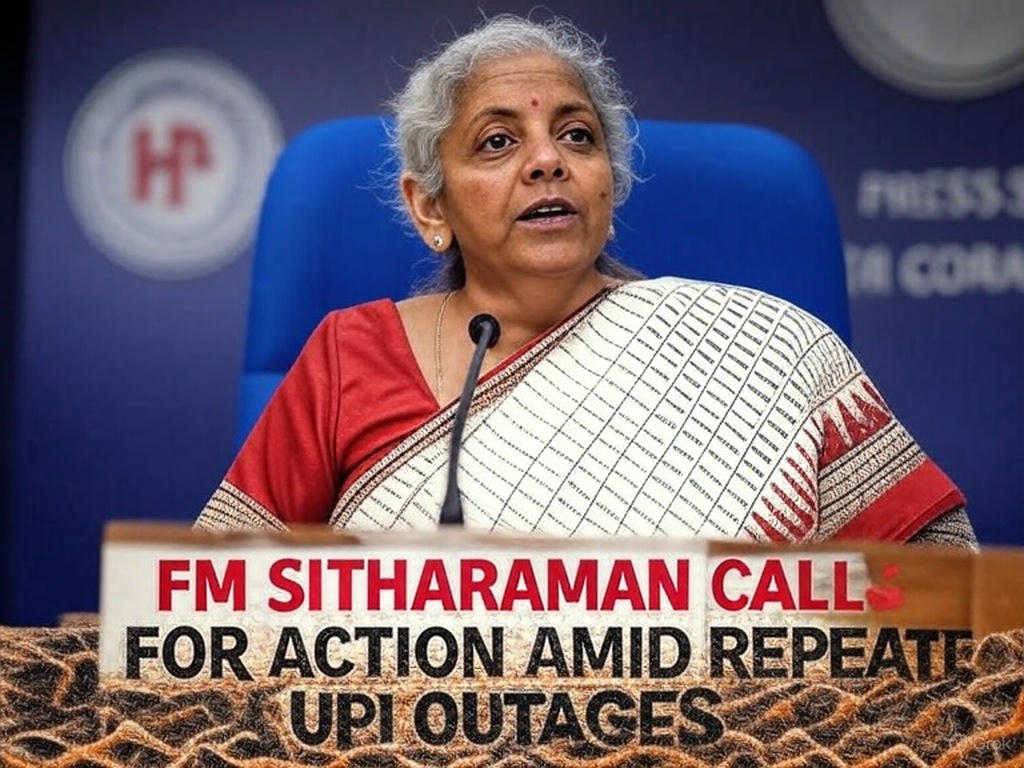
Amid Rising UPI Outages: FM Sitharaman’s Call to Strengthen India’s Digital Payment Backbone
Finance

Amid Rising UPI Outages: FM Sitharaman’s Call to Strengthen India’s Digital Payment Backbone

by Ismail Patel April 30, 2025
3 min read

India’s Unified Payments Interface (UPI) has transformed how we pay, from buying groceries at a local kirana store to splitting dinner bills with friends. It’s fast, convenient, and has made India a global leader in digital payments. But lately, there’s been a hiccup: Amid Rising UPI Outages, users are facing disruptions that are causing frustration and raising questions about the system’s reliability. Finance Minister Nirmala Sitharaman recently stepped in, calling for urgent action to address infrastructure gaps and ensure UPI can handle the massive growth it’s poised for. So, what’s going wrong, and how can India fix it? Let’s dive in.

The UPI Boom and Its Growing Pains

UPI has been nothing short of a revolution. Launched in 2016 by the National Payments Corporation of India (NPCI), it now processes over 500 million transactions daily, accounting for nearly 80% of India’s retail digital payments by volume. From street vendors to multinational corporations, UPI is the go-to payment method for millions. Its ease of use and interoperability across banks have made it a global benchmark.

Today, we're able to send most of the benefits directly to the bank accounts of citizens.

After the introduction of Digital Public Infrastructure (DPI), the govt was able to save Rs 1 lakh crore in just one of the provinces in India through DBT.

Digital Public Infrastructure… pic.twitter.com/NjA0FIQ2D2

— Nirmala Sitharaman Office (@nsitharamanoffc) June 22, 2023

But with great success comes great responsibility. The system’s rapid growth has exposed cracks in its infrastructure. Amid Rising UPI Outages, users have reported failed transactions, delays, and error messages, especially during peak hours. These disruptions aren’t just inconvenient—they’re affecting businesses, eroding trust, and highlighting the need for a more robust system to support UPI’s skyrocketing demand.

Why Are UPI Outages Happening?

The reasons behind UPI outages are multifaceted. First, the sheer volume of transactions is putting unprecedented pressure on servers and networks. In March 2025, UPI processed 14.4 billion transactions, a 40% jump from the previous year. This surge is overwhelming the existing infrastructure, leading to bottlenecks.

Second, technical glitches at banks and third-party apps like Google Pay and PhonePe are contributing to the problem. For instance, server downtimes at major banks have caused cascading failures across the UPI ecosystem. Cybersecurity threats, including phishing and fraud attempts, are also straining the system, as NPCI and banks work to balance security with seamless performance.

Finally, external factors like network connectivity issues in rural areas and power outages in certain regions add to the woes. These challenges are particularly acute as UPI expands into tier-2 and tier-3 cities, where infrastructure isn’t always up to par.

FM Sitharaman Calls for Action

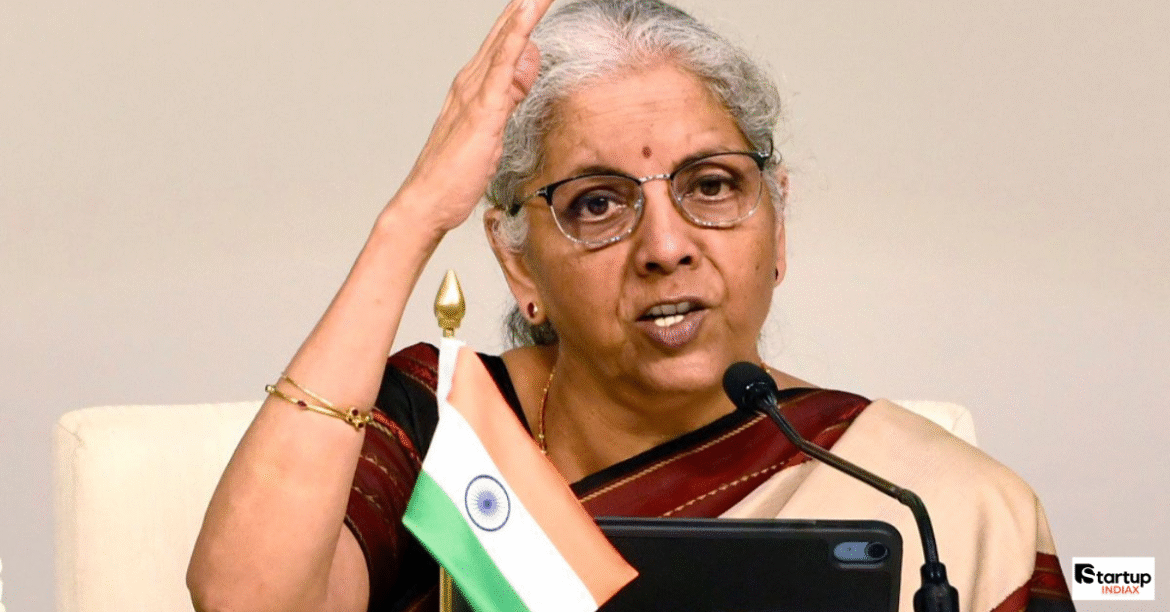
On April 28, 2025, Finance Minister Nirmala Sitharaman chaired a high-level meeting with officials from the Ministry of Finance, the Reserve Bank of India (RBI), and NPCI to review the UPI ecosystem. FM Sitharaman Calls for addressing infrastructure gaps were loud and clear. She emphasized the need to strengthen the system to prevent future disruptions and ensure UPI remains a reliable pillar of India’s digital economy.

Amid Rising UPI Outages: FM Sitharaman’s Call to Strengthen India’s Digital Payment Backbone

Sitharaman’s message was twofold: fix the immediate issues and prepare for exponential growth. She urged NPCI to identify and address technical and operational bottlenecks, from server capacity to cybersecurity protocols. Her call to action reflects the government’s commitment to making UPI not just a national success but a global model for digital payments.

The Ambitious Goal: 1 Billion Transactions a Day

One of the most striking announcements from the meeting was the target of achieving one billion daily UPI transactions within the next 2-3 years. That’s a tenfold increase from current levels and a bold vision for India’s digital future.

UPI Outage: Finance Minister Nirmala Sitharaman Targets 1 Billion UPI Transactions A Day, Calls For Immediate Action#UPI #UPIOutage #NirmalaSitharamanhttps://t.co/xD6mydbJch pic.twitter.com/hufWPP49S5

— TIMES NOW (@TimesNow) April 29, 2025

This goal aligns with India’s broader push for financial inclusion and a cashless economy. UPI’s growth has already empowered millions of small businesses and individuals, particularly in rural areas. But scaling to one billion transactions a day requires more than ambition—it demands a complete overhaul of the infrastructure, from hardware upgrades to software optimizations.

Challenges in Scaling UPI Infrastructure

Scaling UPI to handle such volumes is no small feat. Here are the key challenges:

  • Server Capacity: Current servers are struggling to keep up with transaction volumes. Upgrading to high-capacity, cloud-based systems is essential but costly and complex.
  • Bank Integration: Many banks’ legacy systems are not fully equipped to handle UPI’s real-time processing demands, leading to delays and failures.
  • Cybersecurity: As UPI grows, so does the risk of cyberattacks. Strengthening security without compromising speed is a delicate balance.
  • Rural Connectivity: Expanding UPI to rural areas requires better internet and power infrastructure, which remains a work in progress.
  • User Education: Many users, especially in smaller towns, lack awareness of how to troubleshoot errors or report issues, adding to the chaos during outages.

These hurdles highlight why FM Sitharaman Calls for a collaborative effort among stakeholders to ensure UPI’s growth doesn’t come at the cost of reliability.

Proposed Solutions to Fix UPI Outages

To address Amid Rising UPI Outages, experts and officials have proposed several solutions:

  1. Infrastructure Upgrades: NPCI and banks must invest in scalable cloud servers and advanced load-balancing technologies to handle peak traffic.
  2. Redundancy Systems: Building backup servers and failover mechanisms can minimize disruptions during technical failures.
  3. Real-Time Monitoring: Deploying AI-powered tools to detect and resolve issues before they escalate can improve system reliability.
  4. Bank Modernization: Banks need to upgrade their core banking systems to integrate seamlessly with UPI’s high-speed requirements.
  5. Cybersecurity Enhancements: Implementing multi-layered security protocols, like biometric authentication and real-time fraud detection, can protect users without slowing down transactions.
  6. Rural Infrastructure: Expanding 4G and 5G networks in rural areas, along with reliable power supply, will ensure UPI’s accessibility nationwide.

These solutions require significant investment and coordination, but they’re critical to achieving Sitharaman’s vision.

The Role of NPCI and RBI

NPCI, as UPI’s backbone, is at the forefront of addressing these challenges. It’s responsible for maintaining the platform’s technical infrastructure, coordinating with banks, and ensuring compliance with RBI’s guidelines. NPCI has already started exploring cloud-based solutions and partnerships with tech giants to bolster its systems.

The RBI, on the other hand, plays a regulatory and supervisory role. It’s pushing banks to modernize their systems and comply with stricter cybersecurity standards. The central bank is also exploring ways to incentivize investments in digital infrastructure, particularly in underserved areas.

Together, NPCI and RBI are pivotal in turning FM Sitharaman Calls into actionable outcomes, ensuring UPI remains a trusted and efficient payment system.

What Users and Businesses Are Saying

UPI outages have sparked a wave of reactions on social media and beyond. Users have taken to platforms like X to voice their frustrations, with many sharing screenshots of failed transactions and error messages. Small businesses, which rely heavily on UPI for daily operations, are particularly hard-hit, as outages disrupt cash flow and customer trust.

For instance, a vegetable vendor in Mumbai told me, “When UPI fails, customers walk away because they don’t carry cash. It’s a loss for us.” Similarly, e-commerce platforms have reported dips in sales during outages, as customers abandon carts due to payment failures.

On the flip side, some users are optimistic about Sitharaman’s intervention. “It’s good to see the government taking this seriously. UPI is too important to fail,” tweeted a fintech enthusiast on X. These reactions underscore the urgency of addressing Amid Rising UPI Outages.

The Road Ahead for UPI

The path to a billion daily transactions is ambitious but achievable. With FM Sitharaman Calls for action, the focus is now on execution. Short-term priorities include stabilizing the current system and minimizing outages, while long-term goals involve building a future-proof infrastructure.

Collaboration will be key. Tech companies, banks, telecom providers, and government agencies must work together to address technical, regulatory, and logistical challenges. Public awareness campaigns can also help users navigate outages and adopt best practices, like using alternative apps during peak hours.

Ultimately, UPI’s success will depend on its ability to balance scale, speed, and stability. If executed well, Sitharaman’s vision could cement India’s position as a global leader in digital payments.

Conclusion: A Stronger UPI for a Digital India

Amid Rising UPI Outages, FM Sitharaman’s call to address infrastructure gaps is a wake-up call for India’s digital payment ecosystem. UPI has transformed how we transact, but its growing pains are a reminder that reliability is as important as innovation. By investing in infrastructure, modernizing systems, and fostering collaboration, India can achieve its goal of one billion daily transactions while ensuring UPI remains a trusted lifeline for millions. The road ahead is challenging, but with the right steps, UPI can power a truly digital India.

April 30, 2025 5 comments 339 views
FacebookTwitterLinkedinWhatsapp
Profit Zooms 81% IndiaMART’s Q4 Net Profit Hits INR 181 Cr in FY25
Finance

Profit Zooms 81%: IndiaMART Q4 Net Profit Hits INR 181 Cr in FY25

by Ismail Patel April 30, 2025
3 min read

Introduction: IndiaMART’s Q4 Triumph

Imagine a company that connects millions of businesses, fuels Startup India’s growth, and posts a jaw-dropping 81% profit surge. That’s IndiaMART InterMESH in Q4 FY25, with its consolidated net profit hitting INR 181 Cr. This B2B marketplace, a cornerstone of India’s digital economy, has once again proven its mettle. In this blog, we’ll unpack the numbers, decode the strategies, and share content writing tips to help you craft compelling startup news articles. Whether you’re a tech enthusiast or a budding blogger, let’s dive into why IndiaMART’s INR 181 Cr milestone matters.

Financial Highlights: Profit Zooms 81% to INR 181 Cr

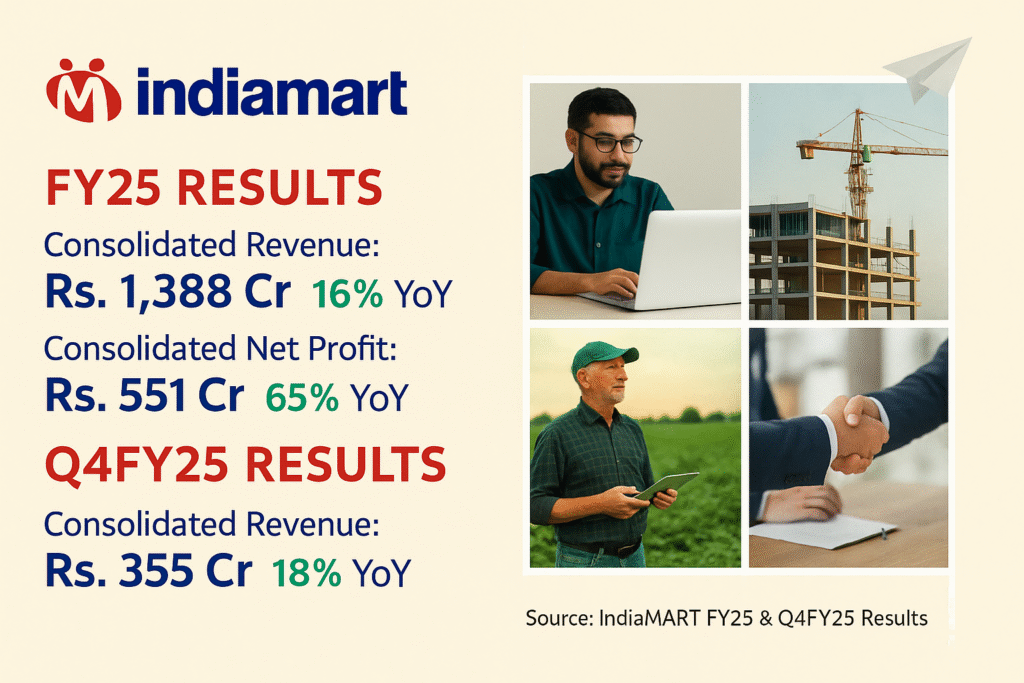
IndiaMART’s Q4 FY25 results are nothing short of spectacular. The company reported a consolidated net profit of INR 180.6 Cr, a massive 81.33% jump from INR 99.6 Cr in Q4 FY24. Revenue from operations grew 12.8% year-on-year to INR 355 Cr, up from INR 314.7 Cr in the same quarter last year. EBITDA also surged by 47.5% to INR 130.4 Cr, with margins improving to 36.7% from 28.1%.

We are excited to share IndiaMART's Q4FY25 & FY25 results! For FY25, our consolidated revenue surged by 16% YoY, reaching Rs. 1,388 Cr, while our consolidated net profit experienced a robust growth to Rs 551 Cr, marking a 65% YoY increase.

With every milestone, our resolve to… pic.twitter.com/kRe6VlcVNI

— IndiaMART (@IndiaMART) April 29, 2025

For the full fiscal year FY25, IndiaMART’s consolidated revenue reached INR 1,388 Cr, a 16% YoY growth, while net profit stood at INR 551 Cr, reflecting a 33% margin. Cash flow from operations was robust at INR 623 Cr, underscoring the company’s financial health. The board also recommended a final dividend of INR 50 per share, a significant hike from INR 20 in FY24, signaling confidence in sustained growth.

These numbers highlight IndiaMART’s ability to balance profitability with expansion, a key factor in its dominance within Startup India’s B2B ecosystem. But what’s driving this financial firepower? Let’s explore the operational metrics.

Operational Metrics: Driving the Numbers

IndiaMART’s operational excellence is the engine behind its INR 181 Cr profit surge. In Q4 FY25, the company registered 24 million unique business inquiries, a 14% YoY increase. Supplier storefronts grew 5% to 8.2 million, while paying suppliers rose to 214K, with a net addition of 3K subscribers. Collections from customers reached INR 465 Cr, and deferred revenue stood at INR 1,492 Cr, up 17% YoY.

Profit Zooms 81%: IndiaMART’s Q4 Net Profit Hits INR 181 Cr in FY25

These metrics reflect IndiaMART’s growing appeal as a trusted platform for businesses. Its ability to attract more suppliers and inquiries shows the platform’s scalability and relevance in a digital-first world. For Startup India, IndiaMART’s network effect—connecting buyers and sellers seamlessly—is a game-changer. The platform’s focus on enhancing matchmaking relevancy and user experience, as noted by CEO Dinesh Agarwal, has clearly paid off.

Strategic Moves Fueling Growth

IndiaMART’s Q4 success isn’t just about numbers; it’s about smart strategies. The company has doubled down on its core SME business while expanding into fintech, accounting, and SaaS solutions. Investments in subsidiaries like Busy Infotech, which contributed INR 16 Cr to Q4 revenue, have bolstered its portfolio.

The amalgamation of subsidiaries like Busy Infotech, Hello Trade Online, and Tolexo Online, approved by the National Company Law Tribunal, is set to streamline operations and boost efficiency. IndiaMART’s focus on onboarding quality suppliers and leveraging technology to improve customer engagement has also strengthened its value proposition.

CEO Dinesh Agarwal emphasized, “We continue to focus on onboarding quality suppliers, improving matchmaking relevancy, and enhancing the overall user experience on our platform.” This strategic clarity, combined with a strong balance sheet, positions IndiaMART to capitalize on India’s rising internet adoption among businesses.

Expert Insights: What’s Behind the Success?

Industry experts attribute IndiaMART’s profit zoom of 81% to its robust business model and adaptability. “IndiaMART’s ability to scale its supplier base while maintaining healthy margins is remarkable,” says Priya Sharma, a startup analyst. “Their investments in SaaS and fintech are strategic bets that align with the needs of SMEs in Startup India.”

Brokerages like Choice have raised their target price for IndiaMART, maintaining a “buy” call, citing its strong fundamentals. However, some, like Nomura, express concerns about high subscriber churn in the silver category, suggesting room for improvement in customer retention.

The company’s cash flow strength—INR 623 Cr in FY25—gives it the flexibility to invest in growth areas without compromising profitability. For Startup India, IndiaMART’s success underscores the potential of tech-driven marketplaces to transform traditional industries.

Future Outlook: Can IndiaMART Sustain the Momentum?

With INR 181 Cr in Q4 profits and a 16% revenue growth in FY25, IndiaMART is on a roll. But can it keep the momentum going? Analysts are optimistic, citing India’s growing digital economy and the platform’s strong market position. The company’s focus on expanding its buyer and supplier network, coupled with investments in technology, bodes well for long-term growth.

Challenges remain, including competition from players like Udaan and Moglix, and the need to address subscriber churn. Yet, IndiaMART’s track record of innovation and its ability to adapt to market needs make it a formidable player. As Agarwal noted, “We are confident of sustained long-term profitable growth as more businesses adopt the internet to grow.”

For Startup India, IndiaMART’s journey is a blueprint for building scalable, profitable businesses. Its Q4 FY25 performance reinforces its role as a leader in the B2B space, with INR 181 Cr as a testament to its enduring appeal.

Conclusion: A Bright Future for Startup India

IndiaMART’s Q4 FY25 performance, with profits zooming 81% to INR 181 Cr, is a shining example of what’s possible in Startup India. Its blend of financial discipline, operational excellence, and strategic investments has cemented its position as a B2B powerhouse. As the company continues to innovate and expand, it’s paving the way for other startups to thrive in India’s digital economy.

Whether you’re a startup founder, investor, or content creator, IndiaMART’s story offers valuable lessons. Want to stay updated on Startup India’s success stories? Follow our blog for more insights, and share your thoughts in the comments!

April 30, 2025 7 comments 444 views
FacebookTwitterLinkedinWhatsapp
Newer Posts
Older Posts

Follow Us

Facebook Twitter Instagram

Recent Posts

  • Breaking: Gemini Signs Three Years IPL Sponsorship Deal Worth Rs 270 Crore for IPL 2026

  • Startup India Seed Fund Scheme Incubators: How to Apply Now

  • Startup Application Rejection Rate Hits 67% – Avoid These Mistakes

  • Starting a Small Business in India in 2026? Here’s Your Complete Investment, Execution Plan

  • India’s Bionic Arm Breakthrough: 72kg Capacity at 10% Global Price

Newsletter

Subscribe my Newsletter for new blog posts, tips & new photos. Let's stay updated!

Categories

  • Advertising (2)
  • Agritech (3)
  • AI (63)
  • AI & DeepTech (26)
  • AI Tools (18)
  • Automobile (15)
  • Beauty & Wellness (3)
  • Bootstrapped Wins (3)
  • Crowdfunding Hub (1)
  • Debt Financing (1)
  • Digital (31)
  • Ecom (12)
  • EV (31)
  • Failure Lessons (1)
  • Fashion & Lifestyle (1)
  • Finance (36)
  • Fintech (6)
  • FoodTech (6)
  • Funding (17)
  • Government Schemes (12)
  • Green Energy (8)
  • HealthTech (4)
  • Investor Directory (1)
  • News (174)
  • Politics (12)
  • Real State (1)
  • Science (13)
  • Startup (150)
  • Startup Learning (12)
  • Startup Stories (14)
  • Technology (84)
  • Unicorn Journeys (4)
  • Women Entrepreneurs (6)

About Us

Startup IndiaX is a digital media platform covering India’s startup ecosystem. We bring you the latest news, founder stories, funding updates, and tech innovations.

Facebook Instagram Twitter Youtube

Featured

Startup India Seed Fund Scheme Incubators: How to Apply Now
January 2, 2026
Startup Application Rejection Rate Hits 67% – Avoid These Mistakes
December 30, 2025
Starting a Small Business in India in 2026? Here’s Your Complete Investment, Execution Plan
December 27, 2025

@2025 – All Right Reserved. 

  • Home
  • About Us
  • Privacy Policy
  • Contact
startupindiax.com
  • Home
  • News
  • Startup
  • Funding
  • Startup Stories
  • Sectors
    • Finance
    • Agritech
    • AI & DeepTech
    • Fintech
    • Green Energy
    • HealthTech
    • EV
    • Digital
    • Automobile