
Summary
- Rillet, AI accounting startup, closed a $100M Series C at a $1B valuation in roughly 48 hours, taking total funding past $200M.
- CEO Nicolas Kopp says Rillet isn’t cutting junior accounting jobs, but data shows consulting and audit firms are already hiring fewer entry-level staff.
- Indian CA firms, GCCs, and early-stage startups should watch this shift now, before it reshapes their own hiring pyramids too.
Two years ago, Rillet didn’t exist as a product companies could actually buy. This week, it’s worth $1 billion.
The AI-native accounting startup closed a $100 million Series C led by ICONIQ, with returning backers Sequoia Capital, Andreessen Horowitz and Oak HC/FT joined by new investors including Bain Capital Ventures, Battery Ventures, FirstMark and Creandum. It’s the company’s third fundraise in under a year, pushing total funding past $200 million, roughly ₹1,660 crore.
What actually turned heads wasn’t the amount. It was the speed. Founder and CEO Nicolas Kopp told reporters the round came together in about 48 hours, largely because Rillet’s board meeting a few weeks earlier had shown investors something hard to ignore: annualized revenue that had doubled in a single quarter, on top of an earlier quarter where it had already doubled once before.
What Rillet Actually Does
Rillet builds what it calls an “agent-first” ERP, artificial intelligence handling hundreds of accounting tasks at once so human accountants review transactions instead of keying them in by hand. It’s going after the ground legacy giants like Oracle, SAP and NetSuite have held for decades, particularly among fast-growing, venture-backed companies with complicated revenue models.
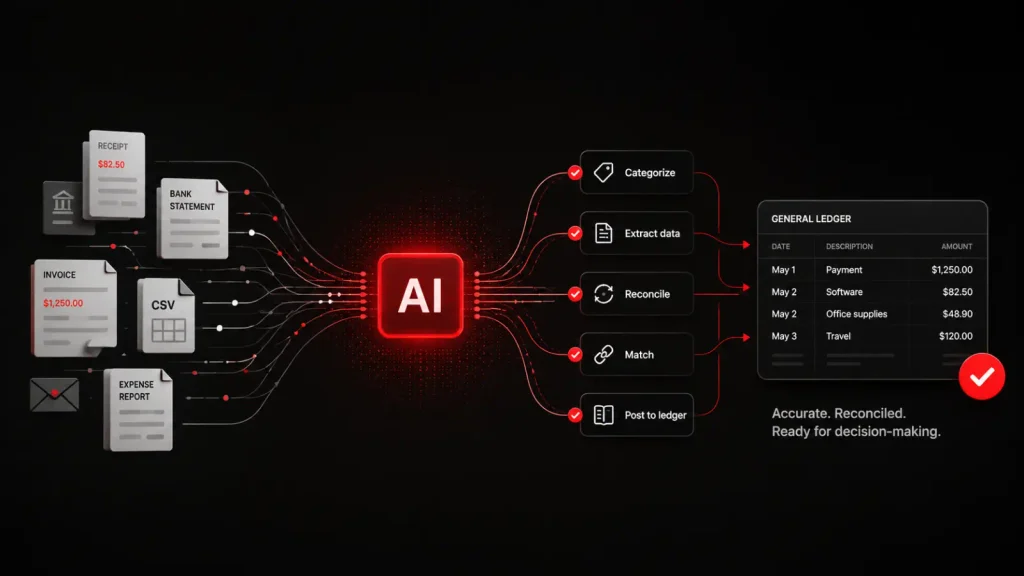
The traction is real. Rillet now counts more than 600 customers, including public companies and AI-era names like Neuralink, Skild AI and Mercor. On the audit side, it works with two of the Big Four, EY and KPMG, and says it now partners with more than half of the Accounting Today top 20 CPA firms in the US. Earlier this year it launched a formal alliance with EY focused on AI-native finance transformation, complete with risk controls built into the workflow.
For a category Kopp himself calls “traditionally a very old, stodgy” one, that’s a fast rewrite. He credits recent leaps in underlying AI models more than anything Rillet built alone. “Especially in the last six months, things started lighting on fire in a good way,” he said, describing tasks that once ate a full workday now wrapping up in minutes.
Read More: Peak XV, Together Fund Join $280M Round as Wispr Flow Hits $2B Voice AI Valuation
The Jobs Question Kopp Keeps Getting Asked
Every AI founder eventually gets the same question: is this replacing people? Kopp’s answer is consistent, if a little too clean. He says he isn’t seeing customers install Rillet and lay off their accounting teams. Instead, companies get selective about who they hire next and save costs that way. “We don’t see our customers firing their teams, rather being able to be selective in hiring,” he said.
There’s a real tailwind behind that framing too. The number of students graduating with accounting degrees has been falling since 2010, and a recent Controllers Council survey found 61% of finance leaders struggled to find qualified accounting and CPA talent in the past year. In that context, AI genuinely does look like relief rather than replacement, at least for firms desperate for hands.
But zoom out from Rillet’s own customer base to the consulting and professional services industry at large, and the picture gets less comfortable.
Research from workforce analytics firm Revelio Labs shows hiring at leading consulting firms has fallen steadily since 2023, with overall talent demand roughly 20% below its 2023 peak and demand for consultant-specific roles down closer to 40% over the same stretch. Crucially, the drop isn’t even. Firms are placing more weight on senior hires who can oversee and interpret AI-generated output, while entry-level roles shrink and become far more selective.
That matches what’s playing out at the Big Four. An FT analysis of over 50,000 job postings found AI-related roles made up nearly 7% of listings across Deloitte, EY, KPMG and PwC last year, while audit roles, the traditional entry point into the profession, accounted for under 3%. KPMG has advertised for managers with chatbot prompt engineering experience. EY has sought staff who can help clients adopt generative AI. The old formula, hire large classes of junior associates and winnow them over a decade, is quietly being rebuilt around fewer, more senior entry points.
Even at the interview stage, the bar has moved. McKinsey has started testing candidates on its internal AI tool, Lilli, as part of final-round interviews, and some BCG offices reportedly stopped reviewing cover letters altogether once AI made them trivial to write well. Firms aren’t just automating grunt work anymore. They’re screening for who can direct the automation.
Read More : Yulu Raises $93 Million, But Its Investors Are Sending a Mixed Signal
Why This Matters for Indian Founders and Finance Teams
None of this is a US-only story. India’s CA firms, GCCs and startup finance functions sit downstream of exactly the same pressure, and in some ways face it sooner.
Big Four India arms and large Indian audit practices already lean on large cohorts of articled clerks and junior associates for exactly the kind of reconciliation and data-entry work Rillet automates. If AI-native tools compress that work from days to minutes at Rillet’s US customers, the same compression is coming for Indian back offices, GCC finance teams and CA practices serving startups, whether or not they’ve adopted an AI-native platform themselves yet.
For early-stage founders specifically, there’s a more immediate, practical read. Lean startup finance teams don’t need to hire a full bookkeeping bench anymore if a founder or a single finance hire can supervise an AI-assisted workflow instead. That changes the calculus on when to make a first finance hire, and what that hire should actually be good at: judgment and review, not data entry.
Kopp’s own instinct on this is worth borrowing directly. He’s built Rillet with a team heavy on accounting backgrounds, and insists domain expertise remains the point. “Our message is not that we’re coming after jobs,” he said. “We’re positioning AI as a helper to that individual and what they can achieve.” Whether that framing holds up as entry-level hiring keeps thinning across the profession is the question worth watching over the next year, not this quarter’s valuation number.
Rillet’s billion-dollar valuation is a funding story on the surface. Underneath it is a hiring story, and it’s one Indian founders, CA firms and finance leaders would do well to read closely before it shows up in their own org charts.
FAQs
What is Rillet?
Rillet is an AI-native ERP and accounting platform that automates bookkeeping, reconciliation and financial reporting for venture-backed and high-growth companies, founded in 2021 by Nicolas Kopp and Stelios Modes.
How much has Rillet raised, and at what valuation?
Rillet closed a $100 million Series C led by ICONIQ, taking its total funding past $200 million (roughly ₹1,660 crore) at a $1 billion valuation, making it a unicorn.
Is Rillet replacing accounting jobs?
CEO Nicolas Kopp says Rillet is not built to replace accountants, including junior ones, and that customers are becoming more selective in hiring rather than cutting existing teams.
Why are consulting firms hiring fewer junior staff even as they grow?
Data from Revelio Labs and Big Four job postings shows firms are automating entry-level analysis and audit work with AI while increasing emphasis on senior roles that can oversee and interpret AI output.
How does this affect Indian startups and CA firms?
Indian GCCs, CA practices and early-stage finance teams face the same pressure as US firms, since AI-native tools compress the same reconciliation and data-entry work that has traditionally justified large junior hiring pyramids.
Who are Rillet’s competitors?
Rillet competes with newer AI-native accounting tools like Campfire, Puzzle and Digits, as well as legacy ERP giants including Oracle, SAP and NetSuite.