
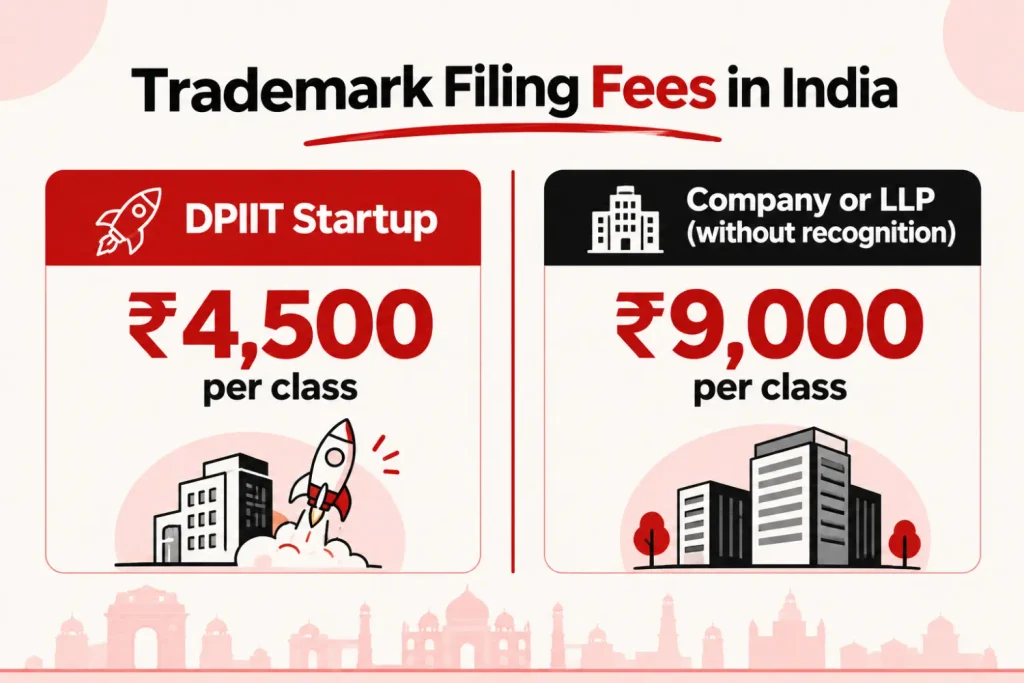
- DPIIT-recognised startups pay ₹4,500 per class to file; a Pvt Ltd or LLP without recognition pays ₹9,000, so get the certificate first.
- Two clocks decide your application: 30 days to answer an examination report, and 2 months to file a counter-statement if someone opposes.
- Expect 7 to 18 months if nothing goes wrong. SIPP’s last term ended 31 March 2026, so confirm free facilitator help before counting on it.
Keep that in mind, because trademark registration for startups in India looks cheap and simple on paper. It’s neither as simple as the fee suggests nor as slow as the horror stories claim. Here’s how it works, what it costs, and where founders get caught.
In August 2025, Boult Audio rebranded as GoBoult and called it a growth move. Delhi High Court records later showed the change came after a trademark fight with boAt that had run since 2019, as Inc42 reported.
On 15 September 2025, a two-judge bench upheld the injunction against Boult’s old name, finding it deceptively similar to boAt’s. Boult had argued its marks were registered. That didn’t settle it.
What it costs, and the catch in the headline number
The government e-filing fee on Form TM-A is ₹4,500 per class for individuals, DPIIT-recognised startups and Udyam-registered small enterprises. Companies and LLPs without that status pay ₹9,000 per class. Paper filing costs ₹5,000 and ₹10,000 respectively, so there’s little reason to file on paper.
Here’s the catch. Your Pvt Ltd doesn’t get the lower rate just for being small. You get it by holding a DPIIT recognition certificate or an Udyam registration and submitting it with the application.
| Applicant | E-filing fee per class | Three classes |
|---|---|---|
| Individual, DPIIT startup, Udyam MSME | ₹4,500 | ₹13,500 |
| Company or LLP without recognition | ₹9,000 | ₹27,000 |
Classes matter more than most founders expect. You pay per class of goods or services, so a brand that sells physical products and also runs an app may need more than one. Pick the classes you actually trade in or plan to enter soon.
Attorney fees are separate and vary, so get two or three quotes. The fee figures here match several legal and compliance guides citing the Trade Marks Rules, 2017. Check the current schedule on IP India before you pay.
The steps, in the order that saves money
- Search your name first. Check IP India’s public trademark search for identical and similar marks, then your domain and social handles. The Boult case turned on names that sounded and looked alike, not exact copies.
- Get DPIIT recognition if you’re eligible. The government charges nothing, and you apply online through the Startup India portal. Guides report approval in anywhere from two to ten working days. Your entity must already be incorporated.
- Choose your classes. Fewer classes means a smaller bill.
- File Form TM-A online on the IP India portal, usually with a digital signature certificate, and claim the concession. You get an application number straight away, which is your dated record of filing.
- Watch for the examination report and reply on time (more on that below).
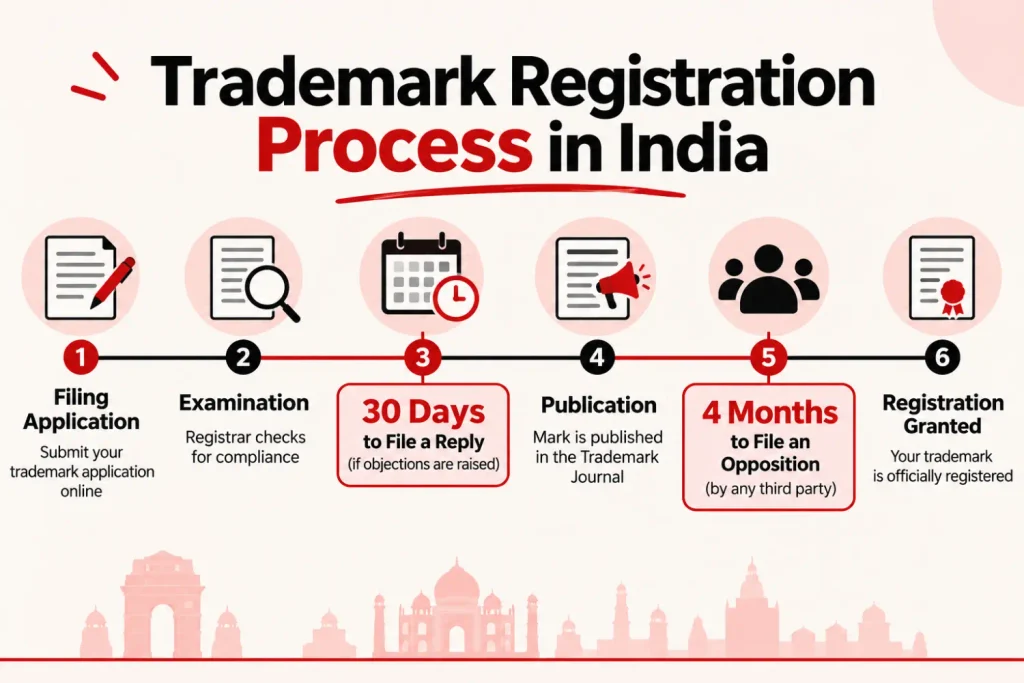
- Publication and registration. If the examiner accepts, the mark appears in the Trade Marks Journal and a four-month opposition window opens. With no opposition, it moves to registration. A registration lasts 10 years and renews through Form TM-R.
How long it takes, and why no two guides agree
Ask five guides and you’ll get five answers. A clean application, with no objection and no opposition, is put at roughly 7 to 12 months by some and 12 to 18 months by others. If a rival opposes, one firm’s estimate runs to 24 to 36 months or longer.
| Stage | What to expect |
|---|---|
| Filing | Application number is instant |
| First examination report | Estimates range from 1 to 6 months |
| Your reply | 30 days from the report |
| Acceptance to publication | About 1 to 2 months |
| Opposition window | 4 months, fixed |
Part of the gap is the examination backlog. One filing firm says the wait for a first report has fallen to 3 to 6 months, from 8 to 10 months in 2022 to 2025. Legal 500 notes the Registry has been working to clear its backlog, including an August 2026 drive on pending oppositions.
Plan for the long end anyway. The opposition window can’t be shortened, whatever the Registry does elsewhere.
Two deadlines that end applications
The first clock is 30 days. That’s how long you have to reply to an examination report. Miss it and the application heads towards abandonment, according to Mondaq.
The second is two months. If someone opposes, your counter-statement is due within that window, or the application is treated as abandoned under Section 21 of the Trade Marks Act.
The Registry now communicates mostly by email and online systems. A notice sent to an outdated email or address is unlikely to count as unserved just because you didn’t see it. Rule 115 also allows no more than two adjournments of 30 days each.
If you changed your email or let a freelance agent handle the filing, check the details on record. Legal 500 also reports that attorneys had to complete e-KYC, with the final deadline at 30 September 2026. Confirm yours did.
The scheme to check before you rely on it
Some guides still say that under SIPP, the Scheme for Facilitating Start-ups Intellectual Property Protection, an empanelled facilitator files for you and the government pays their fee. The startup pays only the statutory fee.
The catch is timing. One legal explainer reports that the most recent notified version ended on 31 March 2026, with no extension or replacement announced as of its latest update. Another firm tells startups not to assume the support is currently available.
The 50% statutory fee concession is a separate rule and continues either way. Before you pick a facilitator expecting a zero professional fee, confirm SIPP’s status on IP India’s site.
What registration doesn’t do on its own
Once you’ve filed, you can use ™. Use ® only after the mark is registered.
Registration isn’t a trump card either. Under Section 34, a registered owner can’t stop someone who has used an identical or similar mark continuously from an earlier date, as Legal 500 explains. That’s why dated invoices, packaging and first-use records matter as much as the certificate.
And registration didn’t end the boAt fight. Boult argued its marks were registered, and the court still found the two names deceptively similar.
Our read: file before the logo goes on the packaging
The ₹4,500 is the smallest number in this story. The expensive ones are a rebrand, a lost domain and months of marketing tied to a name you can’t keep. Boult spent more than five years in court before it changed its name.
If you’re a Pvt Ltd or LLP, get DPIIT recognition first so you file at ₹4,500, not ₹9,000. The Government Scheme Finder in the StartupIndiaX Founder Toolkit can show what else you qualify for once you hold the certificate. If you hit a similar existing mark or an objection, pay for an hour with a trademark attorney.
Before you file this week:
- Search IP India and your domain and social handles for similar names before locking in a logo.
- Get DPIIT recognition first, then file Form TM-A at the ₹4,500 rate for only the classes you need.
- Diarise the 30-day reply and two-month counter-statement deadlines, and keep your email current on Registry records.
Have you been through a trademark objection or opposition? Tell us what surprised you in the comments. Share this with a co-founder who’s still running on an unregistered name, and browse more filing and compliance guides in the Founder Toolkit.
Last updated: November 2026. Fees and timelines change, so verify them on IP India before filing.
FAQs
How much does trademark registration cost for a startup in India?
A DPIIT-recognised startup pays ₹4,500 per class when e-filing Form TM-A, half the ₹9,000 charged to companies and LLPs without recognition. Attorney fees are extra and vary by provider.
How long does trademark registration take in India?
A clean application with no objection or opposition typically takes about 7 to 18 months, depending on the source. If someone opposes, guides put the total at 24 to 36 months or longer.
Do I need DPIIT recognition to file a trademark?
No, anyone can file. But the ₹4,500 rate needs a DPIIT certificate or Udyam registration. Without one, a company or LLP pays ₹9,000 per class. Recognition costs nothing and is applied for online.
What happens if I miss the 30-day examination reply deadline?
Your reply is due within 30 days of the examination report. Miss it and the application can be treated as abandoned, so you may have to file again and pay the fee again.
Can I use the ® symbol as soon as I file?
No. Use ™ while your application is pending and switch to ® only once the mark is registered. Using ® early can create legal trouble.