
SUMMARY
- The 80 IAC tax exemption gives a 100% profit deduction for any three consecutive years within your first ten.
- Recognition isn’t enough. You need a separate Inter-Ministerial Board certificate, and only companies and LLPs qualify.
- The turnover cap rose from ₹100 crore to ₹300 crore from April 2026, and the rule now sits in Section 140.
Three years of profit with no income tax. For a startup that finally turns profitable, that’s an offer worth planning around.
That’s what the 80 IAC tax exemption promises: a 100% deduction on profits for any three consecutive years you choose within your first ten. Yet only a small slice of recognised startups ever claim it. As of May 2025 reporting, over 3,700 startups had received the exemption since the scheme began, while around 1.6 lakh were recognised. We couldn’t find a newer count.
The reason is simple. Founders treat the DPIIT certificate as the finish line. For the 80 IAC tax exemption, it’s the starting line.
80-IAC is now Section 140, and the exemption lives on
One thing to clear up first. From 1 April 2026, the Income-tax Act, 2025 carries this deduction as Section 140, with the same structure: 100% of profits for three consecutive tax years out of ten. Claims for earlier years continue under the old section.
So if you’re searching for the 80 IAC tax exemption, you’re in the right place. Just know that the law you’ll actually claim under may carry a new number.
Test 1: Are you a company or an LLP?
Only private limited companies and LLPs can claim the deduction. DPIIT recognition is wider, and registered partnership firms can get it. The tax holiday isn’t open to them.
If you run a partnership firm and want the 80 IAC tax exemption, that’s a structuring question for your CA before anything else.
Test 2: Were you incorporated inside the window?
Your startup must be incorporated on or after 1 April 2016 and before 1 April 2030. Budget 2025-26 pushed that end date out from 2025, which gave newer ventures more room.
The three years you claim also have to fall within the first ten years from the year of incorporation.
Test 3: Does your turnover stay under the cap?
This is where the rules just changed. Until FY 2025-26, turnover couldn’t exceed ₹100 crore in the year of the claim. The Finance Act, 2026 raised the cap to ₹300 crore under Section 140, from tax year 2026-27.
Two cautions. Plenty of guides still print ₹100 crore, so check the date on whatever you’re reading. And don’t mix this up with the recognition limit. A regular startup is recognised up to ₹200 crore, and Deep Tech up to ₹300 crore.
Our reading: since a regular startup that crosses ₹200 crore stops being recognised, the extra headroom matters most to Deep Tech companies. Confirm your own position with a CA.
Test 4: Is the business genuinely new?
The deduction applies to an eligible business working on innovation, development or improvement of products, processes or services, or a scalable model with strong potential for jobs or wealth creation.
It also can’t be a business formed by splitting up or reconstructing an existing one. Reviewers read this closely, so your 80 IAC tax exemption application needs a specific, honest account of what’s new.
Read More: DPIIT Recognition Rejected? 9 Reasons Behind It and the Fix for Each
Test 5: Do you hold the IMB certificate?
This is the test most founders miss. DPIIT recognition does not grant the deduction. You apply separately on the Startup India portal, and the Inter-Ministerial Board decides whether to issue a certificate of eligible business.
No certificate means no 80 IAC tax exemption in your return. If the board rejects you, one practitioner guide says you can reapply after three months. Check the current rule on the portal before you plan around it.
Read More: Startup India Certificate 2026: The DPIIT Rules Changed, and Most Guides Are Outdated
Test 6: Can you claim it in years that matter?
You choose the three consecutive years, and that choice is worth real money. Most early-stage companies lose money in their first few years, and a 100% deduction against a loss saves nothing.
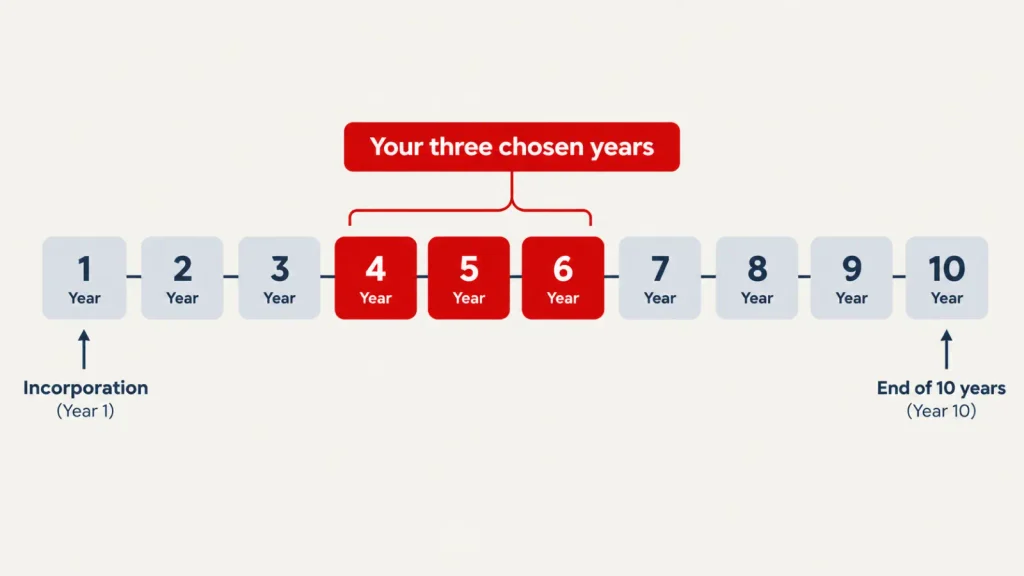
Picture a Bengaluru SaaS startup incorporated in 2022 that turns profitable in its fourth year. It can pick its three years from that profit run, as long as they’re consecutive and inside the first ten. This is an illustration, not a real company.
When you claim, expect to file a CA-certified audit report (Form 10CCB under the old Act) along with your return.
Read More: Startup India Certificate 2026: Step‑by‑Step Guide to DPIIT Recognition (NSWS Portal)
The catches that surprise founders
“Tax-free” needs a footnote. Practitioner guides say private limited companies may still pay Minimum Alternate Tax at 15% of book profits during the holiday, with the MAT paid carried forward as a credit. LLPs are treated differently.
Two guides also warn that the 80 IAC tax exemption can’t be combined with the concessional 22% and 15% corporate tax regimes, so you pick one path. We couldn’t confirm this against a primary source, so run the numbers with your CA before you assume zero tax.
What founders should take from this
Treat DPIIT recognition as step one, not the prize. If profits are likely within a few years, start building the IMB application early, with clean audited books and a sharp innovation write-up.
Then compare what else you can claim. Our startup schemes guide covers the wider set, and the Government Scheme Finder on our Founder Toolkit helps you shortlist.
Read More: Government Schemes for Startups in India 2026: The Guide That Tells You What Not to Apply For
If you remember three things about the 80 IAC tax exemption:
- Treat DPIIT recognition as step one. You need a separate IMB certificate, and a company or LLP structure.
- Check your numbers against the current rules: incorporated before April 2030, turnover within the cap, claims inside your first ten years.
- Choose your three years deliberately, because a deduction on a loss saves nothing. Confirm MAT and tax regime with a CA.
Which test is your startup closest to missing? Tell us in the comments, and share this with a founder who’s waiting on their first profitable year.
FAQs
What is the 80 IAC tax exemption?
It’s a 100% deduction on profits from an eligible business for any three consecutive years within the first ten from incorporation. It’s open to eligible DPIIT-recognised startups that hold an Inter-Ministerial Board certificate.
Is 80-IAC now Section 140?
Yes. From 1 April 2026, the Income-tax Act, 2025 carries the startup deduction as Section 140, with the same three-in-ten-years structure. Claims for earlier years continue under the old Section 80-IAC.
What is the turnover limit for the 80 IAC tax exemption?
Until FY 2025-26, turnover couldn’t exceed ₹100 crore. The Finance Act, 2026 raised it to ₹300 crore from tax year 2026-27, tested for the year in which you claim the deduction.
Does DPIIT recognition automatically give me the exemption?
No. You apply separately on the Startup India portal and need a certificate from the Inter-Ministerial Board before you can claim the deduction in your income tax return.
Can a partnership firm claim the 80 IAC tax exemption?
No. Registered partnership firms can hold DPIIT recognition, but the deduction is limited to private limited companies and LLPs. A partnership would need to restructure first, so speak to your CA early.
Can I reapply if the board rejects my application?
Practitioner guides say you can reapply three months after the rejection email. Confirm the current rule on the Startup India portal, since its own guidance is what applies to you.