SUMMARY
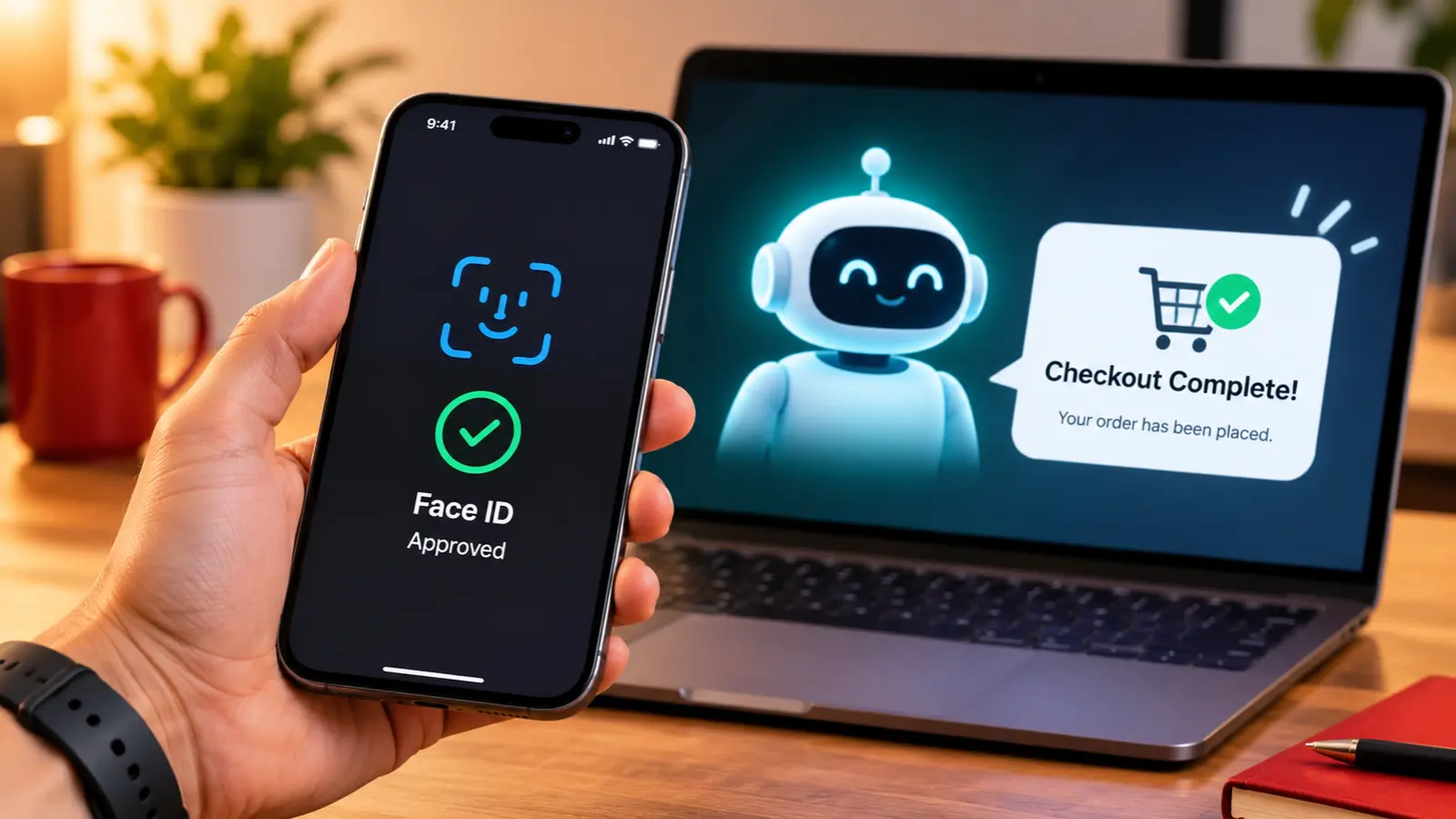
- ChatGPT Wallet, live since 13 November, lets OpenAI’s dots agents pay with Visa, Mastercard or Amex cards after a Face ID or fingerprint check.
- It’s US-only for now: limited ChatGPT Pro users, US-issued cards, dot conversations only, and every purchase needs your approval.
- Indian D2C founders should audit checkout, fraud rules and product data now, because agent-led buying is coming and blocked bots mean lost sales.
OpenAI has given ChatGPT a way to pay. ChatGPT Wallet went live on 13 November 2026, and it lets the company’s AI agents finish a purchase for you using your own Visa, Mastercard or American Express card. The agent never sees the real card number. Neither does the store.
It’s a limited launch, but it’s the clearest sign yet that OpenAI wants ChatGPT to handle the whole shopping trip, from comparing products to hitting “buy.” The company says 1.2 billion people use ChatGPT every week, and many already use it to research what to buy. Wallet closes the gap between deciding and paying.
How the card stays hidden
You add a card once, either in Wallet settings or when your agent asks for payment details at checkout. When the agent is ready to buy, you approve with Face ID, a fingerprint or a similar check. The card network then issues a one-off token, a stand-in with its own card number, security code and expiry date, and the store gets paid through that.
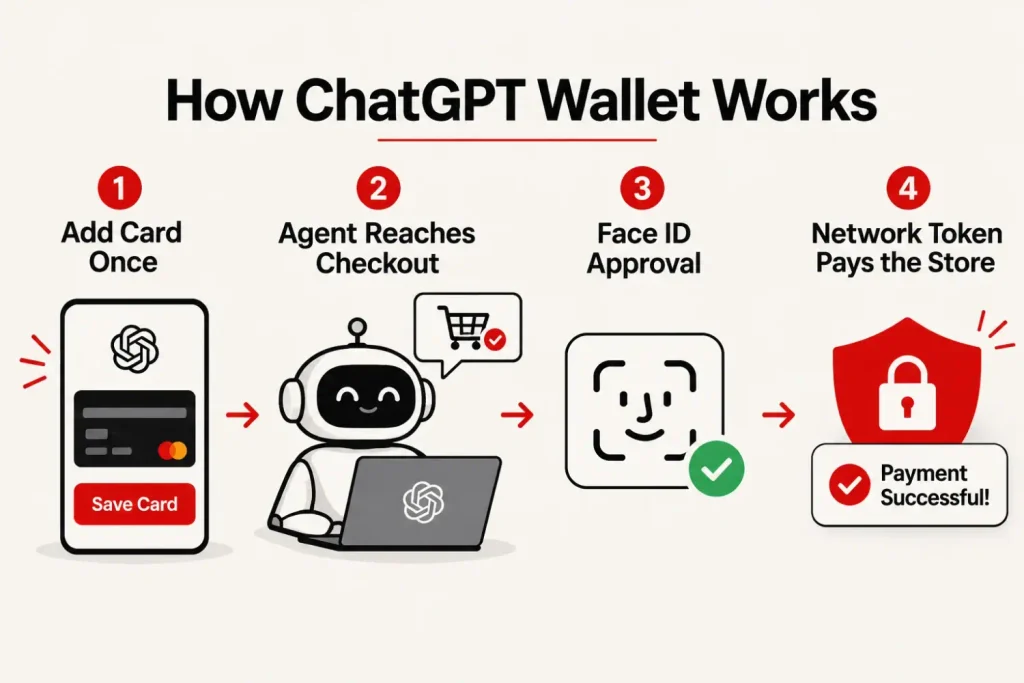
OpenAI says you keep your card’s rewards and its protections for eligible disputes, such as a defective item. It also says the token works with existing checkout flows, so stores don’t need a Wallet-specific setup. American Express, Mastercard and Visa built the system with OpenAI.
The agent in question is a “dot,” OpenAI’s always-on personal agent. At launch, ChatGPT Wallet works only inside dot conversations, not in regular Chat, Work or standalone Codex threads.
Who can actually use it
Not many people, yet. Access is limited to a small group of ChatGPT Pro subscribers in the US, aged 18 and above, with eligible US-issued cards. OpenAI’s help page lists American Express, Chase, Mastercard and Visa. Debit and virtual cards aren’t supported.
Every purchase needs your approval right now. That’s the whole point of the biometric check. OpenAI hasn’t said how many Pro users have access, which retailers support it, or when Wallet will open to other plans or countries. So if you’re in India, you can’t use it today.
The catch: not every store wants an AI shopper
Paying is only half the problem. The other half is getting through the door.
OpenAI admits as much, saying websites “need to ensure agents are not inadvertently blocked.” Reports say Amazon blocks outside AI agents, and Engadget reports that Delta and United have banned agents from making purchases. Fraud systems add a second hurdle, because a legitimate agent purchase can look like bot traffic and get declined.
That’s why OpenAI released a Commerce Partner Playbook alongside the wallet, with guidance for businesses on adapting websites, payment systems and risk management for agent purchases. CNBC reported that OpenAI isn’t taking a transaction cut at launch. Launch pricing is rarely final pricing, so that line deserves another look later.
Read More: Meta Muse Ember Is Cheap, Fast and Built for Agents. Here’s What Founders Should Know
The brake comes off later
Today, you’re the final check on every purchase. OpenAI wants that to change. It expects people to eventually hand purchases to their agent entirely, setting limits on spending, product categories and time periods, with extra safeguards. None of that is live yet, and OpenAI hasn’t said when it will be.
When it does arrive, the Face ID prompt stops being the brake and becomes a setting.
What Indian founders should take from this
India has seen a version of this film. In October 2025, NPCI, Razorpay and OpenAI announced a pilot that let users pay through UPI inside ChatGPT, with BigBasket among the early merchants. Cashfree launched an agentic payments tool for merchants around the same time. ChatGPT Wallet is the card-network answer to the same idea, starting in the US.
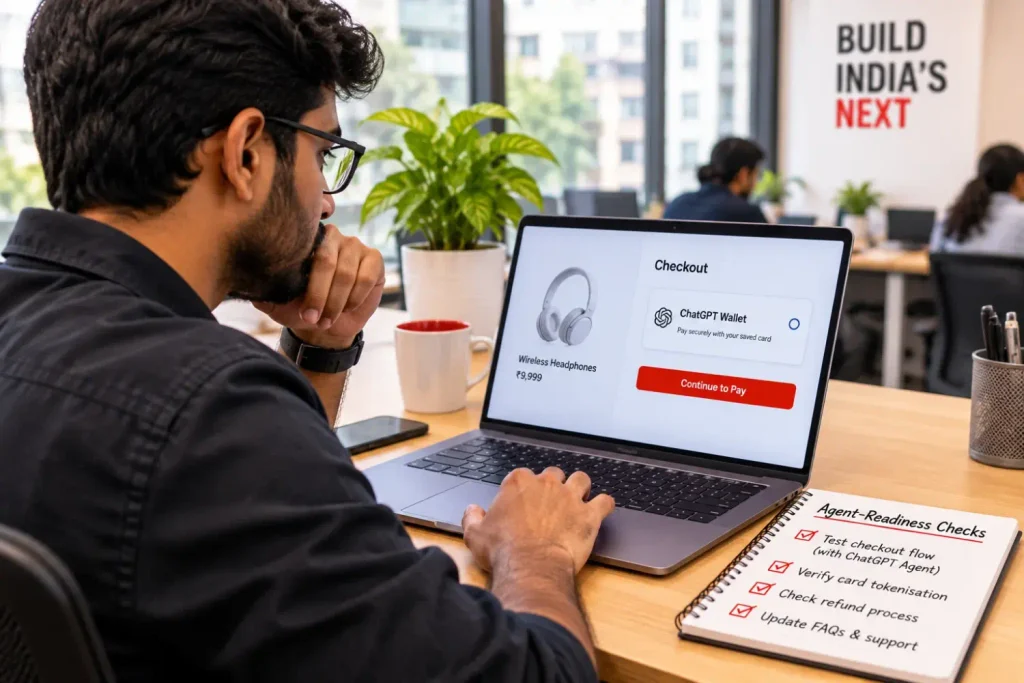
For a D2C founder, the StartupIndiaX take is simple. The shopper’s agent is becoming a customer you never see. It will read your product pages, compare you with three rivals and check out in seconds, if your site lets it.
Read More: ChatGPT Is Becoming a Shopfront: What Businesses in ChatGPT Means for Founders
Three things are worth testing before this reaches Indian users. Does your checkout break when an automated browser uses it? Does your fraud tool flag tokenized or unusual-device payments? And are your prices, sizes and delivery times written clearly enough for a machine to compare you fairly?
Before this reaches India
ChatGPT Wallet is small today. The questions it raises aren’t. Three moves for founders:
- Run your checkout with an automated browser and note exactly where it fails.
- Ask your payment gateway how it treats tokenized and agent-initiated payments.
- Clean up product data so an agent can compare you without guessing.
Would you let an AI agent spend your money? Tell us in the comments, and share this with the D2C founder in your group who still thinks checkout is only for humans. More on AI, payments and the founders building around them is always on StartupIndiaX.
FAQs
What is ChatGPT Wallet?
It’s an OpenAI payment feature that lets dots agents complete online purchases for you. You save a card once, approve each purchase with biometrics, and the agent pays using a token instead of your real card details.
Is ChatGPT Wallet available in India?
No. It launched on 13 November 2026 for a limited group of ChatGPT Pro subscribers in the US with US-issued cards. OpenAI hasn’t said when it will reach other countries or plans.
Does the AI agent see my card number?
No. The card network issues a one-off token with its own number, security code and expiry date. Neither the agent nor the merchant sees your actual card details, according to OpenAI.
Can ChatGPT Wallet buy things without asking me?
Not at launch. You approve every purchase with Face ID, a fingerprint or a similar check. OpenAI plans to add spending limits and pre-approved purchases later, but those features aren’t live yet.
Which cards work with ChatGPT Wallet?
Eligible US-issued American Express, Chase, Mastercard and Visa cards. Debit cards and virtual cards aren’t supported at launch, and the feature works only inside dot conversations.
Why might some stores reject agent purchases?
Some sites block automated agents, and fraud systems can decline purchases that look like bot activity. OpenAI says websites must make sure legitimate agents aren’t blocked, and released a playbook to help.