SUMMARY
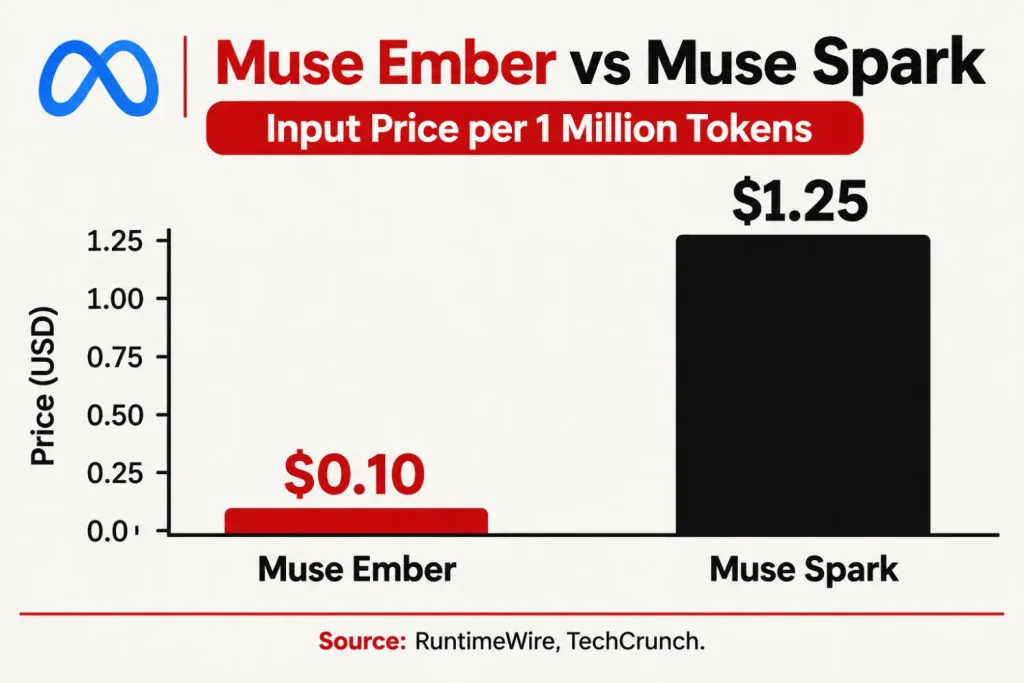
- Meta Muse Ember costs $0.10 per million input tokens versus $1.25 for Muse Spark, and targets high-volume agent work like routing and extraction.
- Meta claims Ember beats Claude Haiku 5.5 and GPT-6 Luna on cost per task, and early third-party benchmarks reportedly back the cost-performance pitch.
- Founders building agents should test Ember on the repetitive layer and keep a stronger model for planning, as Meta’s Wonder-plus-Ember setup suggests.
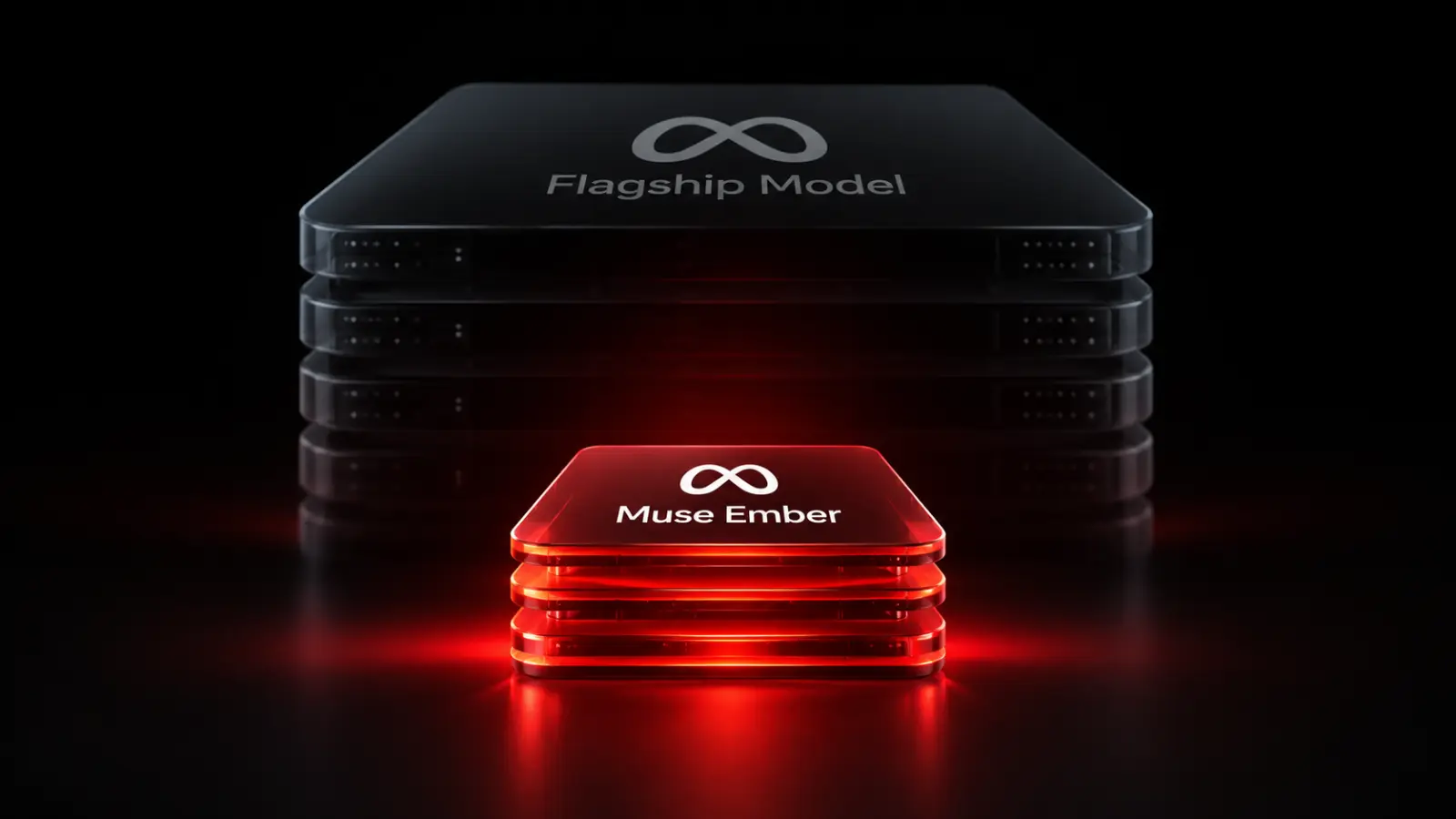
Meta has launched an AI model that isn’t trying to be the smartest in the room. Meta Muse Ember, released on November 9, is the company’s smallest and cheapest Muse model so far, built for the repetitive work AI agents do thousands of times a day.
The price says it all. Ember costs $0.10 per million input tokens, according to RuntimeWire. Muse Spark, Meta’s mid-weight model, runs at $1.25.
If you’ve watched an agent’s API bill climb as usage grows, that gap is the story.
The boring work is the point
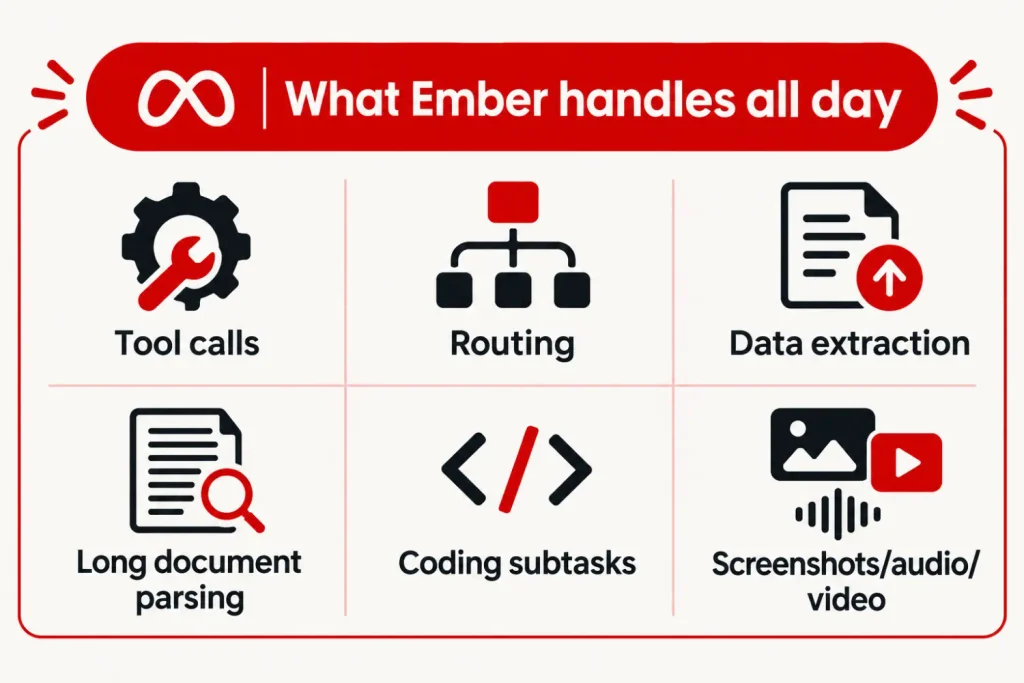
Meta Superintelligence Labs describes Ember as built for complex reasoning execution and the jobs agents repeat all day, according to TechCrunch. In practice that means tool calls, coding subtasks, routing, data extraction and long document parsing.
Think about what a real agent spends its time on. Reading an invoice. Deciding which team gets a ticket. Running a test and fixing one small error. None of it needs a frontier model, but all of it adds up fast.
Ember also handles more than text. Meta trained it across text, images and audio, so an agent can work from screenshots, charts, scanned documents, voice memos and video without a second model. Technobezz reports a context window of 1 million tokens, which helps with long files. Developers can reach Ember through the Meta Model API and Muse Code.
Wonder plans, Ember does the volume
Ember is the first model Meta trained using Muse Wonder, its flagship, according to SiliconANGLE. Meta didn’t say which part of the process Wonder handled. The pairing is deliberate. In Meta’s words, “Muse Wonder plans, Muse Ember handles the volume.”
TechCrunch’s example is a customer-support agent. A heavier model sets the rules for a type of issue, then a lighter one applies them across tens of thousands of cases.
Picture a Bengaluru D2C brand in the middle of a festive sale. Refund requests, delivery queries and size-exchange tickets pour in. Writing the policy once is the hard part. Running it fifty thousand times is the expensive part, and that’s the slice Ember is aimed at. (This is our illustration, not a Meta customer case.)
Read More: Neuralink Telepathy Explained: What It Is, How It Works and Who Can Use It
Does it really beat Haiku and Luna?
Meta says yes, on cost per task. Using Artificial Analysis’s composite benchmark, its chart shows Ember as both cheaper and smarter than Anthropic’s Claude Haiku 5.5 and OpenAI’s GPT-6 Luna. Digit carries the same claim. TechCrunch adds that Ember is also cost-competitive with open-source options like DeepSeek V4.1 Flash and GLM 5.3 Flash.
Outside testers appear to agree, at least so far. Gigazine reports that Artificial Analysis, Vals AI and Arena.ai have published results, with Ember matching or beating rivals at lower cost, especially on agent work and web development.
Two cautions, though. Haiku and Luna are the lighter, cheaper models from Anthropic and OpenAI, not their top tiers, so this isn’t a fight with the flagships. And we found the $0.10 input price but no confirmed output pricing, even though agents generate plenty of output. Check the full rate card before you build a budget around one number.
Read More: Did Alexandr Wang’s Meta Muse Justify a $14.3 Billion Bet? It Beat ChatGPT, Then the Stock Slipped
Where Ember sits in Meta’s lineup
Ember is the fourth model under the Muse brand. Spark, the mid-weight model, arrived in April, followed by Spark’s open-source twin Glimmer in August and the Wonder frontier model in October. The Muse Agent consumer product launched in September.
That’s a full ladder now, from flagship to budget workhorse, the same tiered setup Anthropic and OpenAI run with their own model families.
What this means for founders and investors
Here’s our read. Cheap inference is turning into a margin story for AI-first startups. Many Indian teams building on top of someone else’s model pay per token, so a credible small model from a fourth major lab puts pressure on everyone’s pricing. Investors who ask about gross margins on AI products now have a sharper question: which model handles which step?
What to watch next is whether Meta publishes complete output pricing, how Ember performs outside vendor-picked charts, and whether rivals answer with cuts to their own small tiers.
But don’t rebuild your stack on a launch-day chart. Three moves are worth making:
- Test Ember on one high-volume, low-risk step, like routing, tagging or extraction.
- Measure cost per completed task, not price per token, since retries can erase a cheap rate.
- Keep a stronger model for planning and edge cases, the same split Meta pitches with Wonder and Ember.
Meta hasn’t said anything India-specific in the coverage we found, so check regional availability and billing before you commit.
The short version: Meta Muse Ember won’t replace your best model. It might replace the expensive way you’re using it.
Building with AI agents? Tell us in the comments which step you’d hand to Ember first, and explore more AI and startup coverage on StartupIndiaX.
FAQs
What is Meta Muse Ember?
Meta Muse Ember is the smallest and cheapest model in Meta’s Muse family, released on November 9, 2026. It’s built for repetitive agent work such as tool calls, routing, data extraction, long document parsing and small coding tasks.
How much does Muse Ember cost?
Input tokens cost $0.10 per million, compared with $1.25 for Muse Spark. We couldn’t find confirmed output token pricing, so check Meta’s API pricing before budgeting, since agents generate output tokens too.
How does Muse Ember compare to Claude Haiku 5.5 and GPT-6 Luna?
Meta says Ember is cheaper and scores higher on Artificial Analysis’s composite benchmark, plotted against cost per task. That’s a vendor claim, so run your own tests on your actual workload before switching models.
Where can developers use Muse Ember?
Muse Ember is available through the Meta Model API and Muse Code, under the model name muse-ember-1.0. We couldn’t confirm India-specific availability or rupee pricing, so check your account region before building on it.
Can Muse Ember handle images and audio?
Yes. Meta trained Ember across text, images and audio, so an agent can read screenshots, charts and scanned documents, or work from voice memos, meeting recordings and video without calling a separate model.
Should startups switch to Muse Ember?
Not wholesale. Test it on one high-volume, low-risk step like routing or extraction, measure cost per completed task, and keep a stronger model for planning and tricky edge cases.