SUMMARY
- India now runs more than 1,000 active incubators, so the real challenge for founders is fit, not access.
- T-Hub built Skyroot Aerospace; IIT Madras Incubation Cell backed both Ather Energy and Agnikul Cosmos.
- CIIE.CO, NSRCEL, and NASSCOM 10,000 Startups each specialise differently: pick based on stage, sector, and city, not prestige.
Startup Incubators That Built Skyroot, Ather Energy and Agnikul, India’s incubation network has grown fast. Research jointly released by IIT Madras’s CREST and IIM Bangalore’s NSRCEL found the country now has more than 1,000 active incubators, with Chennai alone holding the highest proportion of academic incubators at 82%. That is a very different problem from five years ago, when the question was simply whether an incubator would take you. Now it is which one actually moves your startup forward.
For early-stage Indian founders, that decision matters. Incubators are not interchangeable. A deep-tech hardware startup coming out of IIT Madras needs lab access and patient capital. A D2C brand in Tier 1 India needs mentorship, market access, and investor introductions. Picking based on brand name alone is how good founders end up in the wrong room.
Here’s a look at five incubators that have quietly built some of India’s most recognisable startups, and how to think about choosing between them.
T-Hub, Hyderabad: the one that built India’s first private rocket company
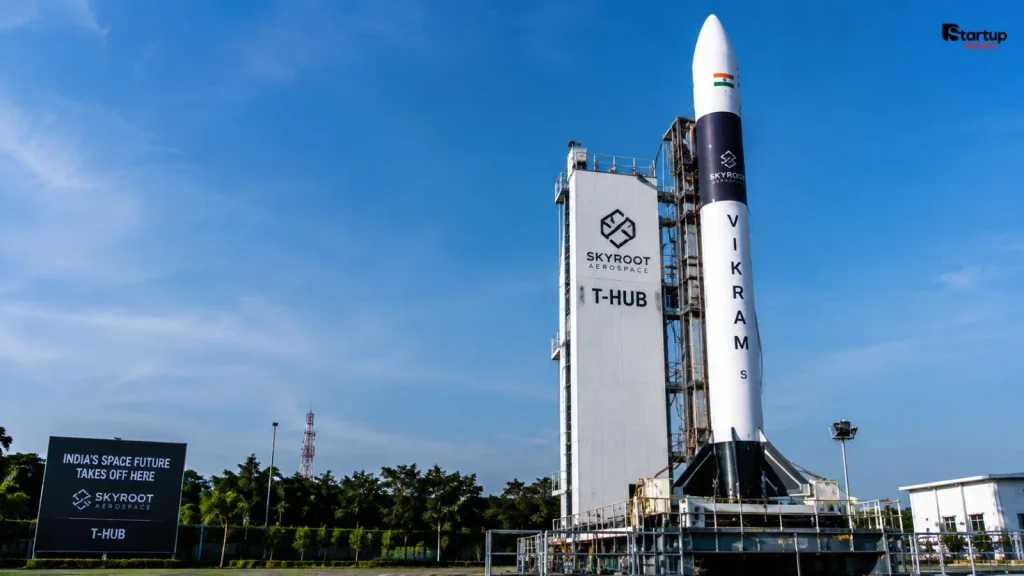
T-Hub launched in 2015 as a public-private partnership between the Telangana government, IIIT Hyderabad, the Indian School of Business, and NALSAR, following what became known as a triple-helix model bringing government, academia, and the private sector together. Its most striking portfolio story is Skyroot Aerospace. Skyroot was incubated in T-Hub and supported by T-Works, and became the first private Indian space-tech company to launch a suborbital rocket. That single relationship shows what T-Hub does well: giving deep-tech and hardware founders access to physical infrastructure and a government-backed innovation ecosystem that’s hard to replicate independently.
Through its AIC T-Hub Foundation arm, T-Hub also runs cohort-based programmes for research-stage founders. AIC T-Hub Foundation, a collaboration between T-Hub and the Atal Innovation Mission, continues to support startups across healthcare, mobility and EV, semiconductors, sustainability and spacetech, and its recent Lab2Market cohort was built specifically to help researchers turn lab innovation into market-ready ventures. (Reference – indiaai )
If you’re building hardware, deep tech, or anything that needs a government-linked ecosystem around it, T-Hub is worth a serious look.
IIT Madras Incubation Cell: the quiet force behind Ather and Agnikul
This one deserves more credit than it usually gets. Ather Energy’s founders Tarun Mehta and Swapnil Jain finished their B.Tech at IIT Madras in 2012, returned to build a prototype, and got incubated at the IIT Madras Incubation Cell before receiving early funding from the Technology Development Board and IIT-M alumnus Srini V Srinivasan. Ather has since gone public on the NSE.
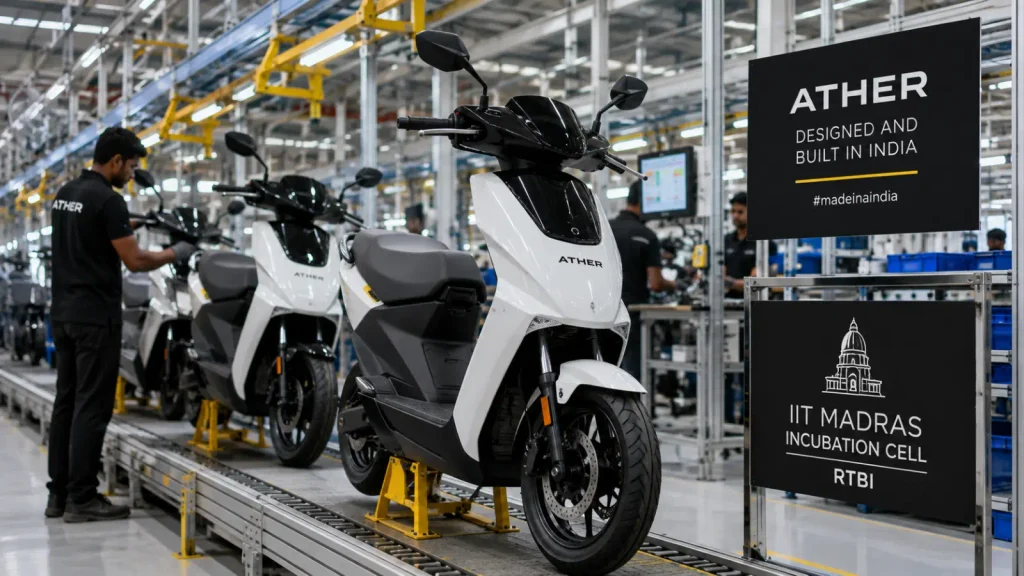
Agnikul Cosmos, the space-tech company that built the world’s first rocket powered by a single-piece 3D-printed engine, is also based out of and incubated at IIT Madras, operating from the National Centre for Combustion Research and Development on campus. The Nirmaan programme run by the institute has supported 268 startup teams to date, with more than 45 having graduated and gone on to build meaningfully.
For deep-tech and engineering-first founders, especially those still in or near an academic research setting, this is one of the strongest technical ecosystems in the country.
CIIE.CO, IIM Ahmedabad: India’s oldest business incubator, still investing actively
CIIE.CO has been around since 2002, making it one of the earliest formal incubators in India, set up as a centre of excellence at IIM Ahmedabad with backing from the Department of Science and Technology and the Gujarat government. As of its most recent disclosed figures, it has accelerated nearly 1,000 startups, funded around 300, and mentored more than 5,000 founders across programmes like iAccelerator and the Bharat Inclusion Initiative. It now operates across five locations: Ahmedabad, Jaipur, Indore, Bengaluru, and Guwahati.
What sets CIIE.CO apart is its investment behaviour. It doesn’t just mentor, it writes cheques, including government-grant-backed seed funding through programmes like IIMavericks, which has funded agri-fintech ventures such as OneImpact Technologies. If your startup is business-model-first rather than deep-tech-first, and you want an incubator that also functions as an early investor, CIIE.CO fits that profile.
NSRCEL, IIM Bangalore: built for scale partnerships and social impact
NSRCEL runs one of India’s largest incubation portfolios by sheer volume, with over 600 investments tracked to date. What makes it distinct is its corporate partnership model. Its Velocity programme recently onboarded five startups from the fourth cohort of the Maruti Suzuki Incubation Programme, working on AI-based manufacturing inspection, IoT-enabled workplace safety, and EV logistics tech, a partnership run jointly with Maruti Suzuki.
NSRCEL also has a strong focus on tech-enabled social enterprises and women-led ventures, an emphasis fewer incubators prioritise as explicitly. If your startup can plug into a large corporate’s innovation pipeline, or if you’re building with social impact as a core thesis, NSRCEL’s partnership-driven model is worth exploring.
NASSCOM 10,000 Startups: the national-scale connector
NASSCOM 10,000 Startups isn’t a single physical incubator so much as a national platform. It connects founders with investors, accelerators, and co-working spaces, with facilities spread across Bengaluru, Noida, Gurugram, Kolkata, Mumbai, Chennai, Hyderabad, Pune, Kochi, and Vizag. It also links startups into MeitY-NASSCOM Centres of Excellence for IoT and AI, which matters if you’re building in enterprise tech and need structured use-case validation rather than just office space.
Because it’s less about one campus and more about national reach, NASSCOM 10,000 Startups tends to suit founders who are past the earliest prototype stage and need broad investor and ecosystem access across multiple Indian cities, not just one hub.
So which Startup Incubators one should you actually apply to?
Skip the instinct to apply everywhere. Indian incubator programmes typically receive between 500 and 2,000 applications per cohort, and a mismatched application gets filtered out fast, even when the underlying idea is good.
A rough way to think about it: T-Hub and IIT Madras Incubation Cell suit deep-tech and hardware founders who need lab infrastructure. CIIE.CO fits business-model-first founders wanting an incubator that also invests directly. NSRCEL works well if you can tap into a corporate partnership or you’re building with social impact at the core. NASSCOM 10,000 Startups makes sense once you’re ready to scale across multiple Indian markets rather than build in one city.
None of these are mutually exclusive with government support either. Most of these incubators run programmes linked to DPIIT recognition, and stacking that with the right incubator match is usually more useful than chasing the most famous name on the list.
Before you shortlist anywhere, it’s worth running your numbers and your pitch through StartupIndiaX’s Government Scheme Finder to check which DPIIT, MSME, and DST-linked schemes you already qualify for, since several incubators explicitly plug into these. And once you’re prepping your application, the Pitch Deck Structure Tool walks through exactly what Indian incubators and investors expect slide by slide.
FAQs
What’s the difference between an incubator and an accelerator in India?
Incubators typically support earlier-stage, research-heavy startups over longer timelines with lab access and technical mentorship. Accelerators run shorter, faster cohorts of three to six months focused on rapid growth and demo-day fundraising.
Do I need to be an IIT or IIM student to join their incubators?
No. Most of these programmes, including CIIE.CO, NSRCEL, and IIT Madras Incubation Cell, accept external founders, not just alumni or current students, though some cohorts prioritise applicants connected to the institution.
Can I apply to more than one incubator at the same time?
Yes, there’s no rule against it, but tailoring each application to that incubator’s actual focus area matters more than applying broadly. Generic applications are usually the ones that get filtered out early.
Do these incubators take equity?
It varies. Some, like CIIE.CO, offer both grant-based and equity-based funding depending on the programme. Others function purely as mentorship and infrastructure providers without taking a stake. Always check the specific programme’s terms before applying.
Is NASSCOM 10,000 Startups a physical location I can visit?
Not exactly. It’s a national platform with incubation facilities across ten Indian cities rather than one central campus, so its structure works differently from a single-site incubator like T-Hub or CIIE.CO.