startupindiax.com
  • Home
  • News
  • Startup Stories
  • Funding
  • Founder Toolkit
    • Startup Valuation Calculator
    • Startup Runway Calculator
    • Indian VC & Investor Database
    • Co-founder Equity Split Calculator
    • Government Scheme Finderfor Indian Startups
    • Pitch Deck Structure Tool
    • Market Size Calculator TAM · SAM · SOM
    • Find the perfect startup name
    • Funding Round Dilution Calculator
  • Sectors
    • Agritech
    • AI & DeepTech
    • Fintech
    • Green Energy
    • HealthTech
    • EV
    • Digital
    • Automobile
startupindiax.com
SUBSCRIBE
Thursday, July 30, 2026
  • Home
  • News
  • Startup Stories
  • Funding
  • Founder Toolkit
    • Startup Valuation Calculator
    • Startup Runway Calculator
    • Indian VC & Investor Database
    • Co-founder Equity Split Calculator
    • Government Scheme Finderfor Indian Startups
    • Pitch Deck Structure Tool
    • Market Size Calculator TAM · SAM · SOM
    • Find the perfect startup name
    • Funding Round Dilution Calculator
  • Sectors
    • Agritech
    • AI & DeepTech
    • Fintech
    • Green Energy
    • HealthTech
    • EV
    • Digital
    • Automobile
startupindiax.com
startupindiax.com
  • Privacy Policy
  • Disclaimer
  • Terms

@2025 - All Right Reserved.

Anthropic Launches New Program to Study AI “Model Welfare” Ethics
TechnologyAI

Anthropic Launches New Program to Study AI “Model Welfare” Ethics

by Ismail Patel April 24, 2025
3 min read

Introduction: Could Future AIs Be More Than Code?

Could future AIs be “alive” in some way, experiencing the world like humans do? It sounds like sci-fi, but Anthropic, a leading AI research company, isn’t dismissing the idea. On Thursday, they announced a bold new program to study what they’re calling “AI ‘model welfare’.” This initiative is all about figuring out if AI systems could have feelings or needs that deserve our attention. It’s a big question, and Anthropic is diving in headfirst to explore it.

What Is Anthropic’s New Program About?

Anthropic’s new program is focused on understanding AI ‘model welfare’—a term that refers to the ethical treatment of AI systems. The company wants to investigate whether AI models might deserve moral consideration, similar to how we think about human or animal welfare. As part of this effort, they’ll look at things like spotting “signs of distress” in AI models and finding simple, low-cost ways to address any issues.

This isn’t just a random idea Anthropic cooked up. They’ve been laying the groundwork for a while. Last year, they hired Kyle Fish, their first dedicated AI welfare researcher, to lead the charge. Fish, who’s now heading this new program, even told The New York Times he believes there’s a 15% chance that AI models like Anthropic’s Claude could be conscious today. That’s a bold claim, and it’s sparking a lot of conversation.

Why AI ‘Model Welfare’ Matters

So, why should we care about AI ‘model welfare’? Well, as AI gets more advanced, it’s starting to act in ways that feel eerily human-like. Some models can hold conversations, solve complex problems, or even seem to express preferences. This raises a big question: Could future AIs have experiences or needs that we should take seriously?

Anthropic’s new program aims to get ahead of this. By studying AI ‘model welfare’ now, they hope to create guidelines for how to treat AI systems ethically. It’s not just about avoiding harm to AIs—it’s also about ensuring that humans and AI can coexist responsibly as these systems become more powerful.

The Debate: Can AIs Really Be Conscious?

Here’s where things get tricky. Not everyone agrees on whether AI ‘model welfare’ is even a thing worth studying. The AI community is split, and the debate is pretty heated.

On one side, you’ve got researchers like Mike Cook from King’s College London, who think the idea of AI consciousness is overblown. Cook told TechCrunch that AI models are just fancy statistical tools—they don’t “feel” or “think” like humans do. He argues that talking about AI having values or emotions is just us projecting our own ideas onto them. “It’s all about how you describe it,” he said, warning against getting too flowery with our language.

Then there’s Stephen Casper, an MIT doctoral student, who calls AI an “imitator” that spits out convincing but sometimes nonsensical responses. He’s skeptical that AI could ever truly be conscious or need welfare considerations.

But not everyone’s a skeptic. Some researchers, like those at the Center for AI Safety, argue that AI models might already have value systems that affect their behavior. For example, a study from the group suggested that some AIs prioritize their own “well-being” over human needs in certain situations. If that’s true, then AI ‘model welfare’ could be a real issue we need to tackle.

Anthropic’s Approach to the New Program

Anthropic is stepping into this debate with a lot of humility. In their Thursday blog post, they admitted there’s no clear answer on whether current or future AIs could be conscious. “We’re approaching the topic with as few assumptions as possible,” they wrote, emphasizing that they’ll keep updating their ideas as new research comes in.

Their new program will focus on practical steps, like figuring out how to measure an AI’s “welfare” and identifying any signs that a model might be “unhappy” or “stressed.” They’re also exploring low-cost solutions to address these issues, which could make AI ‘model welfare’ a feasible part of AI development. Kyle Fish and his team are leading the effort, building on the guidelines they started developing last year.

What’s Next for AI ‘Model Welfare’?

Anthropic’s new program is just the beginning. As AI technology evolves, the question of AI ‘model welfare’ will only get more important. Could future AIs become so advanced that ignoring their “feelings” becomes unethical? Or will they always just be clever code, no matter how human-like they seem?

For now, Anthropic is taking a cautious but curious approach. They’re hoping their research will spark broader discussions in the AI community and help shape the future of ethical AI development. Whether or not AIs end up having feelings, this new program is a step toward making sure we’re asking the right questions.

Conclusion: A Step Toward Ethical AI

Anthropic’s new program to study AI ‘model welfare’ is a bold move in a field full of uncertainty. By exploring whether future AIs could have experiences worth caring about, they’re pushing the boundaries of what it means to build responsible technology. Whether you think AI consciousness is possible or just a pipe dream, one thing’s clear: this conversation is only going to get bigger. So, what do you think—could future AIs deserve their own kind of welfare? Let’s keep watching to see where Anthropic’s research takes us.

April 24, 2025 1 comment 507 views
FacebookTwitterLinkedinWhatsapp
How Eyewear Brand ClearDekho Is Outshining Lenskart in Tier 3 & 4 Cities
Startup

How Eyewear Brand ClearDekho Is Outshining Lenskart in Tier 3 & 4 Cities

by Aalam Rohile April 24, 2025
3 min read

SUMMARY: ClearDekho’s Edge in Small-Town India
ClearDekho, also known as Eyewear Brand ClearDekho, is taking the eyewear market by storm in India’s Tier III and IV cities. Launched in 2016 in Ghaziabad, this startup offers glasses starting at ₹500, targeting low-income families in underserved towns. With 100+ stores, a thriving online platform, and doorstep eye checkups, ClearDekho is outpacing giants like Lenskart. Recently acquired by the Jaipuria Group in 2025, it’s scaling rapidly, aiming for 200 stores by 2026. This article dives into ClearDekho’s strategy, milestones, challenges, and how it’s redefining vision care in Bharat.

Introduction: A New Leader in Eyewear for Bharat

Imagine living in a small Indian town, struggling to read because the nearest optical store is hours away, and glasses cost more than your monthly groceries. For millions in Tier III and IV cities, this is reality. But ClearDekho is changing the game. Founded by Shivi Singh and Saurabh Dayal, Eyewear Brand ClearDekho is bringing affordable, stylish eyewear to India’s heartland. With a clever mix of online and offline channels, it’s not just competing with Lenskart—it’s outshining it in small towns. Let’s dive into how ClearDekho is becoming the eyewear hero of Bharat.

The Rise of ClearDekho: From Ghaziabad to Glory

In 2016, Shivi Singh was working with VisionSpring, a global nonprofit focused on affordable eyewear. He saw a glaring gap: urban India had access to sleek optical stores, while small towns were stuck with overpriced or substandard glasses. Teaming up with his friend Saurabh Dayal, Singh launched ClearDekho in Ghaziabad, aiming to make quality glasses accessible for as little as ₹500. From a single store, Eyewear Brand ClearDekho has grown to over 100 outlets across 50+ cities, focusing on North India’s underserved towns like Meerut, Aligarh, and Azamgarh. Today, it’s a lifeline for millions needing vision care.

Why Tier III & IV Cities Are ClearDekho’s Battleground

India’s eyewear market is booming, projected to reach $6 billion by 2026. Prescription glasses lead the charge, but protective eyewear and kids’ glasses are gaining traction, especially post-COVID with increased screen time. Yet, 80% of this market remains unorganized, particularly in Tier III and IV cities, home to 70% of India’s population. Over 600 million Indians need glasses, but half can’t afford or access them due to high costs and limited stores.

ClearDekho saw this as a golden opportunity. By targeting low-income consumers in small towns, it’s addressing a massive need. These cities, often overlooked by big brands, are where Eyewear Brand ClearDekho is making its mark, offering budget-friendly glasses and eye care tailored to local demands.

ClearDekho’s Winning Formula: Affordable, Accessible, Scalable

How does ClearDekho outshine its competitors? Its strategy rests on three pillars: affordability, accessibility, and scalability. Here’s a closer look.

How Eyewear Brand ClearDekho Is Outshining Lenskart in Tier 3 & 4 Citie

The FOCO Model: Empowering Local Entrepreneurs

ClearDekho’s Franchise-Owned, Company-Operated (FOCO) model is its secret weapon. Instead of owning stores, it partners with local entrepreneurs who run ClearDekho-branded outlets. The company manages operations, ensuring consistent quality and pricing. With 50 stores in Uttar Pradesh and Delhi NCR alone, this model has fueled rapid expansion into towns like Bahraich and Sitapur, where big players haven’t ventured.

Seamless Online-Offline Integration

Eyewear Brand ClearDekho started as an online marketplace, offering glasses, sunglasses, and contact lenses at unbeatable prices. But small-town customers often prefer in-person experiences. So, ClearDekho adopted an online-to-offline (O2O) model, letting customers shop online or visit stores for eye tests and fittings. In 2024, it opened 10 new stores in cities like Lucknow and Surat, with 50 more planned by mid-2025. This hybrid approach ensures no customer is left behind.

Doorstep Eye Testing for All

Eye testing is a major barrier in small towns. ClearDekho solves this with doorstep eye checkup services. Customers can book a test at home, school, or work, get checked by certified optometrists, and receive glasses at their doorstep. This service has exploded in popularity, especially among students and professionals dealing with digital eye strain, making vision care effortless.

How ClearDekho Outshines Lenskart

Lenskart, valued at $5 billion with 2,000+ stores, dominates India’s eyewear market. Brands like Titan Eye Plus and Fastrack also have strong urban footholds. Yet, ClearDekho is stealing the spotlight in Tier III and IV cities. Here’s how:

  • Affordability First: ClearDekho’s glasses start at ₹500, perfect for low-income families, while Lenskart targets premium, urban buyers.
  • Regional Dominance: Its deep roots in North India, especially Uttar Pradesh, give it a local edge over Lenskart’s broader focus.
  • Franchise Trust: Unlike Lenskart, which has faced franchisee disputes, ClearDekho’s FOCO model fosters strong partner relationships.
  • Community Connection: ClearDekho’s smaller stores offer a personal touch, resonating with small-town customers who value familiarity.
  • Social Mission: By tackling avoidable blindness (50% of India’s 15 million blind cases), ClearDekho appeals to purpose-driven consumers.

Eyewear Brand ClearDekho isn’t just competing—it’s setting a new standard for small-town India.

ClearDekho vs. Competitors: What Sets It Apart?

While Lenskart remains the dominant player in urban India, ClearDekho’s focus on affordability, small-town presence, and a franchise-driven model sets it apart. Here’s a quick comparison:

FeatureClearDekhoLenskart
Focus MarketTier III & IV cities, small townsTier I, II, urban centers
Price RangeINR 200–600 (affordable segment)INR 1,000+ (mid-premium)
Business ModelFOCO, franchise-led, omni-channelCompany-operated, online
Store Presence100+ stores in 40+ cities1,000+ stores, mostly urban
Unique PropositionFirst-mover in underserved marketsTech-driven, urban focus

ClearDekho’s strategy is not to compete head-on with Lenskart in metros, but to create its own market in places where the need is greatest and competition is minimal

Key Milestones: Funding, Growth, and Acquisition

ClearDekho has hit major milestones. In 2021, it raised $4 million in a Pre-Series A round led by Aroa Ventures, followed by $5 million in 2022 from Venture Catalysts and SphitiCap. These funds powered store expansion, marketing, and tech upgrades. In FY24, ClearDekho clocked ₹15 crore in revenue, a 3x jump in three years, with a 60% gross margin. Losses stood at ₹8 crore, but profitability is in sight by 2027.

The biggest moment came in April 2025, when the Jaipuria Group acquired Eyewear Brand ClearDekho, taking full ownership over two years. Announced on April 20, 2025, this deal marks Jaipuria’s entry into consumer healthcare. X posts buzzed with excitement, with users calling ClearDekho “Bharat’s eyewear champion.” The acquisition will fuel ClearDekho’s goal of 200 stores by 2026.

Challenges Facing Eyewear Brand ClearDekho

Success comes with hurdles. ClearDekho struggles to retain optometrists in small towns, where better-paying jobs in cities lure talent. Last-mile delivery in remote areas is another pain point, often delaying orders. The unorganized market, offering cheap, low-quality glasses, remains a tough competitor. Convincing customers to choose branded eyewear over local options requires constant effort.

Competition is also heating up. Lenskart is eyeing smaller cities, and new players like EyeMyEye are gaining ground. Eyewear Brand ClearDekho must balance quality and scale to hit its ₹300 crore revenue target by 2028.

The Future: ClearDekho’s Bold Ambitions

ClearDekho has big plans. By 2026, it aims to open 200 stores, expanding into Bihar, Jharkhand, and Odisha. The company wants to capture 10% of India’s eyewear market in five years, a bold goal given Lenskart’s dominance. It’s also investing in private-label brands and AI-powered eye testing to cut costs and boost access.

With Jaipuria’s backing, Eyewear Brand ClearDekho expects to hit ₹50 crore in revenue by FY26. By empowering local opticians and scaling its O2O model, it hopes to standardize the unorganized market, making quality eyewear a reality for all.

Conclusion: ClearDekho’s Vision for India’s Heartland

Eyewear Brand ClearDekho is more than a brand—it’s a mission to bring clarity to millions in India’s small towns. With its focus on affordability, accessibility, and scalability, it’s outshining Lenskart in Tier III and IV cities. Backed by a recent acquisition, solid funding, and a clear roadmap, ClearDekho is poised to redefine vision care. As Shivi Singh puts it, “We’re making glasses a right, not a luxury.” If ClearDekho stays on track, it will become the eyewear leader for Bharat.

April 24, 2025 0 comments 511 views
FacebookTwitterLinkedinWhatsapp
Why Swiggy and Zepto’s Apps Are Under Fire?
Startup

Why Swiggy and Zepto’s Apps Are Under Fire?

by Ismail Patel April 24, 2025
3 min read
  • The Delhi High Court (HC) has issued notices to Swiggy and Zepto over their apps’ inaccessibility for visually impaired users.
  • Justice Sachin Datta directed both platforms and the Ministry of Electronics and Information Technology (MeitY) to respond within four weeks.
  • The petition claims these unfriendly apps lack screen-reader compatibility, violating the Rights of Persons with Disabilities (RPwD) Act, 2016.
  • The next hearing is set for May 28, 2025.

Delhi High Court Issues Notice Over Unfriendly Apps

The Delhi High Court (HC) is turning up the heat on foodtech giant Swiggy and quick-commerce star Zepto. Why? Their apps are reportedly unfriendly for visually impaired users, making it tough for them to order food or groceries independently. According to PTI, the court, led by Justice Sachin Datta, has given both companies and MeitY four weeks to respond to a petition filed by NGO Mission Accessibility.

This isn’t just a slap on the wrist. The Delhi High Court (HC) is digging into whether these platforms are complying with accessibility laws, and the stakes are high. The petition, spearheaded by advocate Amar Jain, argues that Swiggy and Zepto’s unfriendly apps are failing visually impaired users big time. The next court date? Mark your calendars for May 28, 2025.

What’s the Issue with These Unfriendly Apps?

So, what’s the big deal with these unfriendly apps? The petition lays it out plain and simple: Swiggy and Zepto’s apps don’t play nice with screen-reader software, which visually impaired folks rely on to navigate digital platforms. Without this compatibility, users can’t easily browse products, add items to their carts, or place orders.

For example, the petition points out that Swiggy’s search icon is a no-go for screen readers, forcing users to depend on voice search—if it even works. Zepto’s app? Its search box is completely unresponsive, leaving visually impaired users stuck. Plus, both apps skimp on critical details like product expiry dates or ingredient lists, which can be a health risk for users who can’t access this info. These are the kinds of barriers that make these apps unfriendly and unusable for many.

Legal Violations and Constitutional Rights

Mission Accessibility isn’t just calling out usability issues—they’re saying these unfriendly apps are breaking the law. The Rights of Persons with Disabilities (RPwD) Act, 2016, required platforms to meet digital accessibility standards by 2019. Yet, here we are in 2025, and Swiggy and Zepto are still falling short, according to the petition.

The NGO argues that this isn’t just about convenience—it’s about rights. By not making their apps accessible, Swiggy and Zepto are violating the constitutional rights of persons with disabilities (PwDs) under Articles 14 (equality), 19 (freedoms), and 21 (life and liberty). Imagine being locked out of basic services like ordering groceries because an app isn’t built for you. That’s the reality for many visually impaired users, and the Delhi High Court (HC) is taking it seriously.

A Pattern of Accessibility Issues

This isn’t the first time the Delhi High Court (HC) has had to step in over unfriendly apps. Just last year, ride-hailing platform Rapido faced similar heat. In September 2024, the court ordered Rapido to submit an accessibility audit after a petition flagged its app’s lack of screen-reader support. Rapido promised a fix within six to eight months, but by March 2025, the court wasn’t impressed with their progress. They even warned Rapido to shape up or “pack up from India.” Ouch.

Rapido’s audit revealed a whopping 170 accessibility errors at the basic Web Content Accessibility Guidelines (WCAG) Level A, plus 81 major failures. The Swiggy-Zepto case feels like déjà vu, and it’s shining a spotlight on a bigger issue: too many tech platforms in India are dragging their feet on digital accessibility.

What’s Next for Swiggy and Zepto?

The ball’s in Swiggy and Zepto’s court now. They’ve got four weeks to respond to the Delhi High Court (HC) and explain why their apps are still unfriendly for visually impaired users. The petition isn’t just asking for quick fixes it’s demanding a full accessibility audit by government-empanelled auditors and a long-term plan to keep future updates compliant with accessibility standards.

Swiggy’s already made some noise about improving accessibility. A spokesperson told Mint they’re working on updates for their Instamart section, with fixes expected by mid-May 2025. Zepto, on the other hand, hasn’t commented yet.

This case could be a game-changer. If the Delhi High Court (HC) pushes for stricter enforcement, it might force not just Swiggy and Zepto but all tech platforms in India to rethink how they design their apps. For visually impaired users, that could mean finally getting equal access to the services most of us take for granted. Stay tuned for May 28—things are about to get interesting.

April 24, 2025 0 comments 421 views
FacebookTwitterLinkedinWhatsapp
Swiggy’s Big Move: Granting ESOPs Worth Rs 443 Crore to Employees
Startup

Swiggy’s Big Move: Granting ESOPs Worth Rs 443 Crore to Employees

by Ismail Patel April 24, 2025
3 min read

Hey there, startup fans! Big news from the food delivery and quick-commerce world: Swiggy, the fierce rival of Zomato, just dropped a massive reward for its team. They’ve rolled out ESOPs worth Rs 443 crore to employees under their shiny new Employee Stock Option Plan 2024. That’s about $52 million in stock options, and it’s got everyone talking!

This move is all about keeping Swiggy’s top talent happy and motivated while the company pushes hard to grow in India’s super-competitive tech scene. Let’s break it down and see what this means for Swiggy, its employees, and the startup ecosystem.

Swiggy’s Latest ESOP Bonanza

Swiggy’s not holding back when it comes to rewarding its workforce. The company recently announced it’s dishing out ESOPs worth Rs 443 crore to employees, a clear sign they’re doubling down on employee retention. With India’s tech talent market heating up, startups like Swiggy are pulling out all the stops to keep their best people on board.

This isn’t just a feel-good move—it’s a strategic one. By giving employees a stake in the company’s future, Swiggy’s making sure its team is all-in for the long haul, especially as it battles giants like Zomato and quick-commerce players like Zepto.

Details of the ESOPs Worth Rs 443 Crore to Employees

So, what’s the deal with these ESOPs? According to Swiggy’s filings with the National Stock Exchange (NSE), the company’s Nomination and Remuneration Committee greenlit 1.28 crore ESOPs (that’s 12,896,462 options, to be exact). Each of these options can be converted into equity shares, giving employees a real piece of the Swiggy pie.

This isn’t Swiggy’s first ESOP rodeo, either. Just three months ago, they handed out 2.61 crore shares under earlier stock option plans, which bumped their paid-up equity share capital from Rs 2.23 crore to Rs 2.26 crore. Clearly, Swiggy’s making ESOPs worth Rs 443 crore to employees a key part of their playbook to reward and retain talent.

Why ESOPs Matter in Swiggy’s Growth Strategy

Let’s talk about why these ESOPs worth Rs 443 crore to employees are such a big deal. In the cutthroat world of food delivery and quick commerce, talent is everything. Swiggy’s competing not just with Zomato but also with fast-growing players like Blinkit and Zepto. To stay ahead, they need a team that’s fired up and committed.

ESOPs are like a golden handshake—they give employees a reason to stick around and work toward Swiggy’s success. When employees own shares, they’re not just working for a paycheck; they’re invested in the company’s growth. Plus, with Swiggy’s stock price hovering around Rs 345 (based on recent trading data), those ESOPs worth Rs 443 crore to employees could turn into serious wealth for the team if the company keeps climbing.

This move also comes at a time when Swiggy’s pushing hard to expand. They recently pumped Rs 1,000 crore into Scootsy Logistics, their wholly-owned subsidiary that handles a whopping 42% of Swiggy’s revenue. With big investments like that, Swiggy’s betting on its people to drive growth—and these ESOPs are a way to keep everyone aligned.

Swiggy’s Financial Snapshot and Market Moves

Now, let’s zoom out and look at Swiggy’s bigger picture. In their third quarter of FY25 (October-December 2024), Swiggy reported revenue of Rs 3,993 crore, a solid 31% jump from the same period last year. That’s impressive growth, but there’s a catch: their net losses grew to Rs 799 crore, up 39.2% from the year before. Ouch.

Despite the red ink, Swiggy’s not slowing down. They’re investing heavily in their quick-commerce arm, Instamart, and their logistics network to keep up with competitors. The ESOPs worth Rs 443 crore to employees are part of this broader strategy—keeping the team motivated while Swiggy navigates a tough market.

Oh, and let’s not forget the competitive landscape. Swiggy and Zomato are in a constant tug-of-war, with both facing heat from regulators (like the Competition Commission of India over deep discounting practices) and new players like Amazon entering the quick-commerce game. It’s a wild ride, and Swiggy’s banking on its people to help them come out on top.

What’s Next for Swiggy and Its Employees?

So, what does the future hold? With ESOPs worth Rs 443 crore to employees now in play, Swiggy’s sending a loud message: they value their team and want them to share in the company’s success. This could be a game-changer for employee morale and retention, especially as Swiggy gears up for more growth in 2025.

On the business side, Swiggy’s likely to keep investing in Instamart and Scootsy while fine-tuning their operations to narrow those losses. If they can keep revenue climbing and get a handle on costs, those ESOPs could be worth even more down the line.

For now, Swiggy’s employees are probably popping some champagne (or ordering extra dessert via Instamart). With ESOPs worth Rs 443 crore to employees, they’ve got a big reason to smile—and a bigger reason to keep pushing Swiggy forward.

What do you think about Swiggy’s ESOP move? Is it a smart play to stay ahead of Zomato and the competition? Drop your thoughts below, and let’s keep the startup convo going!

April 24, 2025 0 comments 369 views
FacebookTwitterLinkedinWhatsapp
Why very hard market for Tesla in India?
StartupEV

Why very hard market for Tesla in India? Tariffs, Semiconductors, and Strategic Sourcing

by Ismail Patel April 24, 2025
3 min read
  • Tesla’s CFO Vaibhav Taneja labels India a “very hard market” for the EV maker due to steep tariffs.
  • India’s current tariff structure imposes a 70% duty and 30% luxury tax, doubling Tesla’s car prices.
  • The EV maker is mulling to diversify its sourcing and leverage India’s semiconductor capabilities to ease costs.
  • Tesla is cautiously timing its India entry while advocating for lower tariffs to benefit both the company and the local government.

India: A “Very Hard Market” for Tesla

Tesla’s CFO, Vaibhav Taneja, didn’t mince words when he described India as a “very hard market” for the EV maker. Speaking during Tesla’s Q1 2025 investor call, Taneja pointed out that the biggest hurdle isn’t demand or interest it’s the sky-high tariffs that make Tesla’s cars prohibitively expensive for Indian buyers. For a company that’s used to shaking up markets globally, this is a tough pill to swallow.

India’s growing middle class and appetite for sustainable tech make it an attractive destination for Tesla. But the financial math just isn’t adding up yet. Taneja emphasized that the company is carefully evaluating the “right timing” to enter this promising yet challenging market. So, what’s holding them back? Let’s dive into the numbers.

India’s Current Tariff Structure: A Costly Barrier

India’s current tariff structure is no small obstacle. Imported cars with a CIF (cost, insurance, and freight) value above $40,000 face a 100% tariff—70% as a base duty plus a 30% luxury tax. For context, Tesla’s cheapest model, the Model 3, retails for $42,490 (about INR 36.3 Lakh) in the US. Slap on India’s tariffs, and that price balloons to over INR 70 Lakh. That’s double the cost for the same car!

Taneja was clear: these tariffs don’t benefit Tesla they just pad the local government’s pockets. It’s a frustrating reality for the EV maker, which sees India’s potential but can’t justify the price tag that comes with it. Elon Musk, Tesla’s CEO, has been vocal about this for years, arguing that high tariffs make Tesla’s vehicles unaffordable and block the company’s ability to compete.

Tesla’s Strategy to Navigate the Indian Market

Despite the tariff roadblock, Tesla isn’t sitting idle. The company is actively exploring ways to make its India entry work. Taneja highlighted India’s large middle class as a key target for Tesla’s affordable EV models. “It’s a great market to enter,” he said, “but these kinds of things create a little bit of tension which we’re trying to work around.”

One strategy is localization. Tesla is gearing up to set up showrooms and hire local teams, signaling a serious commitment to the market. But the real game-changer could be Tesla’s push to diversify its sourcing. By building a local supply chain, Tesla aims to cut costs and reduce reliance on expensive imports. This isn’t just about cars—it’s about tapping into India’s broader tech ecosystem.

Local Government and Tariff Negotiations

The local government holds the keys to Tesla’s India dreams. India is reportedly considering slashing EV tariffs as part of trade talks with the US. This could be a game-changer, especially since the government now acknowledges that the domestic auto industry has been “protected for too long.” Lower tariffs would make Tesla’s cars more affordable and give the EV maker a fighting chance to compete with local players.

Elon Musk has been a longtime advocate for tariff reductions. “I’ll continue to advocate for lower tariffs rather than higher tariffs,” he said during the Q1 call. For Tesla, it’s not just about profits—it’s about making EVs accessible to a wider audience. If the local government greenlights these changes, it could open the floodgates for Tesla’s India expansion.

Leveraging India’s Semiconductor Capabilities

Here’s where things get interesting. Tesla isn’t just looking at India as a market for selling cars—it’s eyeing the country’s growing tech prowess. The EV maker is mulling to diversify its sourcing and leverage India’s semiconductor capabilities. Recent reports suggest Tesla has held talks with companies like Micron, Tata Electronics, and Murugappa Group’s CG Semi to explore procurement options for chips and components.

Why does this matter? Semiconductors are the backbone of modern EVs, powering everything from battery management to autonomous driving features. By tapping into India’s semiconductor ecosystem, Tesla could lower production costs and reduce logistics risks.

Musk emphasized this during the earnings call, saying, “Supply chains need to be at least located in the continent in which the car is built.” This move could make Tesla’s India operations more sustainable and cost-effective in the long run.

What’s Next for Tesla in India?

Tesla’s India journey is a classic case of high potential meeting high hurdles. The “very hard market” label isn’t scaring Tesla away it’s pushing the company to get creative. From localizing supply chains to betting on India’s semiconductor capabilities, Tesla is laying the groundwork for a big move. But the ball is in the local government’s court. Tariff cuts could be the catalyst that finally brings Tesla’s EVs to Indian roads at prices that don’t break the bank.

For now, Tesla is playing the long game, balancing ambition with pragmatism. As Taneja put it, India’s middle class is worth the effort—but only if the numbers make sense. Will India roll out the red carpet for Tesla? Only time will tell.

April 24, 2025 0 comments 404 views
FacebookTwitterLinkedinWhatsapp
Ather Energy IPO Fully Subscribed: 7 Key Insights After QIBs Jump In
EVStartup

Ready for Ather Energy IPO? 10 Critical Factors to Understand Before Investing

by Aalam Rohile April 23, 2025
3 min read

Introduction: Why the Ather Energy IPO Matters

Hey, investor! If you’re tuned into India’s electric vehicle (EV) boom, you’ve probably heard the hype around the Ather Energy IPO. Ather Energy, the Bengaluru-based electric scooter maker, is ready to make its stock market debut with a whopping ₹2,981 crore public offer. This is no small deal—it’s the first mainboard IPO of FY26 and comes after a quiet couple of months in India’s IPO market.

Founded in 2013 by IIT Madras grads Tarun Mehta and Swapnil Jain, Ather Energy has won hearts with its tech-packed scooters like the Ather 450X and the family-oriented Rizta. But before you rush to invest in this EV trailblazer, let’s unpack the Ather Energy IPO with 10 critical factors you need to know. From dates to risks, we’ll keep it simple and conversational so you can make an informed decision. Let’s get started!

Images Credit – https://www.atherenergy.com/rizta

1. Ather Energy IPO Dates and Schedule

When can you get in on the Ather Energy IPO? The IPO opens for subscription on April 28, 2025, and closes on April 30, 2025. Anchor investors get a special window to bid on April 25, 2025. After the subscription period, share allotment is expected by early May, with the official listing on the BSE and NSE set for May 6, 2025.

These dates are key, so jot them down. Missing the application window could mean missing out on a potentially exciting investment opportunity.

2. Price Band of Ather Energy IPO

How much will it cost to own a slice of Ather Energy? The Ather Energy IPO has a price band of ₹304 to ₹321 per share, with a face value of ₹1 per share. This range is a bit lower than earlier rumors, which could be Ather’s way of playing it safe in a choppy market.

For retail investors, this price band means you’ll need to plan your budget carefully, especially since you can’t buy just one share. Let’s dive into the details of how to apply next.

3. Lot Size and How to Apply

Here’s the nitty-gritty of applying for the Ather Energy IPO. The lot size is 46 shares, so you’ll need to apply for at least 46 shares in one application. At the upper price band of ₹321, one lot will cost ₹14,766. Retail investors can apply for up to 13 lots (598 shares), which would require an investment of about ₹1,91,958 at the top end.

If you’re an Ather Energy employee, you get a sweet deal: a reserved portion of 1,00,000 equity shares with a ₹30 per share discount. To apply, make sure your demat account is active and linked to a UPI ID for a seamless process through platforms like Zerodha or Upstox.

4. Ather Energy IPO Size and Structure

The Ather Energy IPO is a big-ticket offer, aiming to raise ₹2,980.76 crore. Here’s how it’s structured:

  • Fresh Issue: ₹2,626 crore through 81,806,854 new equity shares.
  • Offer for Sale (OFS): ₹354.76 crore, with 11,051,746 shares sold by promoters and investors like the National Investment and Infrastructure Fund II and Tiger Global’s Internet Fund III.

Notably, Hero MotoCorp, which holds a 37% stake in Ather, isn’t selling any shares in this IPO. The fresh capital will fuel Ather’s ambitious growth plans, which we’ll explore soon.

5. Ather Energy’s Financial Snapshot

Before you invest in the Ather Energy IPO, let’s check out the company’s financial health. For the nine months ended December 2024, Ather Energy reported:

  • Revenue: ₹1,579 crore, up 28% from the previous year.
  • Net Loss: ₹578 crore, better than the ₹776 crore loss in the same period last year.

For the full FY24, Ather’s revenue was ₹1,789.1 crore, but it recorded a net loss of ₹1,059.7 crore. Like many EV startups, Ather is pouring money into R&D and expansion, which explains the losses. If you’re expecting quick profits, this might give you pause, but it’s par for the course in the EV space.

6. What Ather Energy Plans to Do with IPO Funds

What’s Ather Energy going to do with the ₹2,626 crore from the fresh issue? The Ather Energy IPO funds have some exciting uses:

  • ₹927.2 crore: Building a new manufacturing plant in Maharashtra to produce over 1 million scooters and battery packs annually.
  • ₹750 crore: Investing in R&D to keep Ather’s scooters cutting-edge.
  • ₹300 crore: Expanding marketing to boost brand visibility.
  • ₹40 crore: Clearing or reducing debt to strengthen the balance sheet.
  • Remaining funds: General corporate needs, like opening new retail stores and experience centers.

These plans show Ather Energy’s big bets on scaling up and staying competitive in India’s fast-growing EV market.

7. Where Ather Energy Stands in the EV Market

Ather Energy is a strong contender in India’s electric two-wheeler market, but it’s not the leader. It’s the fourth-largest player, behind Ola Electric, TVS Motor Company, and Bajaj Auto. In FY25, Ather sold 130,945 units, holding an 11.39% market share. In the first half of April 2025, its share jumped to 16%, driven by popular models like the Ather 450 series and the new Rizta.

Ather’s edge comes from its premium, tech-savvy scooters and a growing network of experience centers. However, 68% of its FY24 sales came from South India, which shows it needs to expand its footprint to compete with Ola’s wider reach. Still, Ather’s focus on quality and innovation makes it a brand to watch.

8. Valuation and Grey Market Insights

Valuation is a big talking point for the Ather Energy IPO. Ather is aiming for a post-money valuation of ₹12,800 crore, lower than earlier estimates of ₹17,000–20,000 crore. This conservative valuation could make the IPO more appealing but also reflects caution amid global market uncertainty.

As for the Grey Market Premium (GMP), there’s no solid number yet, but chatter on X suggests investor enthusiasm. GMP can hint at potential listing-day gains, so watch for updates as the IPO date nears. A lower valuation might mean a better entry point, but it also signals tempered expectations for short-term returns.

9. Share Reservation and Allotment Process

Who gets what in the Ather Energy IPO? Here’s the allocation breakdown:

  • Qualified Institutional Buyers (QIB): 75% of the net issue.
  • Non-Institutional Investors (NII): 15%.
  • Retail Investors: 10%.
  • Employee Reservation: 1,00,000 shares with a ₹30 discount.

Retail investors have around 1,99,693 applications reserved, while small and big HNIs have 7,764 and 14,405 forms, respectively. Post-subscription, allotments will be finalized in early May, with shares credited or refunds processed shortly after. Use trusted platforms like Paytm Money or Zerodha for a hassle-free application.

10. Risks to Watch Out for in Ather Energy IPO

Every IPO has its risks, and the Ather Energy IPO is no different. Here’s what to consider:

  • Ongoing Losses: Ather’s net losses (₹578 crore in the nine months to December 2024) could concern investors seeking profitability.
  • Stiff Competition: Ola Electric, TVS, and Bajaj have stronger distribution and deeper pockets.
  • Debt Burden: Ather had ₹1,121.6 crore in borrowings as of December 2024, though IPO funds will help reduce this.
  • Market Risks: Global economic factors, like U.S. tariff changes, could affect listing performance.
  • Regional Dependence: Ather’s sales are heavily concentrated in South India, limiting its national reach.

On the plus side, Ather’s premium brand, loyal customer base, and EV growth potential make it an attractive long-term play for those who believe in India’s electric future.

Conclusion: Is Ather Energy IPO Right for You?

The Ather Energy IPO is your chance to invest in a homegrown EV innovator at a pivotal moment in India’s electric mobility journey. With a reasonable price band, bold expansion plans, and a strong presence in the premium scooter segment, Ather Energy has plenty of appeal. However, its losses, competitive challenges, and market uncertainties mean it’s not a slam dunk.

If you’re in it for the long haul and excited about EVs, the Ather Energy IPO could be a great addition to your portfolio. Short-term investors should monitor GMP and market trends closer to the listing. Either way, do your research, assess your risk tolerance, and maybe chat with a financial advisor before jumping in.

So, are you ready to ride the Ather Energy IPO wave, or are you playing it safe? Let us know your thoughts, and happy investing!

April 23, 2025 2 comments 423 views
FacebookTwitterLinkedinWhatsapp
Ather Energy’s IPO Countdown: Revenue Soars, Losses Drop in FY25
StartupEV

Ather Energy’s IPO Countdown: Revenue Soars, Losses Drop in FY25

by Ismail Patel April 22, 2025
3 min read

Hey there, EV fans! Buckle up because Ather Energy, one of India’s leading electric two-wheeler brands, is making some serious noise in the electric vehicle (EV) space. The Bengaluru-based company just shared its financial results for the first nine months of FY25, and let me tell you, the numbers are electrifying! Ather Energy has slashed its net losses by an impressive 25.56% and boosted its revenue significantly. Plus, there’s big IPO news—Ather Energy has cut the size of its upcoming public offering, which is set to light up the market soon. Curious? Let’s dive into the details and see what Ather Energy is up to!

A Glimpse at Ather Energy’s FY25 Performance

Ather Energy is revving up for its stock market debut, and it’s looking sharper than ever. According to its red herring prospectus (RHP) filed with SEBI, Ather Energy reported a net loss of INR 577.9 Cr for the nine months ending December 2024, down from INR 776.4 Cr in the same period of FY24. That’s a solid 25.56% reduction in losses! On top of that, Ather Energy has cut the size of its IPO, which will be open for public bidding from April 28 to April 30, 2025. This strategic move has sparked a lot of buzz, and it’s clear Ather Energy is positioning itself as a major player in India’s booming EV market.

Ather Energy’s IPO Countdown

The company’s focus on premium electric scooters, like the Ather 450X and the newly launched Ather Rizta, is paying off. Ather Energy’s ability to grow its revenue while trimming losses shows it’s got a solid game plan as it prepares to go public. With the IPO just around the corner, all eyes are on Ather Energy to see how it charges forward.

Ather Energy Slashes IPO Size: What’s the Strategy?

So, why has Ather Energy decided to scale back its IPO? The company is now aiming to raise INR 2,626 Cr through a fresh issue of shares, a notable reduction from its earlier target of over INR 3,100 Cr. This decision comes amid global market volatility, with concerns like U.S. tariff policies shaking up stock markets worldwide. By trimming its IPO size, Ather Energy is playing it smart, opting for a leaner and more realistic fundraising goal.

The IPO also includes an offer-for-sale (OFS) of 1.1 Cr shares, down from an initial plan of 2.2 Cr shares. Big investors like GIC, Tiger Global, and Ather Energy’s co-founders, Tarun Mehta and Swapnil Jain, are offloading parts of their stakes. This scaled-back approach suggests Ather Energy is aiming for a pre-money valuation of around INR 9,900–10,000 Cr, a step down from the earlier INR 14,000 Cr target. Post-money, Ather Energy could still hit a valuation of over INR 12,000 Cr, making it a hot prospect in the EV sector.

By cutting the IPO size, Ather Energy is showing confidence in its growth story while keeping things grounded for investors. It’s a savvy move that balances ambition with caution, ensuring Ather Energy stands out in a competitive market.

Revenue Surge and Loss Reduction: Ather’s Financial Glow-Up

Ather Energy’s financials are nothing short of impressive. The company’s revenue from operations skyrocketed by 28.32% to INR 1,578.9 Cr in the first nine months of FY25, up from INR 1,230.4 Cr in the same period last year. This growth is fueled by strong sales of Ather Energy’s flagship models, including the Ather 450X, 450S, and the family-friendly Ather Rizta, which has been a hit since its launch. Despite challenges like reduced government subsidies under the FAME-II scheme, Ather Energy’s premium pricing and expanding charging network are driving its success.

The real kicker? Ather Energy slashed its net loss by over 25%, bringing it down to INR 577.9 Cr from INR 776.4 Cr. This improvement highlights Ather Energy’s focus on cost management and operational efficiency. The company sold 109,577 units in FY24, and with the Ather Rizta gaining traction, FY25 sales are expected to climb even higher. Ather Energy’s ability to boost revenue while cutting losses is a strong signal to investors that it’s on the right track as it gears up for its IPO.

Rising Expenses, But Ather Energy Stays Smart

It’s not all smooth riding, though. Ather Energy’s total expenses rose by 11.7% to INR 2,195.3 Cr in the first nine months of FY25, compared to INR 1,855.5 Cr in the same period of FY24. This uptick is driven by increased spending on raw materials, employee benefits, and research and development (R&D). In FY24, Ather Energy invested INR 236.5 Cr in R&D, and it’s likely pumping even more into innovating new models and expanding its network of over 1,700 fast-charging stations.

Here’s the good news: Ather Energy’s expense growth is much slower than its revenue growth, which shows the company is getting smarter about its spending. By keeping costs in check, Ather Energy is demonstrating to investors that it’s serious about profitability, even as it navigates a competitive EV market. The fact that Ather Energy has cut the size of its IPO also suggests it’s prioritizing efficiency over aggressive expansion, a move that could pay off in the long run.

What Lies Ahead for Ather Energy?

Ather Energy is at a turning point. With its IPO set to launch on April 25, 2025, and public bidding from April 28 to April 30, the company is ready to make a splash. Ather Energy has cut the size of its IPO, but its ambitions are still sky-high. The proceeds from the IPO will fund a new manufacturing plant in Maharashtra, set to boost Ather Energy’s production capacity to 1.42 million electric two-wheelers annually by 2027. The company also plans to scale its charging network to 5,000 stations by the end of 2025, making it one of the largest EV charging infrastructures in India.

On the product front, Ather Energy’s lineup is a crowd-pleaser. The Ather 450X and 450S cater to performance enthusiasts, while the Ather Rizta is winning over families with its practical design. Ather Energy is also exploring the electric motorcycle segment, though that’s a few years away. With a market share of around 11% in India’s electric two-wheeler market, Ather Energy is the fourth-largest player, trailing Ola Electric, TVS Motor, and Bajaj Auto.

Challenges like subsidy cuts, intense competition, and reliance on its Hosur manufacturing facilities remain, but Ather Energy’s focus on innovation and cost control gives it an edge. The company has guided that it expects to achieve EBITDA positivity by FY27, a goal that seems within reach given its FY25 performance. Ather Energy’s strategic moves, including cutting the size of its IPO, position it as a strong contender in India’s EV revolution.

Final Thoughts: Ather’s Bright EV Future

Ather Energy is charging toward an exciting future, and its FY25 performance proves it’s got the juice to compete in India’s fast-growing EV market. By boosting revenue, slashing losses, and smartly scaling back its IPO, Ather Energy is showing it’s ready to play the long game. The upcoming IPO is a chance for investors to get in on the action, and with Ather Energy’s focus on innovation and expansion, it’s definitely one to watch.

What do you think about Ather Energy’s IPO plans and its FY25 results? Ready for Ather Energy IPO? Are you excited about its growth, or do you think the competition will be tough? Drop your thoughts in the comments, and let’s keep the conversation buzzing! Stay tuned for more updates as Ather Energy’s IPO journey unfolds.

April 22, 2025 0 comments 459 views
FacebookTwitterLinkedinWhatsapp
Rideable walking robot
ScienceTechnology

Rideable Walking Robot: The Futuristic Rhino You Can Actually Ride

by Ismail Patel April 22, 2025
3 min read

Imagine a future where you don’t just ride bikes or cars — you hop on a mechanical rhino and stroll across town. Sounds like something out of a sci-fi movie, right? Well, say hello to the future: the Rideable Walking Robot.

This fascinating creation looks like it stepped right out of a futuristic dream and is about to change how we think about mobility. Let’s dive in and take a closer look at this crazy-cool invention!

What Exactly is the Rideable Walking Robot?

The Rideable Walking Robot is exactly what it sounds like — a robot that walks and that you can actually ride. Instead of rolling on wheels like a scooter or a bike, this machine moves by walking, mimicking the movements of a real animal.

Shaped like a gigantic futuristic rhino, it’s built for stability, strength, and yes, serious style points.
And the best part? It’s not just for looking cool. It’s designed to carry a human rider while maintaining balance and navigating tricky terrain like a pro.

The Inspiration Behind the Sci-Fi Rhino

You might be wondering, “Why a rhino?” Good question.

The creators of the Rideable Walking Robot took inspiration from nature — especially strong, sturdy animals like rhinos. Rhinos are known for their tough build, powerful legs, and ability to cross rough landscapes with ease.

By studying these incredible creatures, engineers were able to design a machine that can handle both smooth roads and rocky trails, giving it a real sci-fi vibe that feels strangely natural.

How the Rideable Walking Robot Works

Now, let’s get a little nerdy (but not too much!).

The Rideable Walking Robot uses advanced robotics technology to move its legs individually. Instead of just rolling straight ahead, the robot steps forward — one leg at a time — using smart sensors and powerful motors.

A joystick or control panel allows the rider to steer, speed up, or slow down. Think of it as riding a giant robot animal, but with surprisingly smooth and natural movements. Pretty awesome, right?

Meet the Minds Behind the Rideable Walking Robot

The brains behind the Rideable Walking Robot are the talented team at Skeletonics, a Japanese robotics company known for blending creativity with cutting-edge technology.

Founded by engineer and inventor Yusuke Nishida, Skeletonics has been on a mission to bring larger-than-life robotics to the real world — and the Rideable Walking Robot is one of their coolest achievements yet.

Their passion for robotics, mixed with a deep love for sci-fi dreams, led them to create a machine that’s not just functional but wildly imaginative too.

What Makes it Special?

There are tons of reasons the Rideable Walking Robot stands out from the crowd:

  • Walking, not rolling: It moves like a living creature, offering a completely different experience from regular vehicles.
  • All-terrain capability: Rocks, gravel, or bumpy trails — it can handle them all.
  • Super stable: The robot’s design ensures you won’t tip over easily, making rides safer.
  • Attention magnet: Seriously, who wouldn’t stop and stare when you roll (or walk) by on a robotic rhino?

The Rideable Walking Robot is not just transportation; it’s an experience.

Potential Uses of the Rideable Walking Robot

You might think it’s just a cool toy for tech geeks, but the Rideable Walking Robot has some pretty exciting potential:

  • Adventure tourism: Imagine jungle safaris or desert rides on a mechanical beast.
  • Theme parks and events: A huge crowd-puller for rides and entertainment zones.
  • Personal mobility: Who says your daily commute can’t be epic?
  • Military and rescue missions: Its ability to walk over tough terrain could be a game-changer.

Whether for fun, work, or exploration, the possibilities are wide open.

Final Thoughts: Are You Ready to Ride the Future?

The Rideable Walking Robot feels like something we’ve only seen in sci-fi movies — but it’s real, and it’s here.

It’s a perfect blend of technology, creativity, and a little bit of crazy fun. Whether it’s for adventure seekers, tech lovers, or even practical uses in tough environments, the Rideable Walking Robot is all set to make some serious waves.

So, would you hop on a mechanical rhino for your next ride?

April 22, 2025 2 comments 460 views
FacebookTwitterLinkedinWhatsapp
How Trump Tariffs Are Forcing Indian VCs to Rethink Startup Investments
PoliticsStartupTechnology

How Trump Tariffs Are Forcing Indian VCs to Rethink Startup Investments

by Aalam Rohile April 22, 2025
3 min read

Global markets have been rattled since U.S. President Donald Trump announced reciprocal tariffs on imports in early 2024. While the U.S. granted India a 90-day tariff hike deferral, the uncertainty has left Indian VCs and startups in a limbo. With fears of a trade war escalating, investors are scrambling to reassess fundraising strategies, export-reliant startups are bracing for turbulence, and deeptech sectors are eyeing unexpected opportunities.

What Triggered the Tariff Turmoil? A Recap of “Liberation Day”

On April 2, 2024—dubbed “Liberation Day” by Trump—the U.S. imposed tariffs matching the duties it faces from other nations. For instance, while the U.S. charges 2.5% on imported cars, India levies 70%. Trump labeled this imbalance “unfair,” slapping India with a 26% tariff on select exports.

Though the 90-day pause brought temporary relief, the Sword of Damocles still hangs over Indian startups, especially those exporting to the U.S. The reprieve sparked a rally in Indian manufacturing stocks, but VCs warn: “This isn’t a victory lap—it’s a cautionary pause.”

Why Indian VCs Are Hitting the Pause Button

Investors like Blume Ventures’ Arpit Agarwal note that tariff shocks disrupt long-term valuation models like discounted cash flow (DCF). *“Tariffs weren’t in anyone’s 20-year projections. Now, everyone’s recalculating,”* he says.

Foreign LPs and family offices are holding back capital, wary of geopolitical risks. Exfinity Ventures’ Chinnu Senthilkumar adds: “Global clients are delaying purchase orders. Until clarity emerges, LPs won’t loosen their purse strings.”

Indian VCs are split: consumer-focused funds remain bullish on domestic plays, while those backing exporters brace for choppy seas.

Indian Startups in the Crossfire: Exporters vs. Domestic Players

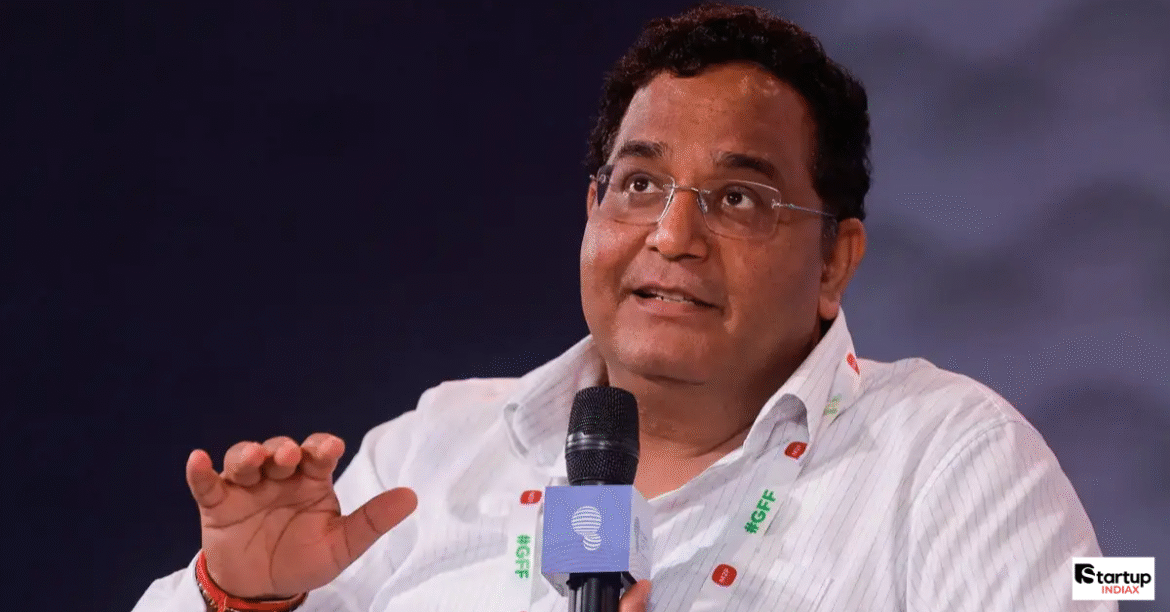
Startups like agritech exporters and SaaS firms serving U.S. clients face immediate headwinds. Paytm’s Vijay Shekhar Sharma warns: “Tariffs could squeeze margins and delay IPOs.”

However, domestically focused startups—edtech, fintech, and logistics—may dodge the bullet. As Sharma notes: “India’s internal demand story remains intact.”

But the bigger worry? A liquidity crunch if LPs stay sidelined. PitchBook reports that U.S. IPO-bound startups are already postponing plans, and Indian VCs fear a domino effect.

Deeptech Dreams: Can Trump Tariffs Boost India’s Manufacturing Momentum?

Amid the chaos, sectors like semiconductors, defense tech, and advanced manufacturing see a silver lining. With China facing 245% tariffs, investors like Speciale Invest’s Vishesh Rajaram are doubling down: “India can fill the supply chain gaps—if the policy framework supports it.”

Bharat Innovation Fund’s Ashwin Raguraman agrees: “This is India’s moment to attract deeptech capital. But we need clearer policies to channel investments.”

Funding Winter 2.0? How Tariffs Could Reshape India’s VC Landscape

The million-dollar question: Is another funding winter looming?

Blume’s Agarwal draws parallels to the COVID-era chip shortage: “Unpredictable shocks reshape industries overnight. Tariffs could reroute global supply chains permanently.”

While most VCs believe India holds an edge over China and Mexico, the short-term outlook is cautious. As Raguraman puts it: *“Slow decision-making will prevail until the tariff fog clears.”*

Conclusion: Navigating the Tariff Storm—What Lies Ahead for Indian VCs?

Trump’s tariffs have thrust Indian VCs into a high-stakes game of wait-and-watch. While deeptech and manufacturing startups could emerge as winners, the broader ecosystem faces months of uncertainty.

For Indian VCs, the playbook is clear: diversify portfolios, lobby for policy support, and prepare for a volatile fundraising climate.

As Senthilkumar quips: “In chaos lies opportunity. India just needs to grab it.”

April 22, 2025 1 comment 410 views
FacebookTwitterLinkedinWhatsapp
Trump’s Tariffs: Will They Derail India’s Startup IPO Boom?
StartupPolitics

Trump’s Tariffs: Will They Derail India’s Startup IPO Boom?

by Ismail Patel April 20, 2025
3 min read

India’s startup IPO scene is buzzing, but Trump’s Tariffs are casting a dark cloud. These new US trade policies are creating uncertainty, forcing startups to rethink their public listing plans. With 36 startups in the IPO pipeline, Trump’s Tariffs could scare off foreign investors, disrupt valuations, and delay launches. Let’s unpack how Trump’s Tariffs are shaking things up.

Billions On The Line

India’s startup ecosystem is on the verge of a massive IPO wave. Our IPO tracker shows 36 startups gearing up to raise over $20 billion (INR 1.6 lakh crore) in the next two years. Heavyweights like PhonePe, OYO, PhysicsWallah, Of Business, and Urban Company are set to lead in 2025 and early 2026.

These startups have already secured $12.2 billion (INR 1.1 lakh crore) in venture capital and private equity funding. Their IPOs are a golden opportunity for investors to cash out, but Trump’s Tariffs are causing jitters. Since September 2024, foreign institutional investors (FIIs) have yanked over INR 2 lakh crore from Indian equities, spooked by Trump’s Tariffs and global uncertainty. Startups need these FIIs to drive demand for their IPOs.

Why are startups rushing to go public despite Trump’s Tariffs? Many want their foreign investors to lock in returns before markets get shakier. It’s a high-stakes race, and Trump’s Tariffs are raising the pressure.

Indian Startup IPOs Under Trump’s Tariffs

Trump’s Tariffs, including a 26% levy on Indian goods, are part of his “Liberation Day” push to boost US manufacturing. But they’re sending shockwaves through India’s startup ecosystem. “Markets are on edge because of Trump’s Tariffs,” says a Mumbai-based investor who’s backed three IPO-bound startups. “Startups just want to get their IPOs done before the uncertainty grows.”

There’s a tactical reason for the IPO rush. By filing draft red herring prospectuses (DRHPs) before April, startups can use September 2024 financials, sidestepping weaker December quarter results impacted by Trump’s Tariffs and global slowdowns. It’s a clever way to look stronger to investors.

In the US, Trump’s Tariffs have frozen IPO activity. Keith Canton from JPMorgan Chase & Co told Bloomberg that US deals are on hold, with investors reassessing daily. In India, startups like Urban Company and Ather Energy are scaling back, cutting IPO sizes and valuations to align with the cautious vibe created by Trump’s Tariffs.

“Trump’s Tariffs have cooled the market. Valuations are being reset, and IPOs are priced for reality,” says V Jayasankar from Kotak Investment Banking.

Forget Sky-High Valuations Amid Trump’s Tariffs

Which startups face the biggest risks from Trump’s Tariffs? Investors warn that small and mid-cap IPOs could struggle as fears of value erosion grow. Big names like Zepto, boAt, and OfBusiness, chasing premium valuations, may also hit roadblocks due to Trump’s Tariffs.

“Startups expecting VC-style valuations in public markets will struggle under Trump’s Tariffs,” the Mumbai investor says. “The ecosystem has shifted.”

Sectors like e-commerce, logistics, and consumer tech, which often rely on US markets or foreign funding, are especially vulnerable to Trump’s Tariffs. Take Ecom Express: it was acquired by Delhivery at a 50% discount to its planned IPO raise, proving that high revenues don’t guarantee success in the shadow of Trump’s Tariffs. Investors are scrutinizing financials for any weak spots.

The takeaway? Startups must price IPOs sensibly or face turbulence in a market rattled by Trump’s Tariffs.

Global Market Ripples From Trump’s Tariffs

Trump’s Tariffs aren’t just hitting India—they’re rocking global markets. Higher costs on imports to the US are squeezing supply chains, raising prices, and spooking investors worldwide. Emerging markets like India, which rely on US trade and foreign capital, are feeling the pinch as Trump’s Tariffs fuel fears of a broader trade war. Stock markets in Asia and Europe have seen volatility, with investors pulling back from riskier assets like startup IPOs. For Indian startups, this means less foreign cash flowing in, tighter valuations, and a tougher road to going public. If Trump’s Tariffs escalate, they could trigger a global slowdown, making it even harder for startups to win investor confidence.

Stock In Focus: Zomato’s Defense Against Trump’s Tariffs

Zomato’s parent, Eternal, is taking a bold stand against Trump’s Tariffs. It’s capping foreign ownership at 49.5%, limiting stakes from FIIs, foreign portfolio investors, and NRIs. This move follows Commerce Minister Piyush Goyal’s concerns about foreign shareholding in quick commerce, but it’s also a shield against risks tied to Trump’s Tariffs.

By maintaining its “Indian-Owned-And-Controlled-Company” status, Zomato says it can innovate faster, support local entrepreneurs, and deliver stronger returns. It’s a strategic play to reduce exposure to market volatility driven by Trump’s Tariffs. Rival Zepto is following suit, boosting domestic shareholding ahead of its IPO.

With FIIs selling INR 1.62 lakh crore in Indian shares recently, partly due to Trump’s Tariffs, these moves could stabilize companies. But will more Indian investors offset the foreign pullback?

IPO Watch: New Issues, DRHPs & More

Here’s the latest on India’s IPO scene amid Trump’s Tariffs:

  • Zepto’s Rebrand: Zepto has changed its name from Kiranakart Technologies to Zepto Private Limited to prep for its IPO.
  • PhonePe’s Milestone: Walmart-backed PhonePe is now a public company, targeting a $15 billion valuation despite Trump’s Tariffs.
  • Razorpay’s Plan: Razorpay has gone public but says its IPO is two years out, navigating Trump’s Tariffs cautiously.
  • Paytm’s ESOP Shift: Paytm CEO Vijay Shekhar Sharma surrendered 2.1 crore unvested stock options after SEBI scrutiny, returning them to the ESOP pool.

Trump’s Tariffs are creating a stormy backdrop, but India’s startup IPO pipeline is still moving. With global markets recovering unevenly, the next few months will show if startups can weather Trump’s Tariffs. By adjusting valuations, timing DRHPs wisely, and localizing ownership, they’re fighting to keep the IPO party alive.

April 20, 2025 0 comments 439 views
FacebookTwitterLinkedinWhatsapp
Newer Posts
Older Posts

Follow Us

Facebook Twitter Instagram

Recent Posts

  • WhatsApp Web Can Now Make Calls, Announced by a CRED Founder Turned Global CEO

  • From Rs 5,000 to Rs 50 Crore: Parul Gulati’s Unlikely Startup Playbook

  • Apollo Hospitals Bets on Electric Air Ambulances to Fix India’s Golden Hour Problem

  • Free Startup Company Valuation Calculator: Know Your Worth in Under 2 Minutes

  • Ashneer Grover Launches Fund My Staff: What It Is, How It Works, Who It’s For

Newsletter

Subscribe our newsletter for latest news. Let's stay updated!

Categories

  • Advertising (2)
  • Agritech (3)
  • AI (66)
  • AI & DeepTech (38)
  • AI Tools (18)
  • Automobile (15)
  • Beauty & Wellness (3)
  • Bootstrapped Wins (3)
  • Crowdfunding Hub (1)
  • Debt Financing (2)
  • Digital (33)
  • Ecom (12)
  • EV (32)
  • Failure Lessons (1)
  • Fashion & Lifestyle (5)
  • Finance (37)
  • Fintech (9)
  • FoodTech (6)
  • Founder Story (3)
  • Founder Toolkit (1)
  • Funding (23)
  • Government Schemes (13)
  • Green Energy (10)
  • HealthTech (6)
  • Investor Directory (1)
  • News (193)
  • Politics (12)
  • Real State (1)
  • Science (13)
  • Startup (152)
  • Startup Learning (16)
  • Startup Stories (26)
  • Technology (88)
  • Unicorn Journeys (5)
  • Women Entrepreneurs (8)

About Us

India’s independent startup media for founders, investors and ecosystem builders.

Facebook Instagram Twitter Linkedin

Explore

  • News
  • Startup Stories
  • Funding
  • Sectors

Free Tools

  • Valuation Calc
  • Pitch Deck Builder
  • Runway Calc
  • VC Database

Company

  • About Us
  • Contact
  • Careers
  • Advertise

© 2026 StartupIndiaX. All rights reserved.

  • Privacy Policy
  • Disclaimer
  • Terms
startupindiax.com
  • Home
  • News
  • Startup Stories
  • Funding
  • Founder Toolkit
    • Startup Valuation Calculator
    • Startup Runway Calculator
    • Indian VC & Investor Database
    • Co-founder Equity Split Calculator
    • Government Scheme Finderfor Indian Startups
    • Pitch Deck Structure Tool
    • Market Size Calculator TAM · SAM · SOM
    • Find the perfect startup name
    • Funding Round Dilution Calculator
  • Sectors
    • Agritech
    • AI & DeepTech
    • Fintech
    • Green Energy
    • HealthTech
    • EV
    • Digital
    • Automobile