Summary
- Maharashtra has approved Sarvam AI’s Indus for 2,500 officials, backed by a two-year outlay of ₹11.26 crore
- Indus runs entirely on India-based infrastructure and works across 22 languages, including Marathi
- The deal signals that Indian founders building “sovereign” infrastructure now have a real government customer, not just a pitch line
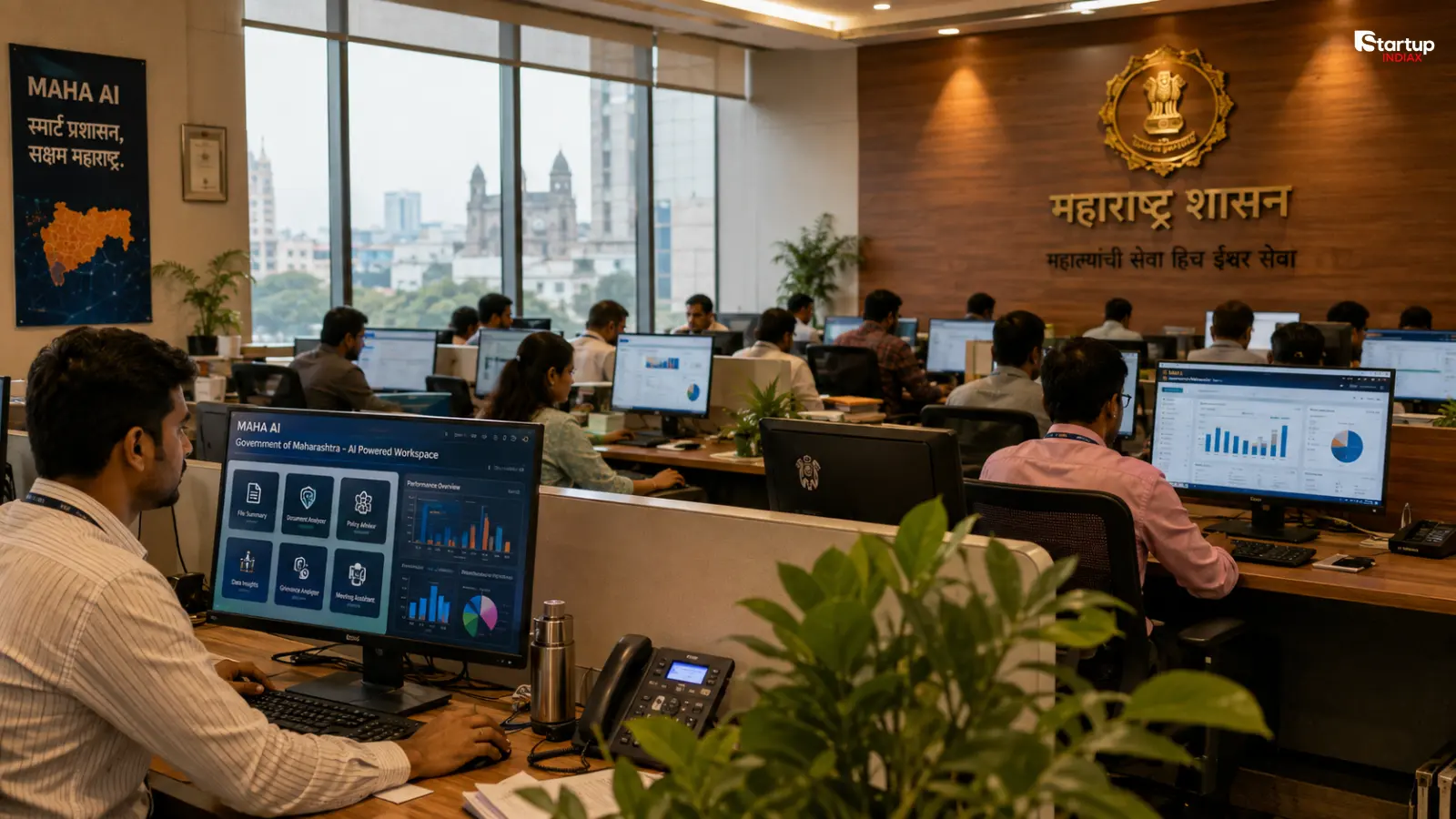
The state government has cleared the deployment of Indus, Sarvam AI’s sovereign AI workspace, across its departments, with roughly 2,500 officials set to use it in their daily work. A High-Power Committee headed by the state’s Chief Secretary approved the plan at an indicative two-year outlay of ₹11.26 crore, according to a Government Resolution. The first-year cost alone comes to ₹5.63 crore.
Under the commercial terms, Maharashtra gets a Foundation Partner rate of ₹1,200 per user per month for the first year, well under Sarvam’s listed standard rate of ₹2,500. The package also folds in a ₹50 lakh one-time professional services fee, ₹42 lakh for setup and adoption support over three months, and an annual maintenance charge of ₹25 lakh.
What officials actually get.
Indus is built to handle the unglamorous but constant work that fills a government day: drafting notes and replies, searching past policies and precedents, translating and summarizing lengthy scheme documents, running OCR on scanned records, and flagging patterns or exceptions in data. It works across 22 languages, Marathi included, and can plug into eOffice and NIC email wherever the API access allows it. The rollout also brings in RTI response support and project workspaces, and it can turn old scanned files into searchable text, which for any state bureaucracy sitting on decades of paper records is not a small thing.
Read More: India’s First Homegrown Sovereign AI Model, Sarvam AI To Build
Why “sovereign” isn’t just a buzzword here.
According to the Government Resolution, Sarvam’s systems run on secure, audited infrastructure located entirely within India, so government data doesn’t leave the country and the state can inspect the systems it runs on. That’s the operational definition of sovereign AI that Sarvam has been pushing since it opened Indus to beta users in February, when the company said building sovereignty means owning the full stack, from the foundational models up through the interface layer. Indus runs on Sarvam’s own 105-billion-parameter model, trained in India under the IndiaAI Mission.
This isn’t Sarvam’s first brush with government backing.
The company was born out of AI4Bharat at IIT Madras, raised a combined $41 million seed and Series A round in December 2023 led by Lightspeed Venture Partners with Peak XV Partners and Khosla Ventures, and has been closely tied to the IndiaAI Mission’s push for a homegrown large language model. Maharashtra’s deployment builds on the state’s own April 2026 decision to set up a dedicated AI department, and extends a March letter of intent that, notably, also named OpenAI, a reminder that Sarvam is winning this deal in a competitive field, not by default.
Read More: Zoho Email Migration: 12 Lakh Government Employees to Indian Platform
The scale is the real story.
Maharashtra isn’t running Indus as a pilot inside one department, it’s committing at the level of the whole administration. Sarvam has called it one of the first commitments by an Indian state to deploy sovereign AI at this scale, and the state is treating Indus as just the opening move. The wider partnership is expected to bring Samvaad, Sarvam’s voice and WhatsApp citizen outreach tool, into the mix next, alongside the Saaras and Bulbul speech models feeding into the state’s MahaAI platform. Maharashtra has already approved a one-month Samvaad pilot for tuberculosis awareness.
What it means for founders.
For deep-tech and AI founders elsewhere in India, this is the clearest signal yet that “sovereign infrastructure” has moved from pitch-deck language to a line item that state governments will actually pay for, at commercial rates, with a multi-crore budget behind it. It also raises a fair question that neither Sarvam nor Maharashtra has fully answered in public yet: what access and retention controls individual departments keep over the records they feed into the system, and how long that data sits there. Worth watching as scanned files and draft replies start moving through the platform at real volume.
If Maharashtra’s rollout holds up, expect other states to watch closely. A successful, administration-wide deployment gives every other state AI department a template, and gives Sarvam a reference customer that’s hard to argue with.
Read More: Krutrim’s Bold Leap: Unveiling Its Agentic AI Assistant Kruti in 2025
So Maharashtra just made a very public bet on homegrown AI. Whether it pays off in faster paperwork and fewer data headaches is something worth checking back on in a few months. Got thoughts on what this means for India’s sovereign AI push? Drop them in the comments, or check out more of StartupIndiaX’s AI coverage.
FAQs
What is Sarvam AI’s Indus?
Indus is Sarvam AI’s sovereign AI workspace, powered by the company’s own 105-billion-parameter model, built to help users draft, translate, research, and analyze documents across 22 Indian languages.
How many officials will use Indus in Maharashtra?
Around 2,500 officials across Maharashtra state departments are expected to use Indus for daily administrative work.
How much is Maharashtra paying for the deployment?
The state approved an indicative two-year outlay of ₹11.26 crore, with the first-year cost estimated at ₹5.63 crore, plus separate one-time setup and services fees.
Why is data sovereignty central to this deal?
Indus runs entirely on infrastructure located within India, meaning government data doesn’t leave the country and the state can audit the systems it’s stored on, a key requirement for handling citizen and administrative records.
What other tools are part of the wider Sarvam-Maharashtra partnership?
Beyond Indus, the partnership includes Samvaad for voice and WhatsApp-based citizen outreach, and the Saaras and Bulbul speech models feeding into the state’s MahaAI platform.
Did Sarvam AI compete with other companies for this deal?
Yes. Maharashtra’s March letter of intent that led to this deployment also named OpenAI, so Sarvam won this at least partly in a competitive process, not as the only option on the table.