SUMMARY
- OpenAI’s Businesses in ChatGPT beta lets brands claim verified profiles and, in the US, launch AI agents that chat with shoppers.
- Business Agents can double as ChatGPT ads, and no India launch date is confirmed, so Indian founders should prepare, not promise.
- Start by checking what ChatGPT says about your brand, then fix product pages and FAQs before any paid test.
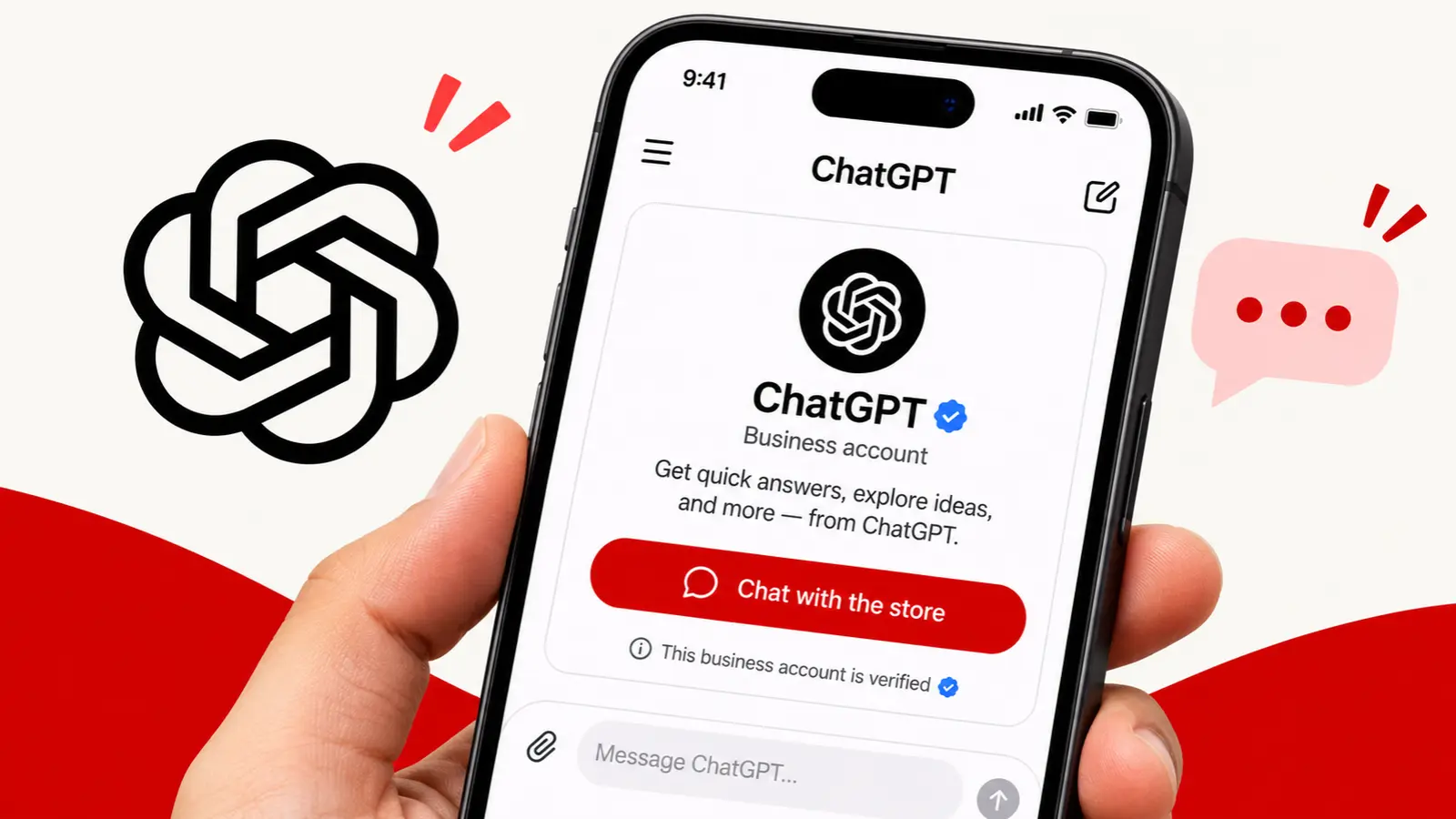
OpenAI has found a new home for businesses: inside the chat itself. On Tuesday, November 10, the company launched Businesses in ChatGPT in beta, a set of tools that lets brands claim a verified profile, correct what ChatGPT says about them, and in some cases talk to shoppers directly through their own AI agent.
For founders, this isn’t another feature drop to skim past. It’s the clearest sign yet that ChatGPT wants to be a shopfront, not just a search box. OpenAI says about 1.2 billion people use ChatGPT every week, and the beta is aimed squarely at that audience.
Two tools, one idea
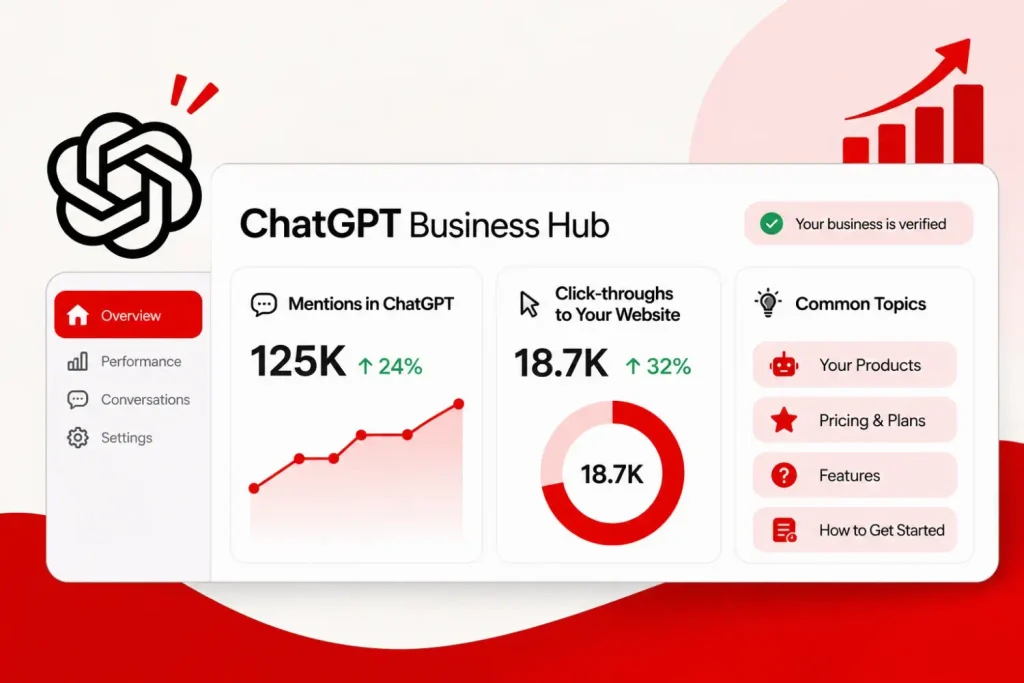
The first piece is the Business Hub. A verified company gets a blue check and can update its details, prices and stock. It can also see how often ChatGPT mentions it, how many people click through to its website, and which topics come up most in those conversations.
The second piece is the Business Agent. When a business shows up in a ChatGPT answer, a user can open its profile and chat with its agent, which answers using the company’s own product details. These chats are labelled and kept apart from ChatGPT’s own answers, so people can tell who’s talking.
Privacy is the obvious worry, and OpenAI has drawn a line. It says it doesn’t share users’ conversations or Business Agent chats with businesses. The insights are aggregated and only appear once there’s enough activity to clear certain thresholds.
Who can use it today
Not Indian startups, at least not yet. Business Agents are opening to eligible US ecommerce and online-service companies, and the whole thing is still a beta. None of the reports we reviewed gives a date for India, so treat any local timeline as unconfirmed.
That doesn’t make it irrelevant. Inc42 reported that OpenAI has already rolled out ChatGPT ads in India, starting with logged-in adults on the Free and Go plans. The ad rails are here. The shopfront isn’t, yet.
Read More: Term Sheet Explained for Indian Founders: 12 Clauses That Decide Who Controls the Company
The ad angle is the part to read twice
OpenAI also sells the agent as an ad. Businesses can sponsor their Business Agent and use it as the landing spot for ChatGPT Ads, building on the Sponsored Agents test the company began in September. OpenAI says paying doesn’t change how often ChatGPT recommends a business, according to Digiday as relayed by TNW.
Keep the scale in mind. TNW reports that ChatGPT ads passed a $1 billion annual run rate in August and now count 100,000 advertisers. So this is a monetisation play first and a service for brands second. Both can be true. Founders just need to know which one they’re signing up for.
The guardrails, and what’s missing
OpenAI has set some ground rules. Agents must say they’re AI, keep prices accurate and avoid pressure tactics. A purchase, or the sharing of personal data, needs the user’s explicit approval.
There’s no in-chat checkout yet. Buyers are sent to the brand’s own website for now, though OpenAI is building agent payments with Visa. Today it’s a discovery and conversation channel, not a till.
What this means for a founder in India
Think of it as a Google Business Profile moment. Indian brands already know the drill from Google listings and marketplace pages: if you don’t claim and tidy your presence, someone else’s version of it fills the gap. ChatGPT is becoming one more place where that happens.
Our read: the first win from Businesses in ChatGPT is accuracy, not sales. If ChatGPT quotes a wrong price or a stale return policy for your brand, a claimed profile gives you a way to fix it. The agent comes second. The ad comes last.
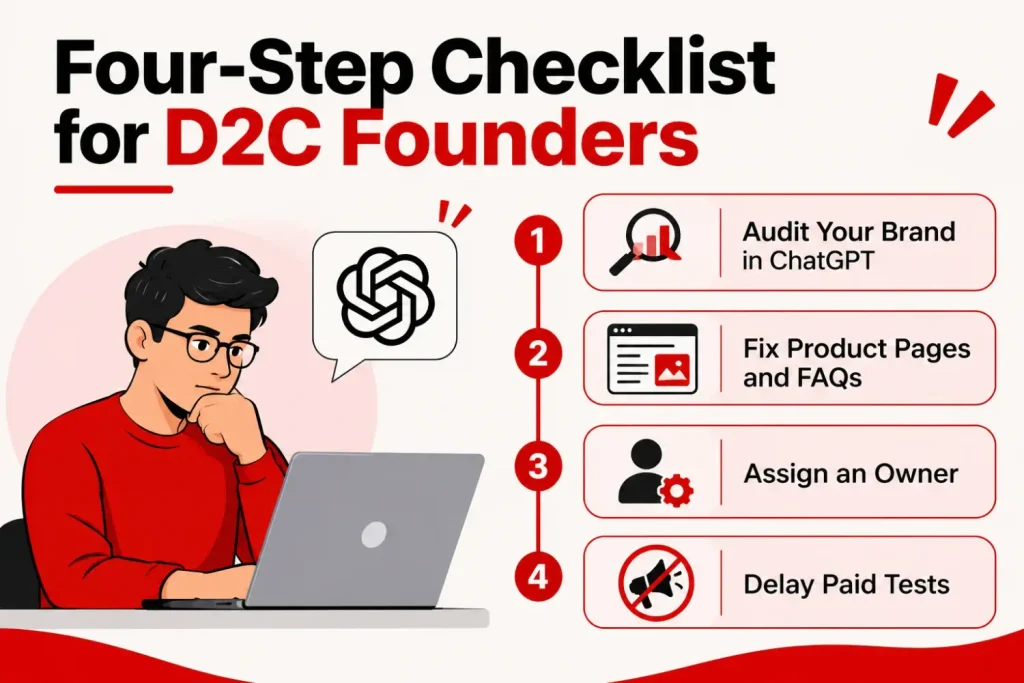
Even before an India launch, D2C and ecommerce teams can do four things:
- Ask ChatGPT about your own brand today. Check prices, specs or ingredients, delivery and returns.
- Clean up product pages and FAQs, since an agent answers from your product details.
- Decide who owns this internally. A profile nobody updates is worse than no profile.
- Hold off on paid placements until you know your customer acquisition cost on other channels.
There’s a market angle too. TNW notes the launch could squeeze startups that sell brands estimates of their visibility in ChatGPT, such as Berlin-based Peec AI, now that OpenAI is handing businesses their own mention data.
And readiness matters. An LS Digital executive told exchange4media in 2025 that roughly 80 percent of Indian businesses were exploring autonomous agents, though adoption was still early. That gap is the opening. Brands with their product data in order will be ready when this reaches India.
Read More: Meta Muse Ember Is Cheap, Fast and Built for Agents. Here’s What Founders Should Know
What to watch next
Three questions will decide how much this matters here. When does it reach India? Will agents handle Indian languages and local payments? And will OpenAI’s promise that paid placement doesn’t change recommendations hold up in practice?
We’ll keep tracking all three. Meanwhile, here’s the short version:
- Businesses in ChatGPT is a US-first beta, with no India date confirmed.
- A claimed profile gives brands control over accuracy, which is the real early win.
- The Business Agent can also be a paid ad, so test it carefully and only after the basics are in place.
Are you a D2C founder thinking about showing up inside ChatGPT? Tell us in the comments what you’d want an AI agent to say about your brand, and keep following StartupIndiaX for the India rollout.
FAQs
What is Businesses in ChatGPT?
Businesses in ChatGPT is an OpenAI beta that lets companies claim a verified profile, update details like prices and stock, see how often ChatGPT mentions them and, if eligible, launch a Business Agent that chats with shoppers.
Who can use Business Agents right now?
Business Agents are opening to eligible US ecommerce and online-service businesses. The reports we reviewed don’t confirm an India launch date, so Indian startups should watch OpenAI’s announcements before building plans around it.
Can businesses read my chats with a Business Agent?
No, according to OpenAI. It says it doesn’t share users’ conversations or Business Agent chats with businesses. Companies only see aggregated insights, and only when enough conversations or interactions meet certain thresholds.
Is a Business Agent also an ad?
It can be. Businesses can sponsor their agent as the landing spot for ChatGPT Ads. OpenAI says paying doesn’t change how often ChatGPT recommends a business, according to Digiday as relayed by TNW.
Can customers buy inside the chat yet?
Not yet. For now, buyers are sent to the brand’s own website, though OpenAI is building agent payments with Visa. Any purchase or sharing of personal data needs the user’s explicit approval.
What should Indian founders do right now?
Check what ChatGPT says about your brand, fix product pages and FAQs, and decide who will own a profile. Wait on paid placements until the India rollout and pricing are clear.