startupindiax.com
  • Home
  • News
  • Startup Stories
  • Funding
  • Founder Toolkit
    • Startup Valuation Calculator
    • Startup Runway Calculator
    • Indian VC & Investor Database
    • Co-founder Equity Split Calculator
    • Government Scheme Finderfor Indian Startups
    • Pitch Deck Structure Tool
    • Market Size Calculator TAM · SAM · SOM
    • Find the perfect startup name
    • Funding Round Dilution Calculator
  • Sectors
    • Agritech
    • AI & DeepTech
    • Fintech
    • Green Energy
    • HealthTech
    • EV
    • Digital
    • Automobile
startupindiax.com
SUBSCRIBE
Monday, October 5, 2026
  • Home
  • News
  • Startup Stories
  • Funding
  • Founder Toolkit
    • Startup Valuation Calculator
    • Startup Runway Calculator
    • Indian VC & Investor Database
    • Co-founder Equity Split Calculator
    • Government Scheme Finderfor Indian Startups
    • Pitch Deck Structure Tool
    • Market Size Calculator TAM · SAM · SOM
    • Find the perfect startup name
    • Funding Round Dilution Calculator
  • Sectors
    • Agritech
    • AI & DeepTech
    • Fintech
    • Green Energy
    • HealthTech
    • EV
    • Digital
    • Automobile
startupindiax.com
startupindiax.com
  • Privacy Policy
  • Disclaimer
  • Terms

@2025 - All Right Reserved.

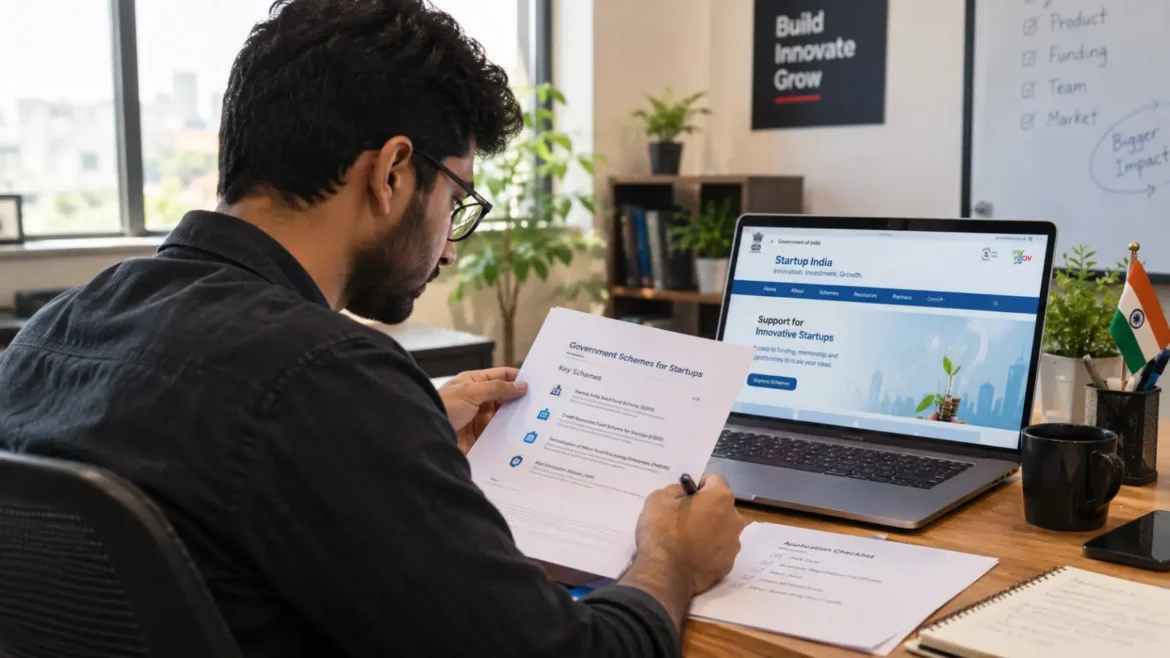
Indian startup founder reviewing government grant scheme documents at a desk
Startup LearningFounder ToolkitGovernment Schemes

From ₹5 Lakh to ₹1.5 Crore: What India’s Startup Grant Schemes Really Offer

Six government schemes are handing out non-dilutive money to Indian founders right now. Here's what each one actually pays, who it pays, and where the numbers you've read elsewhere go wrong.
by Aalam Rohile September 9, 2026
3 min read

Summary

  • Six live schemes cover founders from idea stage to enterprise scale, ranging from a ₹5 lakh RKVY-RAFTAAR pre-seed grant to a ₹1.5 crore iDEX defence cheque.
  • ASPIRE’s ₹1 crore figure goes to the incubator running the centre, not directly to your startup’s bank account.
  • GENESIS is really two schemes in one: a ₹10 lakh EIR grant and a separate, equity-based ₹50 lakh matching investment track.

Every founder WhatsApp group has that one message: a screenshot of a government grant scheme promising lakhs in “free money,” no equity attached. Half the time the amount quoted is wrong, or it’s describing money that goes to an incubator instead of the startup, or it’s an old figure from a scheme that’s since been folded into something else.

That’s worth fixing, because the schemes underneath the confusion are real, and some of them are large enough to cover a founder’s first eighteen months of runway. From ₹5 Lakh to ₹1.5 Crore: What India’s Startup Grant Schemes Really Offer

MAXIMUM GRANT CEILING BY SCHEME

Non-dilutive government support available to Indian startups (₹ Lakh)
iDEXDefence & aerospace
₹150L
ASPIRE*Routed via incubator
₹100L
PRISMPrototype to enterprise
₹50L
RKVY-RAFTAARAgri seed stage
₹25L
MSME InnovativePer incubated idea
₹15L
GENESIS EIRMeitY early-stage
₹10L
*ASPIRE grants are paid to the incubator/institution setting up the centre, not as a direct cheque to individual startups. Figures reflect ceiling amounts; actual disbursement is milestone-based and often lower.
www.startupindiax.com

ASPIRE: money for the incubator, not directly for you

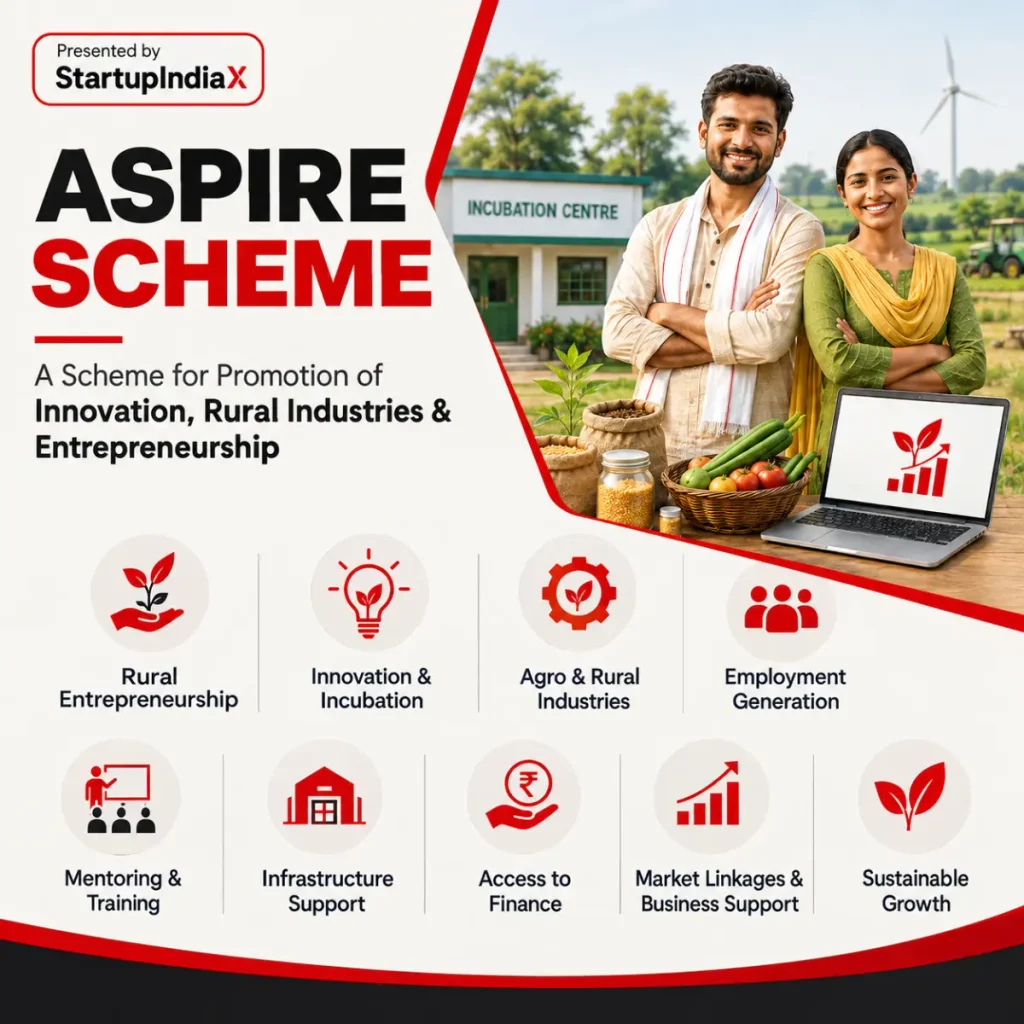
ASPIRE, run by the Ministry of MSME, is often listed online as a straight “₹1 crore per startup” grant. That’s not quite how it works.
ASPIRE Scheme

The ₹1 crore ceiling goes to the government agency or institution setting up a Livelihood Business Incubator (LBI), covering plant and machinery costs. Private applicants running an incubator get up to 75% of that cost or ₹75 lakh, whichever is lower. If you’re a founder in agro-processing, rural manufacturing, or khadi and village industries, you don’t apply for the ₹1 crore directly. You apply to get incubated at, or funded through, one of these centres, which then support you with equipment, mentoring, and smaller pass-through grants.

It’s still useful money if your sector fits (agro-based industries, rural artisans, food processing), but the framing matters. Think of ASPIRE as infrastructure funding for the ecosystem around you, not a founder’s cheque.

MSME Innovative Scheme: ₹15 lakh per idea, plus IPR and design support

Launched in 2022, this scheme merges three sub-components under one roof: Incubation, Design, and IPR.

The headline number founders care about is up to ₹15 lakh per innovative idea, disbursed through one of over 1,400 approved Host Institutes (IITs, IIMs, NITs, and dedicated MSME incubators). That’s per idea, not automatically per enterprise, which matters if you’re running more than one product line under the same company.

The less-talked-about parts are worth knowing too. The IPR component reimburses up to ₹5 lakh for a foreign patent and ₹1 lakh for a domestic one. The Design component covers 60-75% of an approved design project’s cost. And SIDBI manages a separate equity support layer, up to ₹1 crore, for MSMEs ready to commercialise and scale a proven idea. Most founders only ever tap the incubation grant, but the IPR reimbursement alone is worth checking if you’re filing patents this year.

Read More: Startup India Certificate 2026: Step‑by‑Step Guide to DPIIT Recognition (NSWS Portal)

PRISM (DSIR): built for individual innovators, not just registered companies

PRISM stands for Promoting Innovations in Individuals, Startups and MSMEs, run by DSIR (the Department of Scientific and Industrial Research), and it’s one of the few schemes open to individual Indian citizens who haven’t incorporated yet.

The grant comes in two phases. Phase I, for proof-of-concept and prototype work, runs ₹2 lakh to ₹20 lakh. Phase II, aimed at enterprise creation and scaling, caps at ₹50 lakh. Sectors covered are broad: affordable healthcare, water and sewage management, clean energy, smart materials, and waste-to-wealth technologies.

One condition to flag for the audit trail: if a funded project is abandoned, DSIR can ask for the money back with 12% interest. It’s a grant, but it’s not a no-strings one.

GENESIS: two schemes wearing one name

This is where a lot of listicles trip up, including the version most founders have seen. GENESIS is a MeitY umbrella scheme with a ₹490 crore outlay aimed at Tier-II and Tier-III tech startups, and it has more than one funding track under it.

The Entrepreneur-in-Residence (EIR) track, which most early founders actually apply to, offers a subsistence grant of up to ₹10 lakh a year, plus mentorship and incubation access through participating centres. Cohort 3 opened in August 2026 with a specific push toward first-time, non-metro founders.

Separately, there’s a GENESIS Matching Investment Scheme that offers equity-based matching investment of up to ₹50 lakh to technology startups from Tier-II and Tier-III cities, alongside a structured six-month acceleration programme. This one takes equity. It’s not a grant in the same sense as the EIR track, and conflating the two is how the “₹50 lakh GENESIS grant” myth keeps circulating.

Read More: Top 5 Government Schemes for Rural Youth Startups in 2025

If you’re bootstrapped and want money with no equity attached, the EIR track is the one to target first.

iDEX: the largest cheque on this list, if you’re building for defence

Run by the Ministry of Defence through the Defence Innovation Organisation, iDEX funds startups, MSMEs, and individual innovators solving problems posed by the armed forces (through the Defence India Startup Challenge) or self-defined problems with defence relevance (Open Challenge).

Standard grants go up to ₹1.5 crore, disbursed over roughly 18 months against milestones, with startups retaining full IP rights over what they build. Under iDEX Prime, aimed at more mature, higher-stakes challenges, that ceiling rises to ₹10 crore. It’s non-dilutive either way, and a successful prototype comes with a direct line to procurement by the Indian Armed Forces, which is as good a pilot customer as a startup can get in that sector.

This one only makes sense if your product genuinely fits a defence or dual-use use case. It’s not a general-purpose grant.

RKVY-RAFTAAR: staged funding for agri-startups

The Ministry of Agriculture’s RKVY-RAFTAAR programme funds agri and allied-sector startups in two stages, through a network of RKVY Agri-Business Incubators (R-ABIs).
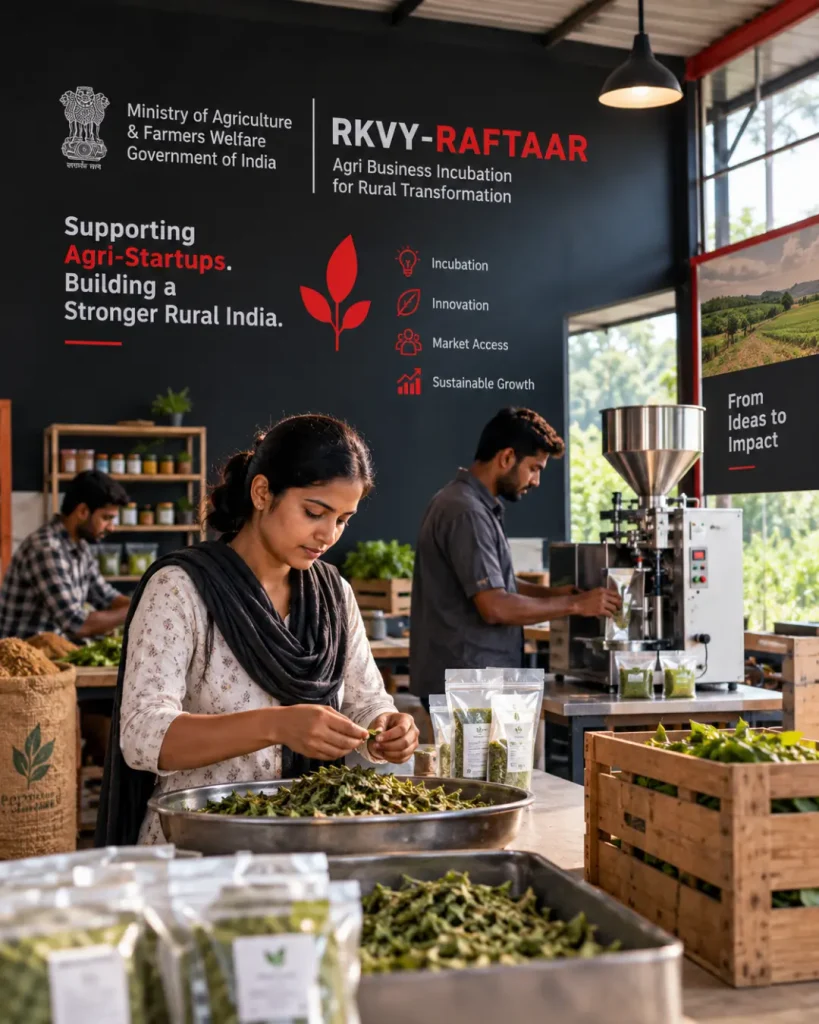
Rural incubation centre supported by government agri-startup scheme

Idea-stage founders can get up to ₹5 lakh after completing a short Agripreneurship Orientation Programme. Once you’ve got a working MVP and move to seed stage, that rises to up to ₹25 lakh, released in tranches as you hit milestones. DeHaat, one of India’s better-known agritech names, used RKVY-RAFTAAR funding early on to expand its farmer network.

It’s a smaller cheque than iDEX or ASPIRE, but the staged structure (₹5 lakh to validate, ₹25 lakh to scale) makes it one of the more founder-friendly designs on this list.

What this actually means for your fundraising plan

None of these schemes replace a seed round, and none of them should be the only line in your funding plan. But stacked together, and applied for with the right expectations, they can meaningfully extend your runway before you have to give up equity.

The pattern worth remembering: schemes tied to a specific ministry’s mandate (defence, agriculture, MSME manufacturing) tend to pay more and move faster than broad, sector-agnostic ones. And whenever a scheme mentions “up to,” read the fine print on who the cheque is actually written to. That single detail is where most of the confusion above started.

Read More: Top 10 Government Schemes Boosting AgriTech and Rural Startups

If you’re not sure which of these fits your stage and sector, StartupIndiaX’s Govt Scheme Finder filters 30+ central schemes by sector and stage, and the Startup Runway Calculator can help you work out how far a milestone-based grant will actually stretch before your next raise.

Got a scheme you’ve applied to that isn’t on this list, or a number here that doesn’t match what you were quoted? Drop it in the comments, we track corrections openly and this list will get updated as new cohorts open.

FAQs

What is the biggest non-dilutive government grant available to Indian startups?

Among the schemes here, iDEX offers the highest ceiling: up to ₹1.5 crore for standard defence and aerospace challenges, and up to ₹10 crore under iDEX Prime for more advanced problem statements.

Can a startup apply for more than one government scheme at the same time?

Generally yes, as long as you meet each scheme’s eligibility and disclose any other government support you’ve already received, since several schemes cap total assistance per idea or per founder.

Do I need to be DPIIT-recognised to apply for these schemes?

It depends on the scheme. PRISM accepts individual innovators who haven’t incorporated yet, while GENESIS EIR and RKVY-RAFTAAR generally expect an incorporated entity, DPIIT recognition or not depending on the specific cohort’s guidelines.

Is ASPIRE funding available directly to my startup?

Not usually. ASPIRE’s grant is paid to the incubator or institution setting up a Livelihood Business Incubator. Founders benefit indirectly, through equipment access, mentoring, and smaller pass-through support at that incubator.

How is GENESIS different from the GENESIS Matching Investment Scheme?

GENESIS EIR is a subsistence grant of up to ₹10 lakh with no equity taken. The GENESIS Matching Investment Scheme is a separate, equity-based track offering up to ₹50 lakh in matching investment, mainly for Tier-II and Tier-III tech startups ready to scale.
September 9, 2026 0 comments 125 views
FacebookTwitterLinkedinWhatsapp
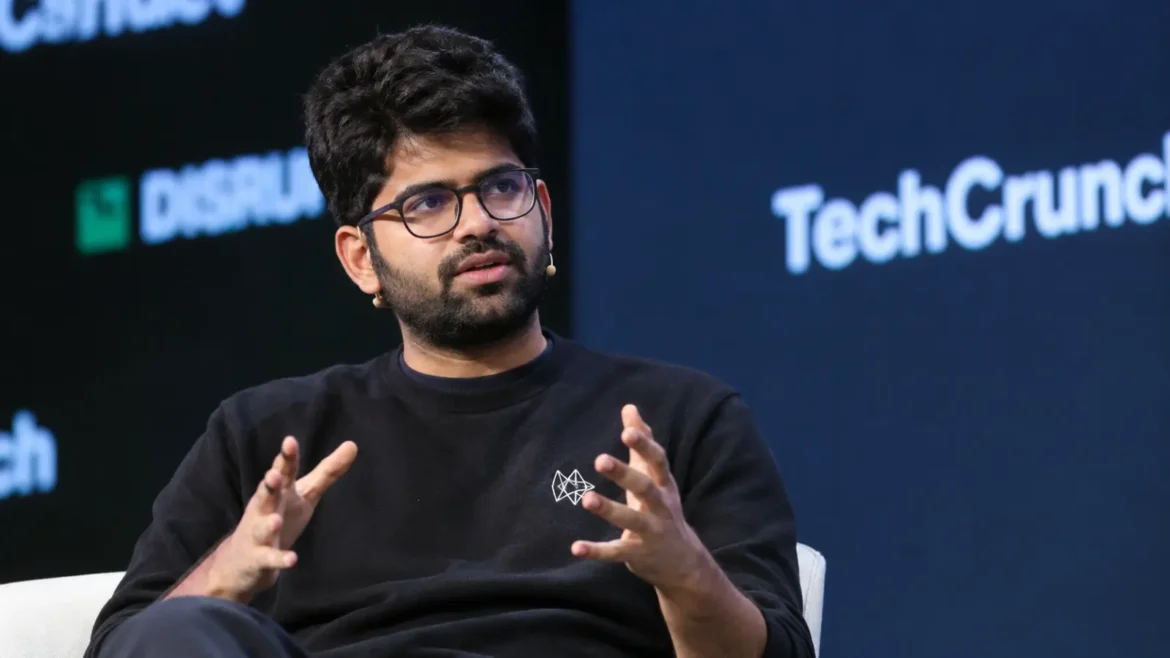
Perplexity's Aravind Srinivas Open-Sources Numbat, a Tool to Catch AI Agents Going Rogue
NewsAI & DeepTech

Perplexity’s Aravind Srinivas Open-Sources Numbat, a Tool to Catch AI Agents Going Rogue

The Chennai-born, IIT Madras-educated founder is betting that open-source security, not more guardrails inside the model, is what keeps AI agents from going off script.
by Aalam Rohile September 7, 2026
3 min read

Summary

  • Perplexity has open-sourced Numbat, a free tool that watches AI coding agents like Claude Code, Codex, and OpenCode for risky behaviour.
  • It ships under Apache 2.0 as a single Go binary and works across desktop, CLI, IDE, and gateway agents.
  • For Indian startups running agents with file and credential access, Numbat is a free way to actually see what those agents are doing.

Aravind Srinivas doesn’t usually sound worried on X. This week, he did.

On September 5, the Perplexity CEO pointed to Numbat, an open-source tool that tracks AI agents, and framed it as urgent. He said detecting malicious intent in agents and doing forensics is becoming crucial given recent cases of rogue agents escaping sandboxes and hitting third-party sites. Coming from someone who’s spent the last year pushing Perplexity deeper into agentic territory, that’s not a throwaway line.

What Numbat actually does

Numbat isn’t a new product launch. Perplexity first released it publicly at the end of July, and Srinivas’s tweet is really a re-highlight, timed to a moment when agent security has stopped being a hypothetical concern.

The tool monitors AI agents running on desktops, command lines, IDEs, and gateways, collecting activity through local hooks and plugins. It also records information through OTLP/HTTP logs and local session files that can be used for investigations. Everything gets normalised into a common event format, and Numbat can flag or block actions using rules written in Common Expression Language (CEL). It ships as a single static Go binary for macOS, Linux, and Windows, and it’s genuinely free, released under the Apache 2.0 license.

Perplexity says it built 52 detection rules across 11 behaviour categories, covering things like secret access, data exfiltration, privilege escalation, and lateral movement. The interesting part is sequence correlation: a single command an agent runs might look completely harmless, but a chain of them within one session can reveal that the agent was quietly trying to get around a security rule. Numbat is built to catch that pattern, not just the individual step.

Perplexity’s own security team uses it internally to keep an eye on code its engineers generate with Claude Code, Codex, OpenCode, and other agent harnesses.

Read More: Perplexity CEO Says AI Browser Set to Erase These Top Office Roles

Why Srinivas is pushing this now

This isn’t Perplexity’s first open-source security release this year. Back in July, the company put out Bumblebee, a read-only scanner for risky packages and AI tool configs on developer machines, and BrowseSafe, a benchmark for testing whether browser agents can be tricked by prompt injection on the sites they visit. Around the same time, Srinivas referenced the Hugging Face breach as a case study: when the platform got compromised, its closed-source security tools reportedly couldn’t tell attackers apart from the defenders trying to contain the damage, and the company ended up running an open-weight model on its own infrastructure just to do the forensics.

That’s the pitch behind Numbat too. Closed, opaque agent tooling is hard to audit when something goes wrong. An open one, at least in theory, lets a security team actually see what happened, step by step.

Read More: An AI Startup, Rillet, Just Raised $100M in 48 Hours. Here’s What It Says About the Future of Hiring

Why this matters if you’re running agents in an Indian startup

Founders don’t need convincing that AI agents are useful. Coding agents, research agents, and support agents are already stitched into a lot of early-stage Indian stacks, often with real access: reading repositories, touching credentials, executing commands, sometimes running unattended for hours. Very few teams outside dedicated security functions are watching what those agents are doing session by session.

That gap is exactly what Numbat is built for, and the fact that it’s free changes who can realistically use it. A well-funded enterprise can build its own agent monitoring layer. A ten-person startup shipping fast with Claude Code or a Codex-style harness usually can’t, and mostly doesn’t try. An open-source tool that a founder or a single security-minded engineer can install in an afternoon is a meaningfully lower bar.

There’s also an Indian-origin angle worth noting here. Srinivas was born in Chennai, studied electrical engineering at IIT Madras, and went on to a PhD at UC Berkeley before co-founding Perplexity in 2022. He was named India’s youngest billionaire in the 2025 Hurun list. His decision to build Perplexity’s security tooling in the open, rather than keep it proprietary, is a pattern Indian founders scaling their own AI products can watch closely, not just for the tool itself, but for how a company balances speed with the discipline to build guardrails alongside it.

The bigger picture is that AI agent security is turning into its own category, fast, and most of the early tooling is coming out of companies that got burned or nearly burned first. Numbat won’t be the last release like this. It’s a reasonable bet that more agent-heavy startups, in India and elsewhere, start treating “how do we monitor our own agents” as a launch-week question instead of an afterthought.

If your team is running AI agents in production right now, Numbat is worth at least a look this week, install it read-only first, see what it surfaces, and decide from there whether you need enforcement mode.

FAQs

What is Numbat?

Numbat is an open-source tool from Perplexity that monitors AI agents running on desktops, command lines, IDEs, and gateways, and can flag or block risky actions before they happen.

Who built Numbat and why?

Perplexity built it to secure its own use of coding agents like Claude Code, Codex, and OpenCode internally, then open-sourced it under Apache 2.0 so other teams could use the same monitoring layer.

Is Numbat free to use?

Yes. It’s released under the Apache 2.0 license and available as a single binary for macOS, Linux, and Windows, with no paid tier required to install and run it.

Does Numbat work with agents other than Perplexity’s own tools?

Yes. It’s designed to work across multiple agent harnesses, including Claude Code, Codex, and OpenCode, not just Perplexity’s own Computer product.

Why is Aravind Srinivas talking about this now if Numbat launched in July?

His September 5 post ties the tool to recent incidents of AI agents escaping sandboxes and acting on third-party sites, positioning Numbat as a timely response rather than just a product announcement.

Should early-stage Indian startups care about this?

Startups running AI coding agents with file, credential, or command access face the same risks larger companies do, and Numbat gives smaller teams a free way to monitor that activity without building tooling from scratch.

September 7, 2026 0 comments 136 views
FacebookTwitterLinkedinWhatsapp
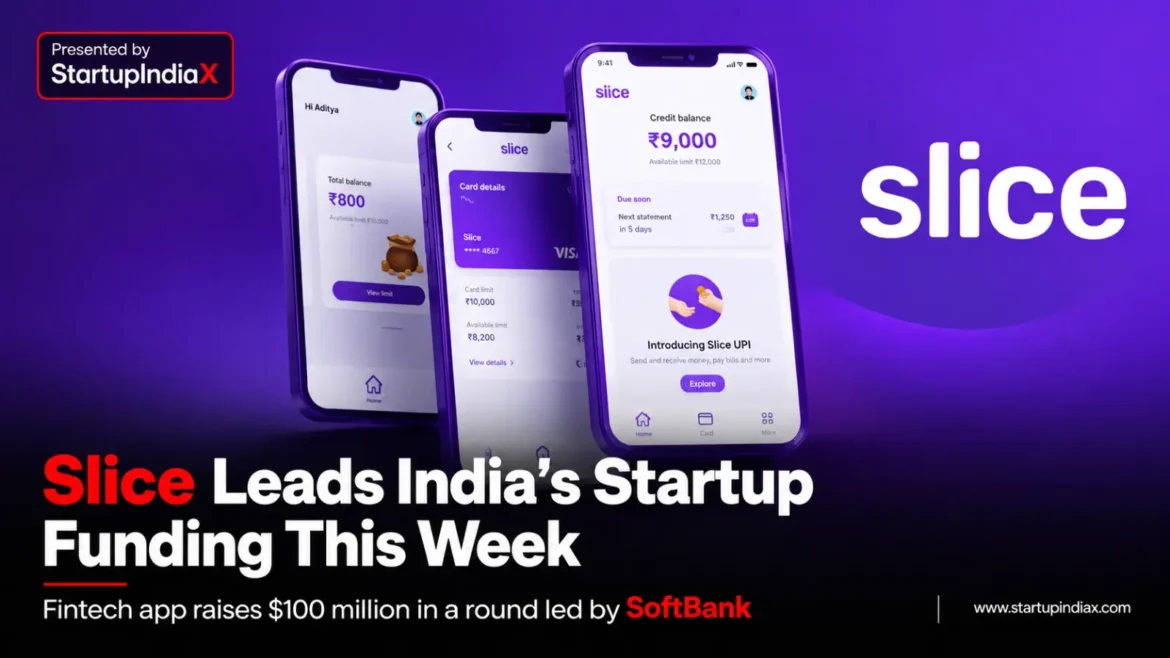
Slice fintech app leads India startup funding this week with 100 million round
FundingNews

India Startup Funding This Week (Aug 31–Sep 5): $303 Mn Raised, 250 Layoffs, and a 12-Year-Old Startup Shuts Down

Slice and Ultrahuman pulled in the big checks, SUGAR Cosmetics took a 75% valuation cut, and a 12-year-old grocery startup ran out of runway, all in the same week
by Aalam Rohile September 6, 2026
3 min read

Summary

  • 25 Indian startups raised $303.7 million this week (Aug 31–Sep 5), a 39% jump from last week’s $218.7 million, per Entrackr.
  • Slice ($100 Mn) and Ultrahuman ($70 Mn) led the pack, while SUGAR Cosmetics raised at a 75% valuation cut to Rs 755 crore.
  • Uber and Eternal both announced India layoffs this week, and 12-year-old grocery startup Satvacart shut down after running out of funding.

India startup funding this week the market woke up. After a sluggish few days, 25 startups raised a combined $303.7 million, up a sharp 39% from the $218.7 million the week before, according to Entrackr’s weekly tracker. That’s well above the eight-week average of roughly $218 million, so this wasn’t just a small bounce.

Week-on-Week Funding Trend India startup funding, USD Mn (Aug 31 – Sep 5) $218.7 Previous Week $218.3 8-Week Average $303.7 This Week +39% WoW Source: Entrackr StartupIndiaX

But the headline number hides a split story. Two other trackers, Inc42 and YourStory, put the week’s total closer to $176.5 million and $196 million respectively, both counting through September 4 instead of September 5 and using a somewhat different deal set. The gap is wide enough that it’s worth flagging rather than picking one number and moving on. We’re going with Entrackr’s figure here since it’s our primary funding source, but if you’re cross-checking against Inc42 or YourStory, don’t be surprised by the mismatch.

Slice And Ultrahuman Carried The Week

Five growth-stage deals accounted for $201.9 million of the week’s total, and two companies did most of the heavy lifting.

Top 5 Funding Deals Aug 31 – Sep 5, 2026 (USD Mn) Slice $100M Ultrahuman $70M SUGAR Cosmetics $15.2M Comet ~$11M* Aeron Systems $4.7M *Comet figure varies by tracker ($10.2M-$11.3M); Entrackr gave rupee figure only Source: Entrackr StartupIndiaX

Slice, the fintech-turned-small finance bank, raised $100 million at a $450 million valuation, led by Neo Wealth with Kado Global, Moore Strategic Ventures and Raise Financial joining in. That valuation is a steep comedown from the $1.25 billion Slice was valued at earlier, a reminder that even well-known consumer fintech names aren’t immune to the reset happening across the sector.

Ultrahuman, the Bengaluru wearable-tech company behind its Ring health tracker, pulled in $70 million led by Qualcomm Ventures, with Labcorp, Alpha Wave, Blume Ventures, Nexus Venture Partners and Alteria also participating. It’s a strong signal for India’s health-tech hardware bet, and it made up the bulk of the sector’s funding this week.

Ultrahuman wearable health tracker raises  70 million led by Qualcomm Ventures

D2C skincare brand SUGAR Cosmetics raised Rs 144.5 crore (about $15.2 million) from existing backer A91 Partners, but at a valuation of Rs 755 crore, down 75% from its last mark of Rs 3,000 crore. That’s the kind of down round that doesn’t always make the celebratory funding-roundup cut, but for founders watching D2C valuations right now, it’s arguably the most instructive data point of the week.

Rounding out growth-stage, homegrown sneaker brand Comet raised around Rs 100 crore in a Series B led by Belgium’s Verlinvest, and Pune-based deeptech firm Aeron Systems closed Rs 45 crore (~$4.7 million) in a Pre-Series B round.

Read More: India Startup Funding This Week: The 5 Deals That Mattered

Early-Stage Money Went Toward Energy, Health And AI

Sixteen early-stage deals brought in $101.8 million. Battery-as-a-service startup Yuma Energy led with $35 million in Series A funding from Magna International. Fintech NBFC NextGen Finance raised Rs 215 crore led by Beams Fintech Fund.

Consumer health platform Cradlewise raised $12 million in Series A funding from 3one4 Capital and Prudent Investment Management, and space infrastructure startup Kepler Aerospace raised $8 million in seed funding led by Blue Ashva Capital.

Former Google AI lead Prashant Jalan launched Guickly with $4.2 million in seed funding led by Engineering Capital, and deeptech startup Zenergize Technologies raised $4 million in a Pre-Series A round. Minimac Systems, Alteon, indoor air-quality startup YOGa Clean Air and several others also raised smaller rounds. Voice-first AI tutoring platform YoLearn.ai, English-learning app SpeakX, neurotech startup Neurotech and deeptech firm BQP raised undisclosed amounts.

Read More: Indian Startup Funding This Week (Aug 17-22): Navi, BGauss, CtrlS And More

Where The Money And The Deals Landed

Sector-Wise Deal Activity Number of deals this week (Aug 31 – Sep 5) 5 Deeptech 4 Healthtech 4 AI 3 Ecommerce 2 Fintech 2 Edtech Source: Entrackr StartupIndiaX

Deeptech led the sector count with five deals this week, followed by healthtech and AI with four each, then e-commerce with three, and fintech and edtech with two apiece. Bengaluru dominated the city-wise split with 14 deals, well ahead of Delhi-NCR’s five, with Mumbai, Pune and Hyderabad also recording activity. That’s a familiar pattern for founders outside the big hubs: Bengaluru’s gravitational pull on early-stage capital hasn’t loosened much this year.

City-Wise Deal Activity Number of deals this week (Aug 31 – Sep 5) 14 Bengaluru 5 Delhi-NCR 6 Other Cities (Mumbai, Pune, Hyderabad) Source: Entrackr StartupIndiaX

The Week’s Other Big Moves: Mergers, Layoffs And A Shutdown

Two insurtech names became one. InsuranceDekho and RenewBuy merged into a single pan-India insurance distribution platform under the InsuranceDekho brand, with founder and CEO Ankit Agrawal leading the combined company. Travel-fintech platform Niyo agreed to acquire Capital India Finance’s forex and cross-border business, run under the RemitX brand. Adobe picked up Indian marketing-intelligence startup Rilo, its second acquisition out of India, and cloud lending platform Lenra AI acquired Israel-based data science firm Data Harbor to build out its automation stack.

On the harder side of the ledger, Uber is reportedly cutting 200-250 roles in India, according to an ET report, as part of a global reduction of around 3,300 positions, roughly 10% of its workforce and its largest cut since the pandemic. Eternal, the parent of Zomato and Blinkit, is also restructuring its customer support operations with around 250 layoffs. Entrackr’s own summary line cites “250 layoffs” for the week overall while the body of its report describes two separate layoff events at different scales, so treat the combined headline figure as an approximation rather than a precise count.

Gurugram-based e-grocery startup Satvacart shut down after 12 years, with August 28 marking its last day.

Read More: India Startup Funding This Week: Udaan’s Rescue Deal and a New Unicorn Steal the Show

What This Means For Founders

If you’re raising right now, this week is a useful gut check. The headline funding number looks strong, but a meaningful chunk of it is concentrated in two large rounds (Slice and Ultrahuman), and the SUGAR Cosmetics down round is a sharper signal about where D2C valuations actually sit today than any aggregate total. Deeptech and healthtech continue to pull disproportionate early-stage attention, so if you’re building in consumer or fintech, expect more scrutiny on unit economics before term sheets get signed.

The layoffs at Uber and Eternal are also worth watching if you’re hiring in operations or customer support right now. Bigger platforms trimming those functions usually means a temporary influx of experienced talent into the market, which can be a genuine opportunity for smaller startups that move fast.

If you’re mapping out your own raise off the back of this week’s rounds, StartupIndiaX’s Indian VC & Investor Database can help you shortlist funds active at your stage and sector, and the Funding Round Dilution Calculator is worth running before you sign a term sheet like any of the ones above.

What’s your read on the SUGAR Cosmetics down round, a one-off or a sign of things to come for D2C? Drop your take in the comments, and check back next week for the next funding roundup.

FAQs

How much funding did Indian startups raise this week (Aug 31–Sep 5, 2026)?

Indian startups raised $303.7 million across 25 deals this week, according to Entrackr, up 39% from the previous week’s $218.7 million.

Why do different funding reports show different totals for the same week?

Entrackr, Inc42 and YourStory use slightly different cutoff dates and deal inclusion criteria, which is why their totals for the same week (ranging from $176.5 million to $303.7 million) don’t always match exactly.

Which startups raised the biggest rounds this week?

Fintech-turned-bank Slice raised $100 million at a $450 million valuation, and wearable health-tech company Ultrahuman raised $70 million led by Qualcomm Ventures.

Why did SUGAR Cosmetics’ valuation drop 75%?

SUGAR Cosmetics raised its latest round at a Rs 755 crore valuation, down from Rs 3,000 crore previously. The reports don’t specify an official reason, so we’re not speculating beyond what’s confirmed.

What startup shut down this week?

Gurugram-based e-grocery startup Satvacart shut down after 12 years of operations, with August 28 as its last working day, following prolonged funding challenges.

Which city led startup funding activity this week?

Bengaluru led with 14 startup deals this week, followed by Delhi-NCR with five, and Mumbai, Pune and Hyderabad also recording funding activity.

September 6, 2026 0 comments 148 views
FacebookTwitterLinkedinWhatsapp
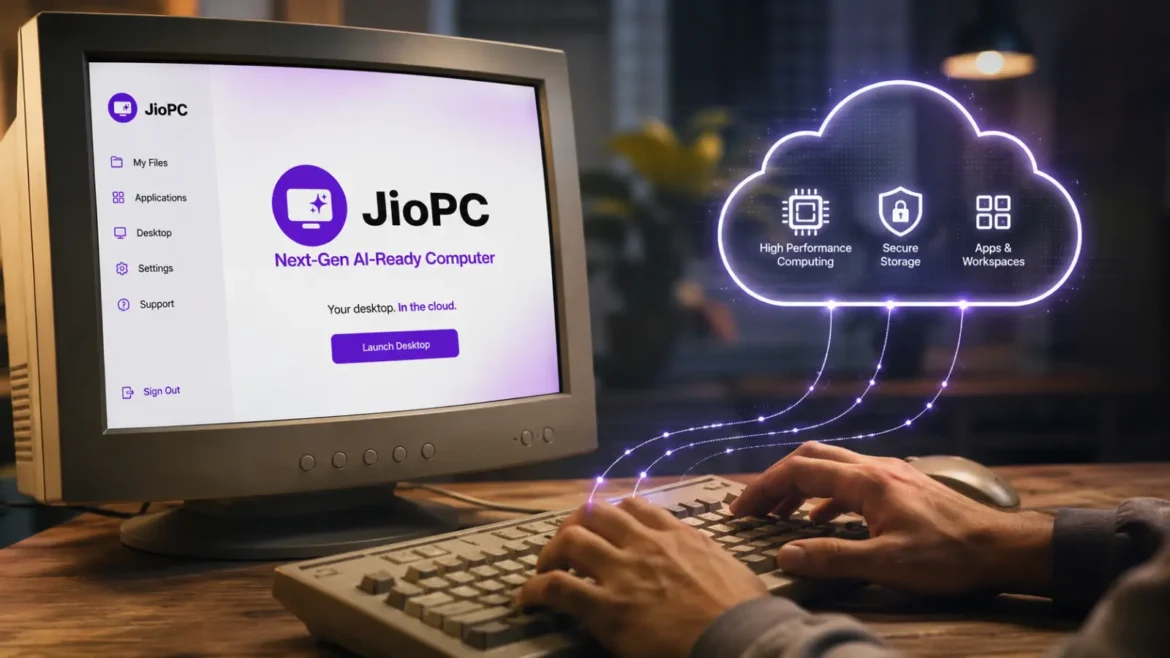
Person using an old computer connected to JioPC cloud service
NewsTechnology

Jio Turns Any Old Computer Into a Cloud-Powered PC, Expands JioPC With Plans Starting at Rs 1,000

The telecom giant just removed the one condition that kept JioPC locked to its own broadband customers.
by Aalam Rohile September 5, 2026
3 min read

Summary

  • Jio has opened JioPC to any internet user in India, dropping the earlier requirement for a JioFiber or JioAirFiber connection.
  • Standalone plans now start at Rs 1,000 for two months, with JioPC Ultra (16GB RAM, 1TB storage) starting at Rs 1,200.
  • Jio says even eight-year-old computers can now run AI tools and modern apps since all processing happens in the cloud.

That laptop you’ve been meaning to replace for the last two years might not need replacing at all, at least not if Reliance Jio has its way.

Jio has expanded JioPC, its cloud-based virtual computer service, well beyond the walled garden of its own broadband subscribers. Until now, you needed a JioFiber or JioAirFiber connection and a set-top box to use it. That requirement is gone. Anyone in India with a broadband or internet connection, on any provider, can now sign up for JioPC through a supported browser, using either a Jio or non-Jio mobile number.

This is a meaningful shift in ambition. JioPC launched in July 2025 as essentially a TV add-on, a way to turn a television and set-top box into a basic PC for browsing and schoolwork. Opening it up as a standalone browser-based subscription turns it into something else entirely: a direct pitch to any Indian household or small business weighing whether to buy a new computer.

What you actually get

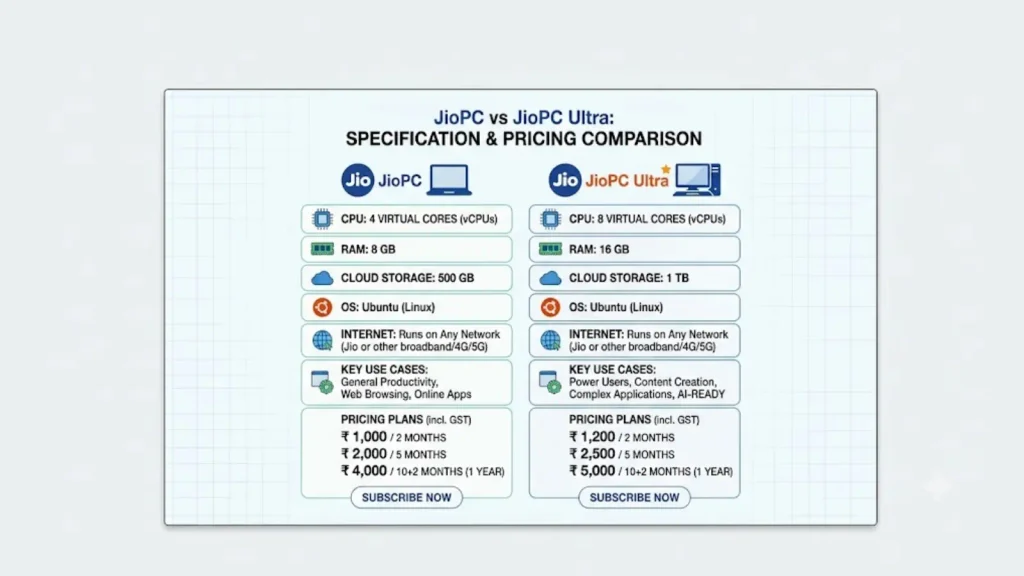
JioPC comes in two configurations, both running Ubuntu Linux:

  • JioPC (Standard): 4 vCPUs, 8GB RAM, 500GB cloud storage
  • JioPC Ultra: 8 vCPUs, 16GB RAM, 1TB cloud storage
JioPC and JioPC Ultra pricing and specification comparison

Pricing starts at Rs 1,000 for two months on the standard tier and Rs 1,200 for two months on Ultra, scaling up to longer validity packs. Jio says setup takes under five minutes, with no data migration, no new hardware, and no downtime. Files live entirely in Jio’s cloud rather than on the device, and the desktop experience carries over identically whether you’re accessing it through a browser or a set-top box.

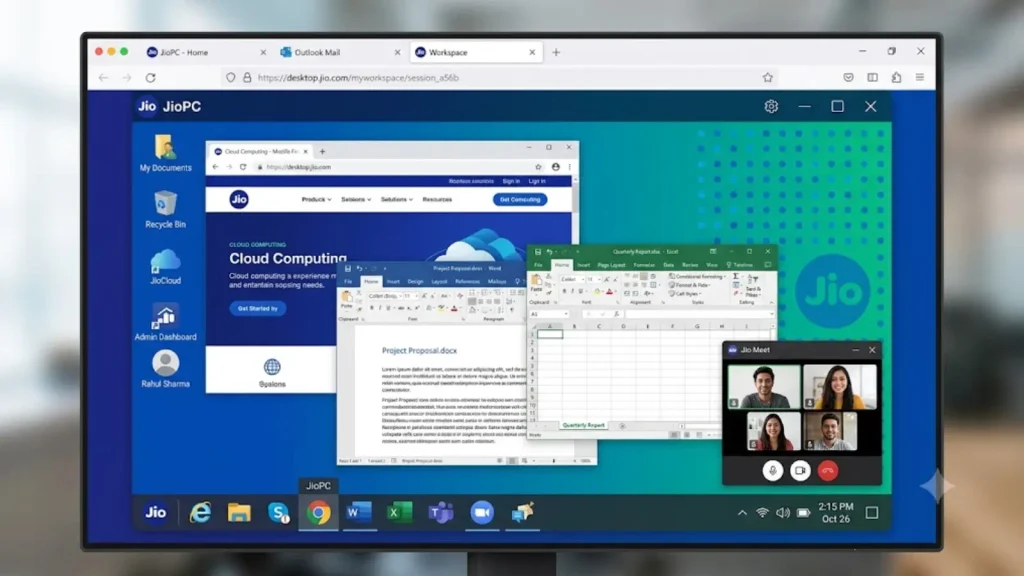
JioPC virtual desktop interface accessed through a web browser

The pitch is simple: since the heavy computing happens on Jio’s servers, even a computer as old as eight years can handle applications that would otherwise demand a hardware upgrade, AI tools included.

Read More: Google Just Launched an AI That Works While You Sleep, Here’s What Gemini Spark Does

Why Jio is betting on old computers

India’s relationship with the personal computer looks different from the US or China. The country had more than 65 million PCs in use in 2025, according to IDC estimates, with that figure expected to touch 69 million by the end of 2026. But PC penetration remains comparatively low, and Indian consumers are holding onto their machines longer than before, replacing them roughly every five to six years now, up from four to five years in 2022, per IDC analyst Bharath Shenoy.

That’s the gap JioPC is aimed at. Rather than compete on selling new hardware, Jio is selling a subscription that stretches the life of hardware people already own.

Prabhu Ram, vice president of CyberMedia Research’s Industry Research Group, pointed out that JioPC could help Jio pull in users from rural and low-income segments who haven’t been well served by traditional PC makers. But he was careful to note that success “will depend on execution,” particularly on connectivity gaps and digital literacy.

That caveat matters. A cloud PC is only as good as the internet connection behind it, and the households JioPC is chasing are often the ones with the least reliable broadband.

Read More: Airtel Adobe Express Free Deal: How To Unlock 1-Year Premium

The bigger picture for India’s ecosystem

This expansion lands at a moment when Reliance is pushing hard on AI infrastructure more broadly, from its Reliance Intelligence data-centre plans to JioPC’s own AI tool bundling. For founders building in adjacent spaces, refurbished-device marketplaces, laptop rental startups, cloud gaming, or affordable computing for students, Jio’s scale changes the competitive math. It’s hard to underprice a service backed by India’s largest telecom balance sheet.

At the same time, it validates the underlying thesis those startups have been betting on: that a large chunk of India doesn’t need a new computer, it needs a cheaper way to make an old one useful. Jio just made that case at national scale.

Whether JioPC becomes a genuine laptop alternative or stays a stopgap for stretched budgets will likely come down to how it performs on India’s patchier broadband, not on the spec sheet.

FAQs

What changed with JioPC’s expansion?

JioPC no longer requires a JioFiber or JioAirFiber connection. It’s now available as a standalone subscription to anyone in India with internet access, through a supported web browser.

How much does JioPC cost now?

The standard plan (8GB RAM, 500GB storage) starts at Rs 1,000 for two months. JioPC Ultra (16GB RAM, 1TB storage) starts at Rs 1,200 for two months, with longer validity packs available.

Can JioPC really make an old computer AI-ready?

Jio says yes, since the processing happens on its cloud servers rather than the local device, computers up to eight years old can run modern AI applications without hardware upgrades.

Do I need a Jio SIM or Jio broadband to use JioPC now?

No. Users can register with either a Jio or non-Jio mobile number and access JioPC purely through a browser and internet connection.

Is JioPC available through TVs as well?

Yes. JioPC remains accessible via a Jio set-top box on a television, in addition to the new browser-based access. The virtual desktop and files stay the same across both methods.

Is JioPC meant to replace a laptop entirely?

It depends on use case. For browsing, office work, and light AI tools it can substitute for a laptop upgrade, but it still depends on a stable, fairly fast internet connection to work well.

September 5, 2026 0 comments 112 views
FacebookTwitterLinkedinWhatsapp
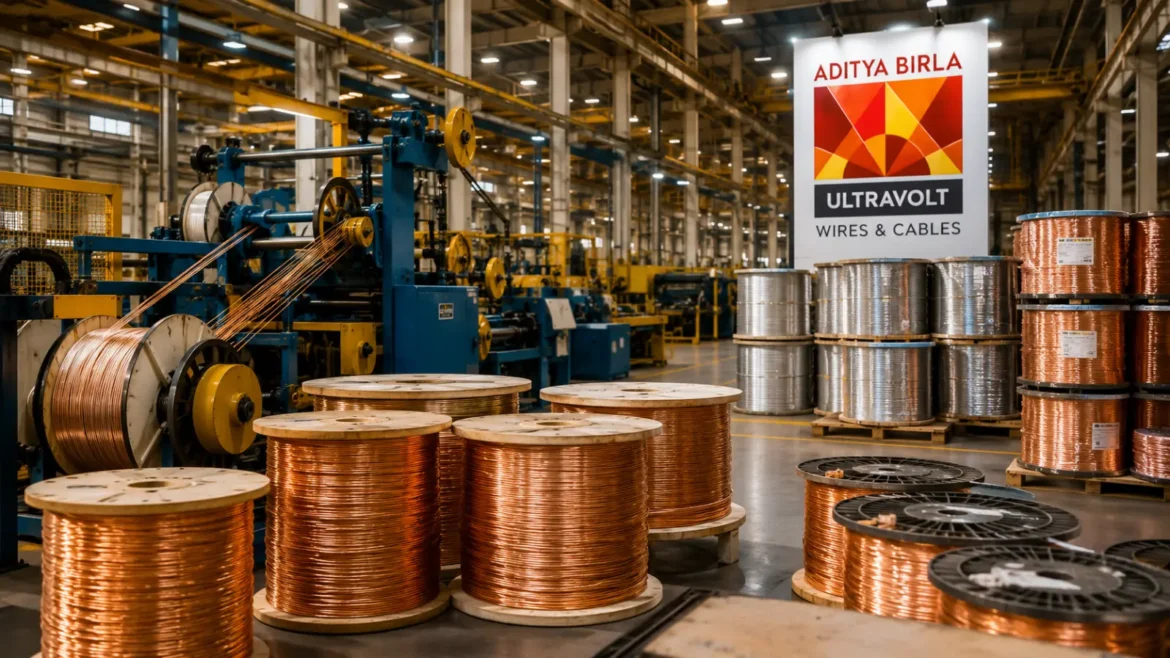
Industrial wire and cable manufacturing facility representing Aditya Birla Group's Ultravolt business launch
NewsTechnology

Aditya Birla Group Launches Ultravolt: Everything to Know About Its ₹1,800 Crore Wires Bet

Kumar Mangalam Birla's fourth new business bet in three years just wiped out crore in market cap from five listed rivals in a single morning.
by Aalam Rohile September 4, 2026
3 min read

Summary

  • Aditya Birla Group launched Ultravolt, a ₹1,800 crore wires and cables business under UltraTech Cement, targeting the number two spot in five years.
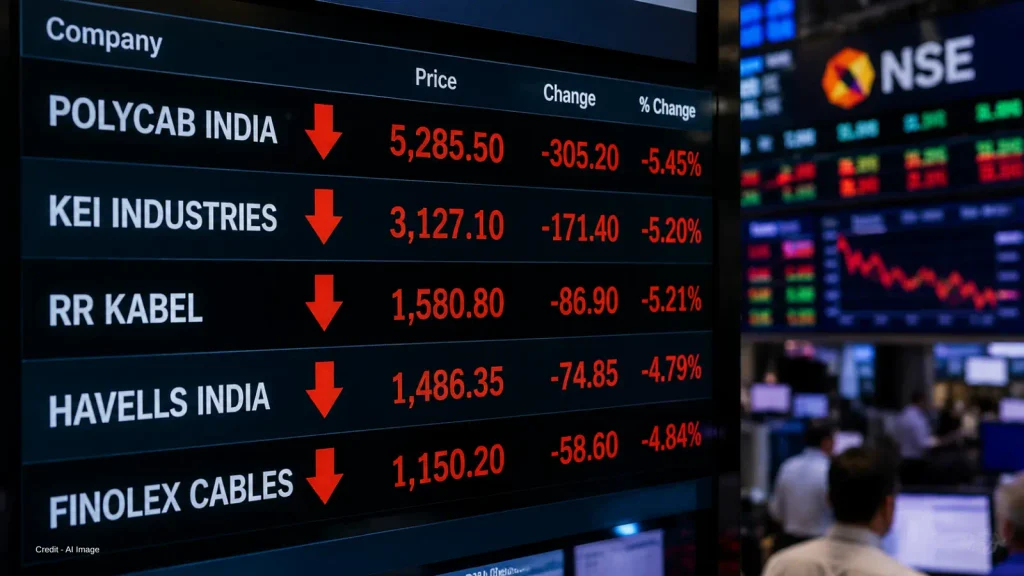
  • Listed rivals Polycab, KEI Industries, RR Kabel, Havells and Finolex Cables fell up to 8% on launch day as investors priced in margin pressure.
  • Ultravolt will reach over 1 lakh retailers through 5,000+ UltraTech outlets, betting on housing, electrification, and AI-driven data centre demand.

For a company that makes cement, UltraTech Cement has spent the last three years acting a lot like a startup. It’s launched a paints brand, a B2B e-commerce platform, and a jewellery retail chain. On September 3, it added wires and cables to that list, and the market noticed immediately.

The new business is called Ultravolt, and it comes with a ₹1,800 crore commitment from the Aditya Birla Group. Housed under UltraTech Cement, the business aims to build a scaled national brand and become one of the top two players within five years. That’s not a toe-in-the-water diversification. That’s a declaration of intent against a market where the top players have spent two decades building distribution networks brand by brand, district by district.

The market didn’t wait for five years to react.

KEI Industries fell as much as 8.25% in early trade, Polycab India dropped 6.22%, and RR Kabel declined 4.8%, while Finolex Cables, Havells India and Universal Cables also traded lower. UltraTech Cement’s own stock, meanwhile, gained close to 2% as investors read the move as a positive expansion bet rather than a distraction. Analysts weren’t shy about naming the reason. Nuvama Research flagged that aggressive pricing and heavier channel investment from UltraTech could squeeze margins and trigger an interim de-rating across the wires and cables industry.

Stock market decline for Indian wires and cables companies after Ultravolt launch

That’s the story in one line: one company’s expansion plan became five other companies’ bad morning.

Why wires, and why now

UltraTech isn’t wandering into wires and cables blind. The company has committed ₹1,800 crore to a business that will begin as the second-largest player in the segment by capacity, with ambitions to be a top-two player within five years. And this isn’t a snap decision. UltraTech first signalled the move back in February 2025, when the same stock selloff pattern played out on the announcement alone.

What’s changed since then is scale of ambition. Kumar Mangalam Birla framed the category around three converging megatrends in the Indian economy: urbanisation, electrification and digitisation, projecting that more than 100 million new homes over the next decade, expanding energy infrastructure, and the rapid rise of data centres will fuel a boom in the category. That last part matters for anyone tracking India’s AI buildout. Every hyperscale data centre coming up in Pune, Hyderabad or Navi Mumbai needs specialised cabling, and Birla is betting UltraTech’s existing relationships in the construction ecosystem give it a shortcut into that demand.

The distribution numbers back the “we’re not testing the waters” framing. Ultravolt is targeting more than one lakh retailers through over 5,000 UltraTech Building Solutions outlets, expanding initially across more than 500 districts and 6,000 pin codes.

Ultravolt Director Dilip Gaur put it bluntly: “We are venturing at pan-India scale rather than testing the market region by region.“

Manufacturing is anchored at Jhagadia in Gujarat’s Bharuch district, and the timeline moved faster than the market expected. Shares came under fresh pressure this week after UltraTech launched Ultravolt earlier than its previously announced timeline. The company had committed ₹888 crore of the total ₹1,800 crore as of June 2026, with the Gujarat facility carrying an installed capacity of around 11 lakh km.

Read More: Temple Acquires Longevous, Its Founders Join as CMO and Science Head

The incumbents aren’t panicking, but they’re not relaxed either

It’s worth putting the reaction in context. Polycab India, the market leader with roughly 26-27% share in the organised C&W market, fell 5.19% to ₹8,350 on the day, while KEI Industries saw a sharper 7.85% decline. These are established, profitable businesses, not fragile startups. But the concern brokerages are flagging isn’t about UltraTech grabbing 10% market share overnight. It’s structural.

Investors are less worried about an immediate loss of market share and more focused on the potential for a longer-term change in industry dynamics, given UltraTech’s financial strength and brand distribution reach. On the other side of that argument, some brokerages see genuine upside for UltraTech itself. The cables and wires foray could become a modest but meaningful growth lever over the medium term for UltraTech, given the company’s brand strength, distribution reach and existing presence across the construction ecosystem.

There’s also a sizing question. India’s wire and cable market is valued at roughly $21.22 billion in 2025 and is forecast to grow to $35.58 billion by 2031, at a 9.01% CAGR, driven by housing demand, renewable energy targets and telecom upgrades. That’s a market big enough to absorb a serious new entrant without every existing player losing ground, but competitive intensity clearly isn’t staying flat. Mandatory BIS certification requirements are already pushing buyers toward organised suppliers, and new copper smelters plus backward integration are adding to that intensity.

Read More: Reliance Rolls-Royce AMCA Engine Partnership: Can Ambani’s Bet Beat Safran to India’s Fighter Jet Race?

What this means beyond the stock ticker

This isn’t a startup funding story in the traditional sense. Ultravolt didn’t raise a Series A, and it’s not chasing a TechCrunch headline. But for founders building in adjacent categories, electrical hardware, D2C home solutions, industrial supply chains, it’s worth paying attention to how a conglomerate with deep pockets enters a market.

The playbook is instructive: don’t pilot regionally, launch pan-India on day one; don’t build distribution from scratch, plug into an existing network (5,000+ UltraTech outlets already reaching builders and retailers); and tie the pitch to a macro narrative (AI infrastructure, electrification) that investors already believe in. It’s a very different resource assumption than what most Indian startups operate with, but the underlying logic, that owning distribution and timing a macro wave beats organic, slow-build growth, applies at any scale.

This is also the fourth time in three years Aditya Birla Group has done exactly this. The group has previously launched Indriya, its premium jewellery retail brand in 2024, and Birla Pivot, a B2B e-commerce and digital procurement platform for construction and building materials launched in 2023. Add Birla Opus in paints to that list, and a pattern emerges: identify a large, fragmented, under-digitised category adjacent to the group’s existing construction footprint, then move in with capital and distribution advantage that smaller, founder-led competitors simply don’t have access to.

Birla himself seems to see this as deliberate strategy rather than opportunistic diversification. “In recent years, successful new business creation has itself become a core part of the Group’s DNA and an important source of differentiation for the group,” he said, adding, “I increasingly see the Aditya Birla Group as providing the platform and engine for new bets.”

For India’s startup and mid-market founders in hardware-adjacent categories, that’s the real headline buried under the stock market drama: large conglomerates are getting faster and more comfortable running startup-style new business launches, at a scale independent founders can’t match. The competitive question isn’t just “can Polycab hold its market share.” It’s “where does a well-capitalised group move next.”

Got a founder building in electrical hardware, cables or industrial D2C who’s watching this space? If you’re sizing up a market before you build, StartupIndiaX’s TAM/SAM/SOM Calculator and Startup Valuation Calculator are free tools worth running your numbers through before you pitch investors on a category a conglomerate might be eyeing next.

Drop your take in the comments, we’re curious whether you think this is a genuine threat to organised C&W players or a slow-burn diversification that takes years to bite.

FAQs

What is Ultravolt?

Ultravolt is Aditya Birla Group’s new wires and cables business, launched under UltraTech Cement with a ₹1,800 crore investment, aiming to become a top-two player in India’s wires segment within five years.

Why did wire and cable stocks fall after the Ultravolt launch?

Investors priced in the risk of margin pressure and market share dilution from a well-capitalised new entrant. KEI Industries, Polycab, RR Kabel, Havells and Finolex Cables all traded lower, with some falling over 8% on the day.

Where is Ultravolt’s manufacturing based?

Ultravolt’s primary manufacturing facility is located at Jhagadia in Gujarat’s Bharuch district, supported by a distribution network of more than 20 warehouses.

Is this Aditya Birla Group’s first new business launch in recent years?

No. Ultravolt marks the group’s fourth new business foray in three years, following Birla Opus in paints, Birla Pivot in B2B e-commerce, and Indriya in jewellery retail.

How big is India’s wires and cables market?

The market is estimated at roughly $21.22 billion in 2025 and is projected to grow to $35.58 billion by 2031, driven by housing, renewable energy, electrification and data centre demand.

Does this affect startups directly?

Not in a funding sense, but it’s a signal for founders in electrical hardware, industrial D2C and construction-adjacent categories about how fast conglomerates can now move into fragmented markets with capital and distribution advantages.

September 4, 2026 0 comments 126 views
FacebookTwitterLinkedinWhatsapp
Bewakoof founder and CEO Prabhkiran Singh
Founder StoryFashion & LifestyleStartup Stories

Bewakoof Founder Prabhkiran Singh Steps Down After 14 Years — Here’s the Full Story

After building one of India's earliest D2C fashion brands from a Mumbai dorm room, Prabhkiran Singh is handing over the reins to TMRW, Aditya Birla Fashion and Retail's digital-first arm.
by Aalam Rohile September 4, 2026
3 min read

Summary

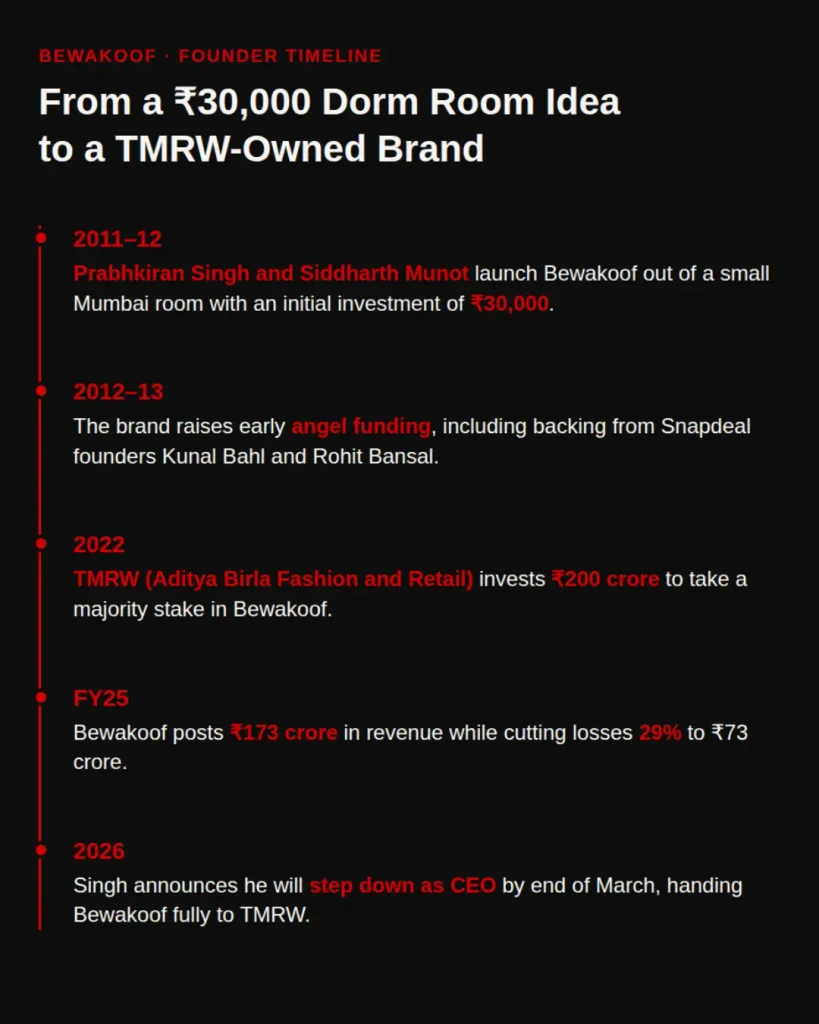
  • Prabhkiran Singh will step down as Bewakoof’s Founder and CEO by March-end 2026, ending a 14-year run at the brand.
  • He co-founded Bewakoof with Siddharth Munot on a ₹30,000 budget; TMRW now owns a majority stake after a ₹200 crore investment.
  • Singh cites health and family, not business trouble, with Bewakoof posting ₹173 crore in FY25 revenue and shrinking losses by 29%.

Fourteen years is a long time to run anything. It’s an especially long time to run a company you started with ₹30,000, a dorm room, and zero idea whether “Bewakoof” would land as a brand name or as a joke nobody got.

Prabhkiran Singh is finding that out now, on his way out the door. On February 24, the Bewakoof founder and CEO announced on LinkedIn that he’s stepping down, staying on only through the end of March 2026 to hand things over cleanly. He said the decision comes down to health, family, and personal priorities, not any crisis at the company.

How Bewakoof actually started

Singh’s Bewakoof origin story is one of the more grounded ones in Indian D2C. He and Siddharth Munot, both IIT Bombay graduates, launched the brand in a small room in Mumbai around 2011 (some company records place the formal launch in 2012), with neither business experience nor outside capital to fall back on. Before Bewakoof, Singh had already run a college side-hustle: a flavoured lassi stall called Khadke gLassi.

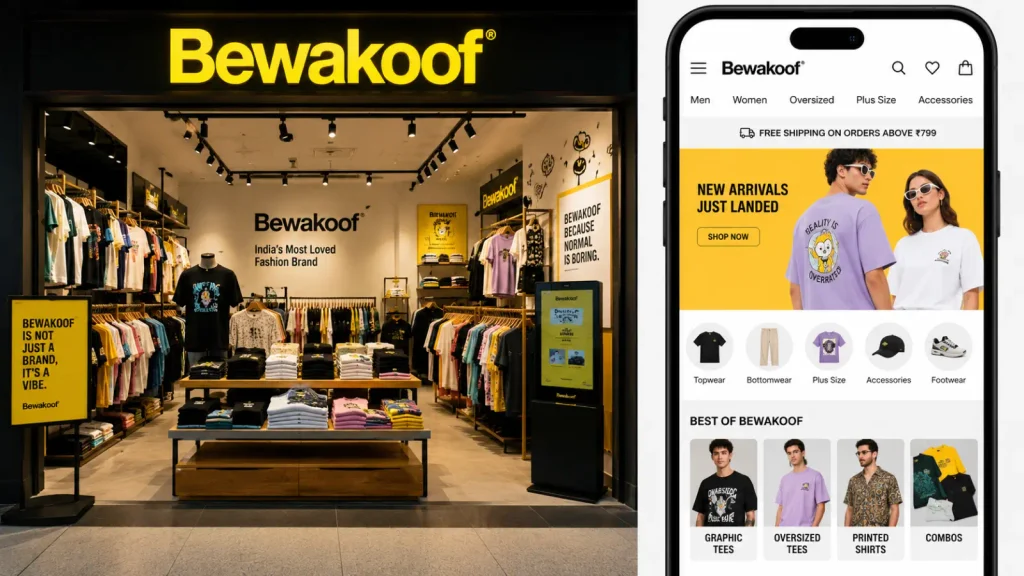
Bewakoof D2C fashion brand products

There was no seed round waiting for them. Singh has said “Bewakoof has been my baby since I was 21 years old,” reflecting on those early years. He and Munot did their own deliveries by local train and answered customer complaints themselves, because there was no one else to do it. Angel money from Snapdeal’s Kunal Bahl and Rohit Bansal came only after the business had already found its feet.

It’s worth noting Singh and Munot got the two-founder split right from day one, and stayed co-founders through a 14-year run without a public falling out, which is rarer than it sounds. Founders setting up a similar structure today can stress-test their own split with StartupIndiaX’s Co-founder Equity Split Calculator before the business grows into something the original math no longer fits.

That bootstrapped instinct became the brand’s identity. Bewakoof grew into a Gen Z and millennial-facing label built on quirky, meme-driven merchandise, first crossing ₹100 crore in revenue and eventually shipping more than 20,000 products a day to a social media community of over 6 million followers.

Read More: Fabletics Picks Reliance Brands for Its India Debut, Here’s the Playbook

The TMRW years

In late 2022, Aditya Birla Group’s digital fashion arm TMRW invested ₹200 crore to acquire a majority stake in Bewakoof, folding it into a portfolio built around scaling homegrown D2C brands. It wasn’t an exit for Singh at the time. He stayed on as CEO, running day-to-day operations while TMRW focused on tightening the business.

Deals like this hinge entirely on what the company is worth going in, and that’s usually the hardest number for a founder to pin down on their own. StartupIndiaX’s Startup Valuation Calculator is a reasonable starting point for founders trying to get a working number before they sit down with an acquirer like TMRW.

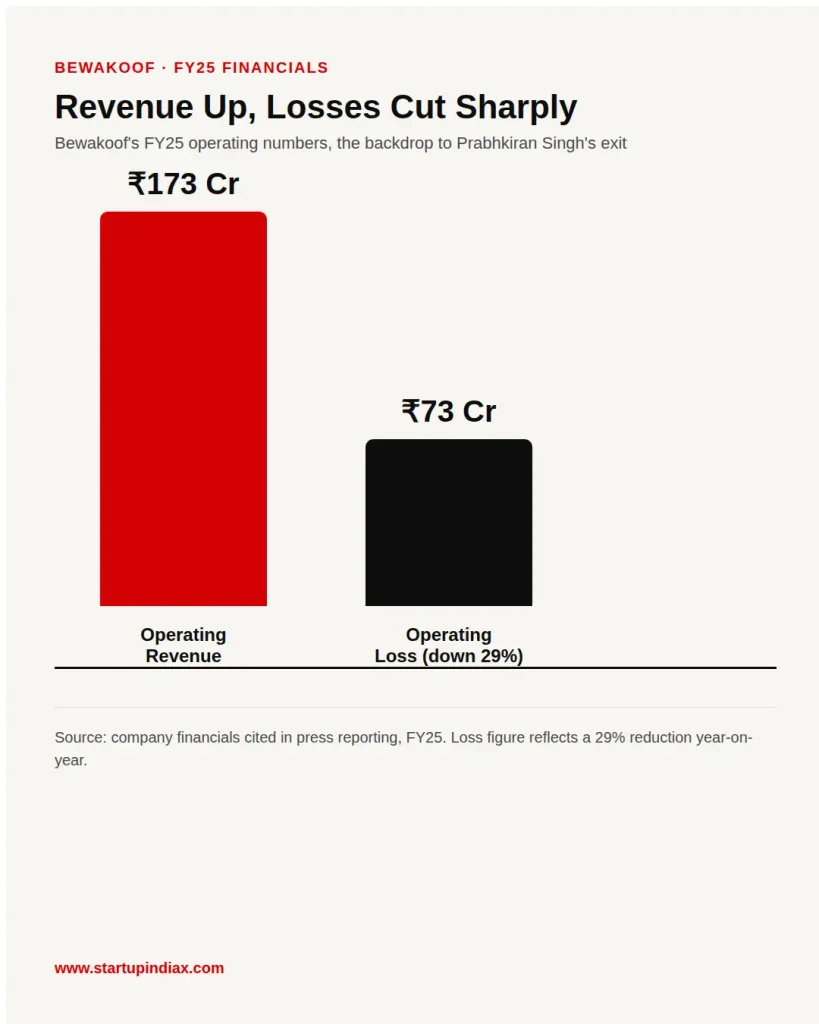
Bewakoof fy25 financials

That tightening shows up in the FY25 numbers. Bewakoof posted operating revenue of ₹173 crore while cutting its losses by roughly 29% to ₹73 crore, a sign the brand was being steered toward profitability rather than pure growth-at-any-cost. It’s the kind of financial discipline a founder-led bootstrap story doesn’t always survive intact, but Bewakoof’s did.

Bewakoof Founder Timeline

Read More: Meena Bindra: The BIBA Founder’s Journey From Rs 8,000 Loan to Rs 800 Crore Brand

Why Singh is really leaving

Singh has been fairly direct about the “why.” He wants to focus on his health and his family, describing his time building Bewakoof as almost consuming in the way early-stage founders’ lives often are. He’s said he wanted to build something that would last 100 years, which reads less like a man walking away from a failing project and more like someone confident the foundation will hold without him standing on it.

TMRW, under CEO Prashanth Aluru, will take Bewakoof into its next phase. For a company that’s already been through a majority-stake acquisition and a profitability push, a founder handover is arguably the last major structural shift left before it becomes a fully professionalised, group-run brand rather than a founder-led one.

The other reason Singh has been in the news

If Singh’s name has crossed your feed recently for a second reason, it’s likely this: a LinkedIn post he wrote retelling how ByteDance founder Zhang Yiming picked his college. Singh’s framing was blunt and very shareable: “Most people chase college prestige. Zhang Yiming chased snowfall and seafood.”

The post pointed out that Zhang, a top-ranking Chinese student who could have gone anywhere prestigious, picked Nankai University instead, largely because it snowed there, it was near the sea, and it was far from home. Zhang went on to build ByteDance. Singh’s point, aimed squarely at an Indian audience raised on rank-driven college decisions, was that the “irrational” choice worked out fine.

It’s a small moment next to a 14-year company exit, but it’s worth mentioning because it says something about how Singh thinks and writes: plainly, with a founder’s instinct for a story that travels.

Read More: Shark Tank Bonkers Corner: How a 12th-pass Gen-Z streetwear brand rose from bankruptcy to a Rs 300 cr valuation

What this means for Indian D2C

Bewakoof’s arc, bootstrapped idea, angel funding, a majority buyout by a large conglomerate, and now a founder stepping back once the business is stable, is becoming a fairly well-worn path for India’s early D2C generation. It’s a different kind of “exit” than a headline-grabbing acquisition or an IPO. It’s quieter: the founder leaves, the brand and the jobs stay.

For other bootstrapped founders watching, the lesson isn’t really about Bewakoof’s fashion category. It’s about sequencing. Singh didn’t step away during the scrappy years or right after the TMRW deal. He left once the losses were shrinking and the brand had a corporate parent capable of running it without him in the room. That timing, arguably, is the real founder skill on display here.

FAQs

Who is Prabhkiran Singh?

He’s the co-founder and, until end of March 2026, CEO of Bewakoof, the D2C youth fashion brand he started with Siddharth Munot in 2011 while both were students at IIT Bombay.

Why is Prabhkiran Singh stepping down from Bewakoof?

Singh said the decision is driven by wanting to focus on his health, family, and personal priorities, not any business trouble at Bewakoof.

Who owns Bewakoof now?

TMRW, the digital-first fashion venture of Aditya Birla Fashion and Retail, holds a majority stake after investing ₹200 crore in late 2022.

Is Bewakoof profitable?

Not yet, but it’s getting closer. In FY25, Bewakoof reported ₹173 crore in operating revenue while cutting its losses by about 29% to ₹73 crore.

What is Prabhkiran Singh’s viral LinkedIn post about?

Separately from his exit news, Singh wrote a widely shared post about TikTok founder Zhang Yiming choosing his college for snow and seafood instead of prestige, a story that resonated with Indian readers used to rank-driven college decisions.

Who will run Bewakoof after Singh leaves?

Bewakoof will continue under TMRW’s leadership, with TMRW CEO Prashanth Aluru overseeing the brand’s next phase after Singh’s structured transition ends in March 2026.

September 4, 2026 0 comments 126 views
FacebookTwitterLinkedinWhatsapp
How to Raise Startup Funding in India in 2026: Here's the Roadmap Founders Are Actually Using
Startup LearningFounder ToolkitFunding

How to Raise Startup Funding in India in 2026: Here’s the Roadmap Founders Are Actually Using

From first-time founders closing a seed round to Series A hopefuls, here's what it actually takes to get funded in India this year.
by Aalam Rohile September 3, 2026
3 min read

Summary

  • VC funding into Indian startups hit $6.9 billion in H1 2026, up 21% year-on-year, putting the year on track to beat 2025.
  • DPIIT recognition is step zero. It’s free, takes days, and unlocks most government schemes and investor programs later.
  • AI-native startups, B2B SaaS, and deeptech are pulling in the bulk of new capital, and pitches need to reflect that.

Six months ago, most Indian founders were bracing for a slow year. Then the numbers came in: venture capital funding into Indian startups climbed to $6.9 billion in the first half of 2026, up 21% from the same period last year, according to YourStory Research. A late surge of large deals in June pushed the total past expectations, and the ecosystem is now on track to beat all of 2025’s funding.

India’s VC Funding Rebound, 2026

Total venture capital raised by Indian startups ($ Billion)

$0B $3B $6B $9B $12B $5.7B H1 2025 $6.9B H1 2026 +21% YoY $12.1B Full Year 2025 (for reference)

Source: YourStory Research, VC funding data H1 2026

That’s the backdrop founders are raising into right now. But “the market is back” doesn’t tell you much if you’re the one trying to close a round.

How to Raise Startup Funding in India

There’s no single path here, and founders who treat fundraising as one long pitch tend to struggle. In practice, how to raise startup funding in India in 2026 comes down to matching the stage of the business to the right kind of capital: proof and DPIIT recognition first, non-dilutive government money where it fits, angels and seed funds once there’s traction, and a Series A built on real financials rather than a story. Here’s what that looks like at each stage.

Start with proof, not a pitch deck

Before angels or VCs enter the picture, most Indian startups still bootstrap the earliest months, funding product development and first customers out of savings, freelance income, or small personal loans. Zerodha remains the example founders bring up most often here: built without outside capital, profitable early, and still one of the most cited proof points that traction can substitute for a fundraise.

Investors in 2026 aren’t funding ideas. They’re funding early signals: a working product, some paying users, a founder who understands their unit economics cold. If you can’t explain your CAC and retention numbers off the top of your head, you’re not ready for the next conversation yet.

This is also when DPIIT recognition matters. Registering as a DPIIT-recognized startup takes a few days, costs nothing, and unlocks access to nearly every government scheme and several private investor programs later in the journey. Skip this step and you’ll find doors closed at the seed stage that should have been open from day one.

Also Read : Startup India Certificate 2026: Step‑by‑Step Guide to DPIIT Recognition (NSWS Portal)

Government funding schemes you can actually use in 2026

India’s government funding stack now stretches well beyond the one scheme most founders have heard of, and it’s worth knowing what’s actually live before you plan a runway around it.

Startup India Seed Fund Scheme (SISFS): This has been the go-to early-stage route, offering up to ₹20 lakh as a non-repayable grant for proof of concept and up to ₹50 lakh in convertible debt for market entry, routed through DPIIT-empaneled incubators. Here’s the part founders need to know before they plan around it: the application window for new SISFS applications closed on 31 May 2026, with incubators completing their selections by the end of June. Disbursements to already-selected startups are ongoing, but it isn’t a scheme fresh applicants can walk into right now. Watch the official portal for the next application cycle rather than assuming it’s open.

Credit Guarantee Scheme for Startups (CGSS): This one is easy to miss but genuinely useful for revenue-generating startups. CGSS backs collateral-free loans up to ₹20 crore per borrower, routed through scheduled banks, NBFCs, and venture debt funds under SEBI-registered AIFs. The government covers 85% of the amount in default on loans up to ₹10 crore, and 75% beyond that, which is real risk cover for lenders and a genuine non-dilutive option for founders who’d rather not give up more equity. The annual guarantee fee drops to 1% for startups in 27 government-identified Champion Sectors.

Atal Innovation Mission (AIM): Run by NITI Aayog rather than DPIIT, AIM funds infrastructure rather than writing checks directly to founders. It provides grant-in-aid of up to ₹10 crore per Atal Incubation Centre spread over five years, and the mission has built out 72 operational incubation centres that have supported more than 3,500 startups so far. For founders, this matters less as direct funding and more as a reason to check whether a strong AIC-backed incubator is worth applying to in their city.

Startup India Fund of Funds 2.0: Backed by a ₹10,000 crore corpus, this began deploying capital through SEBI-registered Alternative Investment Funds this year, routing money to startups indirectly through AIFs rather than as direct grants. It’s a structural bet on reducing India’s dependence on foreign VC sentiment, and founders won’t apply to it directly, but it’s worth knowing which AIFs in your sector are drawing on it.

Tax benefits worth factoring in: DPIIT-recognized startups get a three-year income tax holiday out of their first ten years under Section 80-IAC, plus an angel tax exemption on funding raised above fair market value under Section 56. Neither shows up as cash in the bank, but both change how much of a raised round actually survives to be reinvested in the business.

State-level schemes: Karnataka’s Elevate and Telangana’s TANSEED continue to offer support up to ₹50 lakh with no equity dilution, and most states now run some version of a startup policy alongside the central schemes. Founders chasing non-dilutive capital should be checking their state’s program alongside the central ones, not instead of them.

Median Funding Round Size in India, 2026

A realistic benchmark, not headline mega-rounds (₹ Crore)

Seed ₹8.0 Cr Series A ₹50.8 Cr Series B ₹123.8 Cr ₹0 ₹130 Cr

Source: FinVal Research & Consultancy, Seed-to-Series B funding analysis 2026

Free Tool: Government Scheme Finder for Indian Startups

Seed and angel rounds: smaller checks, sharper questions

Once there’s traction, the next stop is usually a mix of angel investors, seed funds, and increasingly, syndicates that pool smaller checks from multiple angels. Median seed round sizes in India this year have sat around ₹8 crore (roughly $0.8 million), which is a more useful benchmark for a realistic first institutional check than the outlier numbers that make headlines.

Investors at this stage want a clean pitch deck: problem, market size, why now, why this specific team. They also want basic financial projections and, increasingly, some sense of how the business defends itself once a bigger player notices it. A deck that skips straight to “the ask” without answering why now tends to get a fast no.

This is also the point where co-founders should have their equity conversation settled, not still pending. Investors read an unresolved cap table as an unresolved team, and it’s a fair reason to walk away from an otherwise strong pitch.

What’s actually getting funded right now

Where the money is going matters as much as how to ask for it. The 2025-26 recovery has been led by AI-native startups, B2B SaaS, and deeptech, while consumer internet and edtech have taken longer to bounce back. In the first quarter of 2026 alone, AI startups pulled in the largest share of sector funding, helped in part by a single $600 million round into AI infrastructure company Neysa.

That doesn’t mean non-AI startups can’t raise. It means the pitch has to work harder to explain why the business isn’t just a feature a larger platform could eventually add. Fintech and B2B SaaS continue to account for the bulk of India’s unicorns, and investors in these categories tend to move faster simply because the playbook is more familiar to them.

Geography still matters too. Funding remains concentrated in Bengaluru, Mumbai, and Delhi-NCR, and founders building outside these hubs should factor in extra time for relationship-building with investors who default to backing what’s nearby.

Series A: where diligence gets real

By Series A, the numbers do most of the talking. Median Series A rounds in India this year have landed around ₹51 crore (about $5.3 million), and investors expect founders to walk in with real financials, not projections dressed up as history. Expect deep diligence on unit economics, customer concentration, and exactly how the last round’s money was spent.

This is also where a valuation conversation gets uncomfortable if founders haven’t done the homework beforehand. Overvaluing an early round can make a Series A down round look inevitable a year later, which is a harder story to tell investors than a modest but honest first valuation. Founders who benchmark their numbers against comparable Indian rounds before walking into investor meetings tend to negotiate from a stronger position, and tend to avoid the awkward renegotiations that happen when a term sheet doesn’t match expectations.

The bigger picture for founders right now

None of this means fundraising in India has become easy. Deal volumes are still recovering unevenly, capital remains concentrated in a handful of cities, and investors are writing fewer, larger checks rather than spreading capital thin. But the direction is clear. Domestic capital through vehicles like Fund of Funds 2.0 is reducing India’s dependence on US-driven VC sentiment, and IPO activity from 2021-vintage unicorns is starting to give early investors a realistic path to exits again, which tends to loosen up fresh capital for the next generation of startups.

For founders, the practical takeaway is less about chasing headline mega-rounds and more about matching the stage of the business to the right kind of capital: DPIIT recognition and government schemes early, angels and seed funds once there’s traction, and a Series A pitch built on real numbers rather than a story. The founders raising successfully in 2026 aren’t the ones with the flashiest decks. They’re the ones who knew exactly which door to knock on, and when.

Got a fundraising story of your own, a round that closed faster than expected or one that fell apart at diligence? We’d genuinely like to hear it. Drop it in the comments, or explore more founder guides on StartupIndiaX.

FAQs

Do I need DPIIT recognition before I can raise money in India?

Not legally, but it’s strongly recommended. DPIIT recognition is free, takes a few days, and is a prerequisite for most government schemes and several investor programs, so most advisors suggest getting it before you start fundraising conversations.

Is the Startup India Seed Fund Scheme still accepting applications?

New applications closed on 31 May 2026, with incubator selections wrapping up by the end of June. Disbursements to already-selected startups continue, but founders should watch the official portal for the next application window rather than apply now.

What is the Credit Guarantee Scheme for Startups (CGSS)?

CGSS is a government-backed guarantee that helps DPIIT-recognized startups access collateral-free loans of up to ₹20 crore through banks, NBFCs, and venture debt funds, with the government covering 75-85% of the loan amount if it defaults.

What’s a realistic seed round size in India in 2026?

Median seed rounds have sat around ₹8 crore (roughly $0.8 million) this year, which is a more useful planning number than the large, headline-making rounds that get most of the press coverage.

Which sectors are getting funded the most right now?

AI-native startups, B2B SaaS, and deeptech are leading the 2025-26 recovery, while consumer internet and edtech have recovered more slowly. Fintech and B2B SaaS still make up the bulk of India’s unicorns.

How much VC funding has India raised in 2026 so far?

Indian startups raised $6.9 billion in the first half of 2026, up 21% year-on-year, according to YourStory Research, putting the year on track to surpass 2025’s total funding.

What do investors look for before a Series A?

Real financials rather than projections, clear unit economics, manageable customer concentration, and evidence of how the previous round’s capital was actually deployed. Median Series A rounds this year have landed around ₹51 crore (about $5.3 million).

September 3, 2026 0 comments 138 views
FacebookTwitterLinkedinWhatsapp
What India's First 8 Months of 2026 Funding Data Really Tells Founders
FundingNewsStartup Learning

What India’s First 8 Months of 2026 Funding Data Really Tells Founders

The headline numbers look healthy. The concentration underneath them is the part every founder actually needs to read.
by Aalam Rohile September 2, 2026
3 min read

Summary

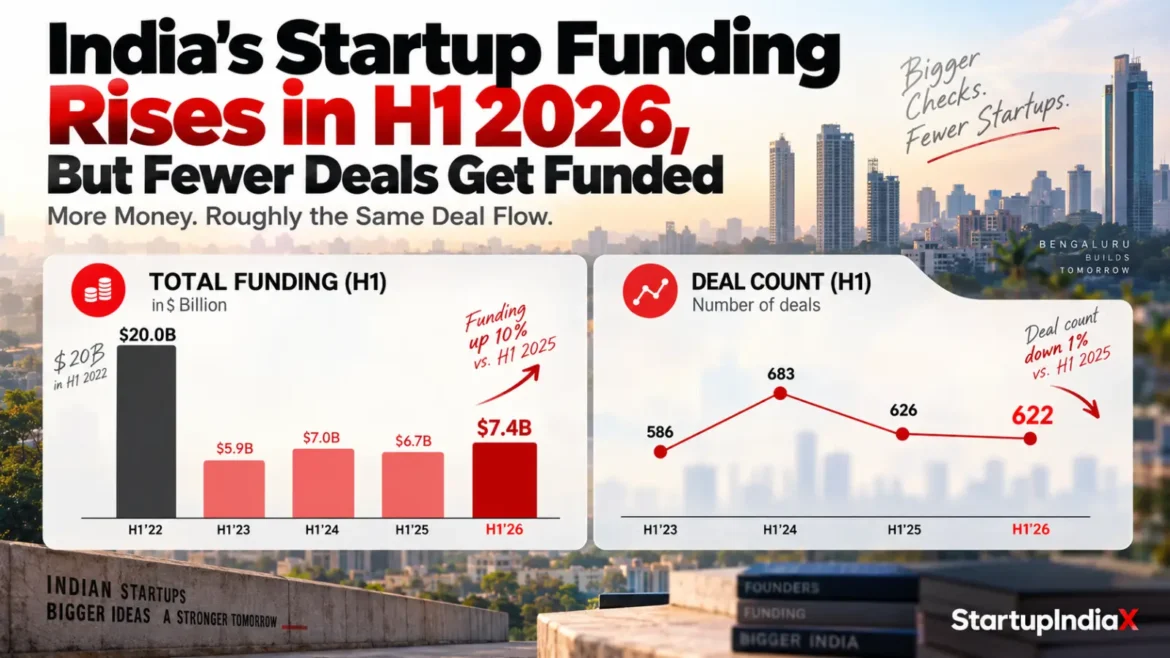
  • India’s startups raised roughly $7.4 billion in H1 2026, then swung from a $662 million July to nearly $1 billion in August, per Entrackr.
  • Three mega-rounds, Neysa, CRED and Nxtra Data, made up close to a third of all H1 capital raised.
  • Deal count kept falling even as totals rose, so most founders are competing for a shrinking pool of active checks.

Eight months into 2026, the pitch for India’s startup ecosystem writes itself: funding is up, AI is on fire, and fresh unicorns keep showing up. All of that is true. It’s also not the whole story.

The first 8 months of 2026 funding data, pulled together from Entrackr, YourStory, Tracxn and FinVal Research, points to something narrower and more useful for founders than a feel-good recovery headline. Money came back, but it came back concentrated in fewer, bigger bets. For anyone raising a seed or Series A right now, that distinction matters more than the topline number.

The H1 number everyone quotes, and why it’s already contested

Entrackr’s tally puts India’s H1 2026 funding at approximately $7.4 billion, which it called the strongest first half since 2022. YourStory’s own research arrived at a lower $6.9 billion, up 21% year on year. Neither number is wrong. They just count differently, and that gap is worth sitting with before treating either figure as gospel.

What both trackers agree on is the shape of the money. YourStory counted 584 deals in H1, down from 621 a year earlier, meaning the average check size grew even as the number of companies getting funded shrank. Just six deals crossed the $100 million mark in the entire half.

Three of those rounds did a lot of the lifting. AI infrastructure startup Neysa raised close to $1.2 billion, the largest round of the half. CRED’s Meta-backed round added roughly $900 million, and data infrastructure player Nxtra Data brought in about $710 million. Together, these three deals accounted for close to a third of all H1 capital, according to tracker estimates.

July’s crash, August’s rebound, and what the swing actually shows

If H1 looked healthy on paper, July brought founders back to earth fast. Entrackr recorded just $662 million raised in July, an 85-deal month it flagged as the second-lowest monthly total in the previous 13 months, down sharply from June’s roughly Rs 19,100 crore, a figure inflated by the CRED round. Only one round in July crossed $100 million.

India’s Startup Funding: June to August 2026

A single mega-deal swung the whole market in a month, then a slowdown, then a rebound.

$2.0B June CRED round lifts total $662M July 2nd-lowest month in 13 ~$1.0B August Nearing $1Bn, Entrackr

Source: Entrackr Monthly Funding Reports and YourStory Research, 2026. Figures are month-level totals as reported and may be revised.

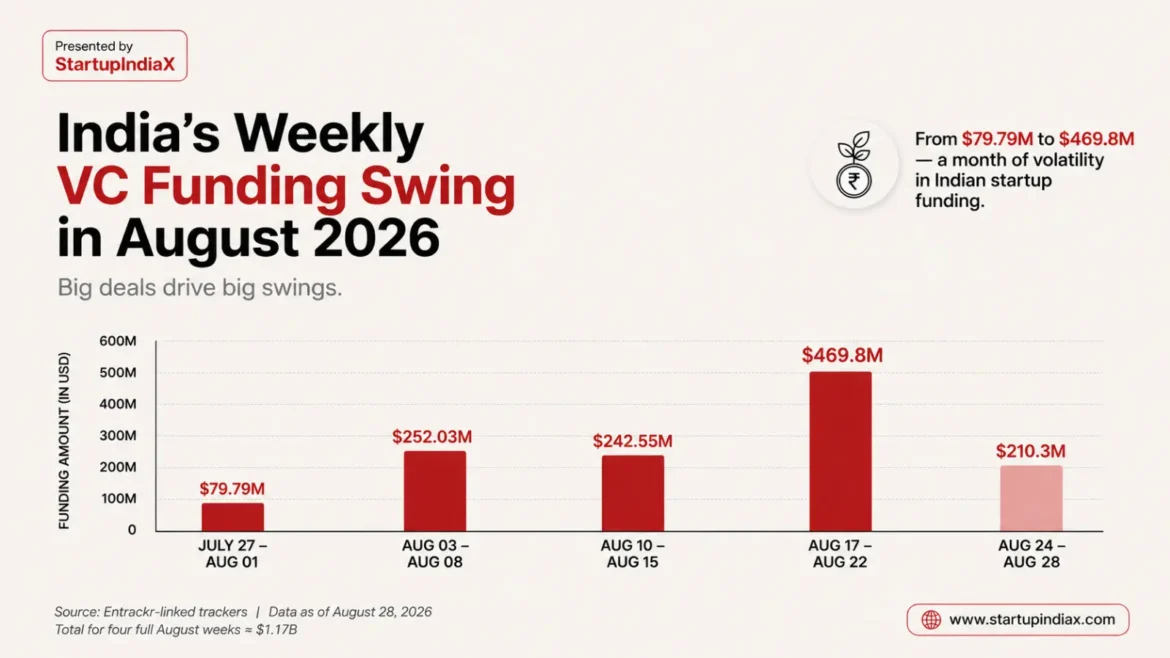
August reversed course. By September 1, Entrackr reported India’s startups were nearing $1 billion for the month, helped along by a run of strong weeks: $252 million between August 3 and 8, led by electric two-wheeler maker River Mobility’s $120 million round, followed by a defence and aerospace-heavy week that included Airbound’s $37 million Series A and Sigma Advanced Systems’ $48 million raise.

The lesson here isn’t “the market recovered.” It’s that any single month can swing wildly based on whether one large round happens to close in that window. Founders planning a raise around a specific quarter should treat the monthly headlines as noisy, not predictive.

Where the money is actually going

FinVal Research’s analysis of 890 Seed-to-Series B deals between January 1 and August 13 adds useful texture. By deal count, Consumer & Retail led with 182 deals, about 20% of the market, spread across many smaller checks. By capital raised, Enterprise Tech & SaaS appeared to lead with roughly a third of all money, but that ranking is misleading on its own: three mega-deals (Neysa, Sarvam and Wingify) made up 63% of that sector’s entire total.

Deal Count vs. Capital: Two Different Stories

Jan 1 – Aug 13, 2026, across 890 Seed to Series B deals

Consumer & Retail — share of deals 20% 182 deals, the most of any sector Consumer & Retail — share of capital 13% Spread across many mid-size rounds Enterprise Tech & SaaS — share of deals 16.4% 146 deals (calculated from 890 total) Enterprise Tech & SaaS — share of capital 33.6% 63% of that came from just 3 mega-deals

Source: FinVal Research & Consultancy analysis of Tracxn data, India Startup Funding Report 2026. Deal-share percentage for Enterprise Tech & SaaS calculated from reported deal counts.

The practical read for founders: if you’re building consumer or D2C, you’re competing in a crowded field with plenty of deals but smaller average checks. If you’re in enterprise AI or infrastructure, the headline sector numbers look enormous, but that money is going to a handful of category leaders, not spread evenly across the field.

AI overall had a strong run. Entrackr and other trackers noted AI funding jumping more than 4x year on year in H1, with six startups, Sarvam, Juspay, KreditBee, Square Yards, Skyroot and Neysa, turning unicorn during the period. Physical AI and robotics also picked up pace, with roughly Rs 1,480 crore across 31 deals through late July, a sign investor interest is spreading beyond pure software.

Why the totals don’t agree with each other, and why that’s fine

Tracxn’s own count for the same January-to-August window lands at $13.8 billion across 1.3K rounds, nearly double Entrackr’s implied total for the same period. That’s not a contradiction to panic over. Trackers differ on what counts as a “round” (debt, secondary sales and undisclosed deals get treated inconsistently across platforms), and Entrackr, YourStory and Tracxn have never claimed to be measuring the exact same thing.

The honest takeaway is that no single number captures India’s 2026 funding story cleanly. What every source agrees on, regardless of methodology, is the underlying pattern: fewer companies are raising, and the ones that do are raising bigger. That’s the number founders should actually plan around, more than any specific dollar total.

What this means if you’re raising in the next two quarters

For founders heading into Q4 2026 fundraising conversations, a few things follow directly from this data:

Median deal size has moved up, but that doesn’t mean the bar for a seed or Series A round dropped. It means investors are writing fewer checks and expecting more traction proof before they write them. A founder pitching now should expect longer diligence, not faster closes.

India’s 2026 Funding Numbers, in Four Facts

What the first 8 months of 2026 funding data actually shows

6

deals crossed $100M in all of H1 2026

~33%

of H1 capital came from just 3 mega-deals

584

deals in H1 2026, down from 621 a year earlier

4x

YoY jump in AI startup funding in H1 2026

Source: Entrackr, YourStory Research, FinVal Research, 2026. Deal counts per YourStory H1 2026 report.

Sector matters more than it used to. AI infrastructure, enterprise SaaS and fintech are attracting the biggest checks, but that capital is landing on a small number of proven teams, not spreading widely across early-stage bets in those categories. A first-time founder in these spaces should expect to compete against well-funded, already-scaled players for the same investor attention.

Consumer and D2C founders have more company at the table, literally, with 182 Consumer & Retail deals in the FinVal count alone, but the average check in that category is smaller. Capital efficiency and a clear path to profitability matter more here than a large total addressable market slide.

The StartupIndiaX take

Concentration isn’t automatically bad news. It can mean investors are being more disciplined about where real value is building, rather than spraying capital across untested ideas the way 2021 did. But founders reading only the topline “India funding hits X billion” headlines are getting an incomplete picture. The real signal in the first 8 months of 2026 funding data is that the market rewards fewer, sharper bets, and founders need a sharper story to be one of them.

If you’re modeling your own runway against this kind of environment, it’s worth running the numbers rather than guessing. StartupIndiaX’s free Startup Runway Calculator and Indian VC & Investor Database (both part of the nine-tool Founder Toolkit) are built for exactly this kind of planning, no signup required.

What’s your read on the concentration story, does it change how you’re pitching this quarter? Drop your take in the comments, or explore more of StartupIndiaX’s funding coverage for the weekly breakdowns behind these numbers.

FAQs

How much funding did Indian startups raise in the first 8 months of 2026?

Trackers vary. Entrackr’s H1 2026 figure was around $7.4 billion, followed by a $662 million July and a rebound toward $1 billion in August, putting the running total for the period in the high single-digit billions by most counts, though Tracxn’s broader methodology puts its own count near $13.8 billion.

Why do different funding trackers report different totals for the same period?

Entrackr, YourStory and Tracxn use different criteria for what counts as a funding round, including how they treat debt, secondary sales and undisclosed deals, so their totals for the same window rarely match exactly.

Which sectors got the most funding in 2026 so far?

Enterprise Tech & SaaS led by capital raised, driven largely by a handful of mega-deals, while Consumer & Retail led by number of deals, according to FinVal Research’s analysis of Seed-to-Series B rounds.

Did deal count go up or down in 2026?

Down. YourStory recorded 584 deals in H1 2026 versus 621 in H1 2025, even as total capital raised increased, showing money concentrating into fewer, larger rounds.

What does this mean for a founder raising a seed round right now?

Expect more scrutiny and slower closes, even if the eventual check size is competitive. Investors are being more selective about which early-stage bets they back, rather than writing more checks overall.

September 2, 2026 0 comments 166 views
FacebookTwitterLinkedinWhatsapp
India startup funding week by week, July to August 2026, showing volatility driven by large deals What India Startup Ecosystem Taught Us in August 2026
FundingNewsStartup Learning

What India’s Startup Ecosystem Taught Us in August 2026

Five weeks, one clear pattern: the money didn't disappear in August. It just got a lot more particular about where it goes.
by Aalam Rohile August 31, 2026
3 min read

Summary

  • Weekly VC funding swung from $79.79M to $469.8M within three weeks, showing how a handful of large checks now decide India’s headline numbers.
  • Deep tech and AI kept compounding quietly, with India crossing 8,842 deep tech startups and a new government-backed venture fund going live.
  • Investors rewarded capital efficiency and IPO readiness over growth-at-all-cost, pushing founders toward tighter unit economics ahead of September.

August didn’t feel like a dramatic month if you were only watching the top-line numbers. Look week by week, though, and it tells a much sharper story about where Indian venture capital is headed into the second half of 2026. What India’s Startup Ecosystem Taught Us in August 2026

The month that moved in fits and starts

Start with the swings. Between August 3 and August 8, 23 Indian startups raised over $252 million, a 216% jump week-on-week from the roughly $80 million logged the week before. That kind of volatility isn’t new for Indian startup funding, but August made it unusually visible.

The month began with July closing at around Rs 6,324 crore across 85 deals, before funding accelerated through August on the back of fintech, healthtech, infrastructure, mobility and AI deals. By the third week, the swing became even sharper. Between August 17 and 22, Indian startups pulled in more than $469.8 million, a 94% jump from the $242.55 million raised the previous week.

Here’s what that looked like across five weeks:


India Startup Funding, Week by Week (August 2026)

Weekly VC funding raised by Indian startups, in USD million

      0 100M 200M 300M 400M 500M   $79.79M Jul 27- Aug 01   $252.03M Aug 03- Aug 08   $242.55M Aug 10- Aug 15   $469.8M Aug 17- Aug 22   $210.3M Aug 24- Aug 28      

Source: IndianStartupNews, Whalesbook, Inc42 (Entrackr-linked weekly trackers) · StartupIndiaX


Two or three deals decided most of these swings. Voice AI startup Wispr Flow led the third week with a $280 million Series B round from Menlo Ventures, while fintech company Navi secured $100 million from Prosus, pending regulatory clearance. Bengaluru’s River Mobility, an electric two-wheeler maker, topped an earlier week with a $120 million round from Elev8 Venture Partners and Claypond Capital, accounting for nearly half of that week’s total capital.

On the totals for the year, sources don’t fully agree, and that discrepancy is worth flagging rather than smoothing over. Entrackr-based tracking put 2026 year-to-date funding at roughly $8.2 billion across 590 rounds as of early August, while Tracxn’s broader database, which counts a wider set of round types, showed $13.8 billion raised across 1.3K equity rounds through August. Neither number is wrong; they’re just measuring different slices of the same market. A separate FinVal analysis, built strictly around Seed, Series A and Series B rounds, counted approximately $4.8 billion across 890 deals between January and mid-August.

Indian startup team working, representing the ecosystem behind August 2026 funding activity

Beneath the mega-rounds, plenty of smaller checks kept moving too. Data center operator CtrlS raised close to $26 million from investors including Zerodha co-founder Nikhil Kamath, and geospatial technology firm NeoGeoInfo pulled in $20 million from Neev II Fund and Aavishkaar Capital. Elsewhere, EV company Omega Seiki Mobility raised Rs 50 crore, deeptech startup Yaanendriya closed Rs 15 crore in seed funding, and student housing platform House of Student raised about $2 million. In healthtech, EV battery maker BGauss closed Rs 110 crore in Series D funding, while mental health platform Lissun raised Rs 48 crore in Series A.

AI kept its grip on investor attention, but the questions got harder

AI didn’t lose momentum in August. It just stopped being enough on its own. Wispr Flow’s $280 million round is the clearest signal: voice AI, not a generic “AI-powered” pitch, pulled in one of the month’s biggest checks.

That pattern holds beyond the headline deals too. Entrackr reported that Indian physical AI startups had raised roughly Rs 1,480 crore across 31 deals in 2026 through late July, pointing to investor interest expanding from software-only AI into robotics and industrial systems. That’s a meaningful shift for founders pitching “AI” in 2026. Generic automation decks are getting harder passes. Specific, defensible AI applications, in voice, robotics, or vertical enterprise tools, are the ones clearing diligence.

Industry commentary through the year has consistently flagged AI, sustainability and deep tech as the sectors pulling the biggest bets from India’s venture capital firms, as investors move away from growth-at-all-cost models toward long-term value creation. August’s deal flow backed that up almost deal for deal.

Investors turned selective, and founders felt it directly

This is the theme every roundup from the month circles back to: money got choosier, not scarcer. Analysts pointed out that a single large round, like Navi’s roughly Rs 955 crore-equivalent raise, can swing an entire week’s or month’s headline total, so founders should separate that headline number from the median early-stage experience.

That’s a genuinely useful distinction for anyone building outside the handful of companies pulling nine-figure checks. Most of August’s 23-startups-in-a-week weeks were, as one tracker put it, dominated by smaller checks even during the busiest stretches. The big names carried the headlines. The bulk of the deal count came from Seed and early Series A rounds in unglamorous categories: legaltech, proptech, foodtech, insurtech.

For investors specifically, the opportunity increasingly lies in identifying companies building essential infrastructure rather than riding temporary enthusiasm. Translation for founders: durable demand and clean unit economics are doing more work in a pitch than a good growth chart alone.

Read More: Awais Ahmed, Pixxel: Karnataka Village to ₹900 Cr Space Firm

DeepTech quietly became the ecosystem’s most interesting subplot

If funding concentration was August’s loudest story, deep tech was its quietest and arguably its most important. India now has 8,842 deep tech startups, with 1,821 of them funded, 373 having secured Series A or later, and seven reaching unicorn status; 448 new deep tech startups were created in 2026 alone.

The government showed up as a co-investor this year in a way it hadn’t before. The Antariksh Venture Capital Fund, a Rs 1,600 crore equity vehicle, made its first investment in July, putting roughly $6.3 million into satellite company Dhruva Space, alongside IN-SPACe’s separate Rs 500 crore Technology Adoption Fund, which grants up to 60% of a qualifying project’s cost. That’s a genuinely new model for Indian deep tech: government grants and government equity working side by side with private VC, rather than one substituting for the other.

Indian deep tech and space hardware, reflecting rising government and VC investment in 2026

Space and defence tech is where this shows up most visibly. Bengaluru’s Pixxel and Hyderabad’s Skyroot Aerospace, both StartupIndiaX has covered closely, sit right at the center of this shift, building hyperspectral satellites and heavy-lift rocket engines respectively while government-backed capital starts flowing in behind them.

Read More: Pawan Kumar Chandana: Vizag to Rocket Factory

Zooming out to 2025’s full-year numbers, released by NASSCOM and Zinnov earlier in 2026, deep tech funding surged 37% to $2.3 billion, with AI alone accounting for 91% of that capital and 84% of deep tech startup activity. August’s smaller deals, in geospatial tech, robotics, and satellite hardware, look like the early innings of that same trend playing out in real time.

Founders adjusted to a tighter, more demanding capital environment

The founders who had the calmest August weren’t necessarily the ones chasing the biggest rounds. They were the ones who’d already made peace with a slower, more scrutinized fundraising process.

IPO readiness became a real strategic signal this year, not just a distant milestone. Twenty-nine startups have filed draft red herring prospectuses with SEBI, with over 25 more in various stages of preparing to file, and unicorns like OYO, Razorpay and Zetwerk could collectively raise over ₹34,000 crore in 2026. That said, most new-age tech listings this year have been flat or lacklustre compared to 2025’s record ₹41,248 crore raised across 18 listings, barring a few standouts.

Within August specifically, Atomberg filed its draft red herring prospectus and Upstox reportedly opened preliminary discussions around a possible public listing, though neither should be treated as confirmed until formal filings land. For founders several years out from an IPO, the message is the same one investors have been sending in private rounds: public markets are rewarding fundamentals and capital efficiency, not just growth curves.

This is the tool that changes the least dramatic-sounding but most practically useful August lesson. Founders who tracked their own runway and capital efficiency numbers going into fundraising conversations had a materially easier month than those relying on last year’s benchmarks. Anyone recalculating their runway against this tighter environment can run the numbers through our free Startup Runway Calculator, and founders trying to figure out which of India’s active VCs actually fund their stage and sector can check the Indian VC & Investor Database before their next round of outreach.

What we’re watching in September

  • AI, especially applied, vertical, and physical AI rather than generic AI-labeled decks
  • FinTech, still one of the most consistently funded sectors through 2026
  • DeepTech, as government co-investment models like AVCF start writing more checks
  • Startup funding concentration, and whether September brings another single mega-round swing
  • Government schemes, particularly DPIIT and sector-specific grant expansions
  • Investor activity, and whether the selectivity that defined August holds or eases

None of these are new themes. What changed in August is how visible the gap became between headline funding and what most early-stage founders actually experienced on the ground.

The honest takeaway

August 2026 wasn’t a boom month and it wasn’t a slowdown either. It was a month where three or four large checks did most of the talking while a much larger, quieter set of smaller deals kept the actual ecosystem moving. Founders who understood that distinction going in probably had an easier time pitching investors. Founders still selling growth stories built for 2021 probably didn’t.

September will show whether this selectivity is a temporary phase or the new default. Either way, StartupIndiaX will be tracking it week by week.

Got a deal, a founder story, or a sector shift we should be covering this September? Tell us in the comments, or explore more of StartupIndiaX’s funding coverage.

FAQs

What was the total startup funding in India in August 2026?

Weekly totals varied widely, from roughly $80 million in one week to $469.8 million in another, driven mainly by a small number of large rounds like Wispr Flow’s $280 million Series B and Navi’s $100 million raise.

Why do funding totals for 2026 differ across sources?

Trackers measure different things. Entrackr-based totals (around $8.2 billion by early August) track publicly reported rounds closely, while Tracxn’s broader database (around $13.8 billion) includes a wider range of deal types, which explains the gap.

Which sectors attracted the most investor interest in August 2026?

AI (particularly voice and physical AI), deep tech, fintech, healthtech and electric mobility saw the most consistent deal activity, alongside space tech backed by new government-linked funds.

Is India’s deep tech sector actually growing, or is it hype?

The numbers back it up: India has 8,842 deep tech startups, 1,821 of them funded, and 448 new ones launched in 2026 alone, with 2025 deep tech funding up 37% to $2.3 billion.

What should founders take away from August’s funding patterns?

Investors are prioritizing capital efficiency, defensible technology and durable demand over pure growth metrics. Founders who can show tight unit economics and a clear path to profitability are having an easier time raising.

What is StartupIndiaX watching for in September 2026?

AI application depth, fintech deal flow, deep tech’s government co-investment model, whether funding concentration eases, government scheme expansions, and overall investor activity levels.

August 31, 2026 0 comments 215 views
FacebookTwitterLinkedinWhatsapp
India Startup Funding This Week The 5 Deals That Mattered
FundingNews

India Startup Funding This Week: The 5 Deals That Mattered

From a coffee chain's ₹408 crore raise to a satellite-servicing startup's first big cheque, this week's deals show investors betting on old-economy execution and deep-tech ambition in the same breath.
by Aalam Rohile August 30, 2026
3 min read

SUMMARY

  • Third Wave Coffee raised ₹408 crore, the week’s single biggest disclosed round, at a ₹2,000 crore valuation.
  • Airbound closed a $37 Mn Series A and signed a three-city drone delivery deal with Andhra Pradesh.
  • Space-tech, AI agents and faith-tech all pulled in fresh capital, spreading investor bets across five very different categories.

Some weeks in Indian startup funding are about one giant round everyone talks about. India Startup Funding this week wasn’t that. Instead, five deals across five completely different categories tell a more interesting story about where investors are actually putting money right now.

The headline number

Based on deals verified through Aug 24-28, at least 10 disclosed rounds moved roughly $155 million across Indian startups this week. That figure is compiled from company announcements and press coverage, not Entrackr’s own weekly aggregate, since their official report for this exact window hadn’t published at the time of writing. We’ll update if the official tally differs meaningfully.

India Startup Funding This Week: The 5 Deals That Mattered

Aug 24–29, 2026 · deal size in USD millions

01
Third Wave Coffee
₹408 Cr · WestBridge Capital
$43M
02
Airbound
Series A · Greenoaks
$37M
03
Runable
Series A · Susquehanna, Nexus
$21M
04
InstaAstro
Series A · Singularity AMC
$12M
05
InspeCity
₹100 Cr · Speciale Invest
$10.5M

Source: Company announcements, Entrackr, TechCrunch, Inc42, DealStreetAsia. Compiled by StartupIndiaX.

The biggest round was Third Wave Coffee’s ₹408 crore (about $43 Mn) raise, making a coffee chain, not an AI startup, the week’s largest single cheque.

The biggest deal of India Startup Funding This Week: Third Wave Coffee’s ₹408 crore bet on cafes

Bengaluru-based Third Wave Coffee raised ₹408 crore led by existing backer WestBridge Capital, with Creaegis and a group of angels also participating. The round, a mix of primary and secondary capital, values the company at roughly ₹2,000 crore, nearly double its ₹1,200 crore valuation from 2023.

The money goes toward pushing store count from around 240 to somewhere between 400 and 500, entering nine new cities including Ludhiana and Lucknow, and scaling Third Rush Desserts, a dessert line launched earlier this year. WestBridge co-founder Sandeep Singhal noted that coffee is becoming an increasingly important consumer category in India, and Third Wave has built its position through consistent execution rather than a single breakout moment.

That’s the real signal here. This isn’t a hype round. It’s an existing investor doubling down on unit economics and store-level profitability in a category everyone assumed was saturated.

Read More: Indian Startup Funding This Week (Aug 17-22): Navi, BGauss, CtrlS And More

The most interesting startup: Airbound’s rocket-shaped drones

If Third Wave Coffee is the safe bet, Airbound is the one founders should actually study. The Bengaluru aerospace startup closed a $37 Mn Series A led by Greenoaks, with DoorDash, Lachy Groom, Lightspeed and Humba Ventures joining in, taking its total raised to nearly $50 million since 2023.

Airbound tail-sitter drone taking off vertically for delivery in Bengaluru

Airbound builds tail-sitter drones that launch vertically like a rocket and then fly like a fixed-wing aircraft, engineered so the aircraft itself weighs less than the cargo it carries. It’s already completed more than 13,000 autonomous flights for Narayana Health’s diagnostic sample runs in Bengaluru, and this week signed an agreement with Andhra Pradesh to build a three-city network targeting 10,000 flights a day.

Founder Naman Pushp summed up the ambition simply: “We want to build towards a world where everything has cost parity with trucking.”

For founders in logistics or deep-tech, Airbound is a useful case study in what it takes to get a hardware startup funded at scale: real deployment numbers, a government partner, and a cost curve that’s actually believable.

Read More: Bengaluru’s Airbound Raised $37 Million to Make Drones Cheaper Than Trucks

The sector gaining momentum: hard tech and physical AI

Airbound wasn’t the only hardware bet this week. InspeCity, a Bengaluru space-tech startup building satellite-servicing capability, raised ₹100 crore (about $10.5 Mn) in a pre-Series A round led by Speciale Invest and investor Ashish Kacholia, with Antler Elevate, Antler India and Shastra VC also joining. The capital funds flight qualification and commercial deployment of its satellite-servicing missions.

Layer in two fresh capital pools announced the same week, an ₹250 crore impact fund from The/Nudge Foundation’s TILT platform and a separate ₹250 crore family office Micromax is setting up specifically for deeptech, and a pattern emerges. Investors are building dedicated capital for hard-tech bets rather than opportunistically writing one-off cheques, which matters more for the ecosystem than any single round.

Investor activity worth watching

Beyond the deals themselves, this week showed two investor behaviours founders should track. First, existing investors are leading up-rounds rather than waiting for new lead investors to price the next stage, as WestBridge did for Third Wave Coffee. Second, AI is pulling capital into vertical, execution-heavy bets rather than horizontal platforms. Runable, a Bengaluru startup building AI agents that help small businesses find customers rather than just build websites, raised $21 Mn in a Series A co-led by Susquehanna Venture Capital and Nexus Venture Partners, valuing the company at $65 Mn post-money. Meanwhile InstaAstro, a Noida-based faith-tech and spiritual wellness platform, raised $12 Mn led by Singularity AMC and Artha Venture Fund on the back of revenue that more than doubled to ₹111 crore in FY26.

Two very different companies, but the same underlying thesis: investors are backing startups that have already found paying customers in a specific niche, not ones still chasing a broad market.

What founders should take away

None of this week’s five deals were mega-rounds. That’s arguably the more useful lesson. Investors funded a profitable-leaning consumer brand, a hardware startup with real deployment data, a space-tech company with a government-adjacent use case, an AI startup with actual revenue traction, and a faith-tech platform that had already proven repeat usage. The common thread isn’t sector. It’s evidence.

Indian Startup Funding: Week-on-Week Trend

Total capital raised, last 4 weekly reports (Aug 3–29, 2026)

Aug 3–8
$383.5M
28 deals
Aug 10–15
$151.5M
14 deals
Aug 17–22
$198.33M
21 deals
Aug 24–29
~$155M*
10+ deals

*Compiled from verified deal-level reporting; Entrackr’s official weekly aggregate for Aug 24–29 was not yet published at time of writing. Source: Entrackr Weekly Funding Reports; StartupIndiaX compilation for the current week.

If you’re raising right now, the deals that matter this week suggest investors want proof before promise, whether that’s store-level economics, flight logs, or an annualised revenue number you can defend in a data room.

FAQs

What was the biggest startup funding deal in India this week?

Third Wave Coffee’s ₹408 crore round led by WestBridge Capital was the week’s biggest disclosed deal, valuing the coffee chain at around ₹2,000 crore.

How much did Indian startups raise this week overall?

Based on deals verified through Aug 24-28, roughly $155 million moved across at least 10 disclosed rounds. This is a compiled figure, not Entrackr’s official weekly tally, which hadn’t published for this window at the time of writing.

Which sector saw the most investor interest this week?

Hard tech and physical AI stood out, with Airbound’s drone delivery round, InspeCity’s satellite-servicing raise, and two new deeptech-focused capital pools announced in the same week.

Did any startup raise funding for AI agents this week?

Yes. Runable, which builds AI agents to help small businesses find customers and manage marketing, raised $21 Mn in a Series A co-led by Susquehanna Venture Capital and Nexus Venture Partners.

Is Third Wave Coffee profitable?

Not yet disclosed for FY26. In FY25, the company reported ₹285 crore in operating revenue against a net loss of ₹94 crore, which had narrowed from the prior year.

August 30, 2026 0 comments 143 views
FacebookTwitterLinkedinWhatsapp
Newer Posts
Older Posts

Follow Us

Facebook Twitter Instagram

Recent Posts

  • Indian Startup News This Week: Simple Energy’s ₹1,750 Crore Round, AceVector’s IPO and 5 More Stories (Sep 28 to Oct 4)

  • Deepinder Goyal’s Temple Is Coming in 6 Colours, and Pre-Orders Could Open Next Week

  • Simple Energy Raises Rs 1,750 Crore: Why Thyrocare’s Velumani Is Betting Big on EV Scooters

  • WhatsApp Parental Controls for Teens in India: What the PIN Lock Does and How to Set It Up

  • What September Taught Us About India’s Startup Ecosystem in 2026

Newsletter

Subscribe our newsletter for latest news. Let's stay updated!

Categories

  • Advertising (2)
  • Agritech (3)
  • AI & DeepTech (120)
  • AI Tools (18)
  • Automobile (16)
  • Beauty & Wellness (3)
  • Bootstrapped Wins (3)
  • Crowdfunding Hub (1)
  • Debt Financing (2)
  • Ecom (12)
  • EV (36)
  • Failure Lessons (1)
  • Fashion & Lifestyle (8)
  • Finance (37)
  • Fintech (11)
  • FoodTech (6)
  • Founder Story (7)
  • Founder Toolkit (7)
  • Funding (49)
  • Government Schemes (14)
  • Green Energy (10)
  • HealthTech (9)
  • Investor Directory (1)
  • News (235)
  • Politics (12)
  • Real Estate (1)
  • Science (13)
  • Startup (152)
  • Startup Learning (24)
  • Startup Stories (29)
  • Technology (118)
  • Unicorn Journeys (5)
  • Women Entrepreneurs (11)

About Us

India’s independent startup media for founders, investors and ecosystem builders.

Facebook Instagram Twitter Linkedin

Explore

  • News
  • Startup Stories
  • Funding
  • Sectors

Free Tools

  • Valuation Calc
  • Pitch Deck Builder
  • Runway Calc
  • VC Database

Company

  • About Us
  • Contact
  • Careers
  • Advertise

© 2026 StartupIndiaX. All rights reserved.

  • Privacy Policy
  • Disclaimer
  • Terms
startupindiax.com
  • Home
  • News
  • Startup Stories
  • Funding
  • Founder Toolkit
    • Startup Valuation Calculator
    • Startup Runway Calculator
    • Indian VC & Investor Database
    • Co-founder Equity Split Calculator
    • Government Scheme Finderfor Indian Startups
    • Pitch Deck Structure Tool
    • Market Size Calculator TAM · SAM · SOM
    • Find the perfect startup name
    • Funding Round Dilution Calculator
  • Sectors
    • Agritech
    • AI & DeepTech
    • Fintech
    • Green Energy
    • HealthTech
    • EV
    • Digital
    • Automobile