startupindiax.com
  • Home
  • News
  • Startup Stories
  • Funding
  • Founder Toolkit
    • Startup Valuation Calculator
    • Startup Runway Calculator
    • Indian VC & Investor Database
    • Co-founder Equity Split Calculator
    • Government Scheme Finderfor Indian Startups
    • Pitch Deck Structure Tool
    • Market Size Calculator TAM · SAM · SOM
    • Find the perfect startup name
    • Funding Round Dilution Calculator
  • Sectors
    • Agritech
    • AI & DeepTech
    • Fintech
    • Green Energy
    • HealthTech
    • EV
    • Digital
    • Automobile
startupindiax.com
SUBSCRIBE
Monday, October 5, 2026
  • Home
  • News
  • Startup Stories
  • Funding
  • Founder Toolkit
    • Startup Valuation Calculator
    • Startup Runway Calculator
    • Indian VC & Investor Database
    • Co-founder Equity Split Calculator
    • Government Scheme Finderfor Indian Startups
    • Pitch Deck Structure Tool
    • Market Size Calculator TAM · SAM · SOM
    • Find the perfect startup name
    • Funding Round Dilution Calculator
  • Sectors
    • Agritech
    • AI & DeepTech
    • Fintech
    • Green Energy
    • HealthTech
    • EV
    • Digital
    • Automobile
startupindiax.com
startupindiax.com
  • Privacy Policy
  • Disclaimer
  • Terms

@2025 - All Right Reserved.

Temple Acquires Longevous, Its Founders Join as CMO and Science Head
NewsHealthTech

Temple Acquires Longevous, Its Founders Join as CMO and Science Head

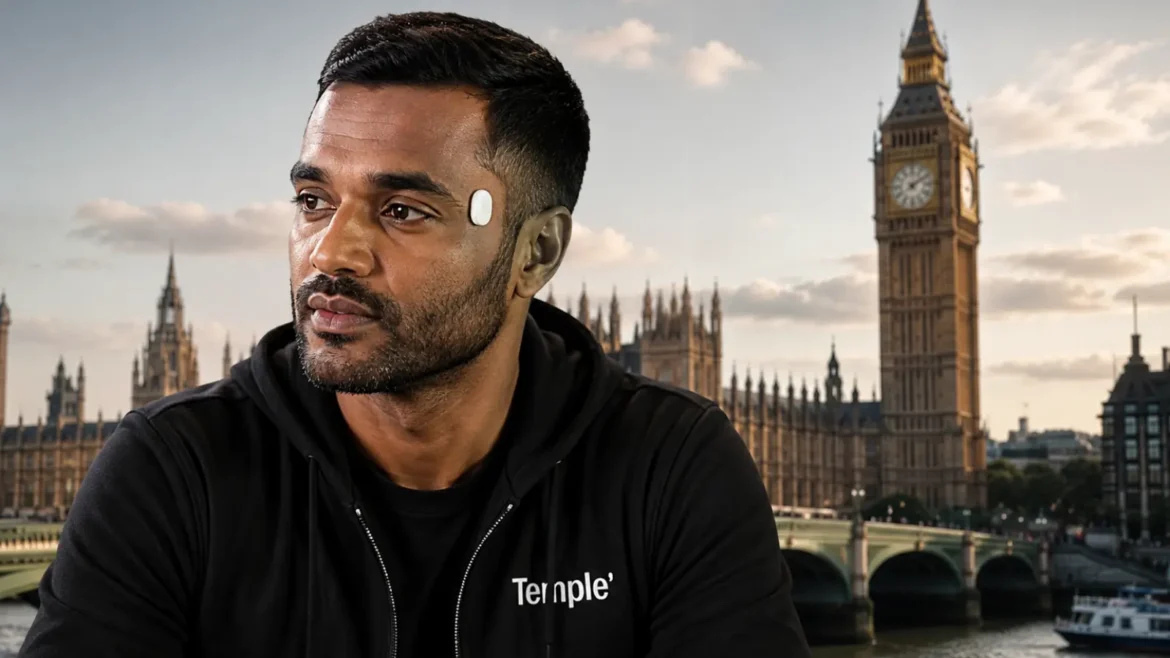
Deepinder Goyal just bought himself two doctors, and that might matter more than the wearable itself
by Aalam Rohile August 28, 2026
3 min read

Summary

  • Temple acquires Longevous, a London longevity practice, as Goyal’s wearable startup pushes toward its first product launch.
  • Longevous founders Dr. Robert Mohr and Dr. Avi Roy join Temple full-time, as CMO and Head of Science.
  • The deal comes months after Temple raised a friends-and-family round at a roughly $190 million valuation.

Deepinder Goyal’s health-tech startup has just made its first acquisition, and it isn’t a hardware company. Temple acquires Longevous, a London-based longevity medicine practice, in a move that says more about credibility than technology.

Goyal announced the deal on X on Thursday. Longevous founders Dr. Robert Mohr and Dr. Avi Roy will join Temple full time, while the London practice continues operating under its existing model and keeps serving its current clients. Financial terms weren’t disclosed.

For a startup that’s spent the better part of a year fielding questions about its science, this is a pointed answer.

Who’s joining, and why it matters

Mohr will join as Temple’s chief medical officer, bringing nearly two decades of clinical experience, having moved from emergency medicine into evidence-based longevity medicine. Roy, an Oxford-trained biomedical scientist, becomes Head of Science; he previously co-founded Founders Health and UDA, and was a research fellow at Oxford’s Centre for the Advancement of Sustainable Medical Innovation.

This isn’t a cold acquisition either. Goyal has said his association with Mohr and Roy began after meeting them at a dinner in London, after which the two tested Temple’s technology over a two-month period and got involved in validating its data.

That detail matters more than it looks. Temple’s core product is an experimental wearable, worn near the temple, that claims to track signals linked to cerebral blood flow, oxygenation, and heart rate, along with responses to exercise, sleep, recovery, and meditation. Bringing in outside doctors who spent months stress-testing that data, rather than simply hiring a medical advisor, reads like Temple wanted its harshest available critics inside the tent first.

Read More: What Is Temple Wearable? Deepinder Goyal’s New AI Health Ring

The credibility problem this is meant to fix

Temple has never been short on attention. It raised a friends-and-family round earlier this year from Zomato-adjacent backers and marquee investors, at a roughly $190 million valuation. What it’s been short on is independent validation. Neurologists quoted in earlier reports have questioned whether measurements taken from one point on the head can accurately represent blood flow throughout the brain, and experts have stressed that a consumer wearable shouldn’t substitute for established medical tests unless its claims are properly validated.

That’s the gap Longevous is meant to close. The acquisition marks a structural pivot for Temple, moving it from speculative hardware engineering toward institutional clinical validation ahead of its debut product launch. It also gives Temple an integrated clinical practice, one that can potentially convert wearable users into higher-margin concierge medical clients down the line.

Read More : Deepinder Goyal Temple Wearable: Brain Health Device 2025

What’s next

Temple is preparing to launch its first product, with limited pre-orders expected soon and shipments planned before the end of 2026. Longevous, founded in 2025 and focused on preventive and precision medicine, keeps its London client base intact while doubling as the scientific backbone for Temple’s next phase.

Why founders should be watching this

Set aside the wearable itself for a second. The interesting move here is the playbook: buy scientific legitimacy instead of building it slowly in-house.

For Indian founders building in healthtech, deeptech, or any hardware category where trust is the real bottleneck, that’s a pattern worth noting. Regulatory and scientific credibility is usually the slowest thing to build organically, especially for a startup making health claims. Acquiring a small, credible clinical team, rather than hiring individual advisors, compresses that timeline and gives a product story it can point to before a single unit ships.

It’s also a reminder that acquisitions aren’t just for scale anymore. Founders are increasingly using them to buy trust, talent, and validation at an early stage, not just revenue or market share.

Temple’s wearable still has to prove itself once it’s in consumers’ hands. But with Mohr and Roy now inside the company, Goyal has bought himself two people whose job is to make sure the science holds up before that happens.

FAQs

What does Temple’s acquisition of Longevous involve?

Temple, Deepinder Goyal’s wearable startup, has acquired London-based longevity medicine practice Longevous for an undisclosed sum. Longevous continues serving its existing clients while its founders join Temple full-time.

Who are Dr. Robert Mohr and Dr. Avi Roy?

Mohr is a board-certified physician with nearly two decades of clinical experience who moved into longevity medicine; he joins as Temple’s Chief Medical Officer. Roy is an Oxford-trained biomedical scientist joining as Head of Science.

Why did Temple acquire a longevity medicine practice?

Temple’s wearable has faced questions over its unvalidated health claims. Acquiring Longevous brings in clinical and scientific expertise to help validate the product ahead of its launch.

When will Temple’s wearable launch?

Temple is preparing limited pre-orders soon, with shipments planned before the end of 2026.

How much was Temple valued at in its last funding round?

Temple raised a friends-and-family round earlier in 2026 at a post-money valuation of roughly $190 million, led by Goyal with participation from Steadview Capital and other investors.

Will Longevous continue operating independently?

Yes. Longevous keeps its existing client base and operating model in London, now functioning as part of Temple rather than being folded into it entirely.

August 28, 2026 0 comments 142 views
FacebookTwitterLinkedinWhatsapp
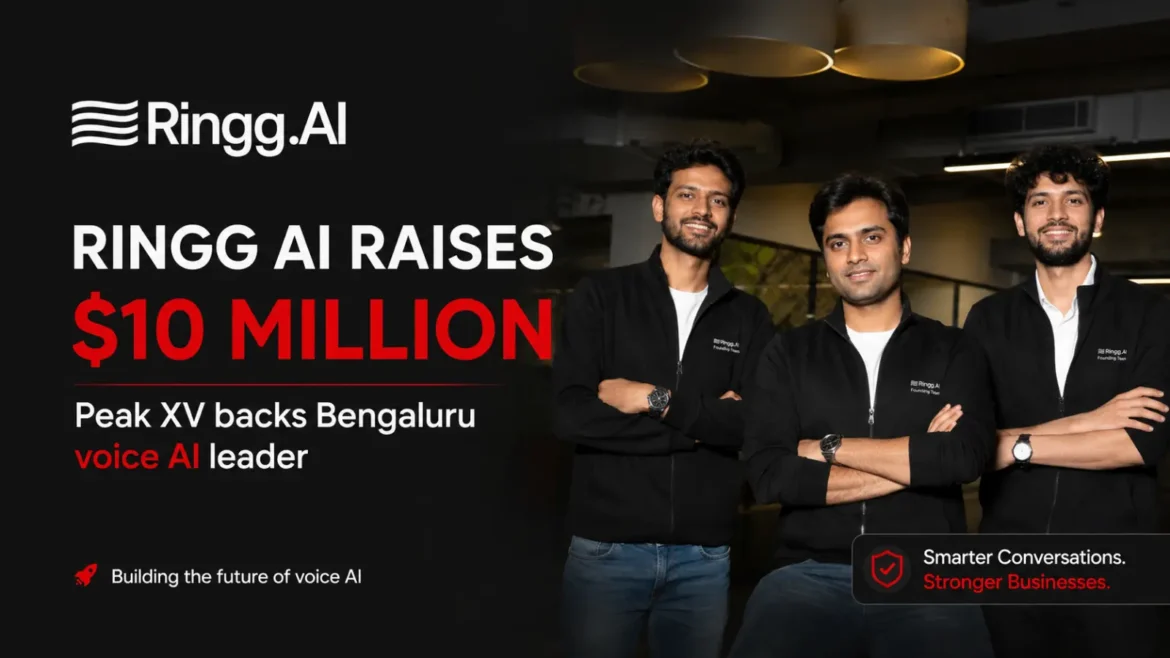
Ringg AI founder Siddharth Tripathi, whose Bengaluru voice AI startup raised $10 million from Peak XV Partners
FundingAI & DeepTechNews

Ringg AI Raises $10M as Peak XV Doubles Down on Enterprise Voice Agents

A Bengaluru startup that almost died as a text-to-speech company is now processing 20 million calls a month, and investors just backed it again.
by Aalam Rohile August 27, 2026
3 min read

Summary

  • Ringg AI raised $10 million in a Series A extension led by Peak XV Partners, taking its total round to $15.5 million.
  • The Bengaluru startup now processes around 20 million call attempts a month for clients including Flipkart, Practo, Groww and PolicyBazaar.
  • Ringg pivoted from a failed text-to-speech venture called DesiVocal to building enterprise voice, WhatsApp and browser AI agents.

Ringg AI has raised $10 million in an extended Series A round led by Peak XV Partners, with existing backers Arkam Ventures and Capital 2b also writing checks. The firm had previously raised $5.5 million in Series A funding in January this year, taking the total size of the round to $15.5 million.

That’s a real number for a startup most people outside enterprise AI circles have never heard of. But the story behind it is the more interesting part.

Ringg didn’t start as a voice AI company at all. The startup began as a text-to-speech company called DesiVocal before shifting towards enterprise AI agents after finding the cost of developing its own speech models difficult to sustain. That’s a polite way of saying the original bet didn’t work, and the founders, Siddharth Tripathi, Utkarsh Shukla and Kali Charan Vemuru, had to rebuild around something that actually paid.

What they rebuilt is now handling meaningful volume. Ringg currently processes around 20 million call attempts every month and counts companies including Flipkart, Practo, Groww, Supernova, Goodscore and PolicyBazaar among its customers. It also works with CRED and Tabby, spanning marketplaces, healthcare, banking and fintech.

From Cheap Volume to Hard Workflows

Early enterprise voice AI in India has largely meant one thing: cheap, high-volume calling for outbound sales and collections. Ringg started there too, and co-founder Siddharth Tripathi has been direct about why that’s not where the company wants to stay.

Enterprise voice AI agent handling customer workflows, illustrating Ringg AI's shift into complex enterprise tasks

“Nobody buys us because the demo sounds good,” Tripathi said, framing the pitch around outcomes rather than novelty.

Its voice agents are used for applications such as outbound calling, lead qualification and loan collection. The company is now moving into more complex workflows, including healthcare appointment booking, e-commerce cart recovery, and fintech onboarding and KYC. That’s a meaningfully harder problem set. Loan collection calls and lead qualification are volume games where price wins. Appointment booking, KYC and cart recovery need the agent to actually complete a task correctly, inside a regulated or transaction-sensitive flow, without a human stepping in to fix it.

Its voice agents are deployed across 1,200 Practo clinics, where they help patients book appointments and follow up after visits. That’s the kind of deployment that doesn’t forgive a bad call.

Read More: An AI Startup, Rillet, Just Raised $100M in 48 Hours. Here’s What It Says About the Future of Hiring

Why Peak XV Extended Instead of Waiting

Extension rounds inside an existing Series A, rather than a fresh priced round, usually signal one of two things: either the company needed a bridge, or the lead investor liked what it saw enough to add capital on the same terms before outsiders could bid up the price. For founders trying to work out what a structure like this actually does to their own cap table, it’s worth running the numbers rather than guessing.

Read More: Funding Round Dilution Calculator

Rishen Kapoor, a principal at Peak XV, pointed to Ringg’s technical depth as the reason the fund went back in, noting that the startup’s own models let it take on harder, higher-value enterprise tasks rather than simple call scripts.

That technical bet includes owning more of the stack than most voice AI startups attempt. Co-founder and CTO Kali Charan Vemuru has said the team deliberately went after the hardest version of the problem first, reasoning that an agent built to survive noisy calls and mid-conversation language switching would generalize to easier environments too. The platform has been built for enterprise environments that typically expose the limitations of AI agents, including noisy calls, customers switching languages mid-conversation, asynchronous WhatsApp interactions, browser workflows spanning multiple enterprise applications, strict latency requirements and regulated data environments. The startup supports in-region deployments across India, the GCC, the US and Europe, as well as on-premise deployments.

Ringg hasn’t disclosed a valuation for this round, and neither Peak XV nor the company has said whether this closes out the Series A entirely or leaves room for further extension. Founders modelling a similar structure for their own raise can get a rough sense of where a round like this might land using a valuation model.

Read More: Startup Valuation Calculator

That regulated-data, on-premise piece matters more in India than it might elsewhere. Fintech and healthcare clients here can’t always send customer conversations to a third-party cloud, and startups that can’t offer on-premise or in-region hosting get quietly excluded from enterprise RFPs before pricing even comes up.

Voice Still Leads, But the Company Is Widening

While voice calls account for more than 70% of Ringg’s business, the startup is expanding into chat, WhatsApp and browser-based support. For clients like Shell, it automates browser-based support requests, a signal the company wants to be read as an AI agent platform rather than a voice-only vendor.

That framing matters for the next fundraise too. Voice AI is a crowded, price-sensitive category globally. An “AI agent platform that completes business tasks” is a different, stickier pitch to enterprise buyers, and a different story to tell investors.

The team backing that ambition is growing fast. Ringg has 40 employees, with more than 15 joining in the past three months. That’s a company scaling headcount roughly as fast as it’s scaling call volume, which is its own kind of bet on near-term demand.

For Indian founders watching the enterprise AI space, Ringg’s arc is a useful data point. The company’s first product idea, cheaper text-to-speech, didn’t survive contact with the market. What did survive was the underlying speech and language infrastructure, redirected at a problem enterprises would actually pay to solve repeatedly. It’s a familiar pivot story in Indian SaaS, applied here to voice.

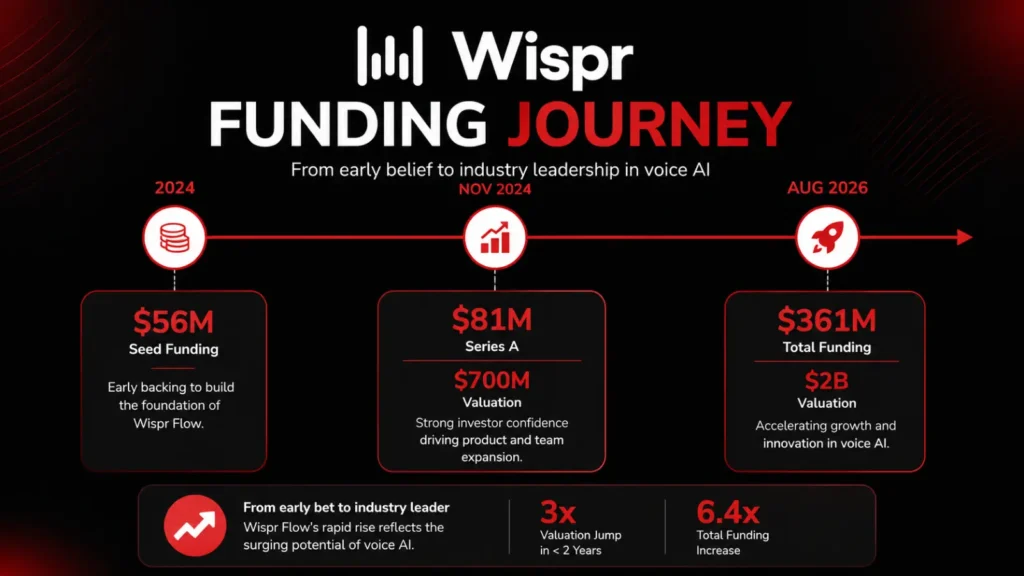
Read More : Peak XV, Together Fund Join $280M Round as Wispr Flow Hits $2B Voice AI Valuation

Ringg hasn’t disclosed a valuation for this round, and neither Peak XV nor the company has said whether this closes out the Series A entirely or leaves room for further extension. That detail remains unconfirmed.

FAQs

What did Ringg AI raise, and who led the round?

Ringg AI raised $10 million in an extension to its Series A round, led by Peak XV Partners, with Arkam Ventures and Capital 2b also participating. This takes the total Series A round to $15.5 million.

Who founded Ringg AI?

Ringg AI was founded by Siddharth Tripathi, Utkarsh Shukla and Kali Charan Vemuru. The company originally launched as DesiVocal, a text-to-speech startup, before pivoting to enterprise voice AI agents.

What does Ringg AI actually do?

Ringg builds AI voice, WhatsApp and browser agents for enterprises, handling tasks like outbound calling, lead qualification, loan collection, healthcare appointment booking, e-commerce cart recovery and fintech onboarding and KYC.

Who are Ringg AI’s customers?

Ringg works with Flipkart, Practo, Groww, PolicyBazaar, CRED, Tabby, SuperNova, GoodScore and Shell, among others, across healthcare, banking, fintech and marketplace use cases.

How big is Ringg’s business right now?

The company processes around 20 million call attempts every month and has grown to 40 employees, with more than 15 hired in the past three months.

Why did Ringg pivot away from text-to-speech?

The founders found the cost of building and maintaining their own speech models under the original DesiVocal model difficult to sustain, and moved up the stack into enterprise voice agents instead.

August 27, 2026 0 comments 136 views
FacebookTwitterLinkedinWhatsapp
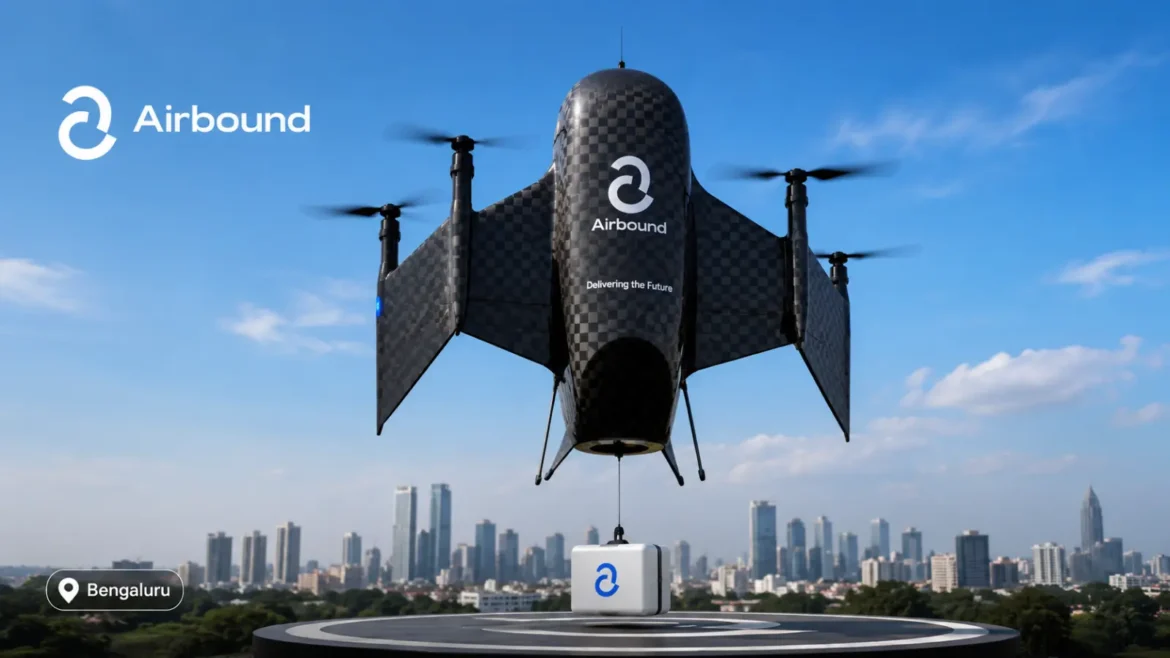
Airbound tail-sitter drone taking off vertically for delivery in Bengaluru
NewsAI & DeepTechFunding

Bengaluru’s Airbound Raised $37 Million to Make Drones Cheaper Than Trucks

A Series A round led by Greenoaks, with DoorDash and Lightspeed joining in, pushes the drone delivery startup's total funding to nearly $50 million
by Aalam Rohile August 25, 2026
3 min read

Summary

  • Bengaluru-based Airbound raised $37 million in Series A funding led by Greenoaks, with DoorDash, Lachy Groom, Lightspeed, and Humba Ventures participating.
  • The startup builds tail-sitter drones that weigh less than the cargo they carry, aiming for air delivery costs on par with trucking.
  • Airbound has signed a deal with Andhra Pradesh to build a three-city drone network targeting 10,000 flights a day.

Most drone delivery pitches sound the same: faster than a truck, cooler to look at, still years from making commercial sense. Airbound’s pitch is different. The Bengaluru startup wants to make flying things around as cheap as trucking them, not just faster.

Investors are betting big on that idea. Airbound has raised $37 million in a Series A round led by Greenoaks, with DoorDash, Lachy Groom, Lightspeed Venture Partners, and Humba Ventures also putting money in. The round comes less than a year after Airbound’s $8.65 million seed, taking its total funding to nearly $50 million.

The physics problem nobody else was solving

Founder and CEO Naman Pushp has been building drones since he was 15. His core insight is almost embarrassingly simple: most aircraft spend the bulk of their energy just carrying their own weight, not the cargo.

Airbound flipped that ratio. Its current tail-sitter drones, which launch vertically like a rocket before switching to horizontal flight, weigh around 1.5 kg while carrying 1 kg of payload. The next generation is expected to weigh close to 3 kg while carrying nearly 5 kg, a payload-to-weight ratio that’s rare in aviation.

“We want to build towards a world where everything has cost parity with trucking,” Pushp said, describing the company’s endgame in blunt terms.

That framing matters for a country like India, where the real competition for drones isn’t other drones. It’s a truck driver who’ll do the same trip for a few hundred rupees.

Read More: How India Can Build a Self-Reliant Drone Manufacturing Ecosystem in 7 Steps

From hospital samples to quick commerce

Airbound didn’t start with grand ambitions. It began flying diagnostic samples for Narayana Health, cutting a delivery that took three to five hours by road down to about seven minutes by air. The company has now completed more than 13,000 autonomous flights across Bengaluru and Guntur, with over 1,000 of those for the hospital network alone.

The new capital is meant to take Airbound beyond healthcare logistics. The company is in talks with quick commerce and e-commerce players to carry small packages, the kind of last-mile delivery Indian consumers have gotten used to arriving in under 10 minutes.

Pushp isn’t shy about how hard that bar is. “The bar for delivery in India is high,” he said. “That’s the complexity here.”

A state government partnership, without the usual strings

Alongside the funding, Airbound has signed an agreement with the Andhra Pradesh government to build a drone delivery network connecting three cities in the state. Unlike typical government tie-ups, this one comes without a contract or subsidy attached. Instead, the state is working with Airbound on the regulatory groundwork needed to actually run the network at scale.

The target is ambitious: 10,000 flights a day across retail, e-commerce, and healthcare deliveries. Getting there will need somewhere between 250 and 1,000 aircraft, depending on route length, and Airbound isn’t the only Indian startup chasing that opportunity. Skye Air Mobility and TSAW Drones are both building competing aerial logistics networks, and drone maker Garuda Aerospace has explored delivery use cases too.

Read More : Apollo Hospitals Bets on Electric Air Ambulances to Fix India’s Golden Hour Problem

Why this matters beyond the drone itself

For founders outside the drone space, Airbound’s raise says something bigger about where Indian venture capital is willing to go right now. DoorDash backing an Indian hardware startup is not a small signal. It suggests global logistics players see Indian drone delivery infrastructure as worth a strategic bet, not just a curiosity.

It’s also a reminder that deep-tech and hard infrastructure bets, the kind that take years of physical iteration before they show traction, can still pull in serious capital in this market. That’s relevant for founders building in EV, robotics, or any category where the product has to work in the physical world before the business model does.

None of this guarantees drone delivery becomes mainstream in India anytime soon. Airbound itself acknowledges the sector is still far from matching the scale and flexibility of trucking. Scaling to thousands of daily flights means solving airspace regulation, ground infrastructure, and public trust, not just battery efficiency.

Still, a three-year-old startup pulling in $37 million on the strength of physics-first design and a state government partnership is a data point worth watching, especially for founders wondering whether India’s investors have appetite for anything beyond fintech and SaaS.

Airbound plans to put the new funding toward engineering, commercial-scale manufacturing, and expanding its customer base, including the larger aircraft it hopes will eventually carry more than packages.

Read More: World-First Fan-in-Wing Transition Flight: How Horizon Cavorite X7 Redefines eVTOL in 2025

What do you think, is drone delivery actually close to matching trucking on cost in India, or is this still a decade-long bet? Explore more funding and deep-tech coverage on StartupIndiaX.

FAQs

What does Airbound do?

Airbound builds autonomous tail-sitter drones designed to move cargo through the air as cheaply as trucking, currently used for healthcare deliveries and expanding into e-commerce.

How much has Airbound raised in total?

Airbound has raised nearly $50 million since its seed round, including the new $37 million Series A led by Greenoaks.

Who are Airbound’s investors?

The Series A round included Greenoaks as lead investor, along with DoorDash, Lachy Groom, Lightspeed Venture Partners, and Humba Ventures.

What is Airbound’s deal with Andhra Pradesh?

Airbound has signed an agreement with the Andhra Pradesh government to build a drone delivery network connecting three cities, targeting 10,000 flights a day, without a government contract or subsidy attached.

Who founded Airbound?

Airbound was founded by Naman Pushp, who started building drones at age 15 and now serves as the company’s CEO.

Who are Airbound’s competitors in India?

Airbound competes with other Indian aerial logistics startups including Skye Air Mobility and TSAW Drones.

August 25, 2026 0 comments 121 views
FacebookTwitterLinkedinWhatsapp
Nicolas Kopp, founder and CEO of Rillet, alongside an AI-powered accounting dashboard
NewsAI & DeepTechFintech

An AI Startup, Rillet, Just Raised $100M in 48 Hours. Here’s What It Says About the Future of Hiring

A two-year-old accounting startup closed a $100 million round before most VCs finished reading the deck. The real story isn't the valuation. It's what Rillet's rise reveals about who gets hired next, in consulting, in accounting, and increasingly, in India's own back offices.
by Aalam Rohile August 25, 2026
3 min read

Summary

  • Rillet, AI accounting startup, closed a $100M Series C at a $1B valuation in roughly 48 hours, taking total funding past $200M.
  • CEO Nicolas Kopp says Rillet isn’t cutting junior accounting jobs, but data shows consulting and audit firms are already hiring fewer entry-level staff.
  • Indian CA firms, GCCs, and early-stage startups should watch this shift now, before it reshapes their own hiring pyramids too.

Two years ago, Rillet didn’t exist as a product companies could actually buy. This week, it’s worth $1 billion.

The AI-native accounting startup closed a $100 million Series C led by ICONIQ, with returning backers Sequoia Capital, Andreessen Horowitz and Oak HC/FT joined by new investors including Bain Capital Ventures, Battery Ventures, FirstMark and Creandum. It’s the company’s third fundraise in under a year, pushing total funding past $200 million, roughly ₹1,660 crore.

What actually turned heads wasn’t the amount. It was the speed. Founder and CEO Nicolas Kopp told reporters the round came together in about 48 hours, largely because Rillet’s board meeting a few weeks earlier had shown investors something hard to ignore: annualized revenue that had doubled in a single quarter, on top of an earlier quarter where it had already doubled once before.

What Rillet Actually Does

Rillet builds what it calls an “agent-first” ERP, artificial intelligence handling hundreds of accounting tasks at once so human accountants review transactions instead of keying them in by hand. It’s going after the ground legacy giants like Oracle, SAP and NetSuite have held for decades, particularly among fast-growing, venture-backed companies with complicated revenue models.

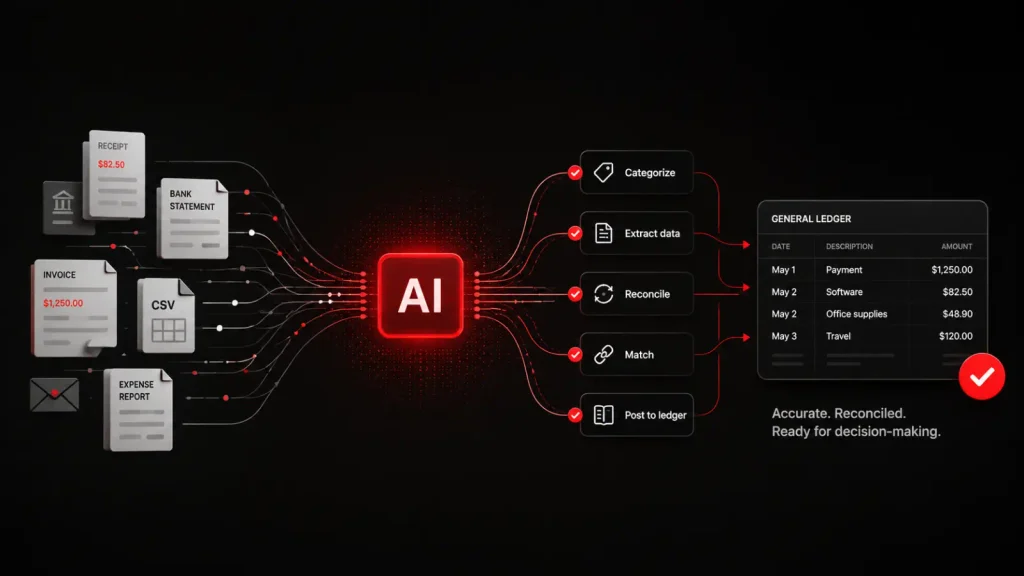
Illustration of AI automating accounting and reconciliation workflows

The traction is real. Rillet now counts more than 600 customers, including public companies and AI-era names like Neuralink, Skild AI and Mercor. On the audit side, it works with two of the Big Four, EY and KPMG, and says it now partners with more than half of the Accounting Today top 20 CPA firms in the US. Earlier this year it launched a formal alliance with EY focused on AI-native finance transformation, complete with risk controls built into the workflow.

For a category Kopp himself calls “traditionally a very old, stodgy” one, that’s a fast rewrite. He credits recent leaps in underlying AI models more than anything Rillet built alone. “Especially in the last six months, things started lighting on fire in a good way,” he said, describing tasks that once ate a full workday now wrapping up in minutes.

Read More: Peak XV, Together Fund Join $280M Round as Wispr Flow Hits $2B Voice AI Valuation

The Jobs Question Kopp Keeps Getting Asked

Every AI founder eventually gets the same question: is this replacing people? Kopp’s answer is consistent, if a little too clean. He says he isn’t seeing customers install Rillet and lay off their accounting teams. Instead, companies get selective about who they hire next and save costs that way. “We don’t see our customers firing their teams, rather being able to be selective in hiring,” he said.

There’s a real tailwind behind that framing too. The number of students graduating with accounting degrees has been falling since 2010, and a recent Controllers Council survey found 61% of finance leaders struggled to find qualified accounting and CPA talent in the past year. In that context, AI genuinely does look like relief rather than replacement, at least for firms desperate for hands.

But zoom out from Rillet’s own customer base to the consulting and professional services industry at large, and the picture gets less comfortable.

Research from workforce analytics firm Revelio Labs shows hiring at leading consulting firms has fallen steadily since 2023, with overall talent demand roughly 20% below its 2023 peak and demand for consultant-specific roles down closer to 40% over the same stretch. Crucially, the drop isn’t even. Firms are placing more weight on senior hires who can oversee and interpret AI-generated output, while entry-level roles shrink and become far more selective.

That matches what’s playing out at the Big Four. An FT analysis of over 50,000 job postings found AI-related roles made up nearly 7% of listings across Deloitte, EY, KPMG and PwC last year, while audit roles, the traditional entry point into the profession, accounted for under 3%. KPMG has advertised for managers with chatbot prompt engineering experience. EY has sought staff who can help clients adopt generative AI. The old formula, hire large classes of junior associates and winnow them over a decade, is quietly being rebuilt around fewer, more senior entry points.

Even at the interview stage, the bar has moved. McKinsey has started testing candidates on its internal AI tool, Lilli, as part of final-round interviews, and some BCG offices reportedly stopped reviewing cover letters altogether once AI made them trivial to write well. Firms aren’t just automating grunt work anymore. They’re screening for who can direct the automation.

Read More : Yulu Raises $93 Million, But Its Investors Are Sending a Mixed Signal

Why This Matters for Indian Founders and Finance Teams

None of this is a US-only story. India’s CA firms, GCCs and startup finance functions sit downstream of exactly the same pressure, and in some ways face it sooner.

Big Four India arms and large Indian audit practices already lean on large cohorts of articled clerks and junior associates for exactly the kind of reconciliation and data-entry work Rillet automates. If AI-native tools compress that work from days to minutes at Rillet’s US customers, the same compression is coming for Indian back offices, GCC finance teams and CA practices serving startups, whether or not they’ve adopted an AI-native platform themselves yet.

For early-stage founders specifically, there’s a more immediate, practical read. Lean startup finance teams don’t need to hire a full bookkeeping bench anymore if a founder or a single finance hire can supervise an AI-assisted workflow instead. That changes the calculus on when to make a first finance hire, and what that hire should actually be good at: judgment and review, not data entry.

Kopp’s own instinct on this is worth borrowing directly. He’s built Rillet with a team heavy on accounting backgrounds, and insists domain expertise remains the point. “Our message is not that we’re coming after jobs,” he said. “We’re positioning AI as a helper to that individual and what they can achieve.” Whether that framing holds up as entry-level hiring keeps thinning across the profession is the question worth watching over the next year, not this quarter’s valuation number.

Rillet’s billion-dollar valuation is a funding story on the surface. Underneath it is a hiring story, and it’s one Indian founders, CA firms and finance leaders would do well to read closely before it shows up in their own org charts.

FAQs

What is Rillet?

Rillet is an AI-native ERP and accounting platform that automates bookkeeping, reconciliation and financial reporting for venture-backed and high-growth companies, founded in 2021 by Nicolas Kopp and Stelios Modes.

How much has Rillet raised, and at what valuation?

Rillet closed a $100 million Series C led by ICONIQ, taking its total funding past $200 million (roughly ₹1,660 crore) at a $1 billion valuation, making it a unicorn.

Is Rillet replacing accounting jobs?

CEO Nicolas Kopp says Rillet is not built to replace accountants, including junior ones, and that customers are becoming more selective in hiring rather than cutting existing teams.

Why are consulting firms hiring fewer junior staff even as they grow?

Data from Revelio Labs and Big Four job postings shows firms are automating entry-level analysis and audit work with AI while increasing emphasis on senior roles that can oversee and interpret AI output.

How does this affect Indian startups and CA firms?

Indian GCCs, CA practices and early-stage finance teams face the same pressure as US firms, since AI-native tools compress the same reconciliation and data-entry work that has traditionally justified large junior hiring pyramids.

Who are Rillet’s competitors?

Rillet competes with newer AI-native accounting tools like Campfire, Puzzle and Digits, as well as legacy ERP giants including Oracle, SAP and NetSuite.

August 25, 2026 0 comments 151 views
FacebookTwitterLinkedinWhatsapp
Anupam Mittal, founder of Shaadi.com and Shark Tank India investor
Founder Story

Anupam Mittal Shaadi.com Story: From Sagaai.com to a Possible IPO

How a 25-year-old's weekend project turned into India's biggest matchmaking platform, why he refused to sell control for nearly three decades, and what the current IPO buzz actually means.
by Aalam Rohile August 24, 2026
3 min read

Summary

  • Anupam Mittal built Shaadi.com in 1997 on roughly $18-25 million in total disclosed institutional funding, tiny by today’s startup standards.
  • A 2006 deal with WestBridge later turned into a multi-country legal fight after Shaadi.com missed an IPO deadline written into their agreement.
  • Reports from late 2025 say Shaadi.com’s parent has opened early talks with bankers about a possible IPO, though nothing is confirmed yet.

Before he was the shark asking “what’s your ask” on Shark Tank India, Anupam Mittal was a 25-year-old back in Mumbai after business school, trying to solve a problem every Indian family understood: finding a match without the endless newspaper ads and matchmaker phone calls.

For Mittal, entrepreneurship didn’t begin with a pitch deck, a term sheet, or a demo day. It began with a website his own relatives thought was a bit of a joke.

He first called it Sagaai.com. Launched in 1997 with his cousins Anand Mittal and Navin Mittal, the site was a simple bet that Indian families would eventually trust the internet with something as personal as marriage. Sagaai.com later became Shaadi.com, a name that translated better across languages and stuck.

Representation of India's early internet era in the late 1990s when Shaadi.com launched

This was India in the late 1990s. Dial-up internet, a handful of cybercafes, and almost nobody had heard the word “startup.” Mittal had just finished an MBA at Boston College and worked briefly at MicroStrategy in the US. He came back to Mumbai instead of staying abroad, at a time when that was the less obvious career move.

The early hustle was small and unglamorous. Convincing Indian parents, not just their children, that a matrimonial listing online was safe and respectable took years, not months. There was no viral moment. Growth came from patience, word of mouth, and Mittal betting on India’s internet adoption curve before most investors would.

Here’s the part that gets lost in the Shark Tank version of his story: Shaadi.com never really chased the venture capital playbook.

While most of India’s consumer internet companies of the 2000s and 2010s raised round after round, Shaadi.com and its parent, People Group, stayed capital-light. Disclosed institutional funding across the company’s entire history sits at roughly $18 million to $25 million, a fraction of what comparable Indian consumer platforms have raised in a single Series C.

They didn’t stop at just one bet, either. Under People Group, Mittal built out Mauj Mobile, one of India’s earliest mobile entertainment and value-added services platforms, and Makaan.com, an early online real estate marketplace. He also co-founded and later sold Interactive Avenues, a digital ad agency, to global agency network IPG.

That instinct to build adjacent businesses rather than sell equity for cash is a big part of why Mittal kept control of Shaadi.com for so long. It’s also where the story gets complicated.

In 2006, WestBridge invested in Shaadi.com through its WestBridge Ventures II Holdings fund. As part of that deal, WestBridge got board rights and a say in major decisions, standard practice for institutional investors backing a founder with no prior outside funding.

Shaadi.com: The Numbers Behind the Story

Based on disclosed shareholding data (2021) and reported institutional funding

Shareholding split (as of 2021 disclosure) WestBridge 44.38% Anupam Mittal 30.26% Total disclosed institutional funding $18M-$25M across nearly three decades, far below most Indian consumer-internet peers Key milestones 1997: Founded 2006: WestBridge invests 2021: Shark Tank India 2025: IPO talks reported

Figures from disclosed shareholding data and reported institutional funding; IPO plans remain unconfirmed talks as of the latest reports.

By 2021, disclosed shareholding put WestBridge at 44.38% and Mittal at 30.26%. The shareholder agreement reportedly included a clause common in Indian VC deals but rarely discussed openly: if an IPO didn’t happen within five years of the deal closing, WestBridge could redeem its shares, and in some circumstances drag other shareholders into a forced sale to a third party.

Read More: The Real Story Behind Nithin Kamath’s Zerodha: Two Brothers, One Trading Desk, No Funding

No IPO happened in that window. What followed was one of the more closely watched governance disputes in Indian startup history.

The case moved through the Singapore High Court, an ICC arbitration tribunal, the Singapore Court of Appeal, and multiple Indian forums including the Bombay High Court, the NCLT, and the NCLAT. At its core, the dispute centered on exit rights, arbitration jurisdiction, and allegations of oppression and mismanagement.

It’s a case founders and early-stage teams should actually read about, not skip past. Shareholder agreements with automatic exit clauses can sit quietly for years until a missed deadline turns them into a legal crisis. Mittal staying capital-light kept him in control day to day, but it also meant Shaadi.com never built the habit of public financial disclosure that investors expect heading into a listing.

That habit gap is showing up again now.

Reports since November 2025 suggest People Interactive India, Shaadi.com’s operating company, has opened preliminary talks with investment bankers about a possible IPO. According to a Bloomberg report cited by multiple outlets, the discussions are still early, with no advisors formally appointed and conversations focused on valuation, timing, and deal structure. Storyboard18 has noted it could not independently verify the details, so this remains a developing story, not a confirmed listing.

If it does move forward, Shaadi.com would be entering Dalal Street at a moment when India’s IPO market has been unusually active, and it would put the matrimony pioneer in direct comparison with rival Matrimony.com, which has been publicly listed for years and already discloses the financials Shaadi.com has kept private.

Read More : Meena Bindra: The BIBA Founder’s Journey From Rs 8,000 Loan to Rs 800 Crore Brand

Mittal’s other identity, the one most younger Indians actually recognize him from, is Shark Tank India. Since joining the show in 2021, he’s become one of its most active investors, reportedly backing more than 200 startups across sectors, including early bets on companies like Ola and BigBasket well before the show existed. That visibility has done more for the Shaadi.com brand among Gen Z and younger millennials than any marketing campaign could.

But the most powerful part of Mittal’s story isn’t the possible valuation, or even the IPO headlines.

It’s the patience.

Nearly three decades on one core idea. Convincing an entire country, one skeptical parent at a time. Building three or four businesses instead of one, quietly, without a funding announcement every few months.

Staying in control long enough that the biggest risk to the company wasn’t a competitor. It was a five-year clock in a contract nobody outside the boardroom knew existed.

For founders reading this now, weighing a term sheet with unfamiliar exit clauses, or wondering whether staying lean means staying safe, Mittal’s story is a reminder that capital discipline and governance discipline are two different things. You can get one right for 25 years and still get caught out by the other.

Shaadi.com’s next chapter, IPO or not, will probably be decided by which lesson Mittal applies faster.

If you’re mapping out your own startup’s ownership structure before it becomes a headline of its own, StartupIndiaX’s Co-founder Equity Split Calculator is a useful starting point for getting those numbers straight early. And if you’re trying to understand who’s actually behind India’s investor ecosystem, the Indian VC & Investor Database is worth a look.

FAQs

When did Anupam Mittal start Shaadi.com?

He launched it in 1997 as Sagaai.com, alongside his cousins Anand and Navin Mittal, before rebranding it Shaadi.com shortly after.

How much funding has Shaadi.com raised?

Disclosed institutional funding across the company’s history totals roughly $18 million to $25 million, considerably less than most Indian consumer internet companies of similar scale.

What is the WestBridge vs Anupam Mittal case about?

It’s a governance dispute stemming from a 2006 shareholder agreement. WestBridge held 44.38% and Mittal held 30.26% as of 2021, and the deal’s IPO exit clause going unmet led to litigation across Singapore and Indian courts.

Is Shaadi.com actually going public?

As of the latest reports from late 2025, People Interactive India has held early, unconfirmed talks with investment bankers about a possible IPO. Nothing has been formally announced.

How is Anupam Mittal connected to Shark Tank India?

He’s been a judge and investor on the show since its first season in 2021, and has reportedly backed more than 200 startups through it and independently as an angel investor.

What else does People Group own besides Shaadi.com?

People Group’s portfolio has included Mauj Mobile, an early mobile entertainment platform, and Makaan.com, an online real estate marketplace, alongside Shaadi.com.

August 24, 2026 0 comments 85 views
FacebookTwitterLinkedinWhatsapp
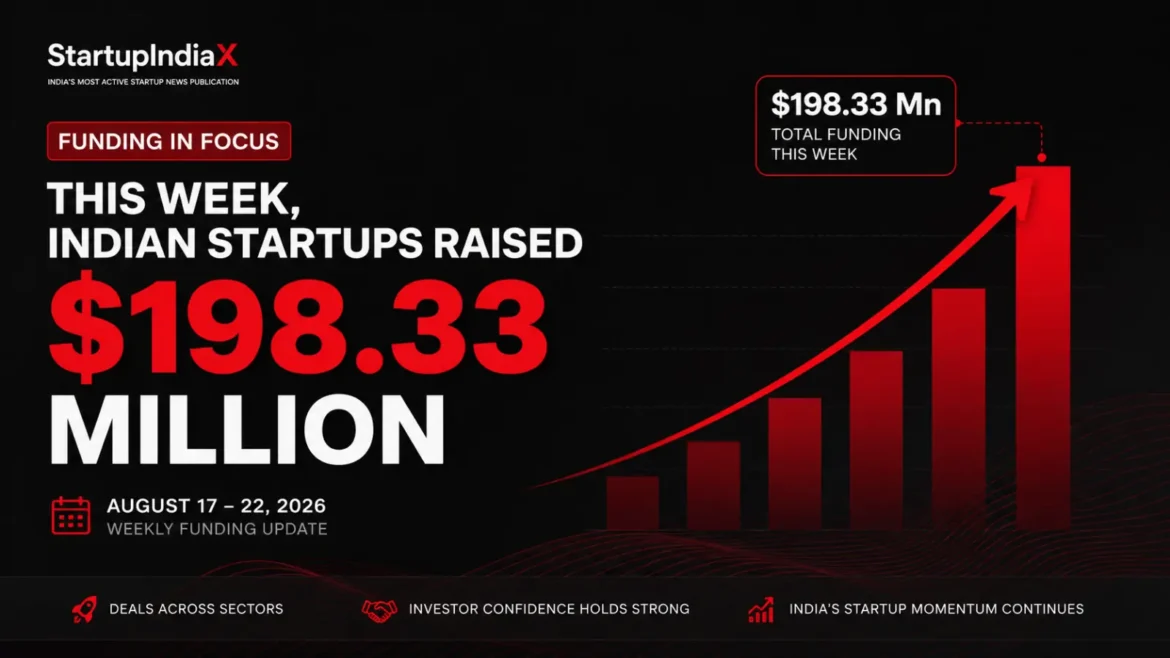
Indian startup funding this week chart showing 198.33 million raised in the week of August 17-22, 2026
NewsFunding

Indian Startup Funding This Week (Aug 17-22): Navi, BGauss, CtrlS And More

Twenty-one startups raised $198.33 million this week, up 31% from the week before, and the biggest name on the list just took outside money for the first time ever.
by Aalam Rohile August 24, 2026
3 min read

Summary

  • Navi raised $100 Mn from Prosus, its first institutional round after years of being funded almost entirely by Sachin Bansal.
  • Nikhil Kamath personally put in Rs 200 Cr as CtrlS raised Rs 250 Cr to expand its data centre business.
  • Three acquisitions closed this week, including Fleetx.ai buying fleet-tech rival Pando.ai for an undisclosed sum.

Indian Startup Funding This Week, Indian startups raised $198.33 million. That’s 21 deals between August 17 and August 22, up 31% from the roughly $151.5 million raised the week before, per Entrackr.

But the number everyone will actually talk about isn’t the weekly total. It’s who wrote the biggest cheque, and who finally took one.

Weekly Funding Report · StartupIndiaX
17–22 Aug 2026
$198.33M total raised
21 deals · +31% WoW · 3 acquisitions

Top 5 Deals This Week

01
Navi
$100M
02
NeoGeo
$20M
03
Rezolv
$12.5M
04
BGauss
$11.6M
05
Peeko
$7M
Source: Entrackr Weekly Funding Report

Navi takes outside money for the first time

Fintech unicorn Navi raised $100 million from Prosus this week. It’s Navi’s first institutional funding round since Sachin Bansal founded the company.

That’s worth sitting with for a second. Navi has largely run on Bansal’s own capital since inception. That’s unusual for a lending and insurance company at this scale.

Bringing in Prosus changes the story. It’s not just capital. It’s a signal that Navi is opening itself up to outside governance in a way it hasn’t before, right as fintech IPO chatter builds across the sector.

For founders watching this space, the read is simple. Even founder-funded companies eventually reach a point where institutional capital brings something equity checks alone can’t: credibility with regulators, other investors, and eventually, public markets.

Read More : Indian Startup Funding This Week (Aug 10–15): Yulu, Astrotalk, Centricity And More

The rest of the growth-stage action

Navi wasn’t the only growth-stage story. Electric two-wheeler maker BGauss raised Rs 110 crore (about $11.6 million) in a Series D round.

That continues the slow build-out of India’s EV two-wheeler segment beyond the Ola Electric and Ather duopoly narrative that’s dominated headlines the last couple of years.

Mumbai-based Butterfly Learnings, a paediatric behavioural health platform, secured Rs 65 crore (around $6.7 million) in a Pre-Series B round led by Inflexor Ventures. Healthtech investors backing paediatric-specific platforms is a trend worth watching if you’re building anything adjacent to child health in India.

Together, growth-stage deals accounted for $118.3 million of the week’s total. That’s more than half the week’s funding in just three transactions.

Read More : Peak XV, Together Fund Join $280M Round as Wispr Flow Hits $2B Voice AI Valuation

Kamath bets big on data centres

The early-stage segment had its own headline moment. Hyperscale data centre operator CtrlS raised Rs 250 crore. Rs 200 crore of that came directly from Zerodha cofounder Nikhil Kamath, with the remaining Rs 50 crore from entrepreneur Sreeram Reddy Vanga.

Kamath writing personal cheques into infrastructure isn’t new. But a data centre operator is a different bet than the consumer and fintech names he’s usually associated with.

It tracks with a broader theme in Indian venture right now. AI-driven compute demand is pulling capital toward the unglamorous infrastructure layer, not just the application layer sitting on top of it.

Elsewhere in early-stage, NeoGeo raised $20 million in a Series A led by Neev II Fund and Aavishkaar Capital. Fintech-adjacent startup Rezolv secured $12.5 million in a Series A led by Norwest.

Quick-commerce babycare platform Peeko raised over $7 million in a Series A led by Chiratae Ventures. Healthtech platform Lissun picked up Rs 48 crore in a Series A led by Colossa Ventures.

A cluster of smaller early-stage deals also closed this week: pesticide-free food brand DeHaat Honest Farms, deeptech startup AlgoFET, specialty coffee brand First Coffee, and reusable packaging platform Yantra Packs. Four more startups, including BookMyShow, traveltech player Atravelq, healthtech infra startup Tross, and water infrastructure startup Neuromod Aqua, raised funding this week without disclosing amounts.

Early-stage deals totalled $80.03 million across 14 rounds, roughly 40% of the week’s overall funding. Early-stage India is still doing plenty of volume even when the headline number gets dominated by one or two growth-stage deals.

Read More : Indian Startup Funding This Week (Aug 3-8): $383.5M Across 28 Deals

Three acquisitions, and a bigger IPO story brewing

Consolidation kept moving too. DSP Finance, the NBFC arm of DSP Group, acquired Salter Technologies, which runs digital lending platform Volt Money.

AI-native fleet and logistics company Fleetx.ai acquired transportation management system provider Pando.ai for an undisclosed amount, a straightforward bolt-on for a company trying to own more of the logistics tech stack.

Hearzap completed its acquisition of Amplifon India’s hearing healthcare business, following the deal first announced back in May.

Separately, consumer appliance maker Atomberg filed its DRHP for a Rs 450 crore fresh issue IPO, with existing investors A91 Partners, Temasek, and Jungle Ventures lined up for a partial exit. It’s not a funding round, but it’s the same investor ecosystem funding this week’s deals, and it shows where some of that capital eventually looks to exit.

Where the deals happened

Bengaluru kept its usual lead with 9 startup deals this week, followed by Delhi-NCR with 7. Mumbai, Hyderabad, and Jaipur split the remaining 5 deals between them.

By sector, e-commerce led with five deals, followed by healthtech with three. Fintech and deeptech each saw two, while data centres, AI, EV, agritech, and F&B rounded out the rest.

INDIAN STARTUP FUNDING · AUG 17–22, 2026

$198.33M
Total raised this week
+31%
vs last week ($151.5M)
21
Deals (3 growth, 14 early, 4 undisclosed)
Source: Entrackr Weekly Funding Report

What this week tells founders

If you’re raising right now, the split matters. Growth-stage money is concentrated and selective. One Navi-sized deal can outweigh the rest of the week combined.

Early-stage capital is still flowing steadily across sectors, but in smaller, more distributed checks. And infrastructure plays, data centres, logistics tech, EV manufacturing, are pulling in the kind of individual investor attention that used to go almost exclusively to consumer apps.

Week-on-Week Funding Trend

$151.5M Previous Week $198.33M This Week $297M 8-Week Average
Source: Entrackr Weekly Funding Report, Aug 17–22, 2026

Worth watching next week: whether Navi’s round triggers commentary from other founder-owned fintechs about their own capital structure plans, and whether Atomberg’s IPO filing kicks off a fresh round of D2C brands eyeing public markets.

If you’re mapping your own raise, it’s worth checking where your target investors have been active. StartupIndiaX’s Indian VC & Investor Database can help you shortlist funds by sector and stage. And if you’re figuring out how much of the company you’ll give up in a round like the ones above, our Funding Round Dilution Calculator walks through the math before you sign anything.

Got a take on the Navi-Prosus round, or a deal we missed? Drop it in the comments, and check back next week for the next roundup.

FAQs

How much did Indian startups raise this week (Aug 17-22, 2026)?

Indian startups raised $198.33 million across 21 deals, including 3 growth-stage rounds, 14 early-stage rounds, and 4 undisclosed rounds, according to Entrackr.

Why is Navi’s $100 million round significant?

It’s Navi’s first institutional funding round. The company has largely been funded by founder Sachin Bansal himself since inception, so bringing in Prosus marks a shift in its capital structure.

Who invested in CtrlS this week?

CtrlS raised Rs 250 crore, with Rs 200 crore coming personally from Zerodha cofounder Nikhil Kamath and Rs 50 crore from entrepreneur Sreeram Reddy Vanga.

What acquisitions happened this week in the Indian startup ecosystem?

Three: DSP Finance acquired Salter Technologies (Volt Money), Fleetx.ai acquired Pando.ai, and Hearzap completed its acquisition of Amplifon India’s hearing healthcare business.

Which city led startup funding deals this week?

Bengaluru led with 9 deals, followed by Delhi-NCR with 7. Mumbai, Hyderabad, and Jaipur split the remaining 5 deals.

Is this week’s funding total higher or lower than the previous week?

Higher. Funding rose 31% week-on-week, from about $151.5 million to $198.33 million.

August 24, 2026 0 comments 180 views
FacebookTwitterLinkedinWhatsapp
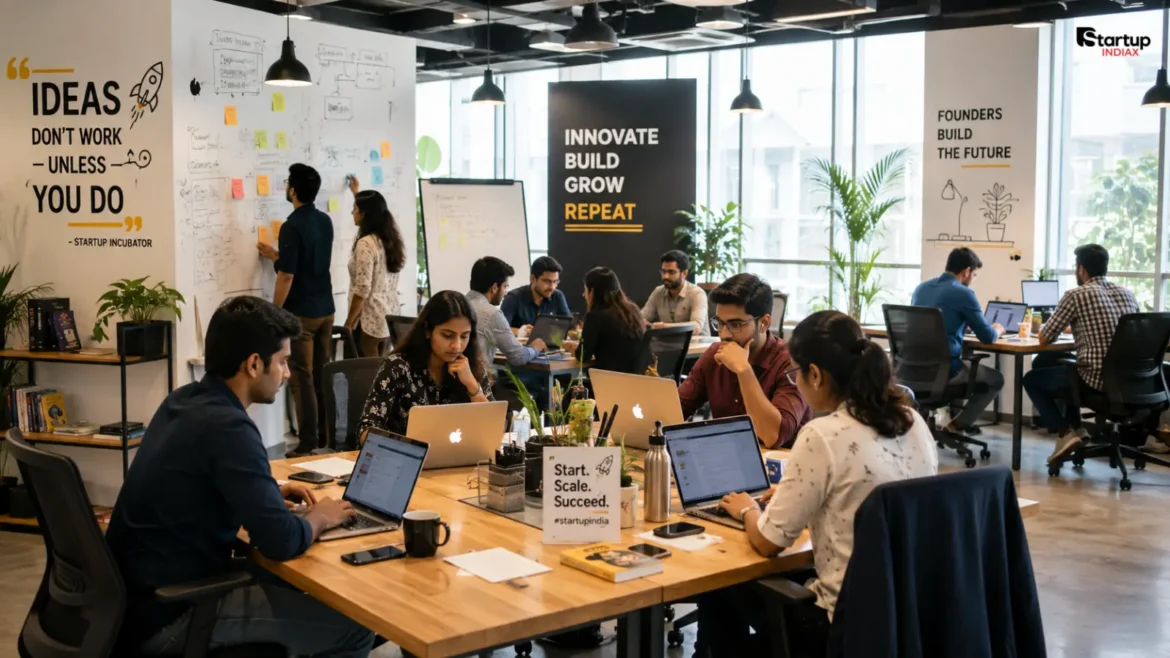
Founders working inside an Indian startup incubators space
Founder ToolkitStartup Learning

5 Startup Incubators That Built Skyroot, Ather Energy and Agnikul: And How to Pick Yours

A founder's guide to India's incubator ecosystem, and why the right fit matters more than the biggest name.
by Aalam Rohile August 21, 2026
3 min read

SUMMARY

  • India now runs more than 1,000 active incubators, so the real challenge for founders is fit, not access.
  • T-Hub built Skyroot Aerospace; IIT Madras Incubation Cell backed both Ather Energy and Agnikul Cosmos.
  • CIIE.CO, NSRCEL, and NASSCOM 10,000 Startups each specialise differently: pick based on stage, sector, and city, not prestige.

Startup Incubators That Built Skyroot, Ather Energy and Agnikul, India’s incubation network has grown fast. Research jointly released by IIT Madras’s CREST and IIM Bangalore’s NSRCEL found the country now has more than 1,000 active incubators, with Chennai alone holding the highest proportion of academic incubators at 82%. That is a very different problem from five years ago, when the question was simply whether an incubator would take you. Now it is which one actually moves your startup forward.

For early-stage Indian founders, that decision matters. Incubators are not interchangeable. A deep-tech hardware startup coming out of IIT Madras needs lab access and patient capital. A D2C brand in Tier 1 India needs mentorship, market access, and investor introductions. Picking based on brand name alone is how good founders end up in the wrong room.

Here’s a look at five incubators that have quietly built some of India’s most recognisable startups, and how to think about choosing between them.

T-Hub, Hyderabad: the one that built India’s first private rocket company

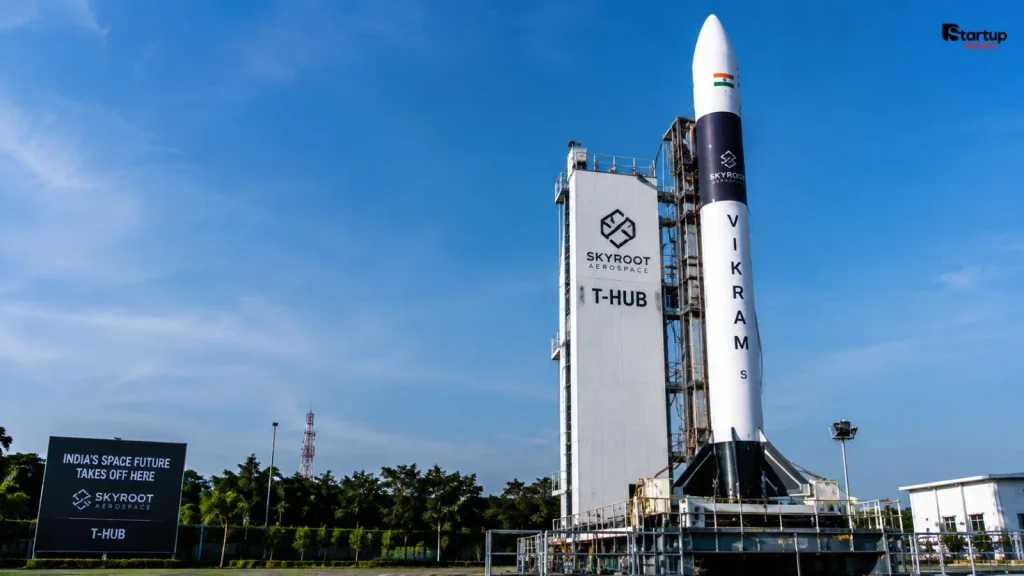
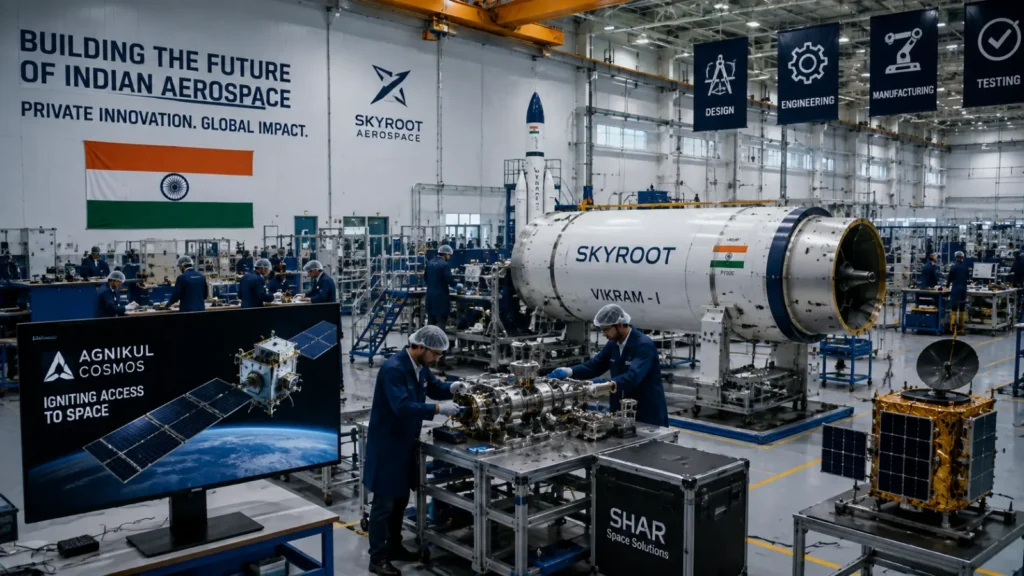
T-Hub launched in 2015 as a public-private partnership between the Telangana government, IIIT Hyderabad, the Indian School of Business, and NALSAR, following what became known as a triple-helix model bringing government, academia, and the private sector together. Its most striking portfolio story is Skyroot Aerospace. Skyroot was incubated in T-Hub and supported by T-Works, and became the first private Indian space-tech company to launch a suborbital rocket. That single relationship shows what T-Hub does well: giving deep-tech and hardware founders access to physical infrastructure and a government-backed innovation ecosystem that’s hard to replicate independently.

Skyroot Aerospace rocket, incubated at T-Hub Hyderabad

Through its AIC T-Hub Foundation arm, T-Hub also runs cohort-based programmes for research-stage founders. AIC T-Hub Foundation, a collaboration between T-Hub and the Atal Innovation Mission, continues to support startups across healthcare, mobility and EV, semiconductors, sustainability and spacetech, and its recent Lab2Market cohort was built specifically to help researchers turn lab innovation into market-ready ventures. (Reference – indiaai )

If you’re building hardware, deep tech, or anything that needs a government-linked ecosystem around it, T-Hub is worth a serious look.

IIT Madras Incubation Cell: the quiet force behind Ather and Agnikul

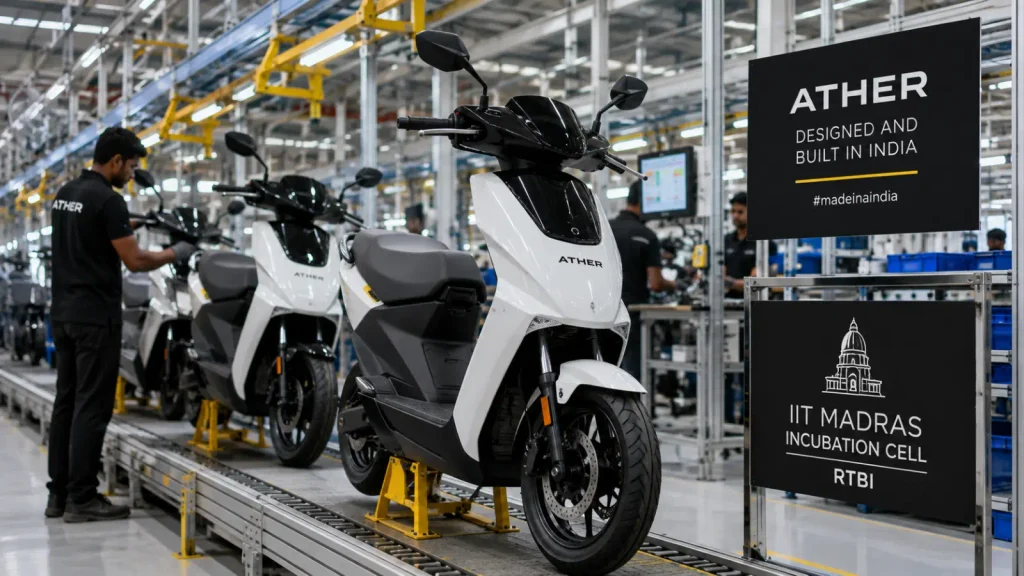
This one deserves more credit than it usually gets. Ather Energy’s founders Tarun Mehta and Swapnil Jain finished their B.Tech at IIT Madras in 2012, returned to build a prototype, and got incubated at the IIT Madras Incubation Cell before receiving early funding from the Technology Development Board and IIT-M alumnus Srini V Srinivasan. Ather has since gone public on the NSE.

Ather Energy electric scooter, incubated at IIT Madras Incubation Cell

Agnikul Cosmos, the space-tech company that built the world’s first rocket powered by a single-piece 3D-printed engine, is also based out of and incubated at IIT Madras, operating from the National Centre for Combustion Research and Development on campus. The Nirmaan programme run by the institute has supported 268 startup teams to date, with more than 45 having graduated and gone on to build meaningfully.

For deep-tech and engineering-first founders, especially those still in or near an academic research setting, this is one of the strongest technical ecosystems in the country.

CIIE.CO, IIM Ahmedabad: India’s oldest business incubator, still investing actively

CIIE.CO has been around since 2002, making it one of the earliest formal incubators in India, set up as a centre of excellence at IIM Ahmedabad with backing from the Department of Science and Technology and the Gujarat government. As of its most recent disclosed figures, it has accelerated nearly 1,000 startups, funded around 300, and mentored more than 5,000 founders across programmes like iAccelerator and the Bharat Inclusion Initiative. It now operates across five locations: Ahmedabad, Jaipur, Indore, Bengaluru, and Guwahati.

What sets CIIE.CO apart is its investment behaviour. It doesn’t just mentor, it writes cheques, including government-grant-backed seed funding through programmes like IIMavericks, which has funded agri-fintech ventures such as OneImpact Technologies. If your startup is business-model-first rather than deep-tech-first, and you want an incubator that also functions as an early investor, CIIE.CO fits that profile.

NSRCEL, IIM Bangalore: built for scale partnerships and social impact

NSRCEL runs one of India’s largest incubation portfolios by sheer volume, with over 600 investments tracked to date. What makes it distinct is its corporate partnership model. Its Velocity programme recently onboarded five startups from the fourth cohort of the Maruti Suzuki Incubation Programme, working on AI-based manufacturing inspection, IoT-enabled workplace safety, and EV logistics tech, a partnership run jointly with Maruti Suzuki.

NSRCEL also has a strong focus on tech-enabled social enterprises and women-led ventures, an emphasis fewer incubators prioritise as explicitly. If your startup can plug into a large corporate’s innovation pipeline, or if you’re building with social impact as a core thesis, NSRCEL’s partnership-driven model is worth exploring.

NASSCOM 10,000 Startups: the national-scale connector

NASSCOM 10,000 Startups isn’t a single physical incubator so much as a national platform. It connects founders with investors, accelerators, and co-working spaces, with facilities spread across Bengaluru, Noida, Gurugram, Kolkata, Mumbai, Chennai, Hyderabad, Pune, Kochi, and Vizag. It also links startups into MeitY-NASSCOM Centres of Excellence for IoT and AI, which matters if you’re building in enterprise tech and need structured use-case validation rather than just office space.

Because it’s less about one campus and more about national reach, NASSCOM 10,000 Startups tends to suit founders who are past the earliest prototype stage and need broad investor and ecosystem access across multiple Indian cities, not just one hub.

So which Startup Incubators one should you actually apply to?

Skip the instinct to apply everywhere. Indian incubator programmes typically receive between 500 and 2,000 applications per cohort, and a mismatched application gets filtered out fast, even when the underlying idea is good.

A rough way to think about it: T-Hub and IIT Madras Incubation Cell suit deep-tech and hardware founders who need lab infrastructure. CIIE.CO fits business-model-first founders wanting an incubator that also invests directly. NSRCEL works well if you can tap into a corporate partnership or you’re building with social impact at the core. NASSCOM 10,000 Startups makes sense once you’re ready to scale across multiple Indian markets rather than build in one city.

None of these are mutually exclusive with government support either. Most of these incubators run programmes linked to DPIIT recognition, and stacking that with the right incubator match is usually more useful than chasing the most famous name on the list.

Before you shortlist anywhere, it’s worth running your numbers and your pitch through StartupIndiaX’s Government Scheme Finder to check which DPIIT, MSME, and DST-linked schemes you already qualify for, since several incubators explicitly plug into these. And once you’re prepping your application, the Pitch Deck Structure Tool walks through exactly what Indian incubators and investors expect slide by slide.

FAQs

What’s the difference between an incubator and an accelerator in India?

Incubators typically support earlier-stage, research-heavy startups over longer timelines with lab access and technical mentorship. Accelerators run shorter, faster cohorts of three to six months focused on rapid growth and demo-day fundraising.

Do I need to be an IIT or IIM student to join their incubators?

No. Most of these programmes, including CIIE.CO, NSRCEL, and IIT Madras Incubation Cell, accept external founders, not just alumni or current students, though some cohorts prioritise applicants connected to the institution.

Can I apply to more than one incubator at the same time?

Yes, there’s no rule against it, but tailoring each application to that incubator’s actual focus area matters more than applying broadly. Generic applications are usually the ones that get filtered out early.

Do these incubators take equity?

It varies. Some, like CIIE.CO, offer both grant-based and equity-based funding depending on the programme. Others function purely as mentorship and infrastructure providers without taking a stake. Always check the specific programme’s terms before applying.

Is NASSCOM 10,000 Startups a physical location I can visit?

Not exactly. It’s a national platform with incubation facilities across ten Indian cities rather than one central campus, so its structure works differently from a single-site incubator like T-Hub or CIIE.CO.

August 21, 2026 0 comments 154 views
FacebookTwitterLinkedinWhatsapp
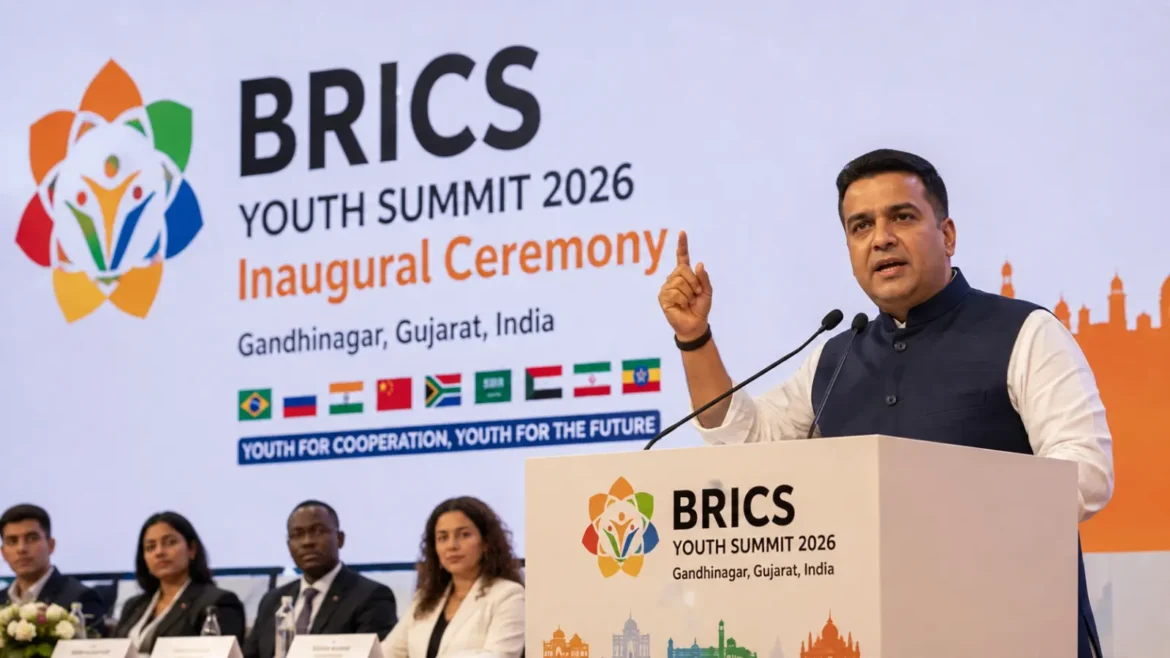
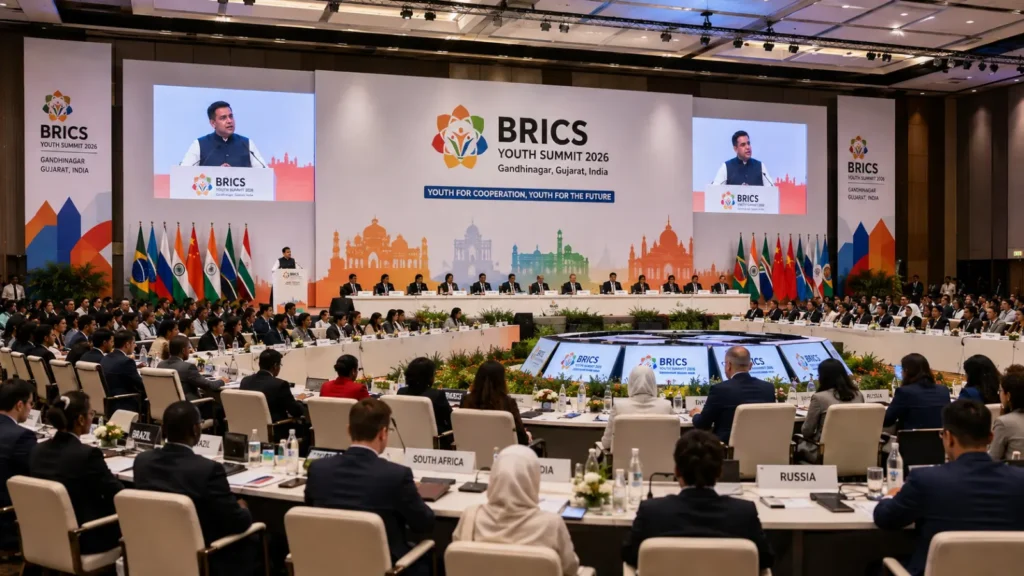
Gujarat Deputy CM Harsh Sanghavi speaks at BRICS Youth Summit 2026 in Gandhinagar on Innovation Fund for Entrepreneurs
News

Gujarat’s New Innovation Fund for Entrepreneurs Just Got ₹1,000 Crore. Here’s What We Know

Announced at the BRICS Youth Summit in Gandhinagar, the fund is open to young entrepreneurs from India and abroad, though implementation details are still to come
by Aalam Rohile August 20, 2026
3 min read

Summary

  • Gujarat has allocated a ₹1,000 crore innovation fund for young entrepreneurs under its new STI Policy 2026-31.
  • The fund is open to founders from India and abroad, announced by Deputy CM Harsh Sanghavi at the BRICS Youth Summit.
  • Eligibility, disbursal structure, and application process haven’t been detailed yet; treat specifics as developing.

Gujarat just put a number on its ambitions for young founders, and it’s a big one. At the opening of the BRICS Youth Summit in Gandhinagar on Wednesday, Deputy Chief Minister Harsh Sanghavi announced that the state has set aside ₹1,000 crore for an innovation fund aimed at young entrepreneurs, under a new policy called the Gujarat STI Policy 2026-31.

The headline detail that’ll matter most to founders outside Gujarat, and outside India entirely: Sanghavi said the fund would be available to young entrepreneurs from India and abroad. That’s a notable widening of scope for a state-level scheme, most of which stay firmly domestic in who they’ll write cheques to.

This Gujarat innovation fund for entrepreneurs didn’t arrive in isolation. It’s part of a broader pitch Sanghavi made to the youth delegates gathered in Gandhinagar this week, framing Gujarat’s own arc, from the charkha to GIFT City, from semiconductors to space tech, as proof the state can back big bets on young people and follow through.

The context: why BRICS, why now

The BRICS Youth Summit and BRICS Youth Council opened in Gandhinagar on August 19, with Sanghavi as chief guest. He pointed out that BRICS nations together account for roughly 49.5% of the world’s population and about 40% of global GDP, with more than half of that population under 35. It’s the kind of framing state governments like to use when they want an entrepreneurship announcement to land as more than a local press release: this is Gujarat positioning itself in front of a global youth audience, not just a domestic one.

Youth delegates at BRICS Youth Summit Gandhinagar August 2026

The summit also saw the launch of the ‘Friends of My Bharat’ portal and a ‘Digital Compendium of Volunteering Practices,’ with Union Minister of State for Youth Affairs and Sports Raksha Khadse also addressing delegates. Sanghavi used the moment to cite Gujarat’s renewable energy capacity, now past 33.39 GW, as part of a wider case for the state’s development credentials.

Read More: Startup India Seed Fund Scheme Incubators: How to Apply Now

What’s still unclear

Here’s where founders should pump the brakes a little. Beyond “₹1,000 crore allocated” and “open to India and abroad,” none of the coverage from the summit goes into how the fund will actually work. There’s no confirmed detail yet on:

  • Eligibility criteria (age caps, sector focus, residency requirements for overseas applicants)
  • Disbursal mechanism (grants, equity co-investment, loans, or a mix)
  • Application process or timelines
  • Whether it routes through an existing body like iCreate, GUJCOST, or a new administrative structure

This is a state government announcement made at a summit stage, not a formal scheme document release. Until Gujarat’s Science and Technology department or DPIIT publishes implementation guidelines, the specifics stay a developing story. Founders excited about the number should hold off on assuming they know how to apply.

If you want to keep tabs on this alongside the 30+ other central and state schemes already live, StartupIndiaX’s Government Scheme Finder is a decent place to bookmark and check back on as Gujarat’s guidelines drop.

Why it matters for founders

Gujarat has spent the last few years building a reputation as a state willing to put money behind policy, from its SpaceTech Policy to its long-running Student Startup and Innovation Policy that’s already helped push the state’s startup count into five figures. A ₹1,000 crore innovation fund, even before the fine print lands, adds another entry to that list, and one explicitly framed around youth and international reach rather than just domestic MSMEs.

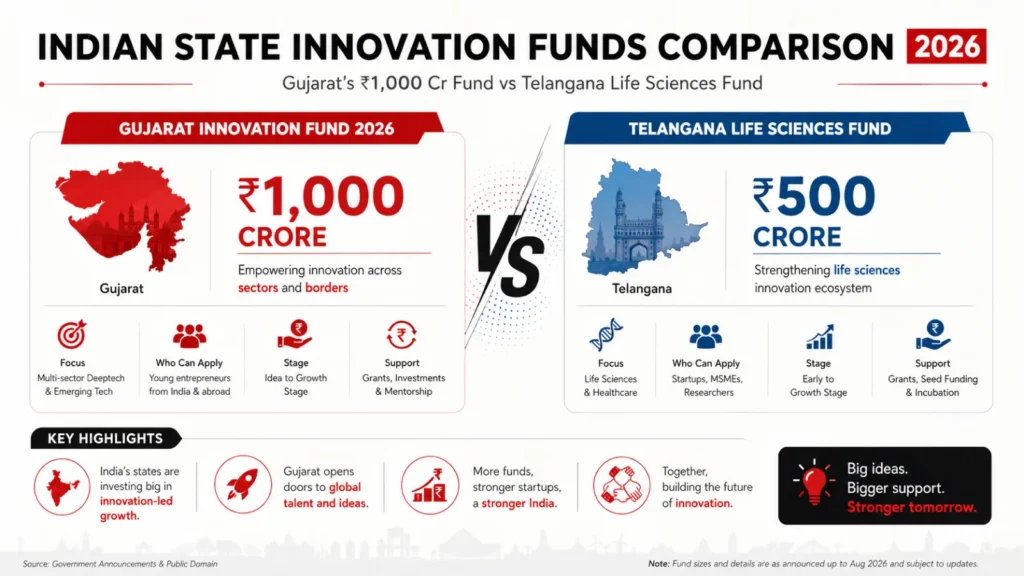
Comparison of Indian state innovation funds 2026

For comparison, Telangana rolled out a Life Sciences Innovation Fund earlier this year starting at a ₹100 crore corpus scalable to ₹1,000 crore, co-investing with venture capital and private equity. Gujarat’s fund, by contrast, launches with the full ₹1,000 crore figure attached from day one, at least on paper. Whether that capital is deployed as fast as it was announced will be the real test.

If you’re a young founder, in Gujarat, elsewhere in India, or abroad, this is worth bookmarking rather than acting on immediately. The state has put a real number and a real policy name behind the intent. What happens next, how you apply, what sectors get priority, whether “young” means under 35 or something else, is the part that’ll actually determine if this becomes a meaningful funding door or another announcement that fades into the policy archive.

One thing worth doing now regardless: if you’re planning to be first in line once applications open, having your pitch materials ready helps. StartupIndiaX’s Pitch Deck Structure Tool walks through what Indian investors and government evaluators typically expect to see.

We’ll track the Gujarat STI Policy 2026-31 as implementation details emerge. If you’ve got firsthand information on how the fund is structured, drop it in the comments, StartupIndiaX readers are often the fastest way stories like this get filled in.

FAQs

What is the Gujarat innovation fund for entrepreneurs?

It’s a ₹1,000 crore fund announced under the Gujarat STI Policy 2026-31, meant to support young entrepreneurs. Deputy CM Harsh Sanghavi announced it at the BRICS Youth Summit in Gandhinagar on August 19, 2026.

Who is eligible to apply for the fund?

Sanghavi said the fund would be available to young entrepreneurs from India and abroad, but detailed eligibility criteria like age limits or sector focus haven’t been published yet.

When was the fund announced?

It was announced on August 19, 2026, at the inaugural ceremony of the BRICS Youth Summit and BRICS Youth Council in Gandhinagar.

Is this fund already operational?

Not confirmed yet. The announcement covered the allocation and broad eligibility, but the application process, disbursal structure, and administering body haven’t been detailed publicly.

How does this compare to other state innovation funds in India?

It’s larger at announcement than most state-level equivalents, comparable in scale to Telangana’s Life Sciences Innovation Fund, which scales up to ₹1,000 crore over time rather than starting there.

Where can founders find more government schemes like this?

StartupIndiaX’s Government Scheme Finder tracks 30+ central and state schemes by sector and stage, worth checking as this fund’s guidelines get published.

August 20, 2026 0 comments 113 views
FacebookTwitterLinkedinWhatsapp
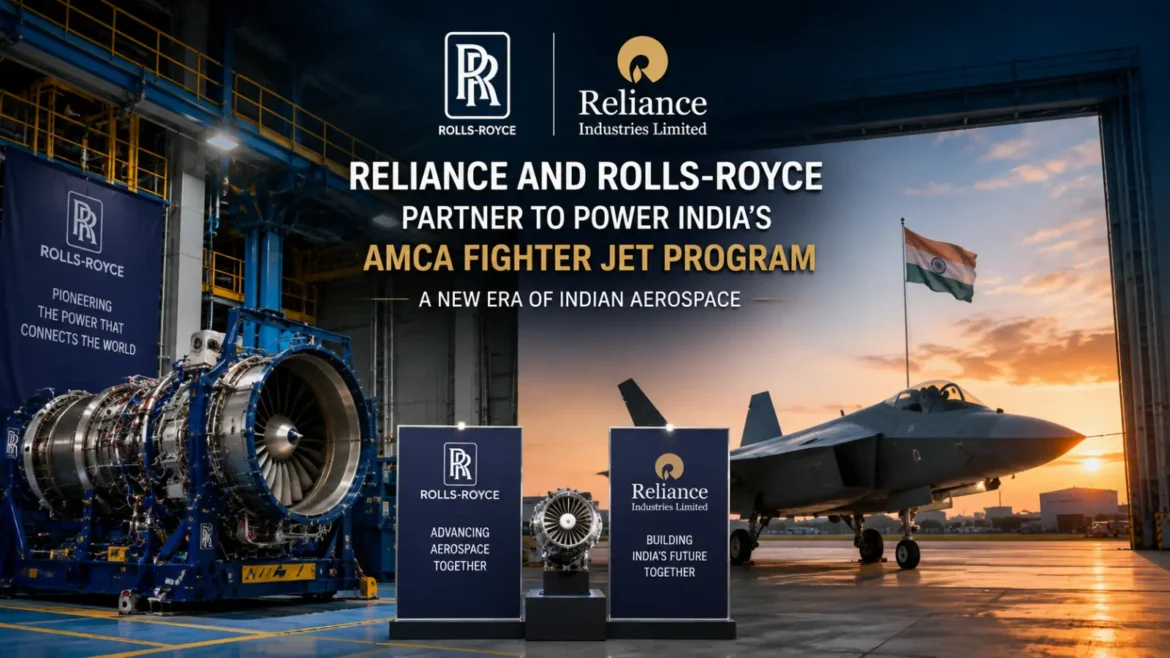
Reliance Rolls-Royce AMCA Engine Partnership announcement
NewsAI & DeepTechTechnology

Reliance Rolls-Royce AMCA Engine Partnership: Can Ambani’s Bet Beat Safran to India’s Fighter Jet Race?

Reliance and Rolls-Royce want to build India's next fighter engine, but they're walking in just as a rival French deal looks ready to land.
by Aalam Rohile August 19, 2026
3 min read

Summary

  • Reliance and Rolls-Royce announced strategic intent on August 14 to co-develop a sovereign engine for India’s AMCA fighter jet.
  • The move lands right as a rival Safran-GTRE engine deal, reportedly worth around ₹61,000 crore, awaits final Cabinet Committee on Security clearance.
  • For Indian founders, the real signal isn’t the engine, it’s private capital entering a defence supply chain that’s opening up fast.

India has wanted a homegrown fighter jet engine for decades. It still doesn’t have one.

What it has now, instead, is a fight over who gets to build it.

On August 14, Reliance Industries and Rolls-Royce announced the Reliance Rolls-Royce AMCA engine partnership, a strategic intent to co-develop a sovereign combat engine for India’s Advanced Medium Combat Aircraft.

As part of the deal, the two companies also said they’ll explore setting up an Aerospace Gas Turbine Complex in India. The facility would handle engine development, manufacturing, testing and long-term maintenance under one roof.

Anant Ambani, executive director at Reliance, framed it as a sovereignty play. He said the intent is to combine Rolls-Royce’s advanced propulsion expertise with Reliance’s manufacturing scale to build an indigenous aero-engine ecosystem in India.

Rolls-Royce CEO Tufan Erginbilgiç called it the start of a “robust, self-reliant aerospace ecosystem” in the country.

That’s the press-release version. The timing tells a sharper story.

The deal the Reliance Rolls-Royce AMCA engine partnership is actually competing with

For most of this year, the AMCA engine story hasn’t been about Reliance or Rolls-Royce at all. It’s been about Safran.

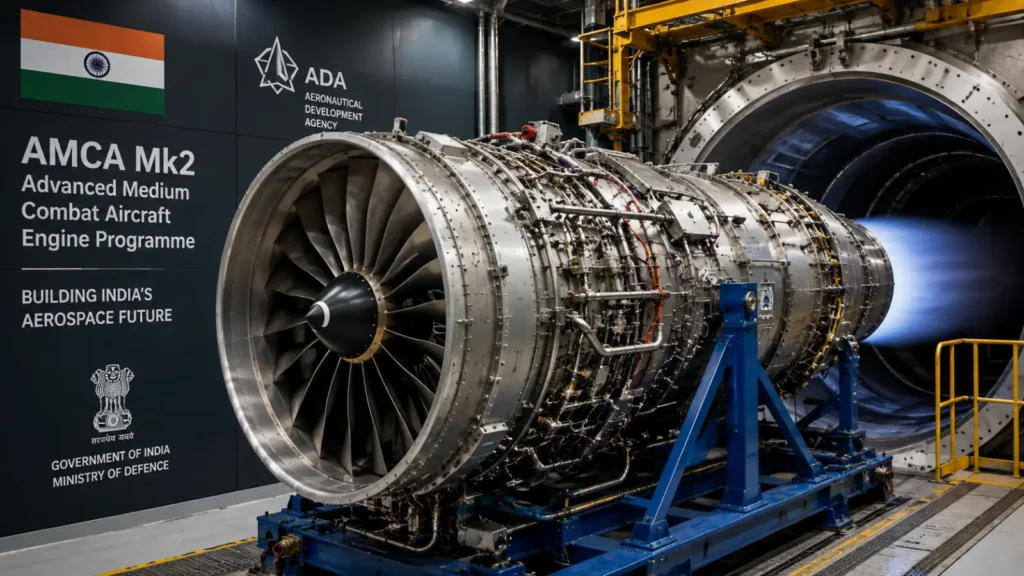
Safran and India’s Gas Turbine Research Establishment, part of DRDO, submitted their proposal for a joint AMCA Mk2 engine to the Cabinet Committee on Security in early August. Approval was expected before August 15.

Reports described a 120 kN engine with an uprated 140 kN version to follow, nine prototypes, and full Indian IP ownership. Some reports have pegged the programme’s value at roughly ₹61,000 crore (about $7 billion), with a complete transfer of technology built into the terms.

Turbofan engine representing Indias AMCA Mk2 fighter engine programme (Reliance Rolls-Royce AMCA Engine Partnership Can Ambani Bet Beat Safran to India Fighter Jet

This isn’t a fresh contest, either. Defence Minister Rajnath Singh had already named Safran as India’s chosen partner back in August 2025, after a competitive process that also considered GE Aerospace and Rolls-Royce. For a while, it looked settled.

It wasn’t. ThePrint reported in June 2026 that Rolls-Royce had made a final pitch: a core test in 2030, first flight in 2034, production by 2036, full technology transfer, and IP staying in India. A contract signature was required by the end of 2026. The contest, ThePrint said, had narrowed to two firms.

Times of India reported in July that both Rolls-Royce and Safran had submitted final financial proposals.

So when Reliance and Rolls-Royce went public on August 14, right after reports of the Safran deal nearing Cabinet clearance, it read less like a fresh announcement and more like a counter-move. Bringing in Reliance gives Rolls-Royce something it didn’t have on its own: a large, cash-rich Indian industrial partner to anchor the “Make in India” argument that Safran’s DRDO tie-up already had built in.

Worth being clear about what this is, and isn’t. The Reliance Rolls-Royce AMCA engine partnership is a statement of intent, not a signed contract. It isn’t confirmation that India has picked a second engine partner. The Safran-GTRE track remains the one furthest along in the government process.

Read More: Skyroot Aerospace Set to Launch India’s First Private Rocket

Why India needs this fight to happen at all

The AMCA programme is India’s push toward a fifth-generation, twin-engine stealth fighter.

The early Mark-1 jets will fly on American GE F414 engines, a stopgap. India still needs a more powerful, fully indigenous option for the more capable Mark-2 variant.

That’s the harder problem. India has tried to build an indigenous fighter engine before, through DRDO’s Kaveri programme, and hasn’t gotten it to the thrust class a modern fighter needs.

In February 2026, Rajnath Singh witnessed a successful full afterburner test of an updated Kaveri configuration. GTRE is advancing toward flight trials of an afterburning variant, potentially in the 73 kN range, scaling toward 80-85 kN with a new afterburner module.

That’s meaningful progress. It’s still well short of the 110-130 kN class the Mk2 needs. Hence the search for a foreign partner willing to hand over real technology, not just assembly work.

India’s negotiating position has been unusually firm on one point: whoever wins, the intellectual property has to sit entirely with India. No right for the foreign partner to reuse the jointly developed engine architecture elsewhere. That’s a tougher ask than most defence ToT deals, and it’s part of why this has dragged on so long.

Rolls-Royce isn’t new to trying. British officials were pitching Rolls-Royce’s jet-engine technology to India as far back as 2023, framing it as part of a broader UK defence supply-chain shift toward Indian industry.

Reliance, for its part, already has a footprint in aviation and defence manufacturing through its group companies. That makes it a more credible industrial partner than a pure financial investor would be.

Read More: Awais Ahmed Pixxel: Karnataka Village to ₹900 Cr Space Firm

What the Reliance Rolls-Royce AMCA engine partnership means for founders

Skip the jet engine specs for a second. The more interesting story for India’s startup and investor community is what a deal like this signals about where private capital is now willing to go.

Strategic, capital-intensive, historically state-dominated sectors like defence propulsion have been mostly closed to private Indian companies. A conglomerate the size of Reliance publicly chasing a piece of that, alongside a legacy aerospace giant, is a marker.

India's private aerospace and deeptech manufacturing ecosystem

Big domestic capital is now comfortable entering multi-decade, high-capex bets in critical technology. Not just software and consumer internet.

That matters down the supply chain too. Whichever engine programme eventually wins Cabinet approval, projects at this scale don’t get built by two companies alone. They pull in precision manufacturing vendors, materials and alloy specialists, testing and calibration firms, and MRO providers.

Indian aerospace and deeptech founders have already shown they can compete here. Hyderabad-based Skyroot Aerospace and Bengaluru’s Pixxel are proof that private Indian space and aerospace ventures can raise serious capital and execute on hard engineering.

A national engine programme, run by either Safran-GTRE or a Reliance-Rolls-Royce combination, widens that opportunity considerably. From component sourcing to specialised testing infrastructure.

There’s a policy signal in here too. Commerce Minister Piyush Goyal has repeatedly said he expects India to become a preferred global supplier in defence and aerospace, pointing to the design and innovation already happening through global capability centres in the country. Deals like this one are the kind of evidence that claim needs.

Read More: Pawan Kumar Chandana: From 51 in Maths to India’s Largest Rocket Factory

What happens next

The near-term marker to watch is whether the Safran-GTRE deal actually clears the Cabinet Committee on Security.

If it does, the Reliance Rolls-Royce AMCA engine partnership may end up shaping India’s broader aerospace manufacturing base rather than the AMCA Mk2 engine specifically. Still a meaningful outcome, just not the headline one.

If the Safran deal slips further, the door stays open for a second act.

Either way, this is the first time two credible options, backed by serious industrial muscle, have been on the table for India’s sovereign fighter engine at the same time. That’s new.

And it’s a reminder that “self-reliance” in defence tech, in practice, is being built through exactly this kind of competitive tension, not despite it.

FAQs

What is the Reliance-Rolls-Royce AMCA engine partnership?

It’s a strategic intent, announced on August 14, 2026, for Reliance and Rolls-Royce to jointly explore developing a sovereign engine for India’s AMCA fighter jet, along with a shared Aerospace Gas Turbine Complex in India.

Has India already picked an engine partner for the AMCA?

Not finally. A separate Safran-GTRE deal for the AMCA Mk2 engine was reported to be nearing Cabinet Committee on Security approval around mid-August 2026, but as of this writing that approval hadn’t been officially confirmed.

Why does the AMCA need a new engine at all?

The AMCA Mark-1 will fly on American GE F414 engines as an interim measure. The more capable Mark-2 variant needs a new 110-130 kN class turbofan that doesn’t exist yet, either from DRDO’s Kaveri programme or a foreign co-development deal.

How much is the rival Safran engine deal reportedly worth?

Various reports have put the Safran-GTRE programme’s value at roughly ₹61,000 crore (around $7 billion), including a full transfer of technology and Indian ownership of the resulting intellectual property.

Why does this matter for Indian startups, not just Reliance and Rolls-Royce?

Programmes at this scale build out a domestic supply chain, precision manufacturing, materials, testing, and MRO, that smaller Indian aerospace and deeptech companies can plug into, beyond the two companies actually building the engine.

August 19, 2026 0 comments 154 views
FacebookTwitterLinkedinWhatsapp
Person dictating text into a laptop using Wispr Flow voice AI software
AI & DeepTechFundingNews

Peak XV, Together Fund Join $280M Round as Wispr Flow Hits $2B Voice AI Valuation

Two India-rooted VCs just placed a serious bet on a Silicon Valley voice AI company, and it says as much about where Indian capital is headed as it does about Wispr Flow itself.
by Aalam Rohile August 18, 2026
3 min read

Summary

  • Wispr Flow raised $280 million in a Series B led by Menlo Ventures, valuing the AI voice dictation startup at $2 billion.
  • Peak XV Partners and Together Fund, both Bangalore-headquartered, joined as new investors alongside Acrew, Forerunner, Goodwater and PLUS Capital.
  • The round came just six months after Wispr’s oversubscribed Series A2, taking total funding to $361 million.

Wispr Flow just became a lot more interesting to Indian founders, and not because it’s an Indian company. It isn’t. The San Francisco-based voice AI startup announced on Monday that it has raised $280 million in Series B funding at a $2 billion valuation, led by Menlo Ventures. What caught our attention is who else showed up on the cap table: Peak XV Partners and Together Fund, two venture firms with deep India roots, both writing checks into a US voice-to-text company for the first time.

That’s the real story here. Not just another AI unicorn minted in six months (though that happened too), but a signal of how far Indian-origin capital is now willing to travel to chase the AI wave.

What actually happened

Menlo Ventures led the round, joined by existing backers Notable Capital, NEA, Neo Ventures, 8VC and MVP Ventures. The new names are the ones worth sitting with: Acrew, Forerunner, Goodwater, Peak XV, Together Fund and PLUS Capital. A separate group of athletes and cultural figures, including NBA players Domantas Sabonis, Klay Thompson and Paul George, plus NFL stars Dak Prescott and Joe Burrow, also put money in.

Wispr Flow funding and valuation timeline from 2024 to 2026

The pace is what stands out. Wispr Flow raised $25 million in November at roughly a $700 million post-money valuation, according to TechCrunch. Less than a year later, it’s at $2 billion. That’s nearly a 3x jump in under 12 months, on the back of a product that, on the surface, does one thing: turn speech into clean, formatted text.

Read More : Sarvam AI’s Indus Just Went Live Inside the Maharashtra Government, Here’s What ₹11.26 Crore Buys

Why investors are convinced this isn’t just dictation software

Wispr’s flagship product, Flow, lets people speak into any text field and get grammatically clean prose out the other end, filler words and stumbles removed. The company says users have generated more than 60 billion words through the app, and that Flow is now used across more than 125,000 companies, reaching nearly all of the Fortune 500.

Menlo Ventures pointed out something founders will recognize instantly: Flow spread across much of the Fortune 500 before Wispr had built a real sales team. That’s organic pull, not a push from an enterprise sales org, and it’s exactly the kind of traction that gets a $2 billion valuation attached to a company with a fairly narrow starting product.

Wispr also used the announcement to unveil Canto, its first proprietary speech-recognition model, built specifically for noisy, real-world conditions rather than the quiet test environments most voice models are trained on. CEO Tanay Kothari said error rates in tough conditions, background noise, accents, wind, fall from more than 30% to somewhere between 5% and 10% with Canto. The company has also stood up the Wispr Advanced Interfaces Lab, led by chief scientist Ariya Rastrow, a founding member of Amazon’s Alexa team.

Read More : Cars24 Launches Deployment Inc, a $5 Million AI Startup Built From Its Own Operations

Why Peak XV and Together Fund matter here

Peak XV Partners, formerly Sequoia Capital India & Southeast Asia, split into an independent firm in 2023 and has been steadily building out an AI-focused thesis, including a run of five new AI startup bets earlier this year. Together Fund is smaller and more specialized: founded in 2021 by Freshworks’ Girish Mathrubootham and Eka Software’s Manav Garg, it’s built specifically around the US-India corridor, backing AI-native companies with India-linked talent or founders selling into global markets.

Neither firm has historically been known for large-check bets on a US consumer-facing voice product with no obvious India angle in its founding team or customer base. That’s what makes their presence in this round notable. It fits a pattern we’ve been tracking: Indian VCs increasingly want exposure to category-defining AI companies, wherever they’re headquartered, rather than restricting themselves to India-first deals.

For Indian founders watching this, the takeaway isn’t “go build a voice AI startup.” It’s that the firms writing your term sheets are now actively comparing your traction curve against global benchmarks like Wispr’s, whether they say so explicitly or not. A four-quarter streak of 150%+ revenue growth and organic Fortune 500 adoption is the bar being set globally, and Indian VCs are now chasing that bar outside India too.

Read More : What Is Temple Wearable by Deepinder Goyal?

What’s still developing

Wispr hasn’t disclosed a specific timeline for further product expansion beyond meeting transcription (following its recent Notetaker launch), and the company hasn’t detailed how the new capital splits between hiring, infrastructure and the Canto model rollout. We’ll treat those specifics as unconfirmed until Wispr shares more.

Whether Peak XV and Together Fund’s involvement here becomes a one-off or the start of a broader pattern of Indian VCs backing global voice and AI infrastructure plays is worth watching over the next few quarters, especially as both firms continue deploying fresh AI-focused capital.

Read More : Tsenta: Indian Students’ AI Job Startup Bags ₹5 Cr From YC

What’s clear right now: a $2 billion valuation, a six-month gap between rounds, and two Bangalore-headquartered VCs on the cap table of a Silicon Valley voice AI company. That combination alone is worth a founder’s attention, whatever sector you’re building in.

FAQs

What is Wispr Flow?

Wispr Flow is an AI-powered voice dictation app that converts spoken language into clean, formatted text across apps like email, documents and messaging, removing filler words and correcting grammar automatically.

How much did Wispr Flow raise and at what valuation?

Wispr Flow raised $280 million in a Series B round led by Menlo Ventures, valuing the company at $2 billion. Total funding to date stands at $361 million.

Why are Peak XV Partners and Together Fund investing in a US company?

Both are India-headquartered VC firms with growing AI investment theses. Their participation reflects a broader trend of Indian venture capital seeking exposure to global AI leaders, not just India-first startups.

What is Canto, the model Wispr Flow just launched?

Canto is Wispr’s first proprietary speech-recognition model, built to handle noisy, real-world conditions like background noise and accents, cutting error rates from over 30% down to roughly 5-10%.

How fast has Wispr Flow grown in valuation?

The company went from a roughly $700 million valuation in November to $2 billion in August, a jump driven by four consecutive quarters of over 150% revenue growth.

August 18, 2026 0 comments 178 views
FacebookTwitterLinkedinWhatsapp
Newer Posts
Older Posts

Follow Us

Facebook Twitter Instagram

Recent Posts

  • Indian Startup News This Week: Simple Energy’s ₹1,750 Crore Round, AceVector’s IPO and 5 More Stories (Sep 28 to Oct 4)

  • Deepinder Goyal’s Temple Is Coming in 6 Colours, and Pre-Orders Could Open Next Week

  • Simple Energy Raises Rs 1,750 Crore: Why Thyrocare’s Velumani Is Betting Big on EV Scooters

  • WhatsApp Parental Controls for Teens in India: What the PIN Lock Does and How to Set It Up

  • What September Taught Us About India’s Startup Ecosystem in 2026

Newsletter

Subscribe our newsletter for latest news. Let's stay updated!

Categories

  • Advertising (2)
  • Agritech (3)
  • AI & DeepTech (120)
  • AI Tools (18)
  • Automobile (16)
  • Beauty & Wellness (3)
  • Bootstrapped Wins (3)
  • Crowdfunding Hub (1)
  • Debt Financing (2)
  • Ecom (12)
  • EV (36)
  • Failure Lessons (1)
  • Fashion & Lifestyle (8)
  • Finance (37)
  • Fintech (11)
  • FoodTech (6)
  • Founder Story (7)
  • Founder Toolkit (7)
  • Funding (49)
  • Government Schemes (14)
  • Green Energy (10)
  • HealthTech (9)
  • Investor Directory (1)
  • News (235)
  • Politics (12)
  • Real Estate (1)
  • Science (13)
  • Startup (152)
  • Startup Learning (24)
  • Startup Stories (29)
  • Technology (118)
  • Unicorn Journeys (5)
  • Women Entrepreneurs (11)

About Us

India’s independent startup media for founders, investors and ecosystem builders.

Facebook Instagram Twitter Linkedin

Explore

  • News
  • Startup Stories
  • Funding
  • Sectors

Free Tools

  • Valuation Calc
  • Pitch Deck Builder
  • Runway Calc
  • VC Database

Company

  • About Us
  • Contact
  • Careers
  • Advertise

© 2026 StartupIndiaX. All rights reserved.

  • Privacy Policy
  • Disclaimer
  • Terms
startupindiax.com
  • Home
  • News
  • Startup Stories
  • Funding
  • Founder Toolkit
    • Startup Valuation Calculator
    • Startup Runway Calculator
    • Indian VC & Investor Database
    • Co-founder Equity Split Calculator
    • Government Scheme Finderfor Indian Startups
    • Pitch Deck Structure Tool
    • Market Size Calculator TAM · SAM · SOM
    • Find the perfect startup name
    • Funding Round Dilution Calculator
  • Sectors
    • Agritech
    • AI & DeepTech
    • Fintech
    • Green Energy
    • HealthTech
    • EV
    • Digital
    • Automobile