Summary
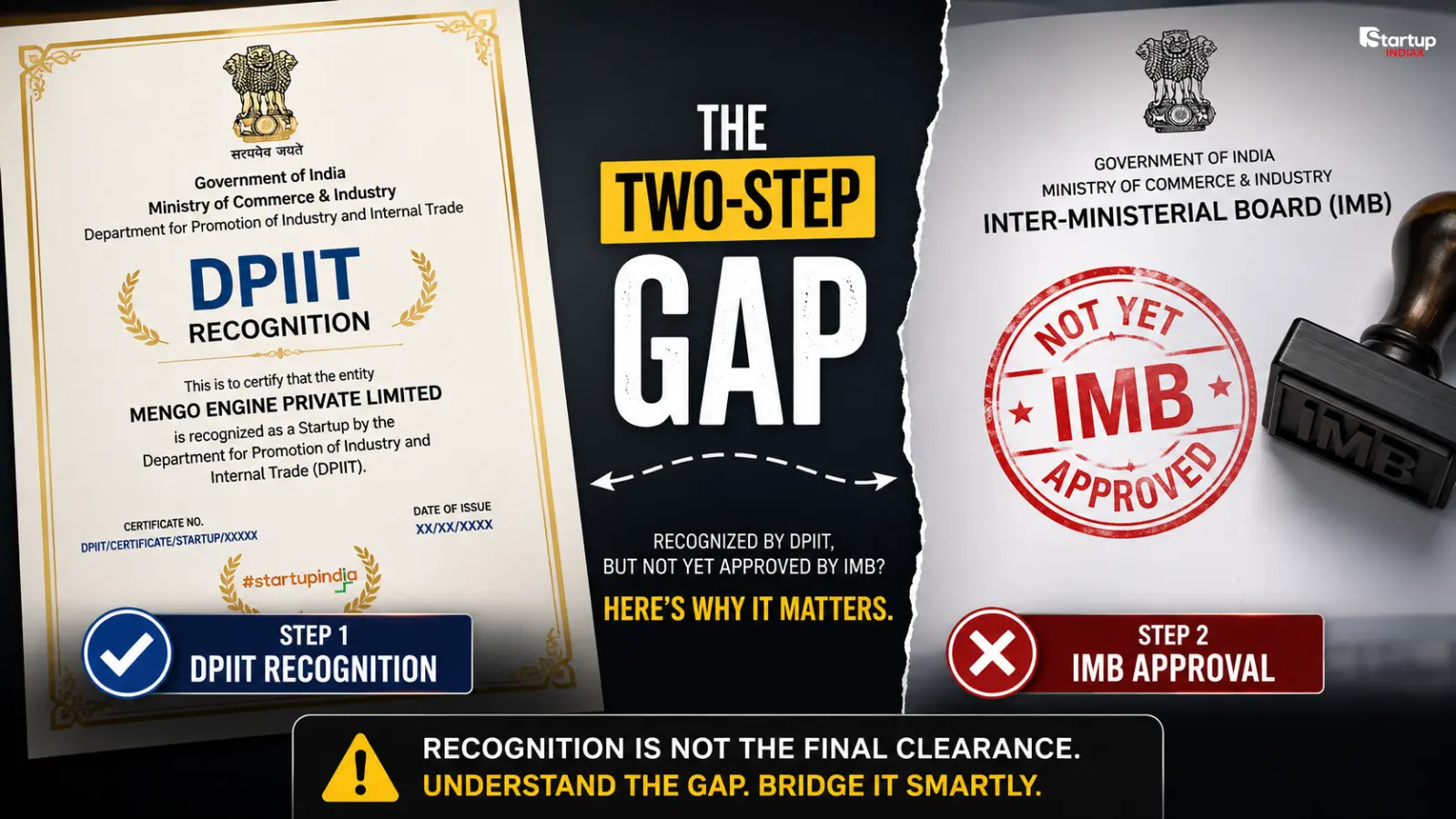
- DPIIT recognition alone does not unlock Section 80-IAC. A separate IMB certificate via Form 80-IAC is mandatory.
- Only startups incorporated as Pvt Ltd or LLP, with turnover under ₹100 crore, qualify for the three-year, 100% profit exemption.
- Choosing the 22% concessional tax rate under Section 115BAA permanently blocks eligibility for 80-IAC, so compare both paths before electing.
Every founder who registers with DPIIT hears the same pitch. Three years, zero tax on profits.
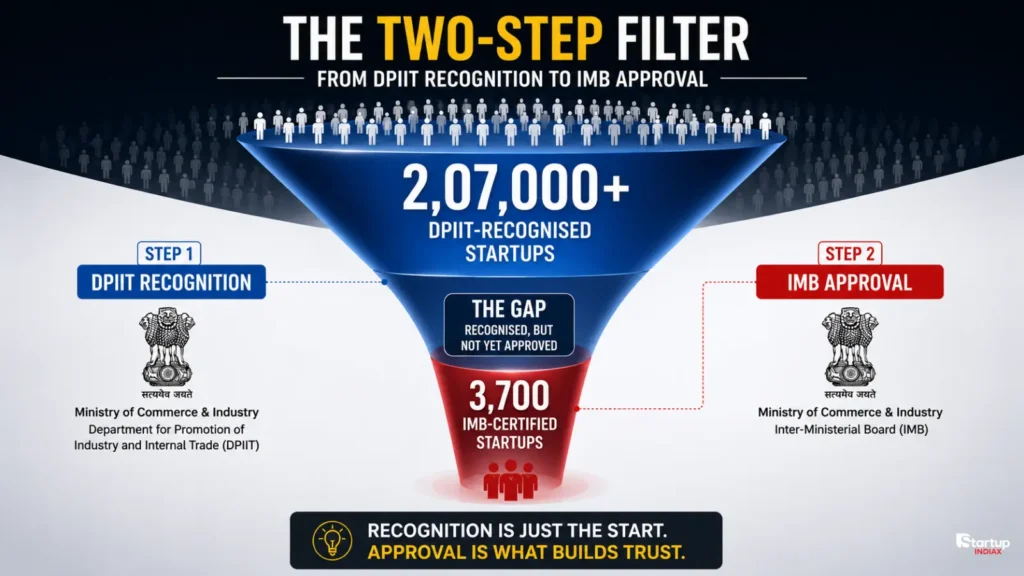
What most don’t hear is that DPIIT recognition alone gets you nothing. Over 3,700 startups have received the Section 80-IAC exemption since the programme began. That’s out of more than 2,07,000 DPIIT-recognised startups, an approval rate of roughly 1.8 percent.
The gap between recognition and the actual tax benefit is where most founders quietly leave money on the table.
What Section 80-IAC Actually Gives You
Section 80-IAC of the Income Tax Act was introduced on April 1, 2017, as part of the Startup India initiative.
It offers eligible startups a 100% deduction on profits. This applies for any three consecutive assessment years within their first ten years of incorporation.
You don’t have to claim the exemption in years one, two, and three. You can wait and pick the three most profitable years within that ten-year window.
For a startup earning ₹50 lakh in annual profit at a 25% tax rate, three years of exemption can mean roughly ₹37.5 lakh saved. Timed right, that’s real runway.
If you haven’t secured DPIIT recognition yet, that’s the step before any of this applies.
Read More: How to Apply for Startup India Certificate in 5 Easy Steps
Who’s Actually Eligible
The eligibility criteria are stricter than most founders assume.
Entity type: Only Private Limited Companies and LLPs qualify. Partnership firms can get DPIIT recognition but cannot claim 80-IAC. Sole proprietorships and OPCs are excluded entirely.
Incorporation window: The startup must be incorporated between April 1, 2016 and April 1, 2030. This deadline was extended from April 1, 2025 in the Union Budget 2025-26.
Turnover cap: Annual turnover cannot exceed ₹100 crore in any financial year since incorporation. This applies to total business turnover, not just the qualifying segment.
Innovation test: The startup must be working on innovation, product improvement, or a scalable model with real employment or wealth creation potential.
No recycled businesses: The startup cannot be formed by splitting or reconstructing an existing business, or by transferring previously used plant or machinery into a “new” entity.
Meeting these boxes gets you DPIIT recognition. It does not get you the tax exemption.
Read More: 7 DPIIT Recognition Mistakes That Get Founders Rejected and How to Fix Them
The Real Gate: IMB Certification
This is the part most guides skip past.
After DPIIT recognition, a startup has to separately apply for certification from the Inter-Ministerial Board, known as the IMB. This happens by filing Form 80-IAC on the Startup India portal.
The IMB doesn’t just check boxes. It evaluates the depth of your innovation, your scalability, and your economic contribution.
You’ll need shareholding patterns, board resolutions, audited financial statements, and income tax returns for every year since incorporation. A pitch deck that actually explains what makes the business different matters too.
Founders regularly get rejected here for one recurring reason. They describe their product in generic terms instead of demonstrating a specific technical or business innovation.
One recurring pattern from IMB decisions involves applications rejected on the first attempt for insufficient differentiation. On resubmission, once the applicant documented the specific technical architecture behind their product, the exemption was approved.
The good news is the process has gotten faster. Since the 80th IMB meeting on April 30, 2025, complete applications are reviewed within 120 days under a revised framework. That meeting alone cleared 187 startups, pushing total approvals past 3,700.
Read More: Startup India Seed Fund Scheme Incubators: How to Apply Now
One Decision You Can’t Undo
There’s a trap hiding in the tax code that catches founders who move too fast.
Startups that elect to pay corporate tax at the reduced 22% rate under Section 115BAA cannot also claim the 80-IAC deduction. That election, once made, is irrevocable.
Run the math before choosing. Three years of 100% exemption at the standard 25-30% bracket will usually beat the lifetime savings from the 22% concessional rate for a fast-growing startup.
But the right call depends on when your profits actually show up. This is worth a real conversation with a CA before you file, not a decision made on a portal form.
Startup INDIAX Take
The 1.8% approval rate isn’t a sign the scheme is broken. It’s a sign most applicants treat IMB certification as a formality instead of the separate, evidence-heavy application it actually is.
Founders who invest early in documenting their innovation story stand a meaningfully better shot than those who assume DPIIT recognition does the work for them. This applies to audited financials and a clear technical narrative, not just a polished pitch deck.
For India’s innovation-led startups, particularly in deep tech, this exemption is one of the few genuinely material tax benefits available in the first decade. Treating the IMB application with the same rigor as a funding round pitch, rather than a compliance checkbox, is the difference between claiming ₹37 lakh in real savings and never applying at all.
Read More: Startup Application Rejection Rate Hits 67% – Avoid These Mistakes
Why This Matters
For early-stage founders, this exemption directly affects runway.
A startup that reinvests its tax savings instead of paying them out can extend its cash position by months. Sometimes that’s long enough to hit the next funding milestone without a bridge round.
For investors, IMB certification signals something specific. It means a startup has passed real government scrutiny on innovation and scalability, not just a recognition filing.
For the broader ecosystem, the low approval rate is a quiet indicator. India’s most promising early-stage companies are still leaving structural benefits unclaimed simply because the application process isn’t well understood.
The Bigger Picture
2026 adds a few wrinkles founders should track.
In February, the government notified a new “Deep Tech Startup” subcategory under G.S.R. 108(E). It extends the eligibility window to 20 years from incorporation and raises the turnover cap to ₹300 crore, for startups working on breakthrough scientific or engineering advancements with meaningful R&D spend.
Separately, the Income Tax Act, 2025 replaces the 1961 Act from FY 2026-27. Section 80-IAC itself will be renumbered as part of that change.
Founders planning to claim the exemption in assessment year 2027-28 or later should confirm the new section number with a chartered accountant before filing.
None of this changes the core mechanics. But it’s a reminder that the compliance layer around this exemption keeps shifting.
Founders who treat 80-IAC as an ongoing compliance relationship, rather than a one-time filing, tend to be the ones who don’t miss deadlines. For a broader look at how DPIIT-linked government support extends beyond tax, our roundup of AgriTech and rural startup schemes shows the same recognition-first pattern at play.
Read More: Top 10 Government Schemes Boosting AgriTech and Rural Startups
Applied for IMB certification and hit a wall? Drop your experience in the comments, we’re tracking common rejection patterns for founders navigating this process. And if you’re still working through DPIIT recognition itself, our step-by-step guide to the Startup India certificate is a good place to start.
FAQs
What is the difference between DPIIT recognition and Section 80-IAC exemption?
DPIIT recognition is a startup registration status. Section 80-IAC is a separate income tax exemption that requires additional certification from the Inter-Ministerial Board, applied for using Form 80-IAC after DPIIT recognition is granted.
How many years of tax exemption does Section 80-IAC provide?
Eligible startups can claim a 100% deduction on profits for any three consecutive assessment years within the first ten years since incorporation, and founders can choose which three years to use.
Can a partnership firm claim the 80-IAC tax exemption?
No. Partnership firms can receive DPIIT recognition but are not eligible for Section 80-IAC. Only Private Limited Companies and LLPs qualify for the exemption.
Why do most Section 80-IAC applications get rejected?
The most common reason is insufficient documentation showing genuine innovation or differentiation. The IMB evaluates technical depth and scalability, not just a generic business description.
Does choosing the 22% corporate tax rate affect my 80-IAC eligibility?
Yes. Electing the concessional tax rate under Section 115BAA is a one-time, irrevocable choice that disqualifies a startup from claiming the 80-IAC deduction, so this decision needs careful comparison first.
How long does the IMB take to approve or reject an application?
Under the revised framework introduced after the 80th IMB meeting in April 2025, complete applications are reviewed within 120 days.